Fully vaccinated Canberra residents have been forced into a two-week stay-at-home period upon return to the ACT after travelling interstate, as they had their second dose less than two weeks ago.
People who have travelled to high-risk regions have been caught up by the rule, despite travel allowed from Monday for those who have had two COVID-19 vaccine doses.
The ACT government has identified a number of regions in NSW and Victoria, including large parts of Greater Melbourne and Newcastle, where there has been significant COVID-19 transmission.
Under the rules, fully vaccinated people are able to travel between high risk areas and the ACT for any reason provided they fill out an exemption form.
The rules for high risk geographical areas were outlined last week, before the territory opened up free travel between all of NSW and Victoria on November 1.
But it was not explicitly mentioned that a person had to wait 14 days after their second dose.
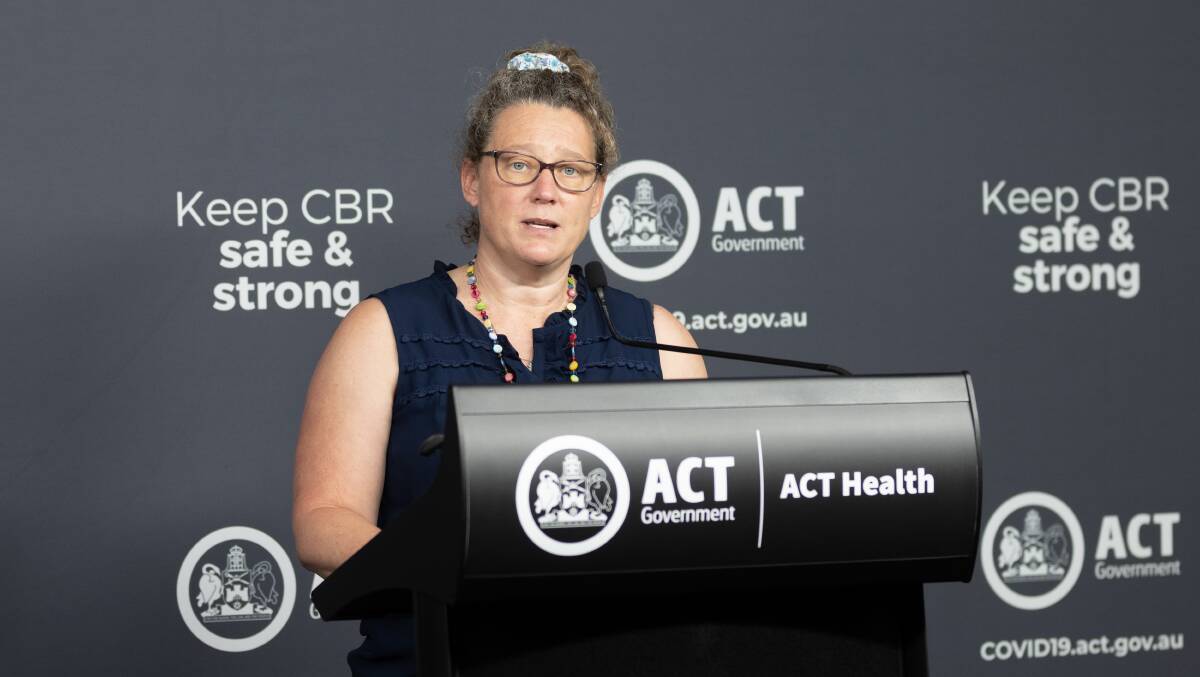
Chief health officer Kerryn Coleman defended communications around the rule, saying the ACT government had been clear throughout the outbreak about the two-week period for vaccines to become effective.
"Whenever the Chief Minister has discussed fully vaccinated he has always communicated that it does take two weeks to be fully vaccinated and have the full effects of vaccination," Dr Coleman.
"The communication around being fully, effectively vaccinated is two weeks after your second dose of vaccine."
Chief Minister Andrew Barr has repeated the message throughout the outbreak that people were only effectively vaccinated two weeks after their second dose. But this has never been mentioned in relation to restrictions or travel.
Dr Coleman said the rule was introduced to reduce the risk of transmission.
"The reason for that is to reduce the risk of reintroduction or continued seeding, which will increase the number of cases and increase our risk of community transmission," she said.
The ACT government, unlike NSW and Victoria, has not differentiated restrictions between vaccinated and unvaccinated people. Unvaccinated people in the ACT are afforded the same freedoms within the territory's border as those who are vaccinated.
But the ACT has applied the vaccinated and unvaccinated rule to travel to geographical areas that have been deemed high risk.
Neither NSW or Victoria have required people to wait to access freedoms until two weeks after their second dose.
Dr Coleman said a small number of people were caught up by the rule but that ACT Health would work with them to see if their stay-at-home period could be shortened when the two-week period was over.
The specification to wait two weeks was not on the ACT government's COVID-19 website until Wednesday afternoon. Prior to that, it was only featured on the exemption form which is submitted on entry to the territory.
This meant people affected by the rule may not see this until they returned to the ACT.
Dr Coleman said they would work to make the rule clearer on government websites but that individuals needed to understand their obligations.
"I have always recommended and I think everyone has always recommended that people are very clear about the travel restrictions in the jurisdiction they are going to and the jurisdiction they're returning to that has not changed," she said.