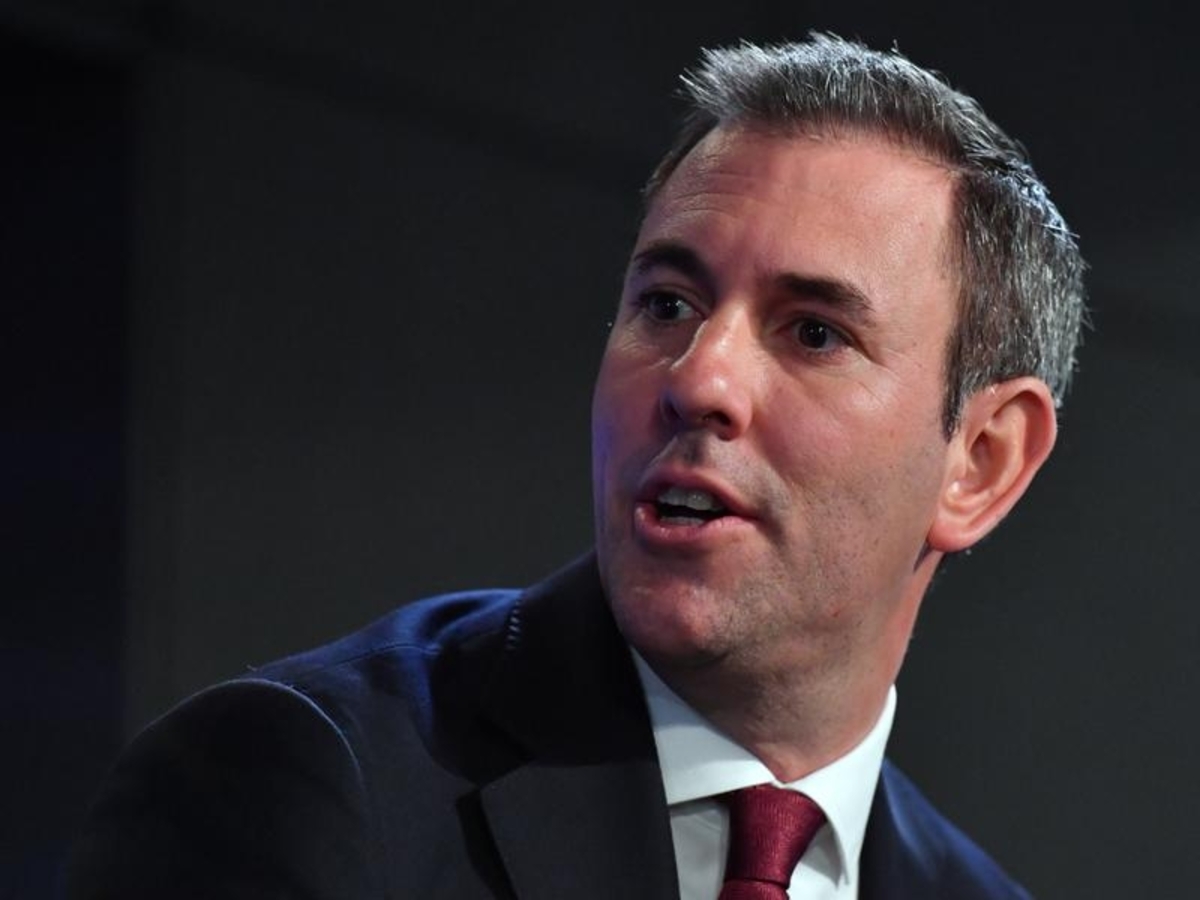
Shadow treasurer Jim Chalmers has slammed the Morrison government's decision to ditch its vaccine rollout timetable, describing it as a "shambles" and warning of economic consequences.
Prime Minister Scott Morrison abandoned the rollout plan on Sunday, saying it was now not possible to set such targets given the many uncertainties involved.
The government had already fallen behind in its vaccine timetable even before it was thrown into further disarray last week when health authorities recommended the AstraZeneca vaccine should not be given to people under 50 on concerns over blood clotting.
"This has been a shambles from the beginning," Dr Chalmers told Sky News on Monday.
"The government was too focused on announcements and on marketing and not enough focus on delivery and on planning."
Last week the International Monetary Fund, while upgrading its economic forecast for Australia, also warned much still depends on the "race between the virus and vaccines".
"You can't have a first-rate economic recovery with a third-rate vaccine rollout. It risks more lockdowns for longer," Dr Chalmers said.
On Sunday the government said there had been 1.16 million vaccinations so far.
The McKell Institute, in an analysis released on Monday, estimates the delayed vaccine rollout risks as many as 34 more days of lockdowns into the future based on the need to have 65 per cent of the nation vaccinated for herd immunity.
Based on reported figures, it calculates the average daily cost of recent lockdowns in Sydney, Brisbane and Melbourne was $123 million.
"The delay in achieving herd immunity increases the risk of lockdowns and border closures. These policies in turn have economic costs," the report says.
Treasurer Josh Frydenberg won't updating his economic forecasts until the May 11 budget.
Meanwhile, a prominent economist is warning international travel for Australians is likely to remain restrictive until 2024.
Deloitte Access Economics' quarterly business outlook, also released on Monday, expects international borders will re-open only gradually.
For Australia, Deloitte economist Chris Richardson anticipates there will be some sort of quarantine remaining for incoming travellers for some time.
"That keeps international travel - both inbound and outbound - pretty weak in 2022, and it may not return to pre-pandemic levels until 2024," he said.
He said Australia's economy appears to be "roaring back", although like the Reserve Bank, he expects a lift in the interest rates to be some years away.
Mr Richardson does not expect a sustained inflation rise back into the RBA's two to three per cent target band to commence until 2023/24.
"A sustained lift in inflation requires a conga line of things to happen," Mr Richardson told AAP.
It will take time for the jobs market to tighten and the unemployment rate to fall enough to lift wage pressures.
"This is going to be a slow moving train not a fast one," he said.