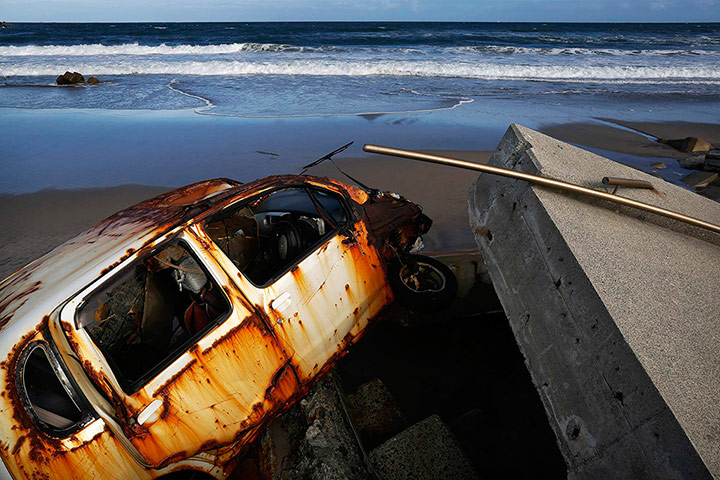
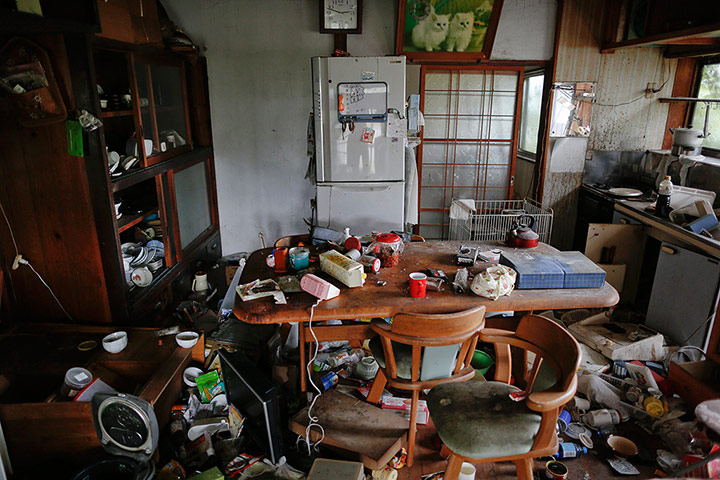
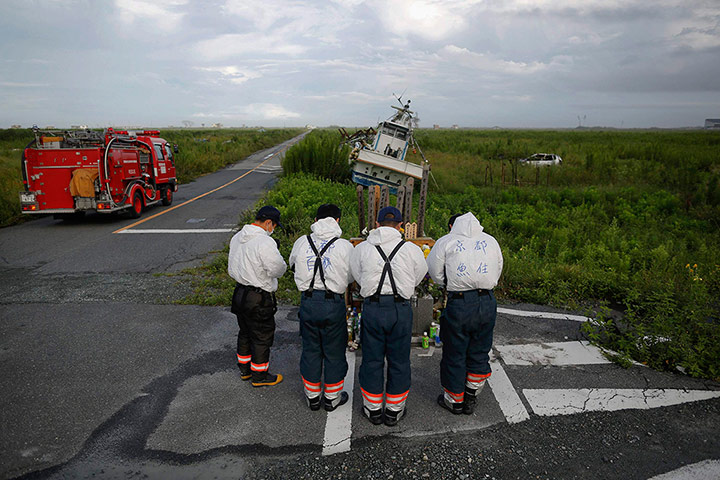
The beach in the evacuated town of Namie is littered with tsunami barriers, wrecked cars and other debris. Almost all of the beaches in Fukushima prefecture have remained closed since the disaster. In July this year, Tokyo Electric Power, which runs the crippled Daiichi plant, admitted that hundreds of tonnes of groundwater mixed with radioactive material may be flowing out to the sea each dayPhotograph: Damir Sagolj/ReutersA clock in the kitchen of a damaged house in Namie shows the time the earthquake struck on 11 March 2011Photograph: Damir Sagolj/ReutersFirefighters from Kyoto pay their respects to victims near Namie Photograph: Damir Sagolj/Reuters
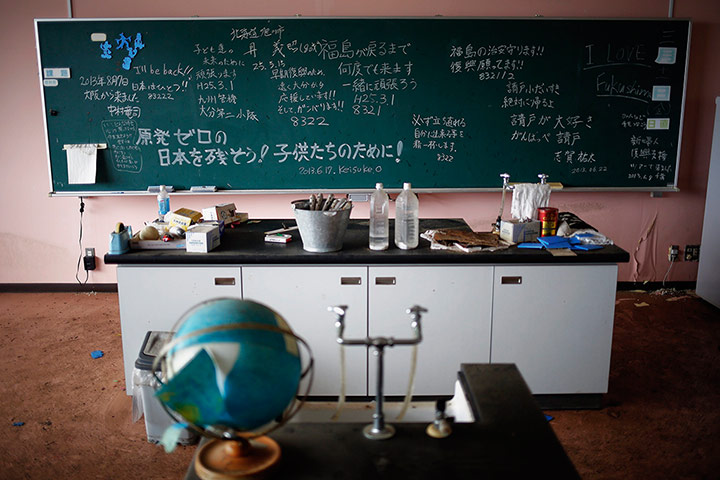
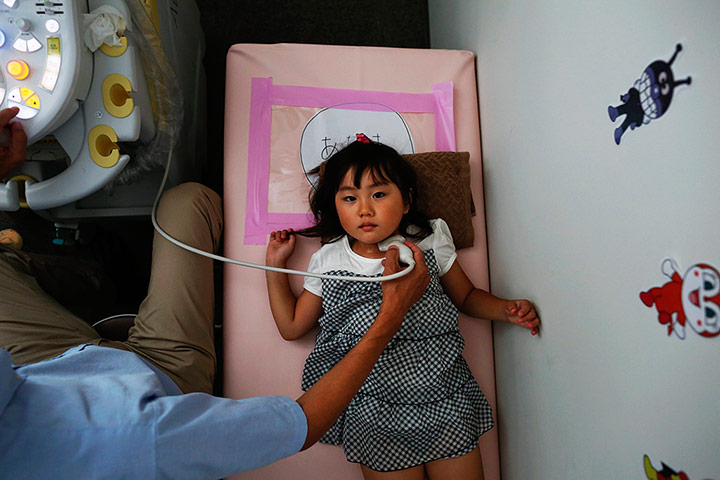
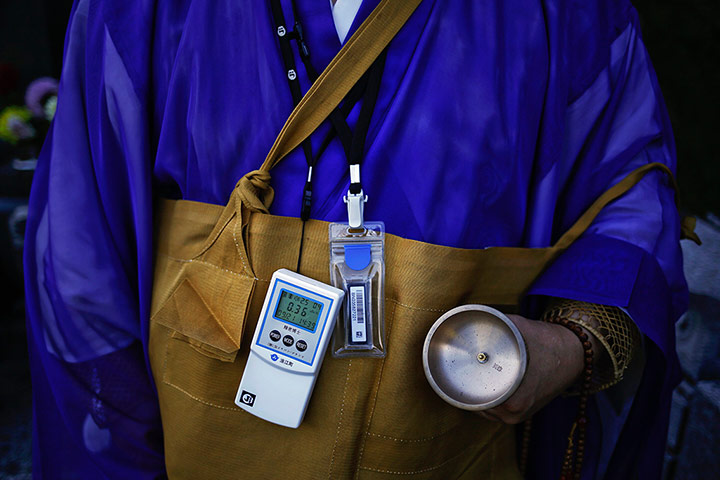
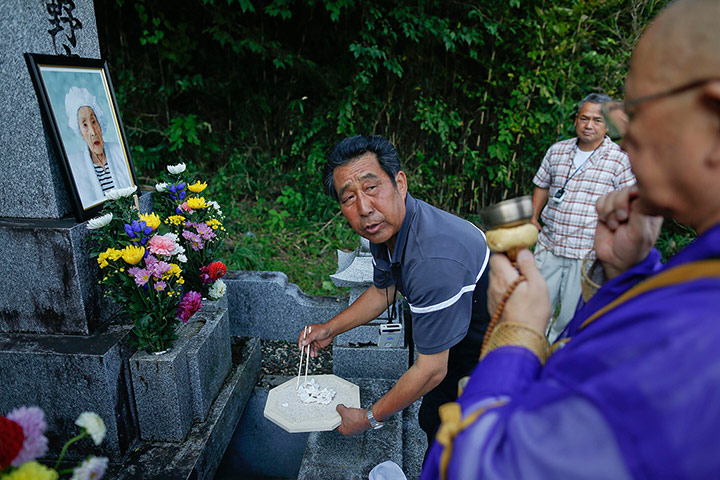
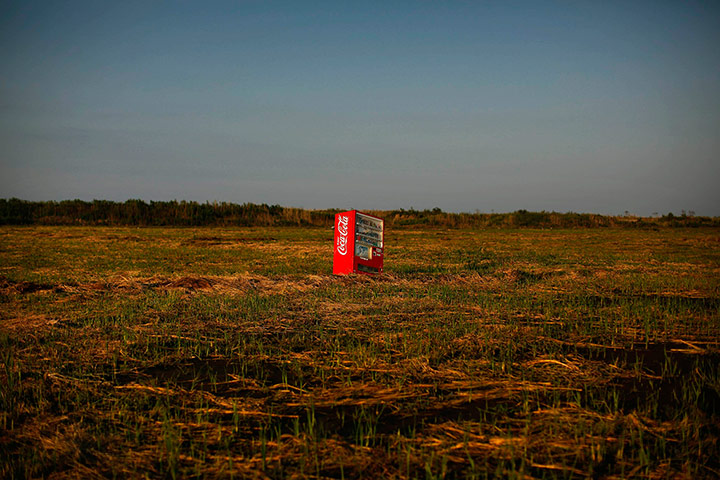
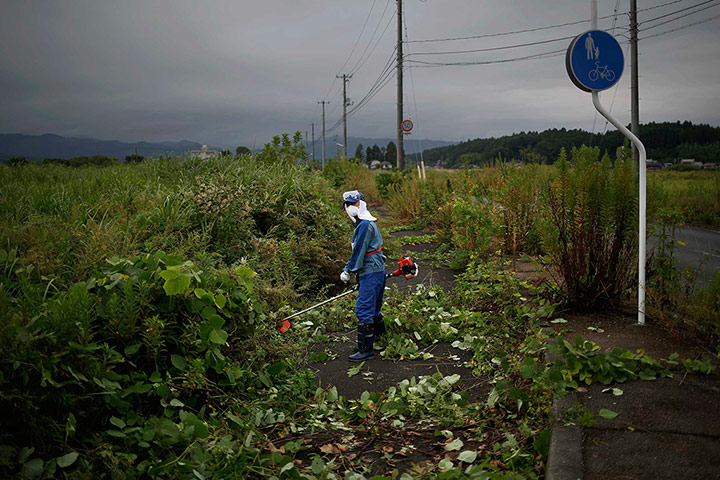
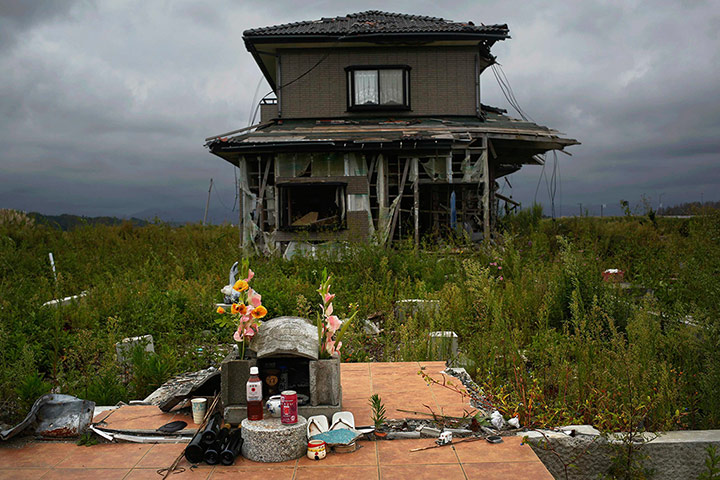
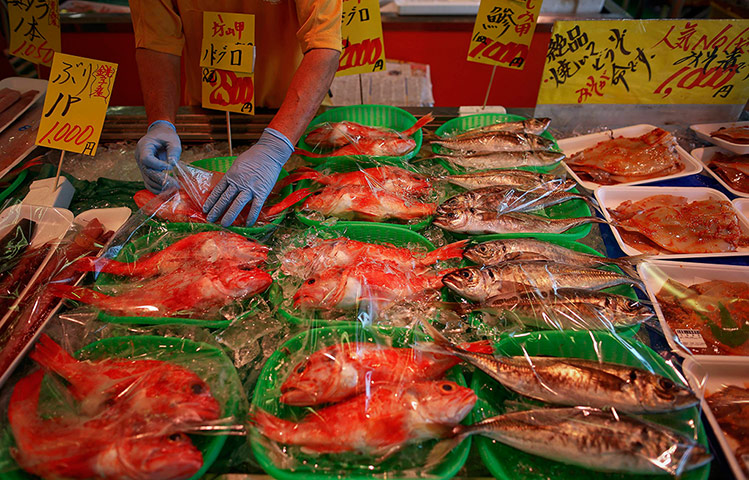
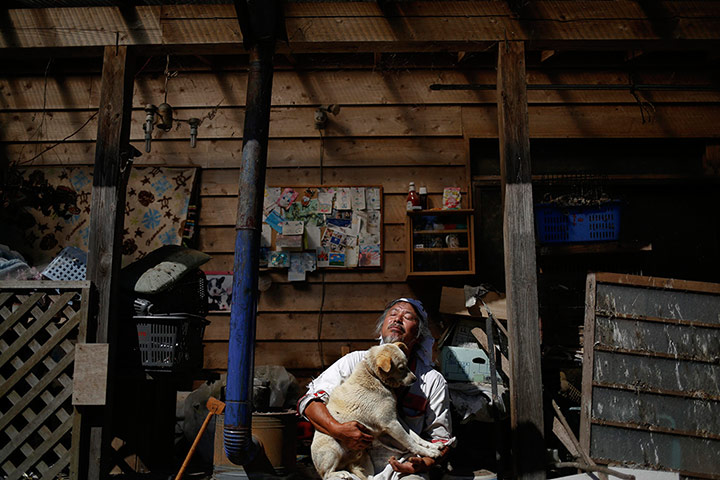
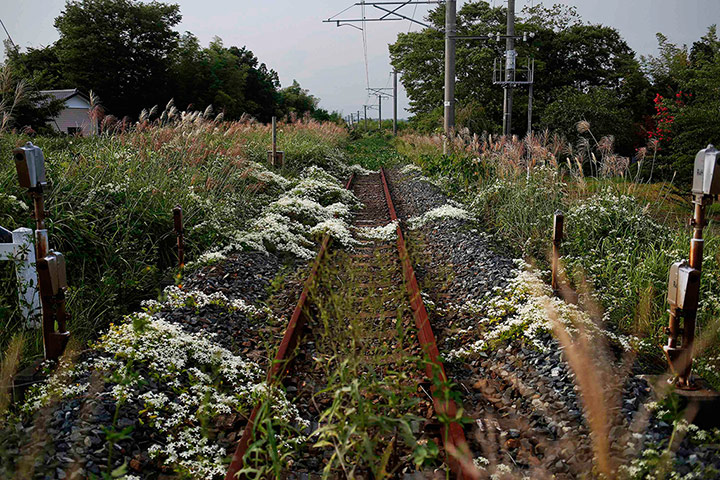
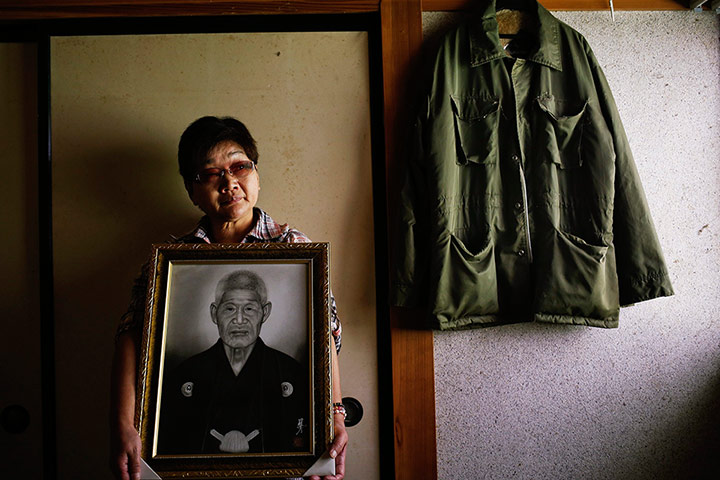
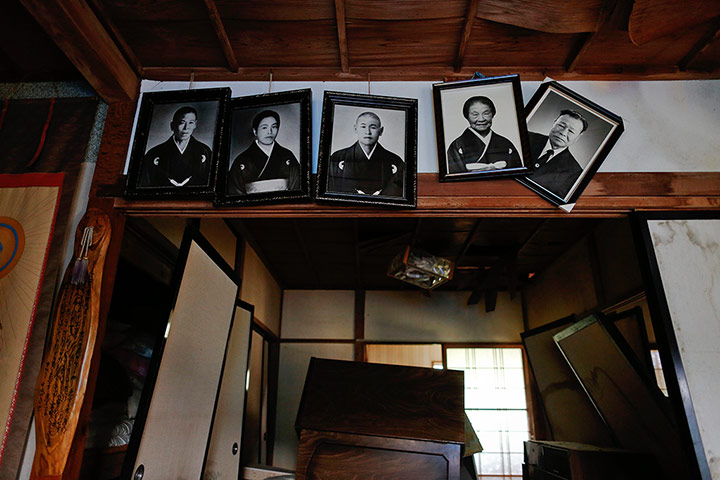
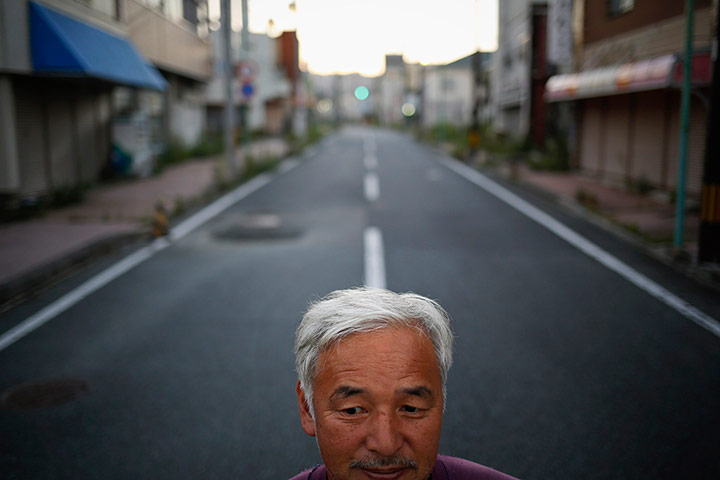
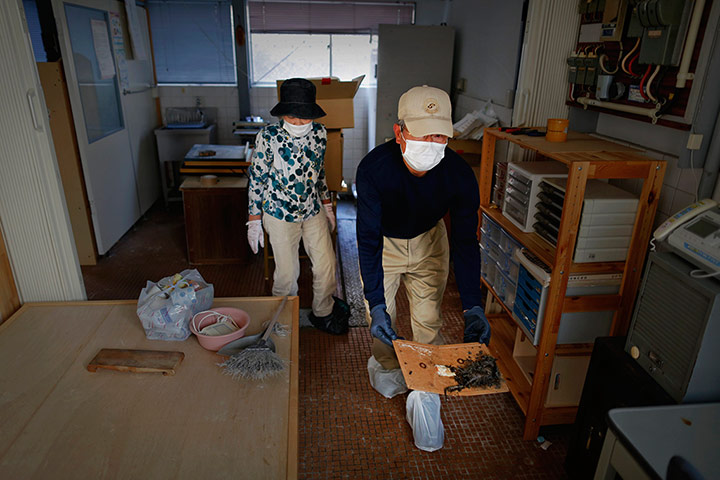
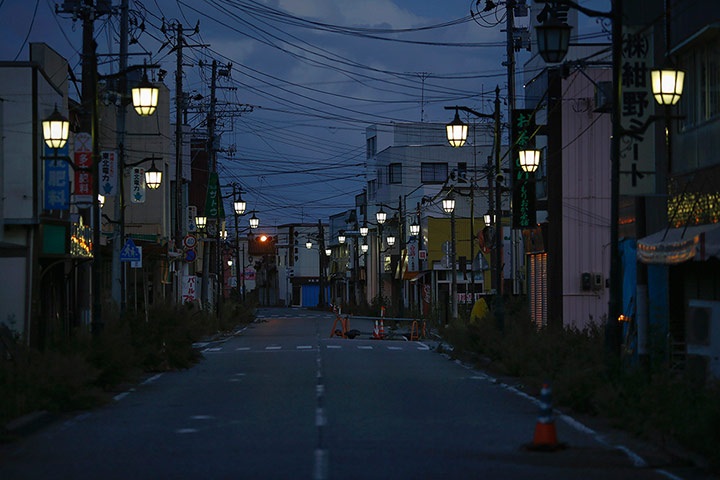
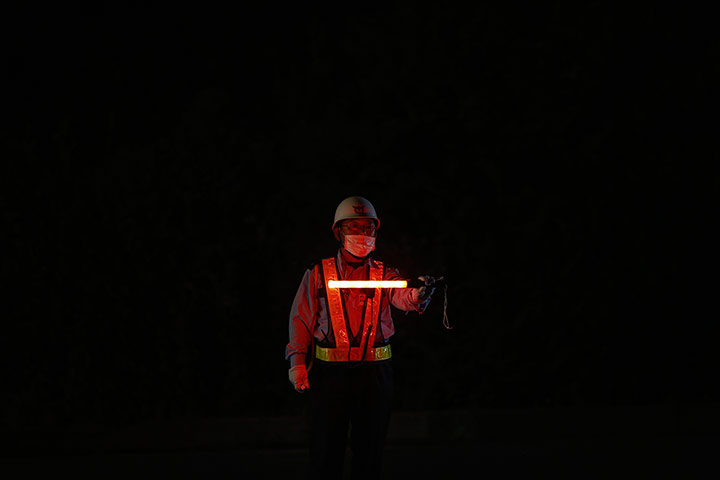
Messages of support are written on a blackboard in a science classroom of a primary school in NamiePhotograph: Damir Sagolj/ReutersA doctor in Iwaki conducts a thyroid examination on four-year-old Maria Sakamoto. The World Health Organisation has said children from Fukushima may have a higher risk of developing thyroid cancerPhotograph: Damir Sagolj/ReutersA Buddhist monk wears a Geiger counter as he leads a small funeral ceremony for Yotsuno KannoPhotograph: Damir Sagolj/ReutersA relative of Yotsuno Kanno uses chopsticks to put her remains into a family grave at a cemetery in the evacuated town of Minamitsushima. Kanno died in temporary accommodation in May 2013, two weeks short of her 100th birthdayPhotograph: Damir Sagolj/ReutersA woman paying a brief visit to her home walks under a sign reading 'Nuclear power – the energy for a better future', at the entrance of the empty Futaba town. Decades ago the citizens ofFutaba took such pride in hosting part of the Fukushima Daiichi nuclear complex that they built a sign over a promenade proclaiming that atomic power made their town prosperousPhotograph: Damir Sagolj/ReutersA vending machine carried inland by the tsunami, in an abandoned rice field near MinamisomaPhotograph: Damir Sagolj/ReutersA worker from Tokyo Electric Power cuts dense vegetation that grew wild in the evacuated town of NamiePhotograph: Damir Sagolj/ReutersA small monument to victims outside an abandoned house in NamiePhotograph: Damir Sagolj/ReutersA vendor offers fish for sale at a market in Iwaki. Before the disaster, more than half of fish offered at the market was from local fishermen, but now none of it comes from the Fukushima prefecture. Commercial fishing has been banned near the nuclear complex, and the only fishing that takes place is for contamination research, carried out by small-scale fishermen contracted by the governmentPhotograph: Damir Sagolj/ReutersKeigo Sakamoto, 58, holds Atom, one of the 21 dogs and more than 500 animals he keeps at his home in the exclusion zone near Naraha. Sakamoto, a former caregiver and farmer who refused to leave the exclusion zone, named his dog Atom because it was born just before the 2011 disaster. With donations and support from outside Fukushima, Sakamoto lives with his animals, many of which were abandoned by previous owners as they fled the areaPhotograph: Damir Sagolj/ReutersWildflowers and other vegetation grow over a train line in NamiePhotograph: Damir Sagolj/ReutersMieko Okubo, 59, poses with a portrait of her father-in-law, Fumio Okubo, next to his jacket in the room where he killed himself. Fumio, a 102-year-old farmer, hanged himself in the house in Iitate where he had lived in all his life after authorities ordered an evacuation of the area. Mieko, who lives outside the exclusion zone, comes back every other day to feed Fumio's dog and clean the housePhotograph: Damir Sagolj/ReutersPortraits hang from the wall of a damaged house in NamiePhotograph: Damir Sagolj/ReutersNaoto Matsumura, 53, poses for pictures in an empty street in the evacuated town of Tomioka. Despite government orders, Matsumura never left and now lives alone inside of the nuclear exclusion zone with his 50 cows, two cats, a dog, a horse and two ostriches. He has made it his mission to take care of those animals left behind, even if they no longer can be sold to a market due to their exposure to high levels of nuclear radiationPhotograph: Damir Sagolj/ReutersZenjuro Nagaoka is followed by his wife, Satoko, as he takes a dead mouse out of their sweet shop during a visit to NamiePhotograph: Damir Sagolj/ReutersStreet lamps in NamiePhotograph: Damir Sagolj/ReutersA security official blocks the road into the the exclusion zone near TomiokaPhotograph: Damir Sagolj/Reuters
Sign up to read this article
Read news from 100’s of titles, curated specifically for you.