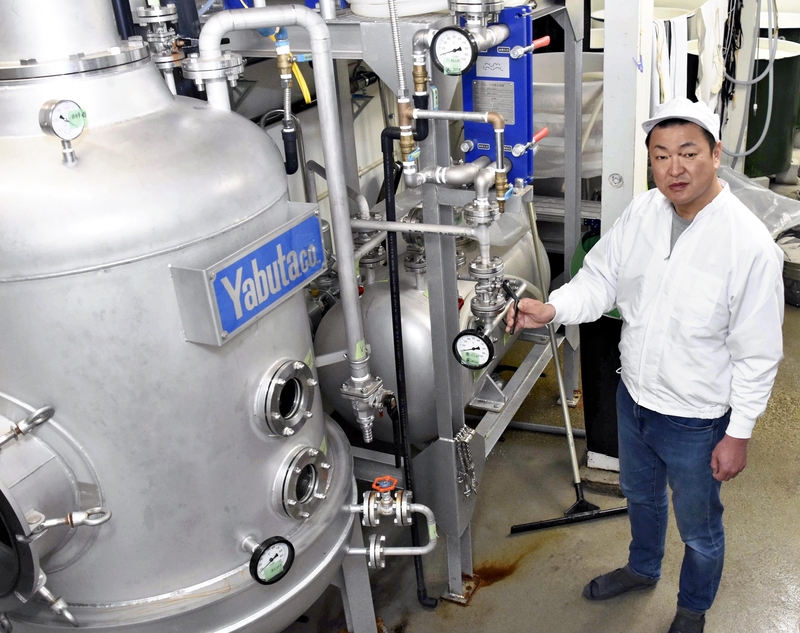
TADAMI, Fukushima -- A brewery for shochu distilled rice liquor in the town of Tadami has unbottled a plan to produce sake for export and catch the wave of popularity that Japanese cuisine is riding overseas.
Reforms to the liquor tax law have made it easier for new entrants in the sake brewing industry to produce the alcoholic beverage exclusively for export. Applications for a new brewing license for such exports opened on April 1, and Nekka LLC filed its application at the local tax office.
"I want sake brewed in Tadami to please palates around the world," said Yoshihiro Wakizaka, a representative of the company.
Overseas demand for sake has grown in recent years alongside the boom in Japanese cuisine. In December 2019, the government decided to establish the new license for brewing sake exclusively for export, and the application process started on the first day of fiscal 2021. The new system also takes into account the balance between domestic supply and demand.
This licensing change caught the eye of Wakizaka, 46.
Wakizaka previously worked as an expert brewer at a sake company in the town of Minami-Aizu, Fukushima Prefecture, but was headhunted by a shochu brewery established in 2016. He has helped develop Nekka shochu, which has a ginjoko aroma similar to sake.
Nekka is a word in the local dialect that means "absolutely" or "wholly" and has a positive connotation. The company uses this word for its name and also its brand of shochu.
Since hitting shelves in April 2017, Nekka shochu has picked up many awards at international contests. However, the company received a growing number of inquiries from customers in places such as Britain and Hong Kong about whether Nekka also made sake. In a stroke of luck, word that the new license would be established came just as Wakizaka had been contemplating brewing sake in Tadami.
Japanese liquor has remained popular abroad even during the novel coronavirus pandemic. In 2020, Japan's liquor exports reached a record high for the ninth straight year, with the export value climbing to about 71.03 billion yen. Whisky held the top spot, accounting for 38.2% of this amount, closely trailed by sake in second place with 34.0%.
"There are plenty of business chances for us," Wakizaka said.
The shochu and sake brewing processes are largely identical up to the point where the moromi mash -- the fermented rice -- is made. Wakizaka is confident that his experience and the skills he honed during his 16 years brewing sake will stand his newest venture in good stead.
"I have more experience making sake than I do making shochu, so I don't feel anxious at all," Wakizaka said.
If everything goes according to plan, Nekka is expected to receive its license in about August and exports could start as soon as early 2022, Wakizaka said.
Read more from The Japan News at https://japannews.yomiuri.co.jp/