FUKUI -- Fukui Gov. Tatsuji Sugimoto said Wednesday he had decided to agree to the restart of three nuclear reactors in the prefecture that first went into operation more than 40 years ago.
It will be the first time for reactors of that age to operate in Japan.
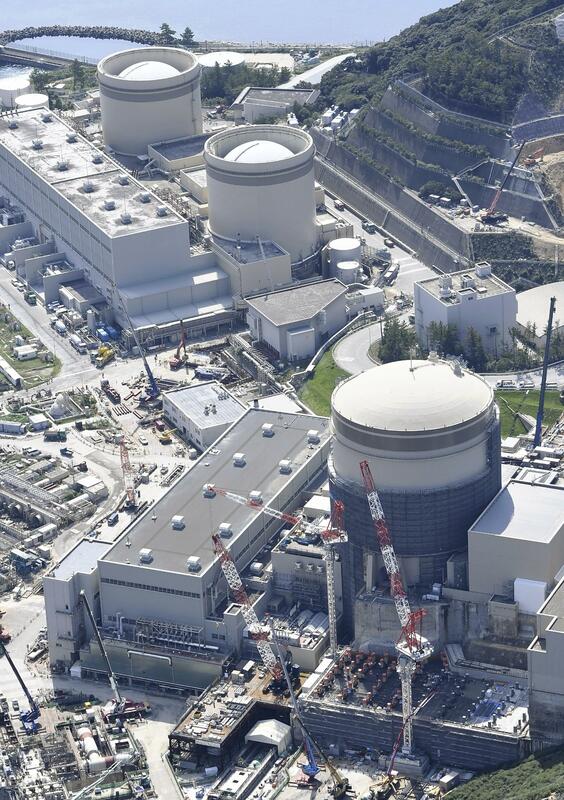
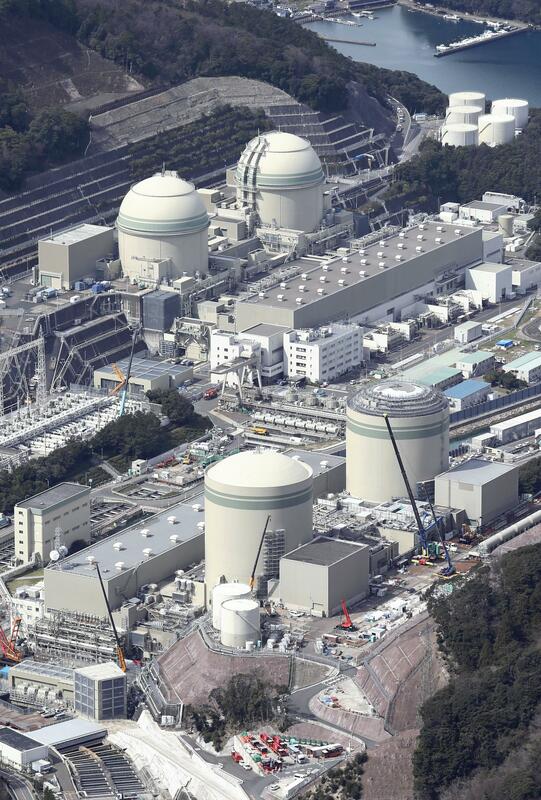
The facilities in question are the No. 3 reactor at the Mihama nuclear power plant in Mihama, and the Nos. 1 and 2 reactors at the Takahama nuclear power plant in Takahama. All are operated by Kansai Electric Power Co.
"After comprehensively examining the issue, I have decided to give my consent to the restart," Sugimoto said at a press conference. The prefectural government's consent concludes the procedures involving the relevant local governments, so the three reactors may be able to restart operations from around the end of May to early June.
Sugimoto held online talks Tuesday with KEPCO President Takashi Morimoto, and with Economy, Trade and Industry Minister Hiroshi Kajiyama. Explaining the reason for his decision at Wednesday's press conference, Sugimoto said, "Economy minister Kajiyama, who is responsible for energy policy, showed me the country's direction [including the future vision for nuclear power and regional development measures]."
In deciding whether to consent to the restart, the governor placed great importance on the prefectural assembly's decision. The assembly decided to agree on Friday, and the prefectural government's nuclear power safety committee, comprised of experts, has submitted a report stating there is no problem with the safety of the three reactors.
Under the nuclear reactor regulation law, which was revised after the 2011 accident at the Tokyo Electric Power Company Holdings Inc.'s Fukushima No.1 nuclear power plant, the operation period of a nuclear power plant is set at 40 years, in principle.
However, it can be extended one time for up to 20 years if the Nuclear Regulation Authority grants approval after a special screening.
Operation of the three reactors, which started over 1974 to 1976, was suspended in 2011 for regular inspections. The authority approved extending their use in 2016.
Restarting the reactors requires the consent of the local governments involved. The Mihama and Takahama town governments agreed in February, and with Sugimoto's announcement, KEPCO will promptly start preparations for the restart. It takes about one month to reactivate a nuclear reactor.
New regulatory standards created after the 2011 disaster require the installment of anti-terrorism facilities, but such facilities are not in place at any of the three reactors. Even if preparations for the restart proceeded as planned, and operations restart, the Takahama plant's Nos. 1 and 2 reactors will reach the deadline for installing such facilities on June 9, and the Mihama plant's No. 3 reactor on Oct. 25.
Operations are likely to be suspended once again, as it will be difficult to complete the facilities by the deadlines.
A reactor at Japan Atomic Power Co.'s Tokai No. 2 nuclear power plant in Tokai, Ibaraki Prefecture, has also passed the screening for extending its operations beyond 40 years. However, procedures to restart the Tokai reactor have not progressed due to strong opposition from the local community.
Read more from The Japan News at https://japannews.yomiuri.co.jp/