Well, October will not be as bad as September as far as the market is concerned, and Halloween in particular is nothing like a horror show.
With an unexpected stimulus package announced by the Bank of Japan - turning the money taps on faster even as the US Federal Reserve pulls the plug on its bond buying programme - the FTSE 100 is ending the week and the month on a positive note.
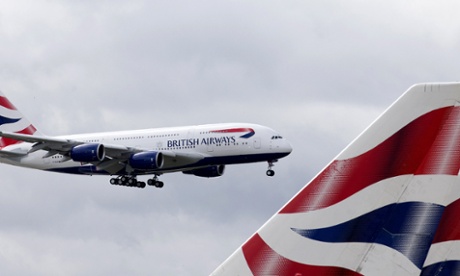
British Airways and Iberia owner International Airlines Group - which shrugged off poor figures from German airline Lufthansa on Thursday - is leading the way. Its shares have climbed 17.4p or 4.5% to 408.1p after it reported a 30% rise in third quarter profits to a better than expected €900m and raised its forecast for the year.
Part of the rise was due to cost controls and the introduction of more fuel-efficient aircraft. Keith Bowman, equity analyst at Hargreaves Lansdown Stockbrokers said:
IAG management has today increased pressure on its European rivals, upping its full year profit forecast. Cost reduction at the company remains central. More fuel efficient aircraft are playing their part, with restructuring initiatives and resulting increased staff productivity at Iberia again contributing. Expanded capacity at British Airways and its exposure to the stronger US economy is assisting, while new bases in Italy and Belgium for its low cost airline Vueling are appealing to cash pressured consumers.
On the downside, the spread of Ebola remains a concern for the travel industry as a whole, while the group’s cyclical nature continues to leave it dependent on improving economic growth.
Overall the FTSE 100 is currently up 75.14 points at 6538.69, helped by the Japanese news which pushed the Nikkei to a seven year high. Michael Hewson at CMC Markets UK said:
As one door closes, another one opens as the saying goes and while we may have seen the end of the Federal Reserve’s bond buying programme for the time being and the ECB reluctant to step into the breach, it appears that the Bank of Japan has no such qualms, filling the void left by the US central bank as overnight they surprised the markets with the announcement of a fresh bout of monetary stimulus.
Concerns about slowing inflation and a sluggish economy appear to have persuaded a narrow majority of Bank of Japan members to vote to increase the annual stimulus to 80 trillion yen from 60-70 trn yen in an open ended manner.
The index is currently down 1.25% on the month and, volatile as it has been, the decline is much less than the 2.89% fall seen in September.
Royal Bank of Scotland has risen 14.6p to 379.9p following its figures.
But Randgold Resources is down 83p to £36.96 and Fresnillo has fallen 14p to 702.5p as gold and silver edged lower after recent rises. Randgold was also unsettled by unrest in Burkina Faso where it has operations.
Direct Line is down 1.7p at 279.8p despite saying it was on track to meet its 2014 profit targets. Eamonn Flanagan at Shore Capital issued a sell note, saying:
Direct Line has issued a mixed third quarter statement. Progress continues to be made in respect of areas where the group has control, such as in costs and strategy, but UK personal lines remains “highly competitive” whilst the industry remains under regulatory scrutiny. The 2014 and 2015 results should continue to benefit from “significant” reserve releases (although reducing from 2014), courtesy of the old RBS shareholders, whilst the disposal of the International operations should result in the return of the net proceeds of around £430m, or around 28.5p per share, some time in the first half of 2015. However, news that large bodily injury claims were higher than expected is disappointing.