Closing summary: That's all for another year

The City of London has officially shut down for another year.
Traders are heading to their favourite pubs and wine bars to mark the FTSE 100’s record high, and to ponder what perils and delights 2017 bring.
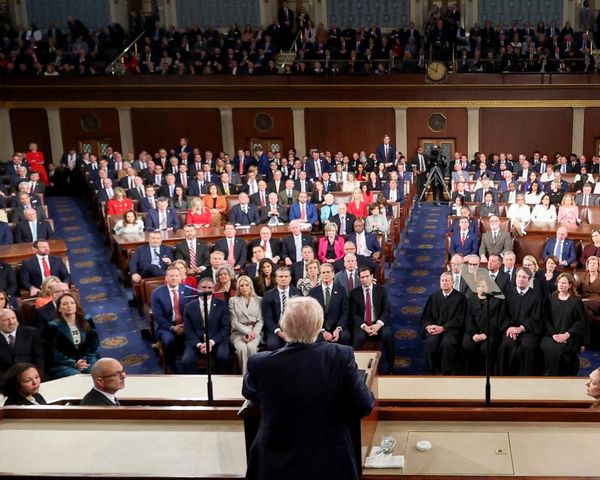
It’s likely to be another white-knuckle ride, with Trump in the White House, Marine Le Pen trying to become French president, China battlign to avoid a hard landing, and Britain facing the sticky problem of negotiating an exit from the EU.
That will probably add up to more market volatility -- this week’s gentle trading will soon be just a memory.
Until then, here’s a summary of today’s events, by my colleague Nick Fletcher:
The FTSE 100 has ended a tumultuous year at an all-time high, boosted by a surge in mining companies and dollar earners and hopes of a spending spree by US president-elect Donald Trump.
Britain’s blue chip index closed a shortened trading day at 7,142.83, up 22.57 points, beating the previous peak of 7,129.82 set in October. The record came as the index hit a closing high for the third day in a row.
The index rose 14.4% over the course of the year, adding £232bn to the value of Britain’s top companies and marking its best annual performance since 2013.
It came despite the shocks of the Brexit referendum vote and Trump’s election, and a slump to 5,499 in February on concerns about a slowdown in the global economy, particularly in China.
The rise was driven by mining companies and overseas earners, which dominate the leading index. The FTSE mining index has jumped 100% over the year, with Anglo American the best performer, up 287%. Signs of recovery in China and the prospect of new infrastructure spending by the incoming US administration sparked the revival, while the 17% slump in the pound since the Brexit vote in June has benefited those companies that earn their money overseas. Over the year, sterling has fallen 16.5%, its worst performance since the financial crisis in 2008.
But in dollar terms the FTSE 100 was actually down 5% over the year, owing to the decline in the pound. Analysts at KPMG said the performance of FTSE 100 companies with more than 70% of their market outside the UK was up 20% over the year. But those with 70% of their business in the UK were down 6%.
KPMG’s Yael Selfin said:
“Put in pounds and pence, this equates to a £226bn rise in the value of the KPMG Non-UK50 and a £24bn loss for their domestic equivalent.”
Despite Brexit, the FTSE 100 was the best-performing European market, as continuing worries about the eurozone, the banking problems in Italy and the prospect of elections in Germany and France next year limited gains.
Happy New Year to all our readers, and we’ll see you in 2017. GW

Greece faces more angst in 2017

Over in Greece, 2016 is closing with the standoff between Athens and its creditors seemingly put to rest...but with no certainty that 2017 will finally resolve the country’s great economic crisis.
Our correspondent Helena Smith reports
It’s been a busy time for the Greek finance minister. Over the course of the past two weeks the emollient Euclid Tskalatos has had to use all his gifts of diplomacy to not only pacify euro zone partners of Greece’s good intent, but persuade them that under stewardship of the left the debt-stricken country is far from bent on colliding with the institutions keeping it afloat.
This the Oxford-educated economist did in a pre-Christmas letter that sought to dispel any notion that a bonus for low-income pensioners was more than a one-off and suspension of a VAT tax for Aegean isles (those, like Lesbos, on the frontline of the refugee crisis) would apply for longer than 2017. This letter appeased Greece’s creditors enough for them to resume talks on short term measures that by 2060 would cut Greece’s debt burden by around 20 percentage points.
But this week Tskalatos’ mollifying has been eclipsed by other mixed signals that Athens’ leftist-led coalition has also sent out: signals that could dash government hopes of the country returning to capital markets, and being included in the ECB’s quantitative easing program, in early 2017.
On Wednesday, minister of state Alekos Flambouraris - prime minister Alexis Tsipras’ mentor and one of his closest aides - insisted that the government wouldn’t hesitate to hand out bonuses again if it also managed to secure a budget surplus next year. The alternate defence minister soon followed saying Athens would extend the special VAT exemption into 2018 “if the refugee crisis continues, and in my opinion it unfortunately will.”
Adding to the confusion, the government then announced that far from ruling out similar solidarity measures, Tskalalotos’ letter “opens the ways for similar ones in the future.”
The doublespeak has enhanced speculation that Greece could be heading for elections if Athens’ financial resuscitation plans don’t come to pass. This week an MRB poll showed that 63 percent of Greeks believed snap polls were likely in 2017 mostly because of growing differences between Tsipras’ administration and creditors.
Prognostications are a mugs game. But of one thing we can be sure: the Greek crisis will continue – and we will be here to report it!
European stock markets are ending 2016 with something of a whimper.
The Stoxx 600 index, which tracks the 600 biggest listed companies in Europe, has lost around 1% this year.
This chart, from Bloomberg, shows how European shares slid sharply in January and February (when worries over China rocked market), and then had a nasty dose of Brexit-itis in the summer.

Another way of looking at things....
The FTSE is up for 2016, but not as much as the pound is down. The FTSE's expected profits are worth less as a claim on global resources.
— Peter Spence (@Pete_Spence) December 30, 2016
UK share prices have also benefitted from the largely robust economic data since the Brexit vote on June 23rd.
Britain’s economy grew by 0.6% in July-September, matching the growth rate in the three month’s before the referendum. This refusal to buckle under the uncertainty created by Brexit has encouraged the City to pile into shares.
Yael Selfin, head of macroeconomics at KPMG UK, explains (via Reuters)
“The latest GDP figures point to a strong UK economy which has probably accounted for some of the pick-up in equity prices overall since the referendum.”
FTSE record high: What the experts say
I don’t want to sound alarmist, but the last time the FTSE 100 hit a record high on the last day of the year was 1999.
That was swiftly followed by the dot-com crash, and a major slump in shares - with the FTSE 100 not recovering its losses until 2015.
Tony Cross, communications director for the Social Stock Exchange (SSX), remembers it:
@KatieAllenGdn @graemewearden @guardian anyone else remember last time ftse100 hit all time highs on last day of year??? Wasn't a pretty Q1
— Tony Cross (@SSXideas) December 30, 2016
On the upside, this rally is good for pension pots:
The FTSE 100 closing the year at all-time high.. at the least pension funds will recoup some returns. What does 2017 have for us?
— Joe B (@Joe_Trading) December 30, 2016
Joshua Mahony, market analyst at IG, predicts that markets will be lively next year - especially as the US has just expelled a bunch of Russian diplomats:
With Obama’s foot already out the door, it is clear that he is happy to speak out against the likes of Israel and Russia without fear of dealing with the repercussions. What is not clear is how things will pan out once the pro-Russian Trump comes into power. Should Trump immediately reverse this week’s measures, it would not only say that he places little confidence in his own security services, but also shows that Russia can essentially do what they want without the chance of being reprimanded.
US futures have edged off overnight highs..... It looks like a quiet end to a very busy year, but 2017 certainly promises to be just as eventful.
The pound and the FTSE 100 have largely moved in opposite directions since Britain voted to leave the EU:
The FTSE 100 has ended the year up almost 13% since the referendum - while the pound has slumped by more than 17%. pic.twitter.com/6qC07hdPeE
— Ian Jones (@ian_a_jones) December 30, 2016
(thanks to PA’s Ian Jones)
The Press Association also point out that the slump in sterling since the Brexit vote has driven shares up:
The pound’s fall, triggered by Britain’s decision to quit the EU, has proved beneficial for multinational companies listed on the index as many tend to benefit from earnings in currencies - such as the US dollar - which are stronger than sterling.
On Friday, sterling slumped further against the euro, falling 0.1% to 1.16 euro. The pound was up 0.5% against the dollar at 1.23.
Sterling remains 18% down against the greenback and 11% lower versus the euro since the Brexit vote in June.
Or in other words....
I did a 'splainer pic.twitter.com/qsm8hPtu7X
— Lorcan Roche Kelly (@LorcanRK) October 4, 2016
Mining companies had a great year.
Share prices across the sector doubled in 2016, as the prices of commodities such as iron ore, copper and nickel rallied.
One of the major reasons for the surging FTSE has been mining firms: Anglo American up 286% this year, BHP up 71%, Rio Tinto 59%
— Joe Lynam BBC Biz (@BBC_Joe_Lynam) December 30, 2016
Updated
The FTSE 250, which includes smaller UK-focused companies, ended 2016 up 3.7% for the year.
The FTSE 250 is seen as a better gauge of the UK economy than the international giants that make up the FTSE 100.
But it is also flattered by the pound’s tumble against other currencies since June’s referendum.
FTSE 100 posts hattrick of record highs
NEWSFLASH: The FTSE 100 has closed for 2016 at a new record high, after sudden last-minute rally.
#Breaking The FTSE 100 Index has closed at a new all-time high of 7,142.83 pic.twitter.com/BBdnIeYX9k
— Press Association (@PA) December 30, 2016
The blue-chip index gained 22 points, or 0.3%, to finish at 7142 points. That’s a new intraday high, and its third closing high in as many days.
This means the FTSE has rallied by 14.4% this year, in spite of the political turbulence at home and abroad.

We should keep in mind that the index is priced in sterling; it’s still down around 4% in US dollar terms.
Details and reaction to follow....
Updated
FTSE 100 hits new alltime intraday high
BOOM! The FTSE 100 just hit a new all-time high.
It touched 7132 points, as City traders make one final push before the close of trading.
That’s just above the previous intraday high of 7129, and means the index has risen around 14% this year.
With 10 minutes to go until the closing bell, the FTSE 100 is recovering its early losses!
The blue-chip index is now UP 2 points on the day, at 7122. If it ends over 7121, it will be a new closing high - the third in as many days...
The Bond Vigilante team at M&G reckon 2017 will be a testing time for Europe, as public anger about austerity bubbles away.
Nowhere have the subjects of fiscal austerity and rising inequality been as relevant as in Europe today. Stubbornly high unemployment rates combined with declining living standards have contributed to rising levels of civil and political instability over the past year. Populist and nationalist parties have been able to capitalise on this phenomenon and raise massive amounts of support from exasperated European citizens.
In Spain, for example, a caretaker government had to be put in place after two consecutive presidential elections failed to designate a clear winner. France will also face an important political test when it holds its presidential election in spring 2017. National Front leader Marine Le Pen will be trying to take advantage of the positive momentum she has built up to sweep her party to its first victory. While this would require a vast – and unlikely – swing from voters, recent events remind us that the rise of anti-establishment parties globally is not one to be underestimated. Equally, traditional polling methods seem to struggle to capture the swing to the hard right that is underway.
These mounting pressures could not come at a worse time for Europe, whose 2017 political schedule looks particularly packed...

The extra difficulty for Europe is that its capacity to boost growth and employment via increased public and infrastructure spending and tax cuts is more limited than other economies, for two main reasons. First of all, high levels of debt (Europe has an average debt-to-GDP ratio of 90% versus the 60% target of the Stability and Growth Pact) are forcing most European countries to rein in spending rather than increase it. Second, not having the ability to print money at an individual country level in the European Union (EU) requires each member to demonstrate even more fiscal discipline for the union to remain viable.
For those mainstream European political parties wishing to claw back votes from their more extreme rivals, the challenge is therefore as follows: to improve the living standards of hundreds of millions of Europeans, while preserving the EU’s balance sheet. This can only be achieved by implementing the right mix of pro-growth structural reforms, but some tough times could still lie ahead.
That’s a small part of their predictions for 2017, which they say will be “a whole new ball game”. Worth a read.
There are a few hours left in the 2016 work year. Why not have a quick look at our 2017 outlook? https://t.co/qeOsyjW34b
— Bond Vigilantes (@bondvigilantes) December 30, 2016
Investors will be toasting their successes this weekend, or grumbling bitterly about having backed the wrong horses.
London’s stock market wasn’t the best place to put your money this year, despite the FTSE 100’s 13% leap.
Brazil’s stock market outperformed all rivals this year, according to Bloomberg data. That’s quite staggering, given the country has suffered a historically bad recession, rising unemployment, plus political turmoil and the impeachment of former president Dilma Rousseff.
Investors are betting that Brazil can claw its way back to growth, and that Rousseff’s successor, Michel Temer, will push through structural reforms.

Richard Stone, chief executive of stockbroking firm The Share Centre, has stuck his neck out with three predictions for 2017.
He reckons that the UK economy will outperform expectations, leading to the first interest rate rise since the financial crisis.
Stone says:
Unemployment remains low and employment is at near record levels. The boost from Sterling’s devaluation will continue to feed through – particularly for exporters to the EU who still have unfettered access to the single market but with substantially lower pricing in Euro terms. Inflation will rise, in part as a function of the impact of weaker Sterling, but also as a result of the relatively tight labour market. Without substantial changes in productivity this will likely start to feed through into higher wages.
In Europe, he expects populist parties to increase their support - but not win power in Germany, France or the Netherlands.
“The level of disaffection in Europe is just as strong as it is elsewhere in the world, but the political and voting systems are very different. This means that those expressions of discontent are less likely to have the same success as they did in the binary choices that were presented by the Brexit and US Presidential Election votes.
In particular the coalition nature of politics in the Netherlands and Germany, along with the run-off process for the French Presidential election, mean that although extremist politicians may make advances their ability to gain power is limited – so I would not expect any great surprises.
And he fears that US relations with China will deteriorate under president Trump:
“January will see the inauguration of President Donald Trump and we will then start to see how his policy pronouncements play out. In the US the power of the President is constrained by the checks and balances inherent in the system, particularly in Congress. However, the President still has significant sway on foreign policy and trade.
“Relations with China – if the current mood music is to be believed – may become more difficult. This in turn could impact trade. Conversely relations with Russia may soften which might alleviate some of the political tensions currently on the global stage.
Stone also suspects Beijing may have to devalue the renminbi next year in an attempt to stimulate growth, which might cause market volatility (as it did in August 2015).
The FTSE 100’s merry upward romp has been welcomed by eurosceptics as a sign that the economy is in good shape following June’s referendum.
Conservative MP Michael Gove (who campaigned for Vote Leave, and was rewarded with demotion to the back benches), tweeted last night that the Footsie had hit a record high “despite Brexit”.
Despite Brexit https://t.co/pQAH5BP6LU
— Michael Gove (@michaelgove) December 29, 2016
It would be more accurate to say that the rally is ‘because Brexit thumped the pound’.
As this chart shows, the FTSE 100 is still down 5% this year when priced in US dollars (the light blue line):
my chart of the year pic.twitter.com/olBIVeXXZF
— Francine Lacqua (@flacqua) December 30, 2016

2016 has been a vintage year for the oil price.
Brent crude prices have jumped by 53% this year, while US crude prices are up 46% - the biggest jump since 2009.
For once Opec can take the credit. The oil cartel put its bickering behind it this year, by uniting behind an agreement to cut production by over one million barrels per day.
That has lifted Brent crude to $57.05 per barrel this morning, which I fear will soon feed through to higher prices at the pumps.
The year is ending on a subdued note, with the main European stock markets all in the red.
The FTSE 100 is down 20 points from last night’s record close, at 7100 points, in extremely light trading.
And Europe’s Stoxx 600 has dropped 0.15%, meaning it’s on track for its first annual loss since 2011.
The latest deterioration in relations between Washington and Moscow will surely encourage investors to sit on the sidelines today, and see how Vladimir Putin responds to the expulsion of 35 diplomats.
Mike van Dulken of Accendo Markets says:
Fresh geopolitical fun and games are taking centre stage with Obama taking a final swipe at Russia before he leaves office.
Updated
Chinese market posts another big loss
China’s stock market has just closed for the year, down 12%.
That’s actually quite a recovery since the wild plunges in early January, which forced regulators to suspend trading altogether a few times.
Ouch! Shanghai Composite ends the year down 12.3% for 2016 after +9.4% in 2015. 2016 is worst year since 2011. Is the worst over for #China? pic.twitter.com/uHdP1Hp3OH
— Holger Zschaepitz (@Schuldensuehner) December 30, 2016
The other European stock markets have lagged behind the FTSE 100 this year.
Italy’s FTSE MIB has lost 10% during a year dominated by worries over its banks, and a political crisis.
Germany’s DAX gained 6.4% while France’s CAC rose by 4%.
The Europe-wide Stoxx 600 index dropped by 1.6%.
This multicoloured tweet from Reuters’ Atul Prakash shows how each index has performed every year since 2000:
Britain's FTSE 100 set to win this year's race, while Italy's FTSE MIB slumps. The year looks like this. #FTSE #STOXX #equity pic.twitter.com/PeM8IPRx4N
— Atul Prakash (@AtulPrakash14) December 30, 2016
(That’s the FTSE 100 on the top, then the Stoxx 600, the Dax, the CAC, and finally the FTSE MIB)
Apologies, I might have forgotten to turn comments on the blog this morning (or they turned themselves off!). Anyway, they’re on now.
We shouldn’t forget that the FTSE 100 has also benefitted from the slump in sterling this year since the Brexit vote.
The Footsie is packed with internationally focused companies; a cheap pound makes UK exports more competitive, and also raises the value of overseas earnings.
So while the FTSE 100 is up 13.8% this year, it’s actually down over 5% when priced in US dollars.
Bloomberg’s Lorcan Roche Kelly wrote the definitive analysis on this issue recently....
I did a 'splainer pic.twitter.com/qsm8hPtu7X
— Lorcan Roche Kelly (@LorcanRK) October 4, 2016
Updated

Mining stocks have played a major role in driving the FTSE 100 up this year.
The mining section of the FTSE 100 has jumped by 100% this year, helped by a recovery in commodity prices after a torrid 2015. That’s its best performance since 2009.
Anglo American, for example, has almost quadrupled in value since January 1st.
Miners are benefitting from optimism about the global economy next year, and the prospect of Donald Trump boosting US infrastructure spending.
Best year for the Footsie since 2013
Britain’s FTSE 100 index is on track to post its biggest annual gain in three years.
Despite the political shocks that rocked markets this year, the blue-chip index has gained 13.8% since January 1st. That’s its best performance since 2013, when it gained 14.4%, and follows two years of losses.
It wasn’t plain sailing through. Having begun January at 6,242 points, the Footsie slumped to 5,536 by mid-February, as global markets were spooked by Chinese slowdown fears.
It then recovered, before a wobbly June - the index crashed by 6% after the EU referendum.
But the FTSE 10 soon bounced back and we saw further gains in the summer and autumn. Finally, Trump’s shock election win sparked a late rally, as this chart shows:

The agenda: Can FTSE 100 manage a hattrick?
We’ve nearly made it!
After a turbulent 12 months, there’s just one more trading session to go until we can consign 2016 to history and face the worst that the new year can throw at us.
Given that includes President Trump, the Brexit negotiations, and key elections in France and Germany, we might not want to rush into 2017 too enthusiastically, of course.
But right now, City investors are hoping that the global economy could shrug off these concerns and strengthen next year.
That helped the FTSE 100 to hit closing record highs on Wednesday and Thursday, and there’s a chance we could see a hat-trick today.
As ftse gets set to open for its last trading day of the year, all time session highs are a whisker away #markets #brexit
— Karen Tso (@cnbcKaren) December 30, 2016
The opens aren’t great, though -- the blue-chip index has dropped by a few points at the start of trading, having closed at 7120 last night.
The all-time intraday high, incidentally, is 7129 points, so well within reach if City traders get all excitable.
Trading ends at 12.30pm chaps, so get those orders in fast.
FTSE 100 called to open -5pts at 7115 pic.twitter.com/1GX1n4LyVE
— Mike van Dulken (@Accendo_Mike) December 30, 2016
We’ll be tracking all the main events through the day, and looking back at the best and worst of 2016.