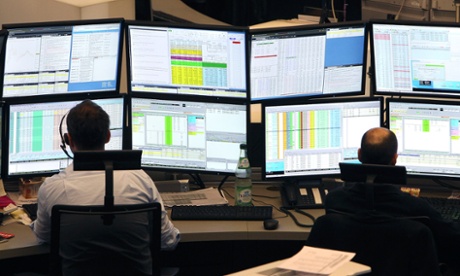
A rise in oil and mining companies pushed leading shares to a five-month high after another volatile week.
A ceasefire agreement in Ukraine and the hope that Greece can agree a deal with its creditors at a key meeting on Monday combined to lift the FTSE 100 45.41 points higher to 6873.52, its best level since 4 September.
Better than expected eurozone GDP figures also helped - with the German figure in particular helping the Dax to a new record high.
Among the risers, Tullow Oil added 19.9p to 405p as Brent crude hit $60 a barrel for the first time this year. Tullow was also helped by a positive note from analysts at Oriel:
Since we established our thesis on Tullow in September 2014, the company has taken most measures that we felt were necessary in the current environment, including cutting exploration costs and the dividend. Given our belief that it is the assets that differentiate the company, we would expect these measures to eventually result in value recognition by the market.
At the analyst presentation, management was very clear that at present it does not intend to raise equity. While we believe that Tullow is one of few companies that in the current environment could actually execute a rights issue, we see the cuts in exploration, general and administrative expense and dividend as much more sensible initial steps in protecting the balance sheet.
We acknowledge that due its relatively weak balance sheet, Tullow is not among the best defensive names in our universe. However, on balance, in our view, it is among the best names that will survive a prolonged period of low oil price and in the same time be among the better performers in a potential oil price turnaround. We maintain a buy rating and our 650p a share target price.
With copper hitting a three week high, mining shares moved higher. BHP Billiton was 74.5p better at £15.69 and Rio Tinto rose 112p to 3151.5p. Anglo American added 39p to 1204.5p despite a $3.9bn write down, as it held its dividend.
GlaxoSmithKline climbed 67.5p to £15.53 after UBS moved from sell to buy with a target price raised from £12.50 to £17.
But BT fell 10.9p to 439.1p, a day after a £1bn placing to help fund its purchase of EE. It was hit by fears of increased competition after Virgin Media unveiled plans to spend £3bn boosting its broadband coverage. Analyst Robert Grindle at Deutsche Bank said:
Virgin Media’s increased ambition is a material threat to BT which is presently the only broadband infrastructure provider to around 50% of UK homes. We have recently been concerned that other operators may also be tempted to roll-out fibre (eg, Vodafone and TalkTalk) but perhaps this news makes them less likely to do so or alternatively, could trigger a rush to invest in areas not being considered by Virgin Media. BT in turn may feel pressured to accelerate the roll-out of its own fibre network (i.e. g.fast) with the risk of rising capex/weaker free cashflows...Though there is no immediate financial impact as a result of this news, the risk of rising medium term capex, and market share loss, perhaps equivalent to around 5% of BT’s consumer base (plus business customers) is unhelpful for estimates. In the near-term, the merger between BT and EE will create a hiatus (up to one year) which competition will use as an opportunity to make gains in UK fixed/mobile, partly at BT’s expense. Escalating sports content costs make it more difficult for cost cuts at BT to offset any competitive impact. We see better value elsewhere in a more broadly recovering European telco sector at this time. Hold.
Among the mid-caps, exploration group Afren had a rollercoaster ride after it terminated talks with potential predator Seplat of Nigeria. It said it had not received a satisfactory proposal from Seplat, and despite the Nigerian company seeking an extention to its deadline to bid or walk away, Afren refused to agree. Seplat later issued a statement clarifying it would not make a bid.
Meanwhile Afren said it was still in talks about a recapitalisation:
The company is continuing discussions with the advisers to the ad hoc committee of its largest bond holders regarding the immediate liquidity and funding needs of the business. The company is also having discussions with its existing stakeholders and new third party investors regarding recapitalising the company.
After falling as low as 4.07p its shares closed up 2.3% at 7.275p.
Finally Shaft Sinkers sank 70% to 0.625p after it said there may be little or no value in the equity. The underground construction company is in talks about funding working capital, but the options available are unlikely to leave the holding company as a going concern.