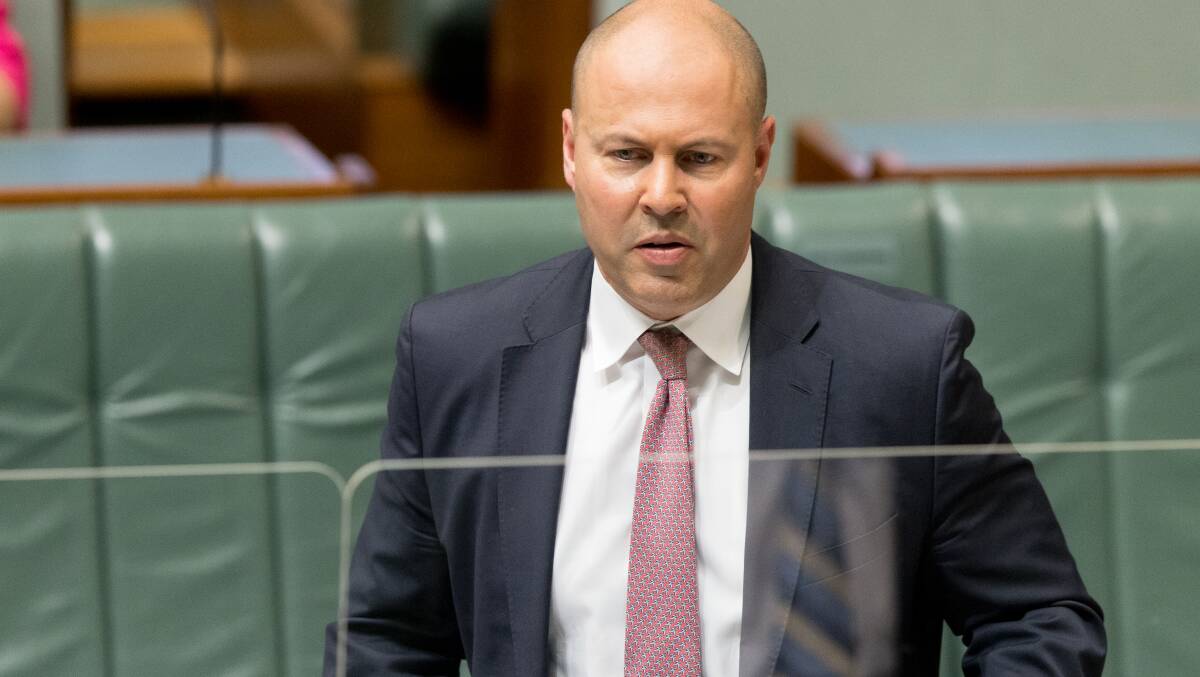
Treasurer Josh Frydenberg is set to get heavy handed with unions holding up Australian ports, initiating a sweeping review into the systemic issues impacting the productivity of the nation's maritime industry.
The federal government has tasked the Productivity Commission to conduct an independent review into the country's maritime logistics sector, following reports from the World Bank which slated Australian ports among some of the worst in the world.
The review will go beyond overseas problems constraining supply and will look at domestic issues which are compounding delays for materials and goods.
It is understood the impacts of industrial actions at ports by the Maritime Union of Australia will also be examined.
In the past 18 months more than 220 strikes have occurred against stevedore companies at ports across the country.
"With more than $400 billion goods imported and exported every year, it's critical that we lift productivity at our ports," Mr Frydenberg said.
"The Morrison government will continue to respond to global supply chain disruptions and importantly, through this review, will consider what domestic changes can be made to improve the efficiency of our ports."
Close to $100 billion in containerised goods is imported and exported from five of Australia's major ports.
The terms of reference also point to a broader assessment of the economic impacts from disruptions at ports and if there are persisting infrastructure constraints.
Recent industrial action by MUA has prompted concern by the government particularly on enterprise agreements which limit companies to automate stevedores, implement labour cost strategies and have control over recruitment decisions.
The Australian Competition and Consumer Commission has previously flagged global constraints were a significant factor to rising shipping costs and delays.
Freight rates are around seven times higher than a year ago which is partly due to supply constraints caused by the pandemic.