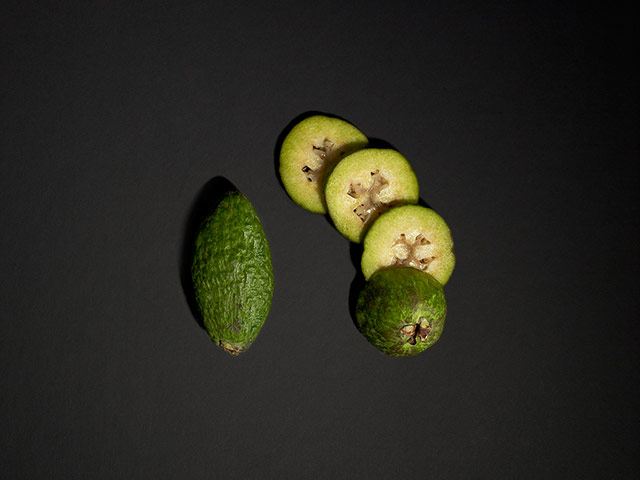
Commonly called feijoa, this evergreen plant is native to the highlands of southern Brazil, but is also grown in Australia, the Mediterranean, southern Russia and is very popular in New Zealand where the fruit are used in numerous recipes from crumbles to cakes. Also known as guava pineapples or guavasteen, the fruit have a zingy flavour with minty tones Photograph: Luke Albert for the Observer
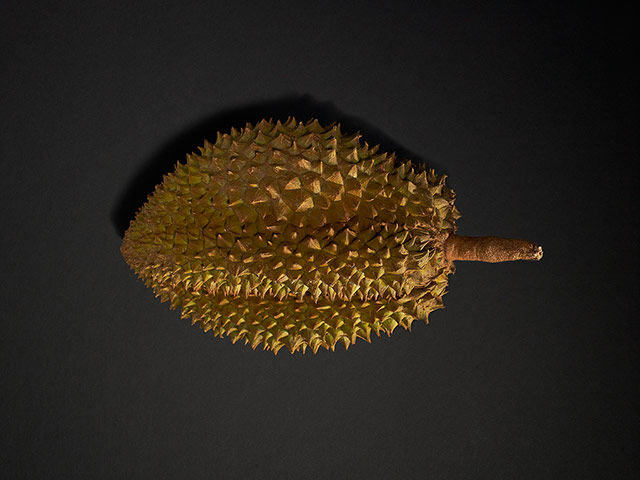
Durian fruits come from many species of durian tree and are popular in South-East Asia where they are known as the 'King of Fruits'. Their thorny exterior wraps around white flesh containing several yellow-coloured bulbs that have a flavour reminiscent of sweet onions. The smell of durian fruit, variously described as akin to sweaty socks or pongy cheese, can be overpowering Photograph: Luke Albert for the Observer
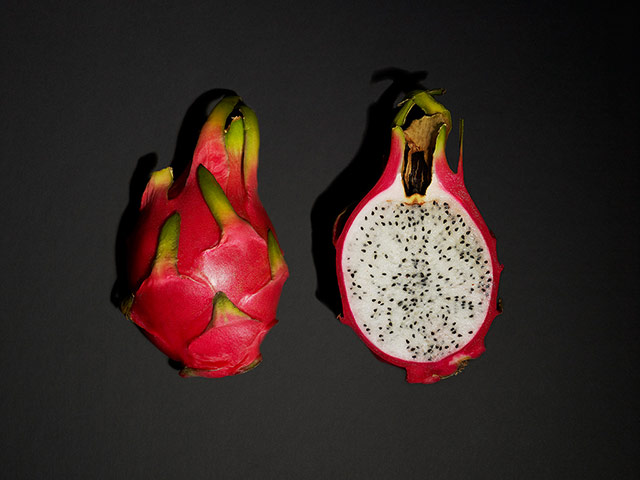
Hylocereus is genus of cacti that covers several species, all of which produce striking pitayas – or dragon fruit. Native to tropical America, it is also commonly grown in many countries including Vietnam, Thailand and Sri Lanka. Vivid on the outside, the inside of the fruit is pale and peppered with seeds. Its mushy texture resembles that of a kiwi fruit, however the flavour is subtle Photograph: Luke Albert for the Observer
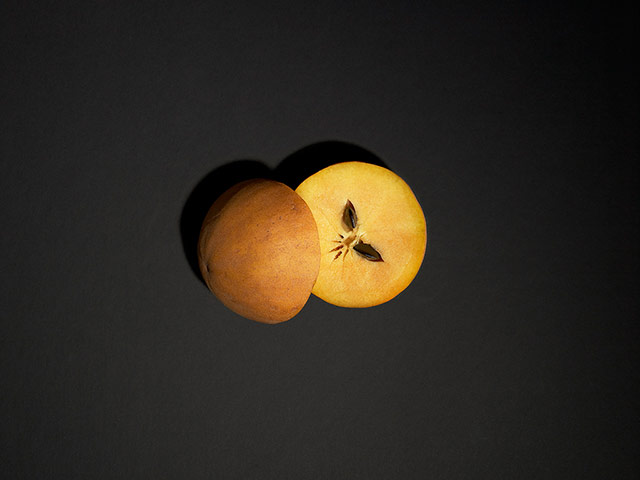
Better known as sapodilla or chikoo, the Manilkara zapota tree bears golden-brown ball-shaped fruit with a dense, orange-coloured flesh containing seeds. Native to southern Mexico, Belize and Guatemala, it is now grown in many tropical countries. With a sweet, toffee flavour and pear-like texture they are often eaten fresh or used in desserts Photograph: Luke Albert for the Observer

Taking their name from the Malay word for hairy (rambut) these red, bristly fruits are found hanging from the boughs of rambutan trees. When cut open, the soft, squidgy interior that surrounds the seed can be removed and eaten. Similar to a lychee in taste, it is native to Malaysia and is commonly grown across South-East Asia and the tropics Photograph: Luke Albert for the Observer
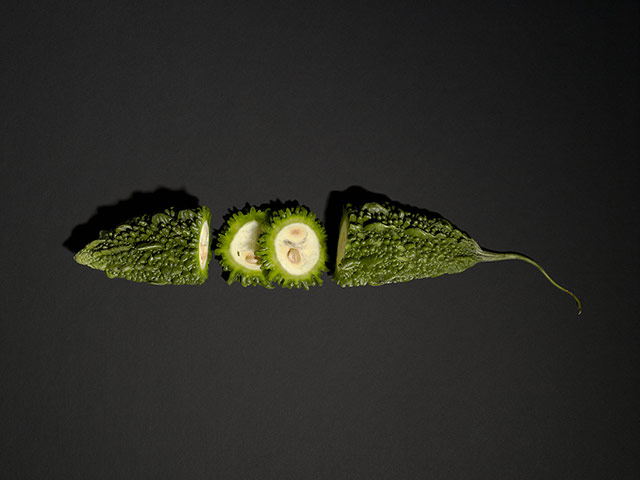
The bitter melon, or bitter gourd, is grown in East Africa, the Caribbean, South America, India and other Asian countries. As its name suggests, it is extremely bitter. Eaten with the knobbly skin left on, it can be cooked in numerous ways including as an ingredient in stir fries and curries, boiled and stuffed or pickled, and is very popular in Chinese dishes Photograph: Luke Albert for the Observer
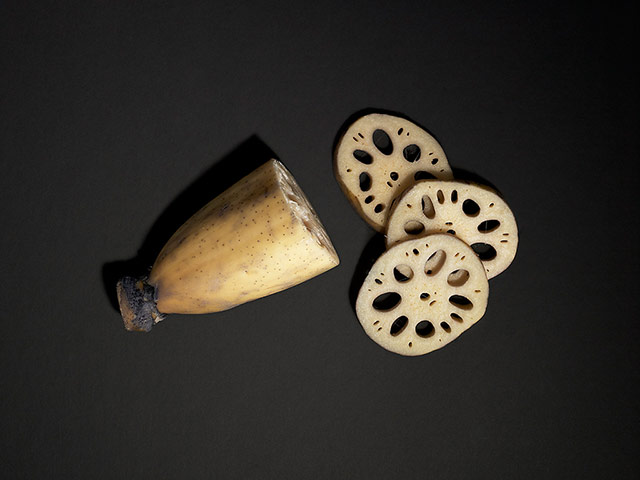
Nelumbo nucifera, or sacred lotus, grows in shallow waters and its “root” (actually rhizome) is very popular in China and other Asian countries. Peeled and chopped, the slices of the sacred lotus have a firm texture and nutty flavour and, among their uses, can be added to stir fries or soups. The leaves, flowers and seeds can also be eaten Photograph: Luke Albert for the Observer
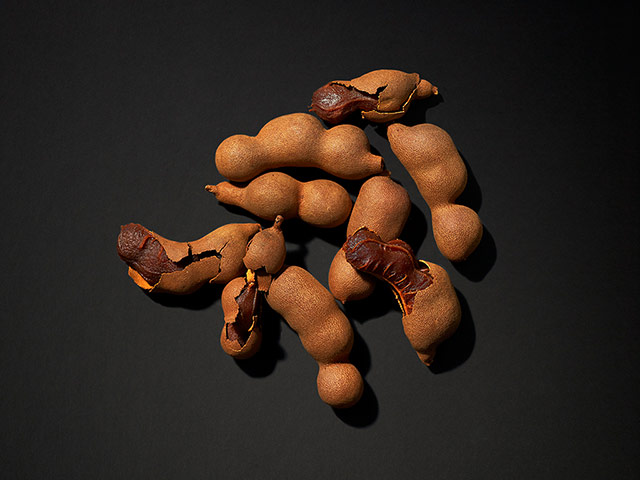
Dangling as pod-like shells from the tamarind tree, tamarind fruit can be cracked open to reveal a sticky, slightly sour pulp that surrounds the seeds. Known as the Indian date, tamarind is native to tropical Africa and is also grown in South America and South-East Asia. It is often used to make chutneys and is an ingredient of Worcester sauce Photograph: Luke Albert for the Observer