Support truly
independent journalism
Malayan tigers and Aldabra tortoises are native to hot and humid lands, but that doesn't mean they don't enjoy a frozen treat on a hot Florida summer day.
Temperatures in South Florida this month have reached the upper 90s Fahrenheit (mid-30s Celsius) with humidity reaching 70%, combining for “feels like” temperatures regularly exceeding 100 F (38 C).
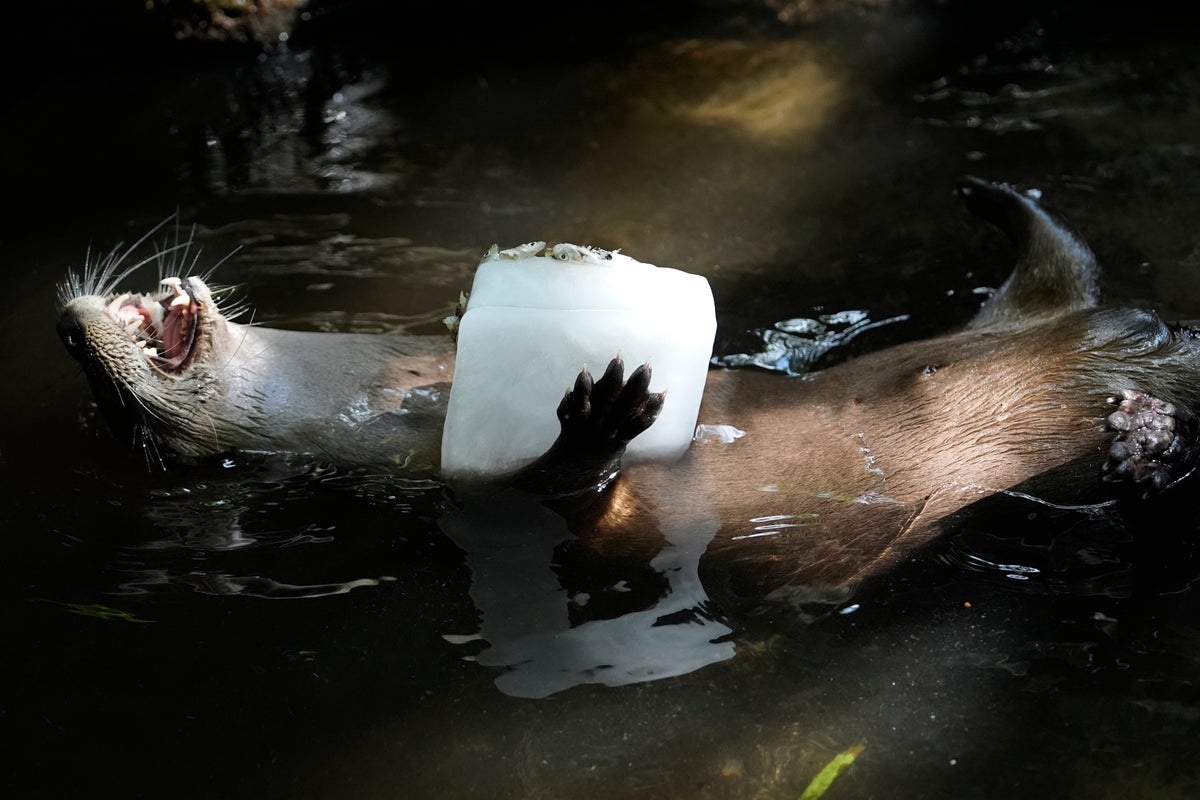
Staff at the Palm Beach Zoo & Conservation Society use a variety of techniques to keep their animals cool. Zookeepers throw large piles of ice into the black bear enclosure for the animals to wallow in, chilling their pool to 74 F (23 C). The otters get ice blocks and frozen fish tossed into their water for playing and eating.
Tigers feast on more ingenious treats: They get frozen cow bones crammed into blocks of ice, along with a side of frozen goat milk. The big cats also like to swim.
Giant tortoises, native to the islands of the Indian Ocean, enjoy cool showers from a hose, which they can feel through their shells.
“Even though all of our animals are acclimatized to the South Florida weather, they look for ways to cool off during the hot days, just like we do,” said Mike Terrell, the zoo's curator of animal experiences. “All of our animals that we have here at the zoo were specifically chosen because they’re used to warm climates. And so they’re totally happy in a high, high heat, high humidity environment. ”
The zoo's guests love to watch the animals cool down and children press their faces up against the glass for a better look, Terrell said.
“We absolutely love is nose prints,” Terrell said.
Figuring out what cooling activities the animals enjoy requires a bit of trial and error, he said.
“They really tell us what they like," Terrell said. "We can take our best guess, but if we’re giving them something that they don’t like or they’re not interacting with, we’re not going to continue to give it to them.”