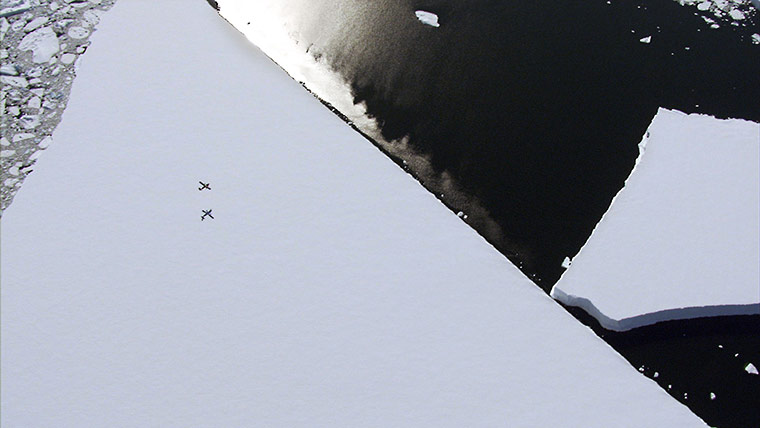
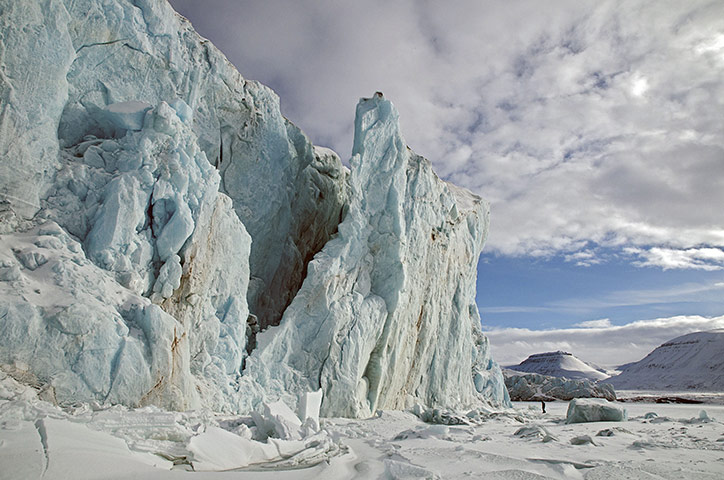
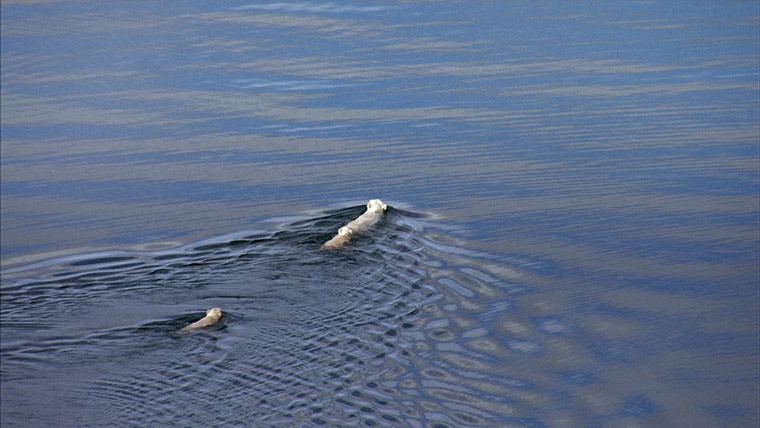
A twin otter aeroplane operated by the British Antarctic Survey flies over the disintegrating Wilkins ice shelf, a 200m-thick sheet of floating fresh water ice larger than Jamaica. It started to break up in 2008. Seven major ice shelves have broken up on the Antarctic Peninsula in the past 30 years, in a wave that has been travelling southwardsPhotograph: BBC/BBCA 3C temperature rise on the Antarctic peninsula over the past 50 years is a rate matched in parts of the Arctic, but nowhere else on EarthPhotograph: Dan Rees/BBCSwimming polar bear mother with two cubs, Svalbard. Polar bears are technically marine mammals. They spend most of their lives on the frozen surface of the sea, where they hunt for the seals which they feed on almost exclusively. In summer, when the ice breaks up into smaller floes or melts away entirely the bears are obliged to swim to the next ice floe or to dry land. They are good swimmers and have always been known to do this. However, now the ice is breaking up earlier and re-freezing later, bears are both having to swim more and go for longer periods without feeding. This hits cubs particularly hard and scientists have found a clear link with poor sea ice cover and poor cub survivalPhotograph: BBC/BBC
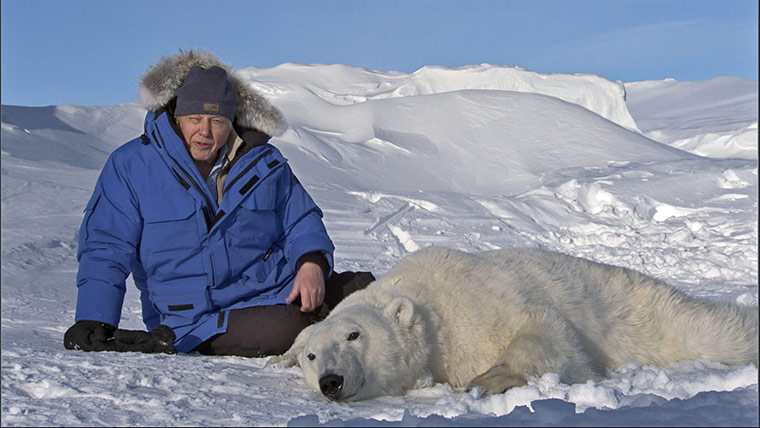
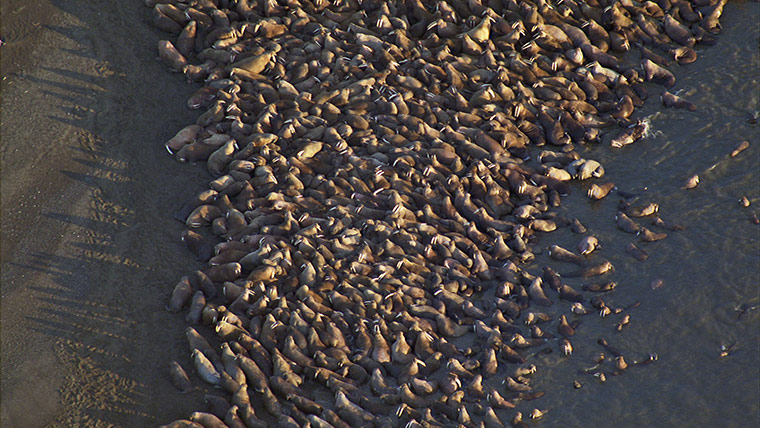
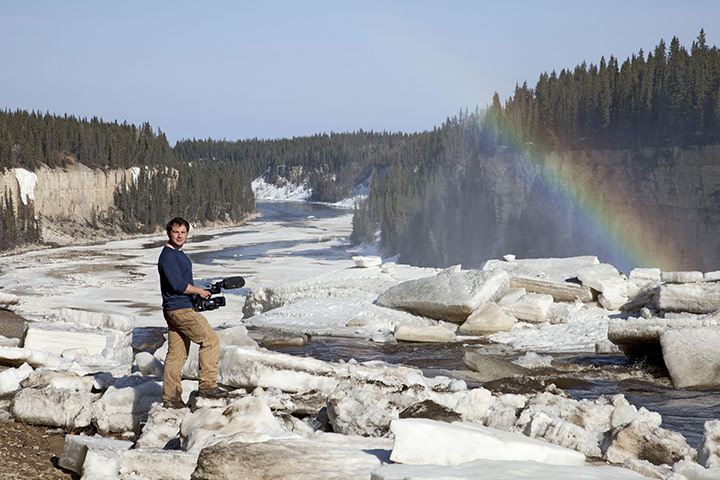
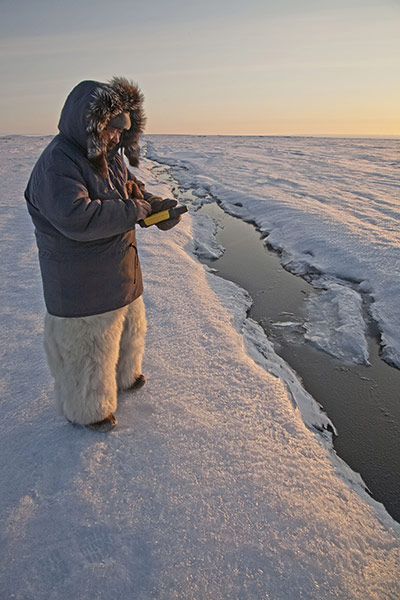
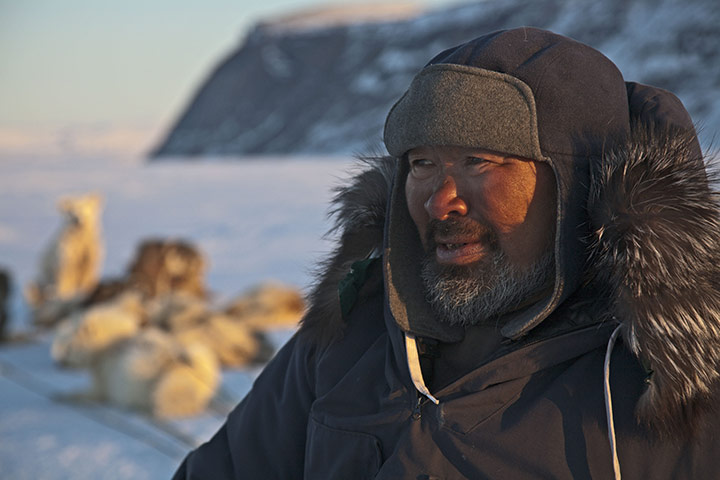
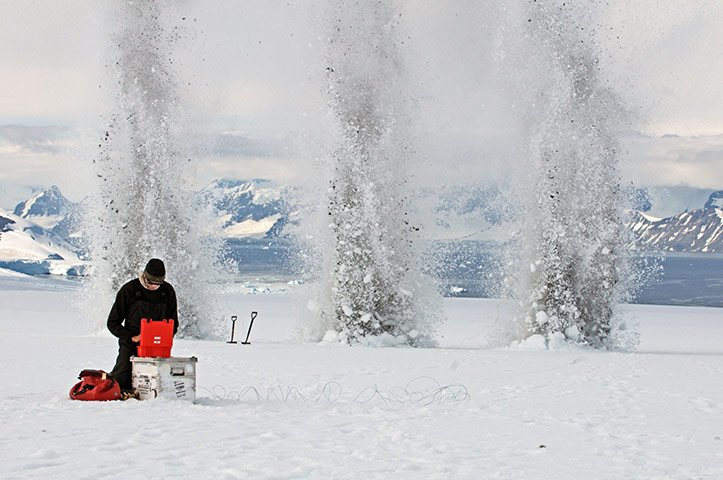
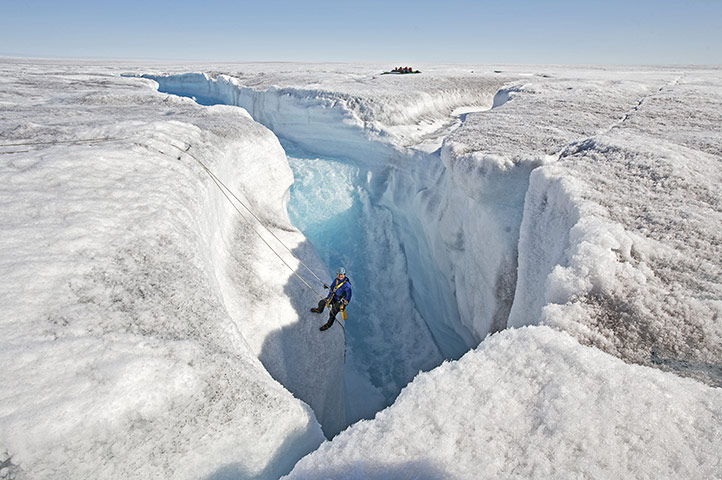
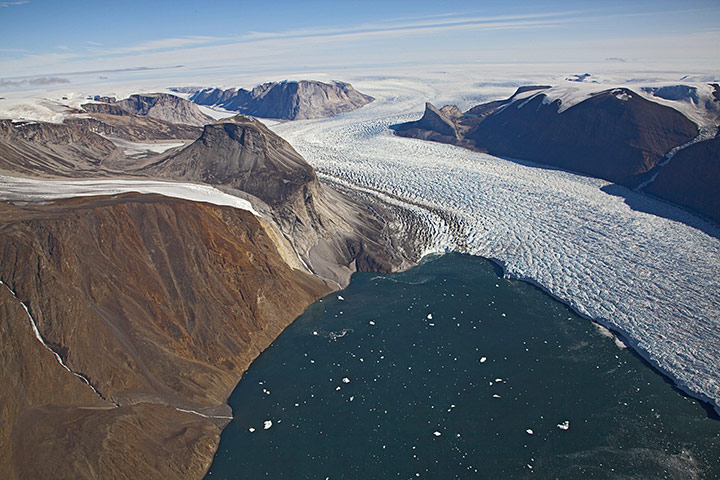
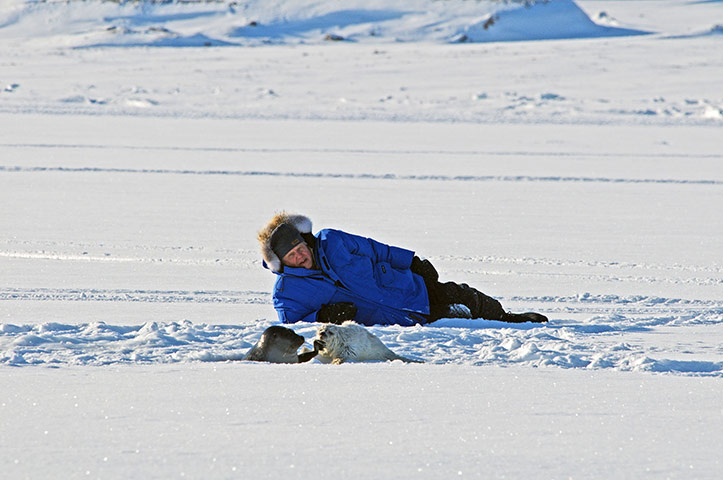
Sir David Attenborough with an anaesthetised polar bear, Svalbard. This bear was darted from a helicopter by a team led by Dr Jon Aars from the Norwegian Polar Institute as part of a long-term monitoring programmePhotograph: BBC/BBCUntil 2007 mother walruses in north-west Alaska and north-east Russia were always known to have their calves on ice floes. Since 2007, however, there has been so little ice on the surface of the Arctic Ocean that the walruses have been forced to bring their calves to land. Haul-outs of many thousands of animals have been seen on both sides of the Bering Strait. It spells trouble for the walruses, first because many young animals get crushed to death, but also because the adults have to swim further to find their feeding grounds off-shorePhotograph: BBC/BBCMatt Swarbrick at the top of a thawing waterfall on the Hay River in the Canadian north-west territoryPhotograph: Mark Linfield/BBCDavid Iqaqrialu records ice conditions near his home in the Canadian village of Clyde River on Baffin Island. Iqaqrialu is helping to record data on a specially adapted GPS system, developed by Canadian ice scientistsPhotograph: Elizabeth White/BBCDavid Iqaqrialu with is dog team, Clyde River. Dogs are a slower form of transport than snowmobiles but their fuel is a lot cheaper. They help to keep travellers safe by feeling for weak ice underfootPhotograph: Elizabeth White/BBCThe glaciologist Andy Smith of the British Antarctic Survey demonstrates his technique for studying the underside of the Antarctic ice sheet. Explosive charges generate a shock wave which travels through the ice and bounces back from the rock below. Instruments record the echoes that bounce back and help Smith to map the underside and determine the composition of the substrate Photograph: Dan Rees/BBCThe camerawoman Justine Evans abseils into a moulin on the Greenland ice sheet. A moulin is a gigantic crack in the ice down which meltwater tumbles in the summer months. Scientists are interested in studying where this water goes, because it is believed to be acting as a lubricant, causing the ice sheet to slide more quickly towards the seaPhotograph: Vanessa Berlowitz/BBCAn aerial view of Rinks glacier on the west coast of Greenland. This is one of a number of glaciers that has doubled or even tripled in speed in the past decade. This is in response to a dramatic increase in air temperature over Greenland of 2C Photograph: Vanessa Berlowitz/BBCSir David Attenborough watches a ringed seal mother and pup, Svalbard. Ringed seals are the favoured prey of polar bears and pups are usually hidden away in lairs under the ice. Unusually low snowfall in the previous winter meant that the pups in this frozen fjord were exposed on top of the ice and hence particularly vulnerable to predatorsPhotograph: Dan Rees/BBC
Sign up to read this article
Read news from 100’s of titles, curated specifically for you.