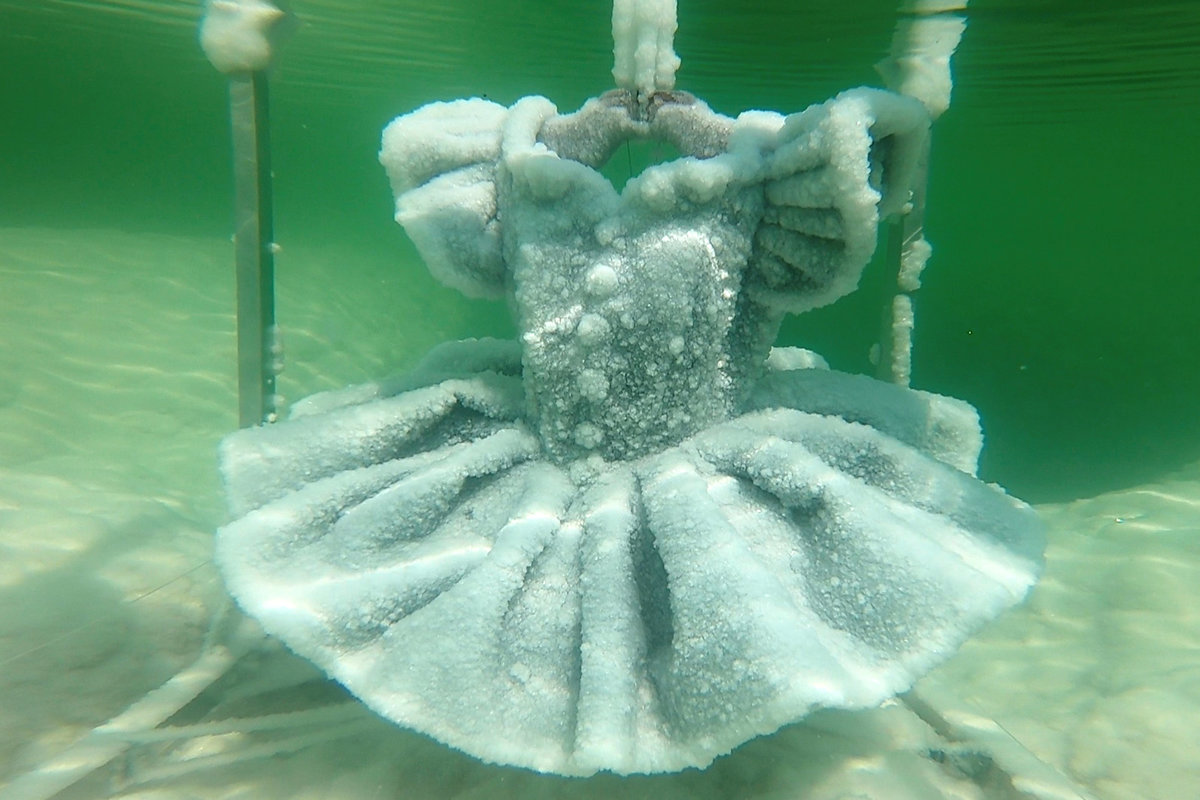
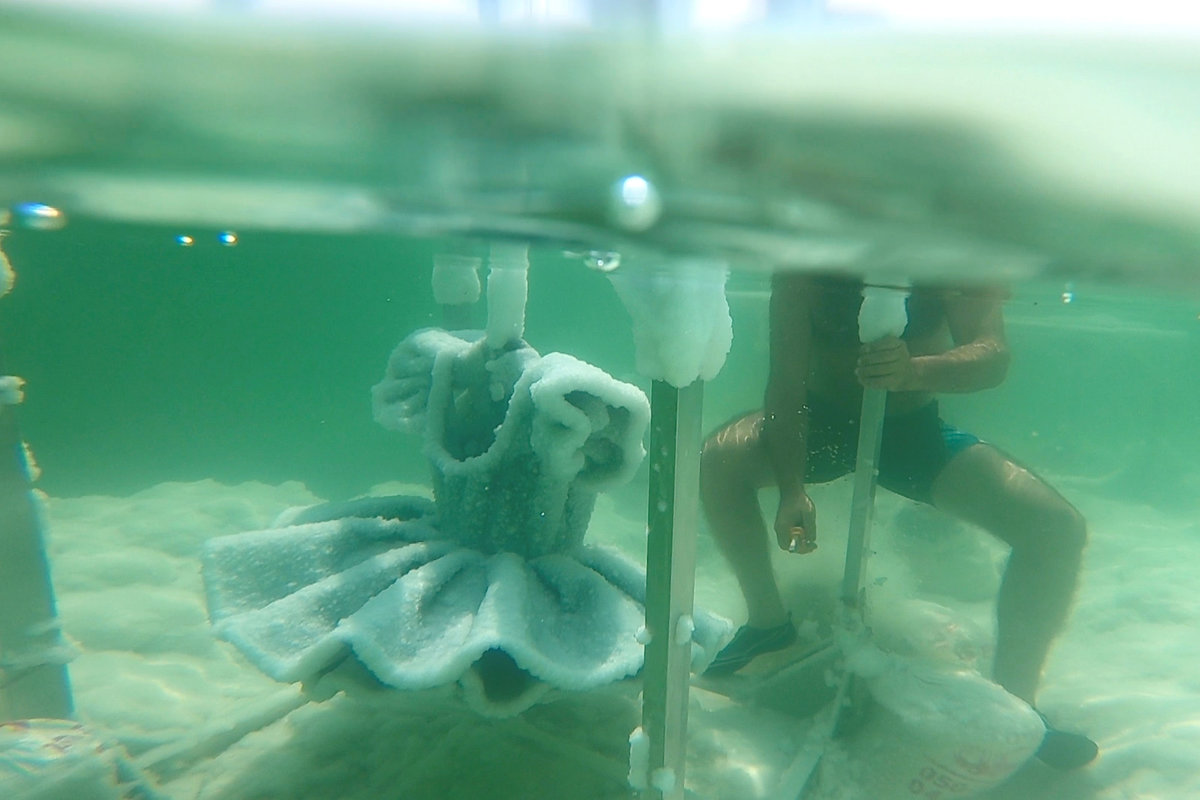
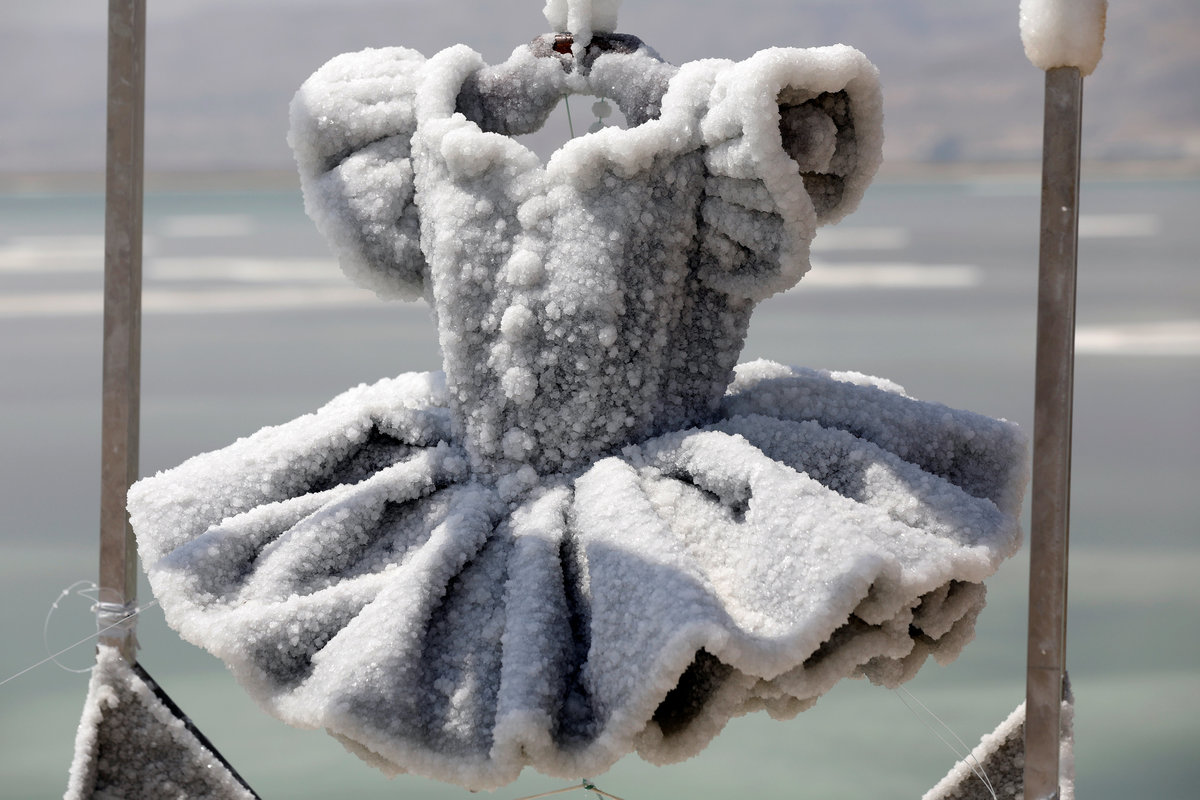
One of Israeli artist Sigalit Landau's pieces, a ballerina's tutu covered in salt crystal formations, is seen submerged in the hyper-saline waters of the Dead Sea, Israel August 30, 2018, in this still image taken from a video. REUTERS TV/ via REUTERS
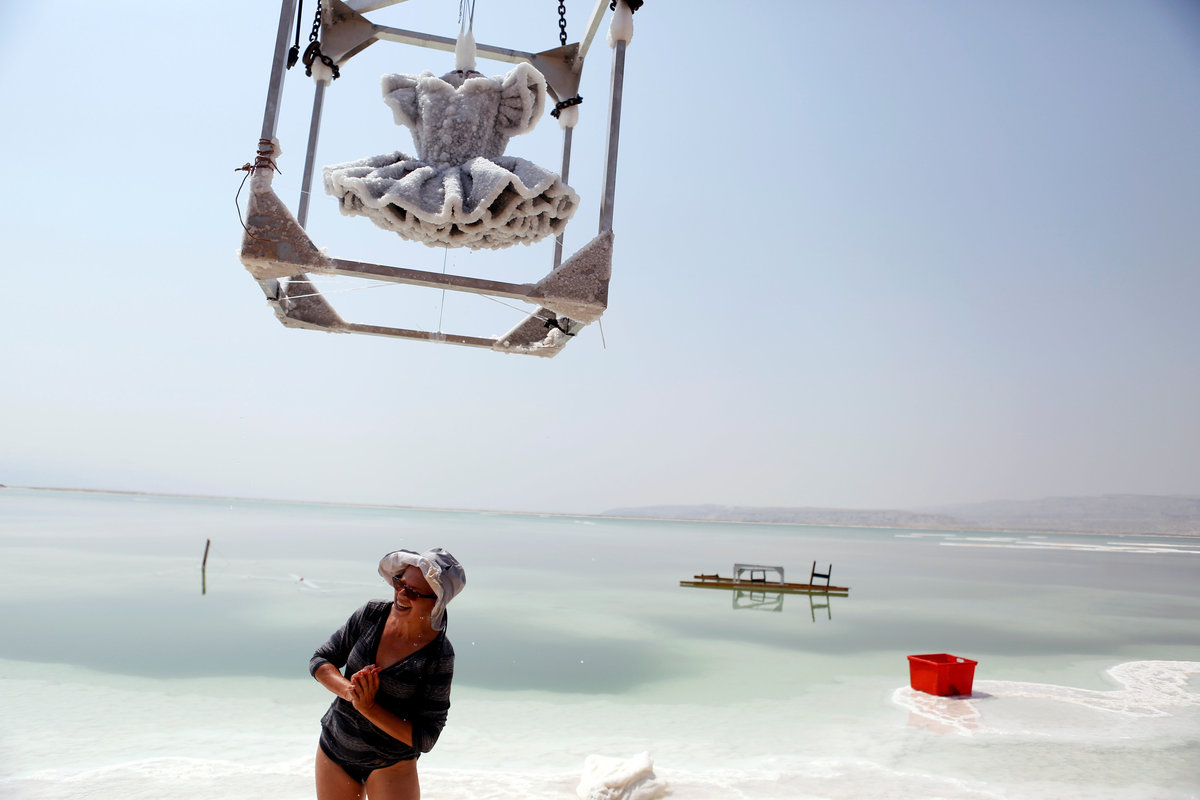
DEAD SEA, Israel (Reuters) - A ballerina's tutu, submerged in the Dead Sea and "frozen" by accumulated layers of salt into a 200 kg (440 lb) crystal-like sculpture, will soon go on international display, part of a unique artistic project at the lowest point on the planet.
Israeli artist Sigalit Landau, 49, has used the high salinity that makes aquatic life in the Dead Sea impossible to create a collection of shiny white sculptures that seem to come out of a fairy tale.
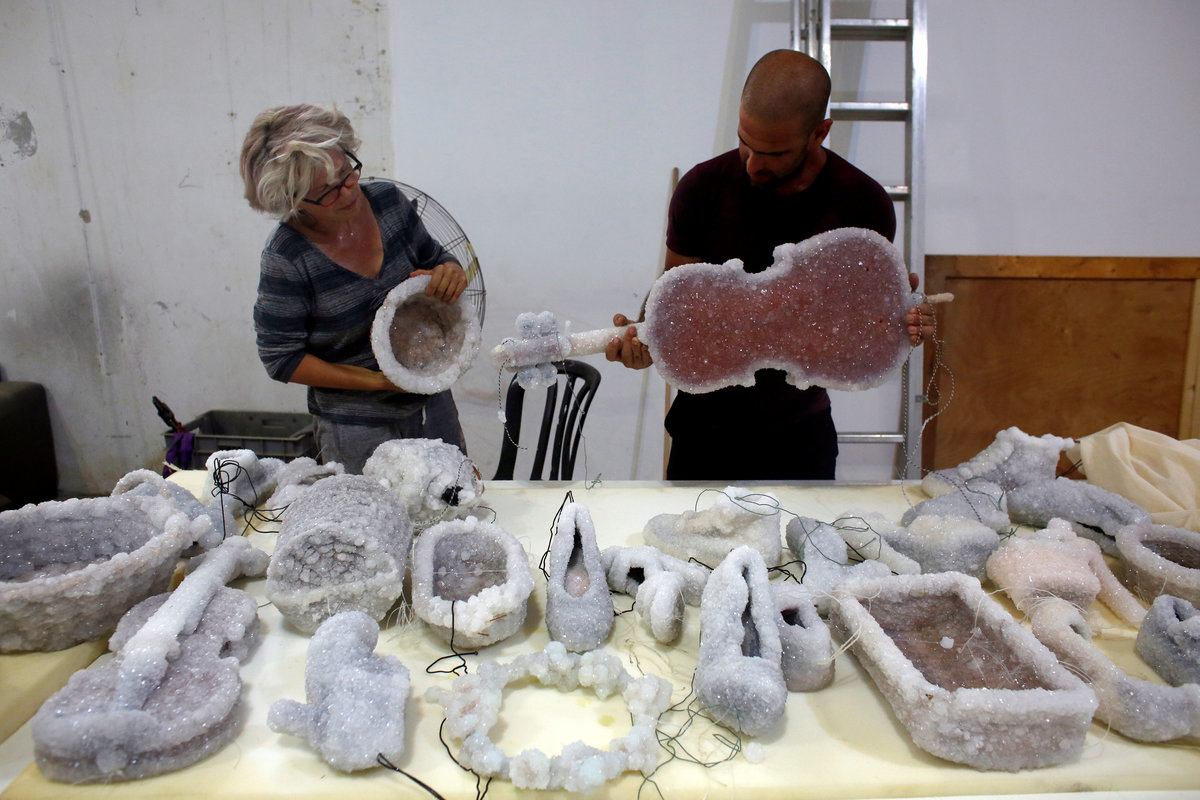
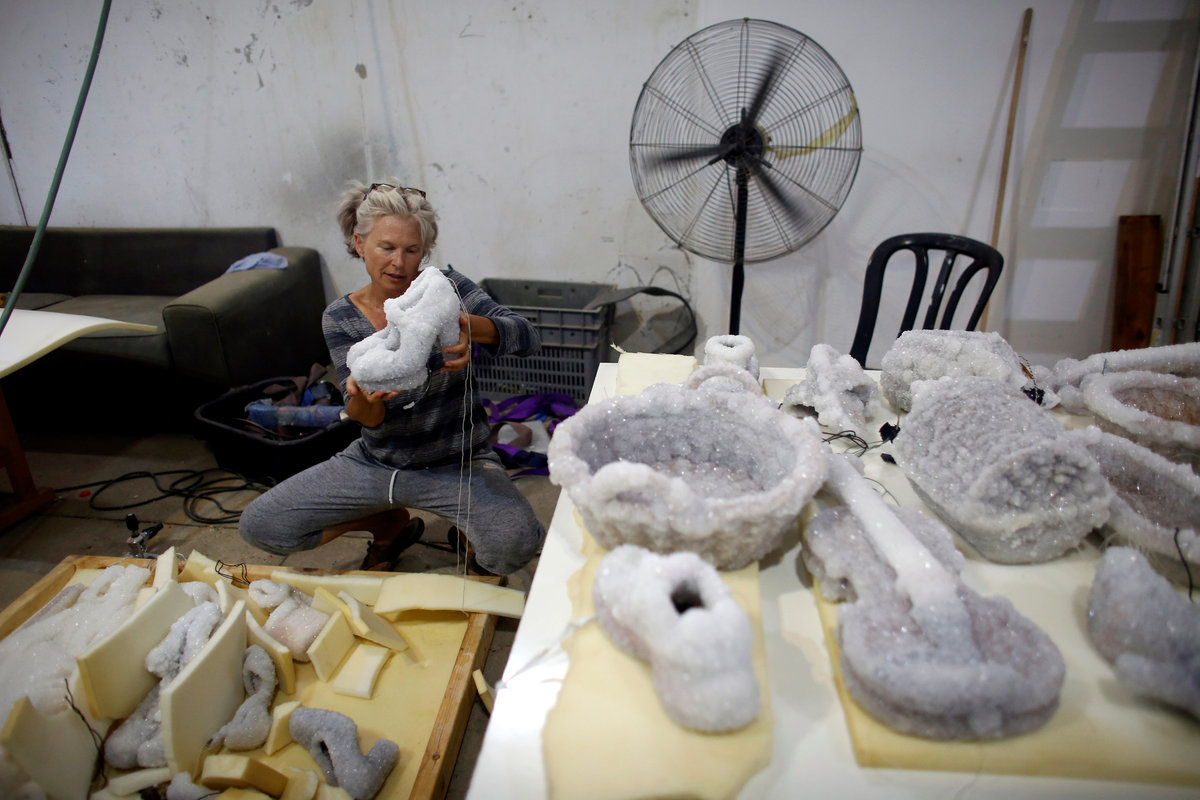
They include a ballet dancer's costume and shoes as well as musical instruments.
Israeli artist Sigalit Landau (L) and her partner Yotam, look at some of her art pieces, objects covered in salt crystal formations after they were removed from the hyper-saline waters of the Dead Sea, at Landau's studio in Kibbutz Almog, Israel August 30, 2018. REUTERS/Nir Elias
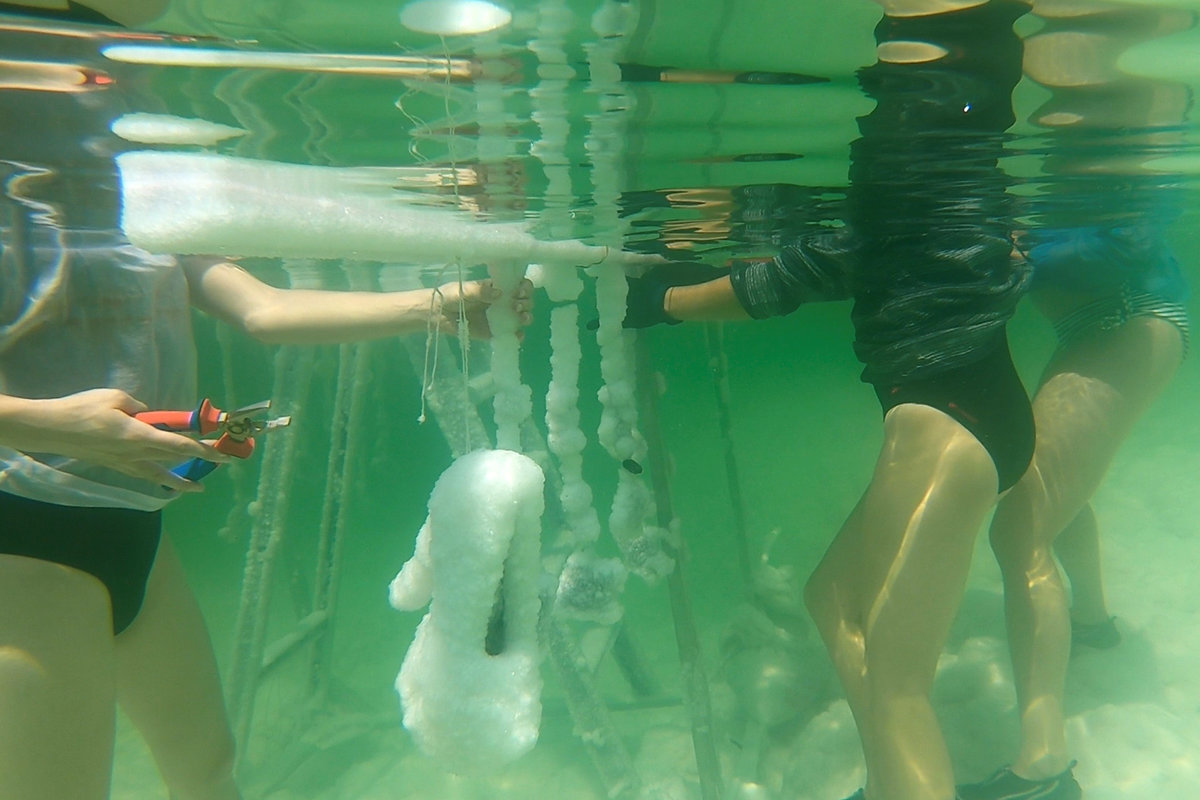
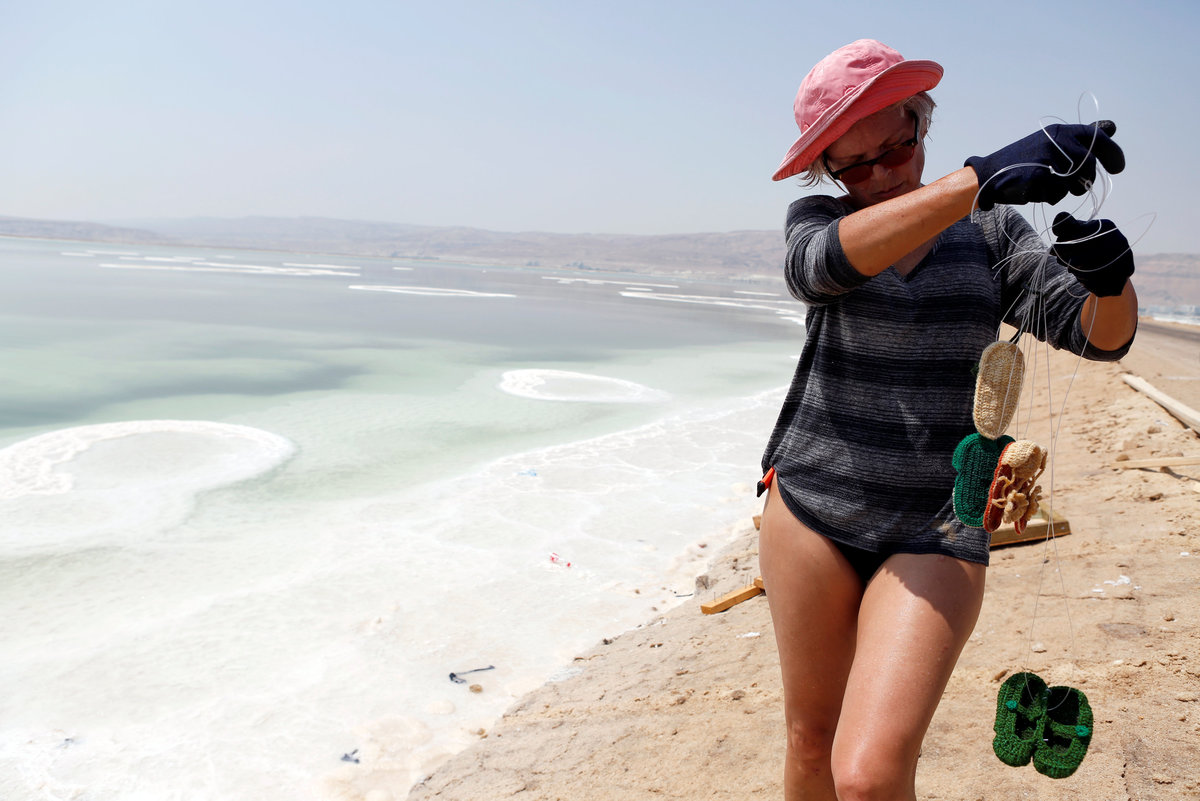
Landau and her team secure their submerged objects with metal frames, weights and strong cords. She said she selects them based "mainly (on) memories and materials which I'm attracted to, but also that the sea really likes".
The artist, who has visited the Dead Sea regularly since childhood, said she embarked on the project after noticing the crystal formations along its shores that "happen spontaneously".
Landau has been creating the sculptures for the past 15 years at the Dead Sea, a site that has been popular for millennia among health seekers and tourists who come to float in its mineral-rich waters.
One of Israeli artist Sigalit Landau's pieces, a shoe covered in salt crystal formations, is released from its anchorage in the hyper-saline waters of the Dead Sea, Israel August 30, 2018, in this still image taken from a video. REUTERS TV/ via REUTERS
Wearing straw hats and long sleeve tops to protect them from the sun and temperatures that can reach 46 degrees Celsius (115 degrees F), Landau and her team examine each item. Some, she said, crystalize quickly while others take more time, depending on the heat.
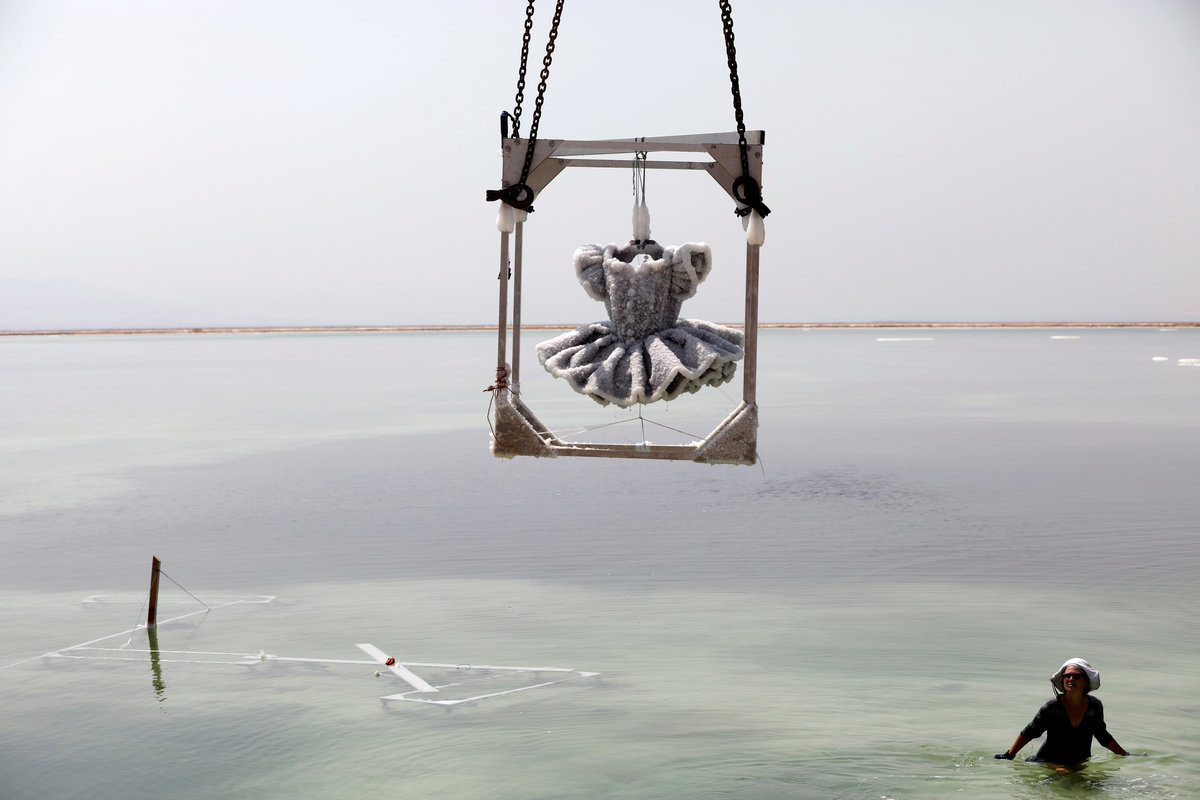
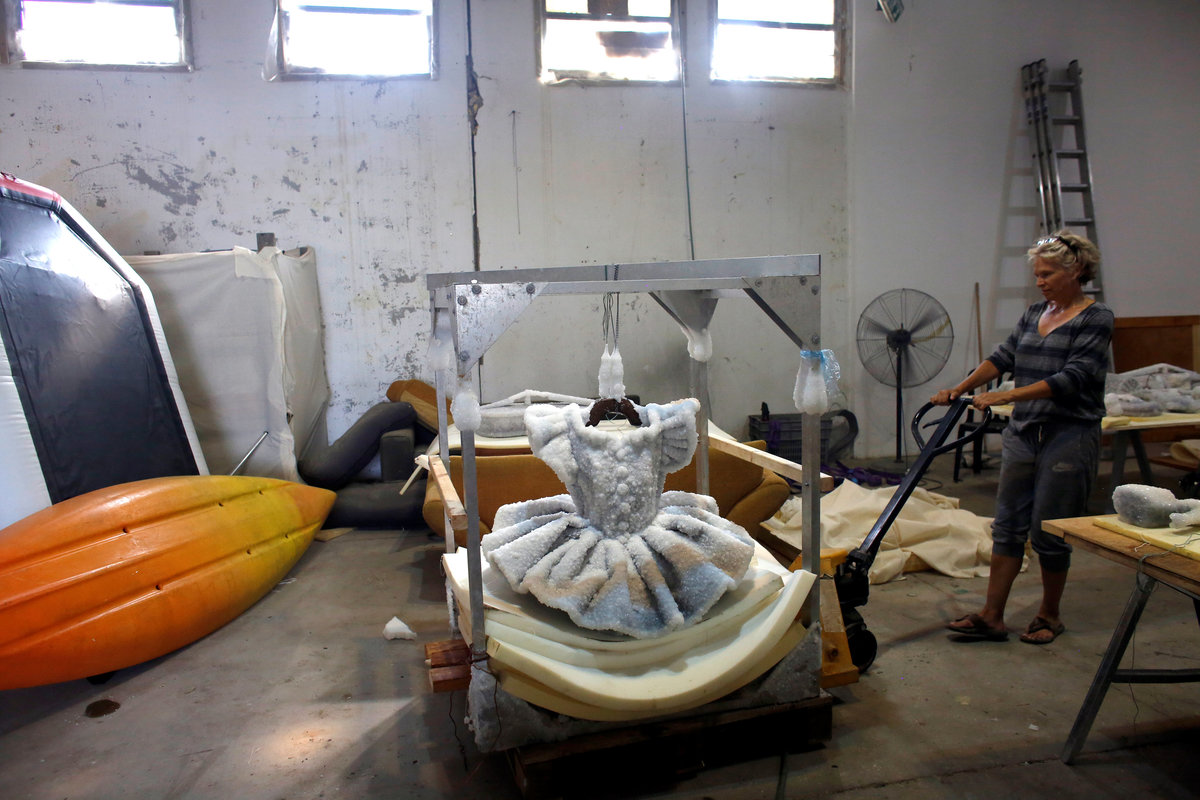
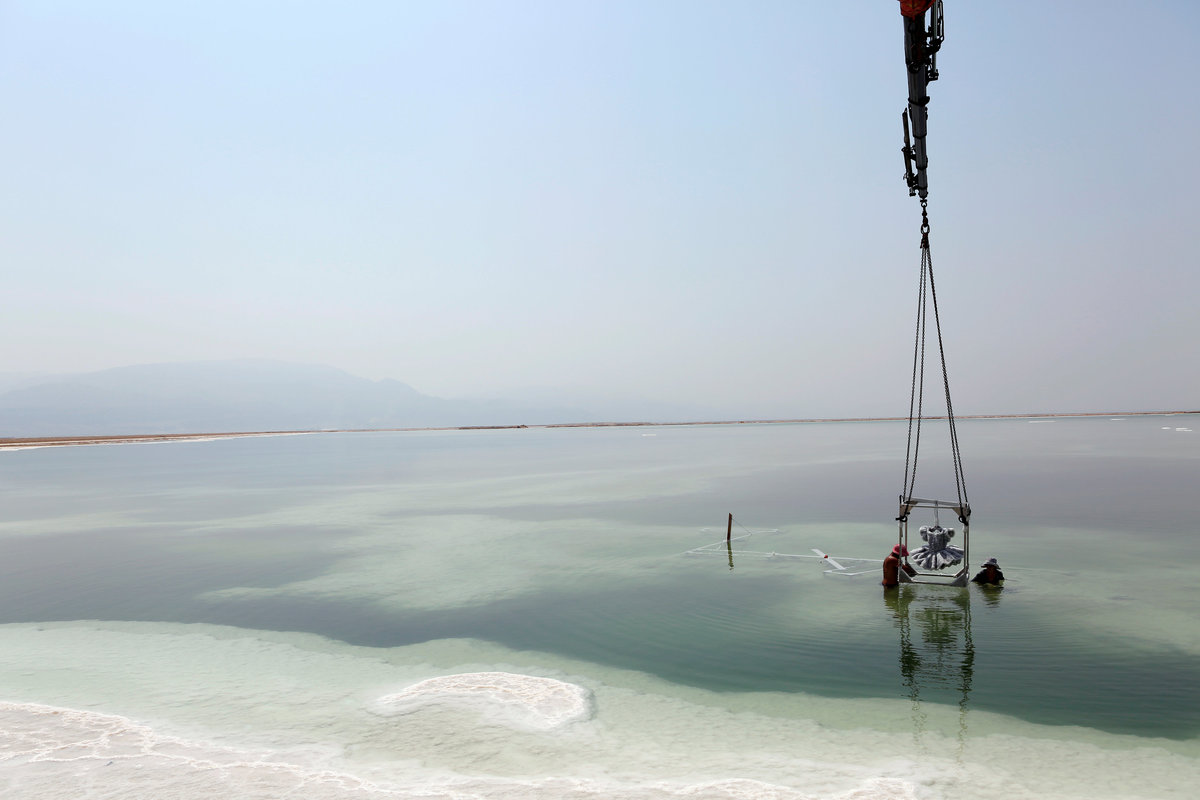
The Jerusalem-born artist and her team regularly document the process before and after the items are extracted, either by hand or by crane, and brought to a nearby hanger where a collection of sculptures is preserved.
Her new works will go on display in the Museum Der Moderne Rupertinum in the Austrian city of Salzburg next year as part of a project entitled "Salt Years".
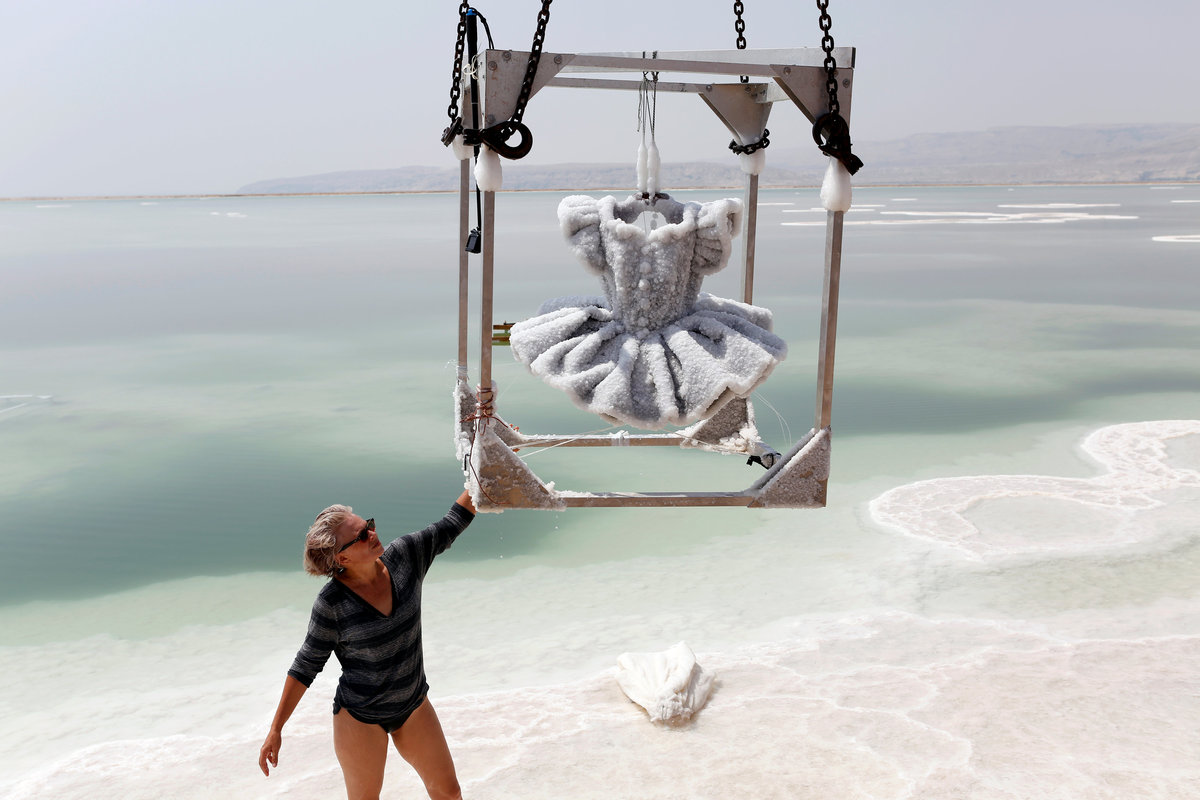
Israeli artist Sigalit Landau looks up at her artwork, a ballerina's tutu covered in salt crystal formations as it is removed from the hyper-saline waters of the southern Dead Sea, Israel August 30, 2018. REUTERS/Nir Elias
Landau is publishing a book about her project next year.
(Reporting by Elana Ringler; Editing by Jeffrey Heller and Gareth Jones)
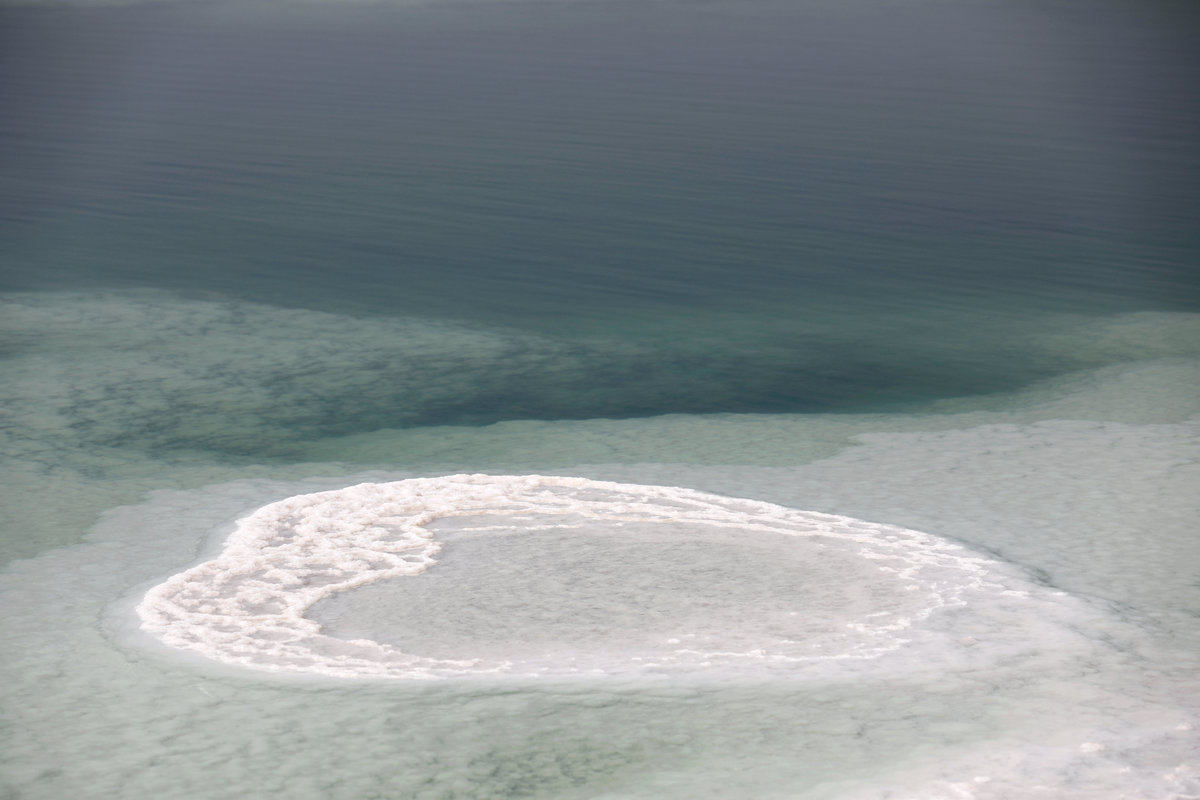
A man helps remove one of Israeli artist Sigalit Landau's pieces, a ballerina's tutu covered in salt crystal formations, from it's anchorage at the bottom of the Dead Sea, Israel August 30, 2018, in this still image taken from a video. REUTERS TV/ via REUTERSIsraeli artist Sigalist Landau's pieces, objects covered in salt crystal formations after they were removed from the hyper-saline waters of the Dead Sea, are displayed at her studio in Kibbutz Almog, Israel August 30, 2018. REUTERS/Nir EliasIsraeli artist Sigalit Landau holds onto a metal frame containing her artwork, a ballerina's tutu covered in salt crystal formations, as it is removed from the hyper-saline waters of the southern Dead Sea, Israel August 30, 2018. REUTERS/Nir EliasIsraeli artist Sigalit Landau looks at her art piece, a ballerina's tutu covered in salt crystal formations after it was removed from the hyper-saline waters of the Dead Sea, at her studio in Kibbutz Almog, Israel August 30, 2018. REUTERS/Nir EliasIsraeli artist Sigalit Landau looks at some of her artworks, objects covered in salt crystal formations after they were removed from the hyper-saline waters of the Dead Sea, at her studio in Kibbutz Almog, Israel August 30, 2018. REUTERS/Nir EliasA ballerina's tutu covered in salt crystal formations is removed from the Dead Sea after it was submerged in the hyper-saline waters over a period of time, by Israeli artist Sigalit Landau, in the southern Dead Sea, Israel August 30, 2018. REUTERS/Nir EliasIsraeli artist Sigalit Landau laughs as a metal frame containing her artwork, a ballerina's tutu covered in salt crystal formations, is removed from the hyper-saline waters of the southern Dead Sea, Israel August 30, 2018. REUTERS/Nir EliasIsraeli artist Sigalit Landau (R) stands next to a metal frame containing her artwork, a ballerina's tutu covered in salt crystal formations, as it is removed from the hyper-saline waters of the southern Dead Sea, Israel August 30, 2018. REUTERS/Nir EliasIsraeli artist Sigalit Landau holds new items before she submerges them in the hyper-saline waters of the Dead Sea to create her art pieces, objects covered in salt crystal formations, on the shore of the southern Dead Sea, Israel August 30, 2018. REUTERS/Nir EliasA general view shows salt formations in the Dead Sea, Israel August 30, 2018. Picture taken August 30, 2018. REUTERS/Nir Elias
Sign up to read this article
Read news from 100’s of titles, curated specifically for you.