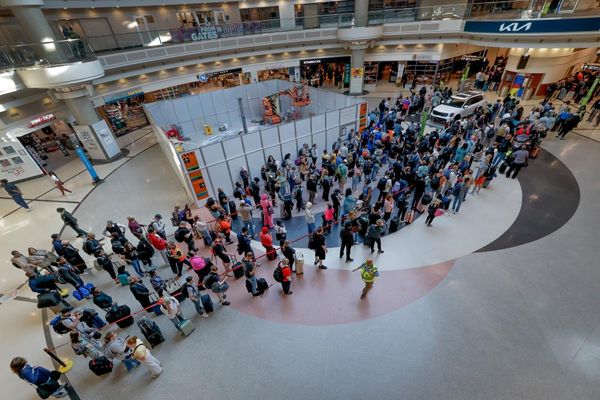
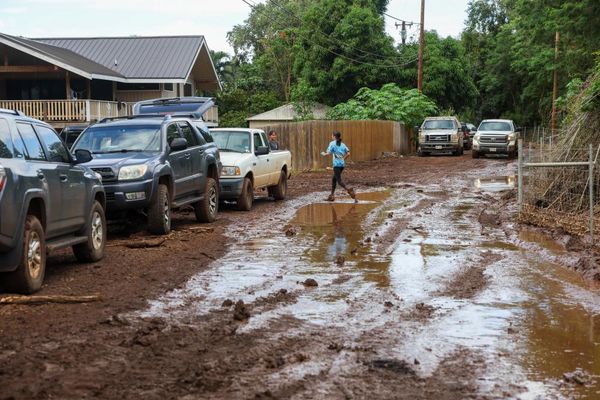
As temperatures soar across southern France, the rest of the Mediterranean basin has been suffering from extreme weather such as wildfires in Italy, Greece and Algeria, to flooding in Turkey.
The climatic variations appear to bear out a damning UN report that says irreversible climate change is happening much faster than predicted.
In Greece, hundreds of houses and businesses have been destroyed and around 65,000 hectares of forest destroyed by the conflagrations since the start of August.
Relief finally arrived with rain on Thursday on Evia, Greece's second-largest island and the scene of some of the worst blazes.
Fire officials say that forest fires on Evia and in the mainland Western Peloponnese and Northern Attica regions remained under control but that many firefighters had stayed on in the areas to fight possible flare-ups.
On Friday, the Greek Prime Minister, Kyriakos Mitsotakis, appointed a new minister in charge of recovery from natural disasters in a bid to defuse growing anger over the struggle to curb wildfires that have charred thousands of hectares of forest.
Mitsotakis this week apologised for delays in the firefighting effort while defending his government's action and authorising a €500 million relief package.
The new deputy minister, Christos Triantopoulos, will be responsible for aid and recovery from natural disasters, a post created to compensate businesses and families hard hit by recent blazes.
With a string of deadly wildfires burning in countries from Turkey to Algeria amid record summer heatwaves, extreme weather events caused by climate change have become a central policy challenge to governments across the Mediterranean.
Deadly flooding in Turkey
In northern Turkey, search-and-rescue crews recovered 10 more bodies overnight, raising the death toll from severe floods and mudslides that have struck the region to 27.
Dozens more are still missing.
Torrential rains pounded Black Sea coastal provinces on Wednesday, causing the flooding that demolished homes and bridges and swept away cars.
Helicopters lifted dozens of people to safety from rooftops, while others were rescued on boats.
More than 1,700 people have been evacuated across the region, with President Recep Tayyip Erogan announcing on Thursday that at least 4,500 personnel, 19 helicopters and 24 boats were involved in the search-and-rescue operation.
The disaster flooding struck as firefighters in south-western Turkey have been working to extinguish a wildfire in Mugla province, an area popular with tourists along the Aegean Sea.
The blaze, which was brought under control on Thursday, was one of more than 200 wildfires raging in Turkey since 28 July.
At least eight people died and thousands of residents have fled their homes.
Scientists and weather-watchers say there is little doubt that climate change from the burning of coal, oil and natural gas is driving more extreme events, such as heatwaves, droughts, wildfires, floods and storms.
Such calamities are expected to happen more frequently as the planet warms.
VIDEO: 🇮🇹 Italian firefighters have been working since early Thursday morning to extinguish wildfires affecting rural areas of the Italian island of Sardinia and blazes that threatened a carriage museum in Calabria pic.twitter.com/dM8DvA4Wja
— AFP News Agency (@AFP) August 12, 2021
Italy's burning
Firefighters throughout southern Italy on Thursday battled hundreds of fires that have killed four people, fuelled by the unrelenting temperatures enveloping southern Europe.
Fire departments reported more than 500 blazes as an anticyclone dubbed "Lucifer" swept across Italy, sending temperatures soaring and causing what is believed to be a new European record of 48.8°Celsius in Sicily on Wednesday.
The heatwave across vast swathes of the Mediterranean region in recent days began to shift west on Thursday, with many of France's southern areas put under a high temperature alert.
Spain and Portugal went on alert for wildfires as three new blazes broke out in Spain's north, even as flames continued across northern Algeria and Tunisia.
The searing heat is due to continue in Italy for several days and risks fuelling fires that have already plagued much of the country's south in recent weeks, notably in Sicily and the region of Calabria.
Italy's Prime Minister, Mario Draghi, has said the government will put in place a relief programme for people and businesses affected. A special plan for reforestation and securing the territory will also be implemented.
Arrests for arson in Algeria
Meanwhile, the authorities in Algeria have arrested 22 people suspected of being behind the most devastating wildfires in the country's history that killed 65 people.
President Abdelmadjid Tebboune called the fires a disaster and called for the preservation of national unity.
Dozens of forest fires have hit mountainous areas in northern Algeria since Monday, mainly in Tizi Ouzou, the main province of the Kabylie region to east of the capital, Algiers.
"Some fires have been caused by high temperatures but criminal hands were behind most of them," Tebboune said in a live televised speech on state television on Thursday. "We have arrested 22 suspects, including 11 in Tizi Ouzou. Justice will perform its duty."
At least 28 military personnel were among the dead as Algeria deployed the army to help firefighters contain the blazes that claimed several houses in forested areas.
This comes as wildfires are burning across the globe from California to Hawaii, Siberia to Japan.