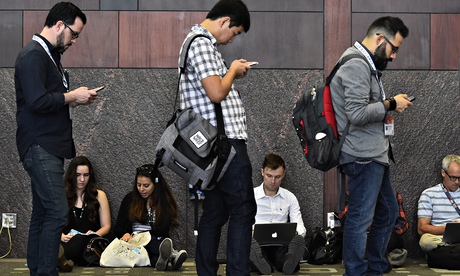
Twenty-one years ago, film and interactive technology exhibitions were added to the South by South West music festival, which had been running since 1987. Every year, detractors accuse the festival of selling out, of being too dominated by brands, and yet every year it gets bigger, busier and even more eclectic.
For technologists, SXSW seems like the best way to get an intense, exciting, almost overwhelming snapshot of all the issues that matter right now. Where do you start in a festival of 72,000 people?
What women in tech deal with
“Gamergate” – the online campaign that tried to silence women and liberal thinking in the gaming community - was conspicuously absent from the vast programme agenda, which indicates the maturity of the curators. Far more important was the discussion about the lack of women in Silicon Valley and the inherent misogyny of the internet.
It was impossible not to be bowled over by Nicole Sanchez, the founder of hair-extensions company Vixxenn, who said that, despite having two degrees from Harvard and working harder and longer than any of her peers, she still had trouble finding funding from an investment sector.
They instinctively look for people like them – for the next Mark Zuckerberg. The problem is less explicit sexism and more unconscious structures and nuance in the way the system works, she said.
We know about the pay gap and about how women are judged differently, said Danika Laszuk of wearable-tech maker Jawbone; where men are “assertive”, women are “aggressive”. And while we’ve heard that before, it wasn’t until a member of the audience started talking that it really came home. Fighting back tears and clearly terrified of speaking in front of people, a woman said that she was the only programmer in a team of men, and that she was repeatedly told that she was hostile, that she didn’t talk to people enough, and that she didn’t make eye contact. “And that’s how they perceive me. You, on the panel, are in positions of leadership. What would you do in my position?”
Bionic pancreas, anyone?
It has been said for years that a cure for diabetes is five years away. Now there is finally some good news. A pioneering project led by Boston University has developed an artificial pancreas that can constantly monitor blood sugar levels using a smartphone, and automatically administer either insulin to lower blood sugar or glucagon to raise it. It might be a solution rather than a cure, but at least it should be on the market by 2017.
Here come the jihadi hackers
It turns out that the global, free tools that we use to photograph our dinner and sell shoes are just as powerful for promoting global terror campaigns. Isis is disrupting the accepted processes of war and the nation-state power structure, and social media is amplifying its scope. Without the internet, Isis would be limited to pamphleteering and graffiti.
Russell Brand didn’t show up
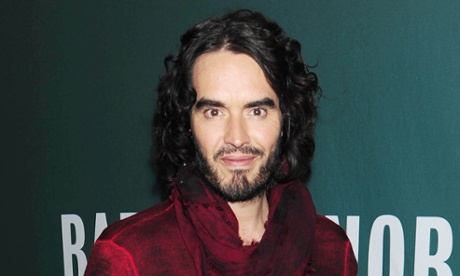
Russell Brand has had a rocky relationship with the film director Ondi Timoner, who has spent seven years making a documentary about the comedian-revolutionary-gadabout.
Despite initially agreeing to an interview at the world premiere in Austin on Friday, Brand decided to pull out at the last minute. The news surely delighted those seeking ever more proof of his flakiness. But there was a note of melancholy in his statement.
The film, he explained, tracked a part of his life he’d rather not live through again. “Over the sprawling time period in which we’d been in production I’d transitioned from an attention-seeking missile, exploding into exhibitionism at every turn, into a man who, while still a show-off, was becoming disillusioned and disconnected from fame, celebrity and all its sticky ephemera,” he said. “I suppose what I didn’t consider was that, in letting go of the film, I was agreeing to be the subject of a biography. Posthumously, this is a great honour but, while you’re alive, oddly intrusive and melancholy.”
The future is dangerous
Technological futures are usually depicted in a utopian glow, explained security expert Nicholas Percoco. Yet a risk analysis of self-driving cars, the telepathic internet of things and autonomous robot doctors reveals how software weaknesses, ethical challenges and privacy questions all need to be addressed before the technologies proliferate.
In the 2060s, will “mind farms” harvest the energetic labour of workers in the developing world, at the expense of their wellbeing and for the benefit of corporations – much like mobile phone manufacturers exploit economic disadvantage in those countries now? In an “elastic transportation system”, what happens when your self-driving car gets the blue screen of death – is it curtains for you, too?
Tesla was held up as an example of a future-technology firm working with expert, external hackers to find flaws in its software. That’s the future Percoco wants to see: bounties for hackers who find bugs, and initiatives like I Am The Cavalry, a hacker collective that works openly to find flaws and bugs in software for the internet of things. In a tech utopia, it’s the hackers who will save us.
Porn is becoming virtually real
Oculus Rift, the virtual reality headset now owned by Facebook, is creating ripples of pleasure in the adult entertainment industry. Anyone who has tried Oculus will know how completely absorbing the environment is – and how perfect for porn. Gone are the days when prototype VR would leave players nauseous; now, companies are combining Oculus with Leap Motion, a gesture-recognition tool that replaces buttons and controllers with hand movements – we’ll let you imagine which hand movements. Then there’s “haptic feedback”, or vibrating devices … Those in the industry say VR will disrupt porn as much as the internet disrupted the VHS market.
Games belong in museums
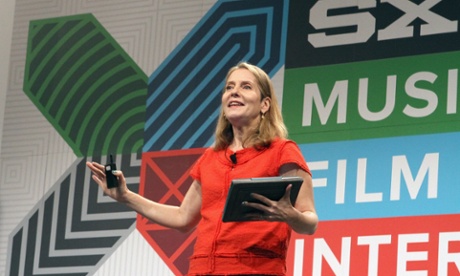
If there’s a frontline in the culture wars, Paola Antonelli of the Museum of Modern Art is on it. Antonelli has rescued video games from galleries of 80s nostalgia and curated them, rightly, as objects of interactive design. The designer of Moma’s original website in 1994, Antonelli explained that design has moved on from solving problems to finding problems, exploring the opportunity in the crossovers between design, technology and science. That might mean an installation made by silkworms, or blocks of Arctic ice that melt in front of the viewer, or an empathising menstruation machine for men.
McDonald’s misses the point
It would be fair to say that Austin contains more than its share of liberal-minded Texans, with a thriving alternative scene and more than a dash of counterculture. No surprise, then, that SXSW is always scrutinised for commercialisation – and that does appear to level up a little each year.
There are no complaints about sponsor Miller Lite, which provides festivalgoers with a free beer every day, but a few eyebrows were raised at the presence of McDonald’s – which, 14 years after Eric Schlosser’s jaw-dropping book Fast Food Nation, still represents unethical corporate America to much of the alternative movement.
The company didn’t help matters by initially asking bands to play for free at its music showcase and throwing in some free burgers. After a backlash, it decided to pay them instead. But way to go to reach the “creative class” of millennials, McDonald’s.