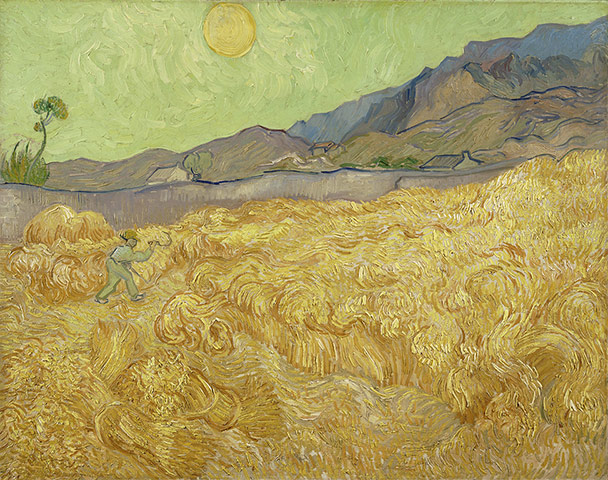
This painting was produced during a period of hospitalisation near Arles. The positivity of the vivid colours and the dancing, golden wheat is undermined by the heavily symbolic presence of the Reaper, toiling beneath a sickly sky. In a letter to his brother, Van Gogh proposed that ‘humanity might be the wheat that he is reaping’ Photograph: Van Gogh Museum, Amsterdam
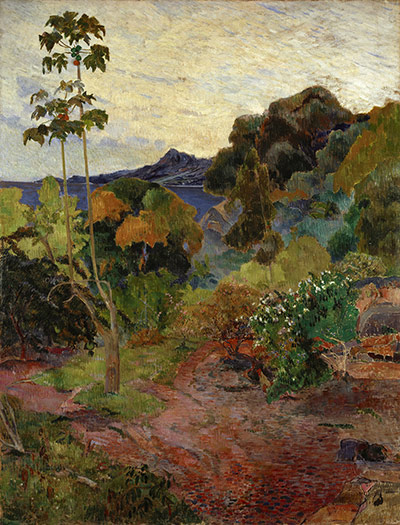
Gaugin painted this in 1887, a few years before he found his tropical utopia on Tahiti. His idealistic treatment of the Martinique landscape signifies early enthusiasm for what he saw as a ‘primitive’ paradise, far from the social and economic corruption of Europe. Fear of the modern, and the urban, was a common symbolist preoccupation Photograph: National Gallery of Scotland
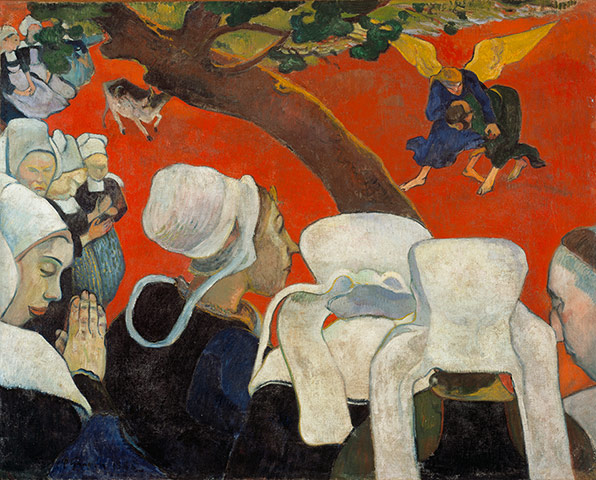
Gaugin’s use of a violent red as the dominant colour in this painting serves to divorce the biblical vision from the reality of the landscape in which it is being played out. This dislocation is further emphasised by the tree that bisects the image, leaving the wrestling figures cut off from the Breton peasants Photograph: Scottish National Gallery
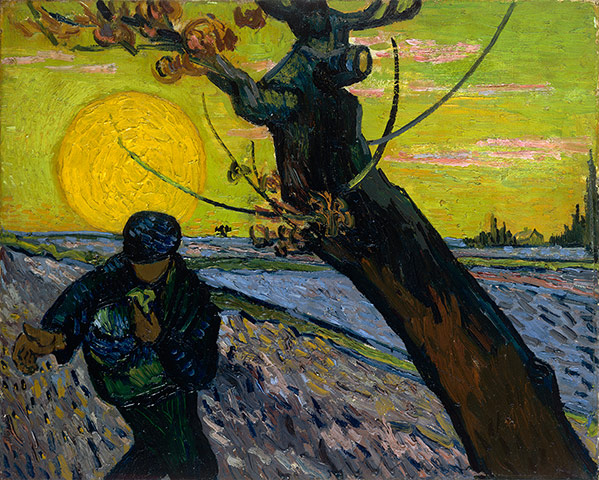
The uneasy green sky bears down upon the sower, threatening the symbol of regeneration. The blue fields look harsh and infertile and the sun is one that gives no warmth, subverting what should be an optimistic scene. This is emotional painting, producing its reaction through the use of improbable colour rather than lecturing subject matter Photograph: Van Gogh Museum Amsterdam
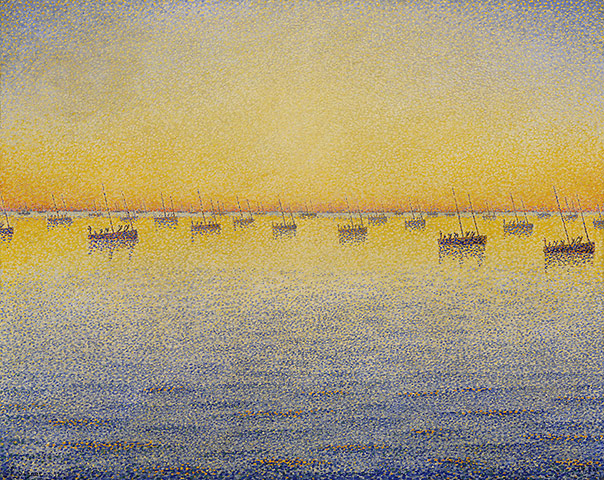
The intense luminosity of this painting comes from the pointillist technique where pure colours are applied, unmixed, in tiny dots. Tones from across the colour spectrum are used, producing a strange, shimmering intensity. This formulaic approach was based more on modern chromatic science than mysticism and symbolism Photograph: Scala / The Museum of Modern Art, New York
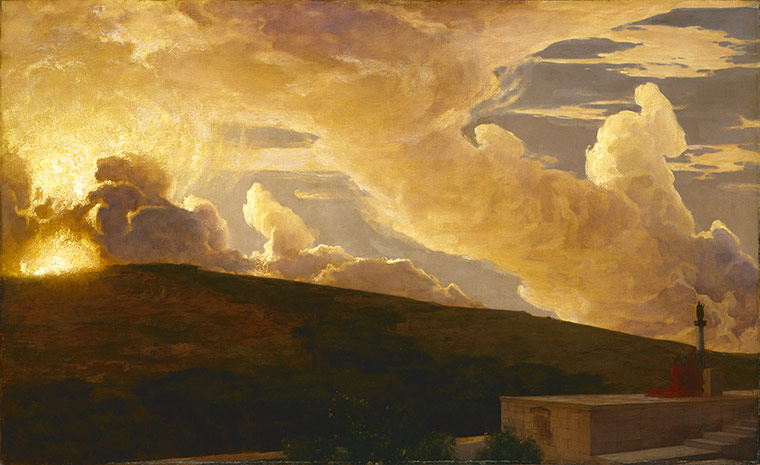
Predominantly a painter of romantic or historic scenes, Leighton shared the symbolist obsession with the sun. ‘Sunlight can never be accessory,’ he wrote, ‘its glory is paramount’ – and it dominates this scene, dwarfing the kneeling figure in the foreground. Leighton was the first painter to be given a peerage, but died the day after its issue Photograph: Leighton House Museum, London, Lent by the Syndics of the Fitzwilliam Museum Cambridge

The artist has suborned reality to the mystical effect given by the layering of light and the towering succession of horizons. Nature seems immense, both in scale and spirit, while the shoreside village appears to be burning in the glare of the light, a metaphor for man’s insignificance in the face of nature Photograph: Thielska Galleriet, Stockholm
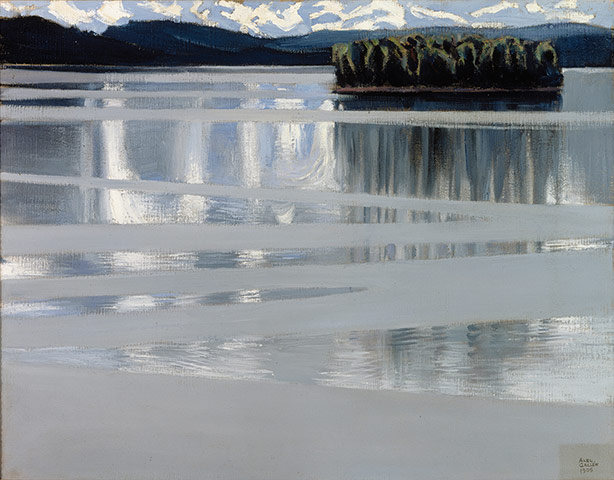
The apparent tranquility of this naturalistic landscape is disturbed by the currents crossing the water and the alarming impenetrability of the dense island. The ripples are supposed to have been made by the boat of Väinämöinen, the legendary bard of Finnish folklore Photograph: Finnish National Gallery / Central Art Archives / Hannu Aaltonen
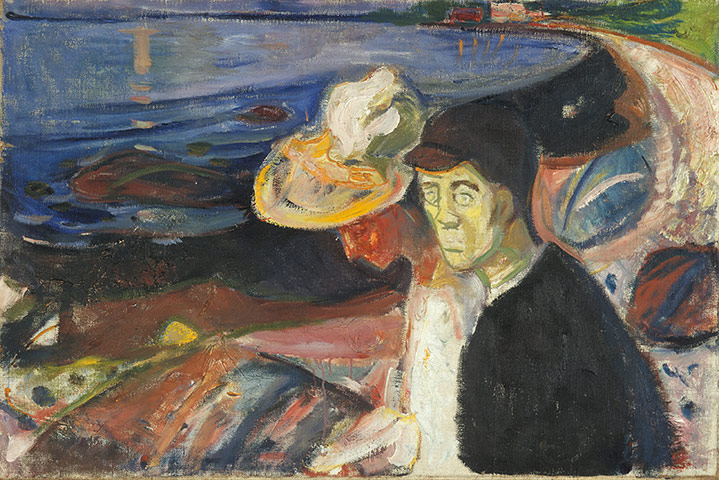
‘Salvation shall come from symbolism’ declared Munch. 'By that I mean art where the artist submits reality to his rule, which places mood and thought above everything and only uses reality as a symbol.’ This dreamlike image is much more about the figures than the landscape, reeking of disquiet, depression and unspoken turmoil Photograph: Munch Museum / Munch-Ellingsen Group / DACS 2012
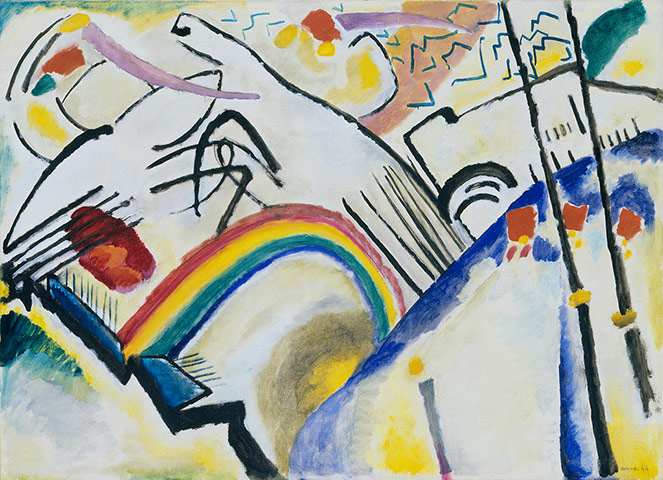
This abstracted painting retains elements of representation. The valley, spanned by a rainbow and with a castle on the right, is clear but the rainbow is flanked by guns and above them are two rearing horses, each carrying a sabre-wielding rider. A restless painting that marks the transition to the modern Photograph: Tate, London 2011