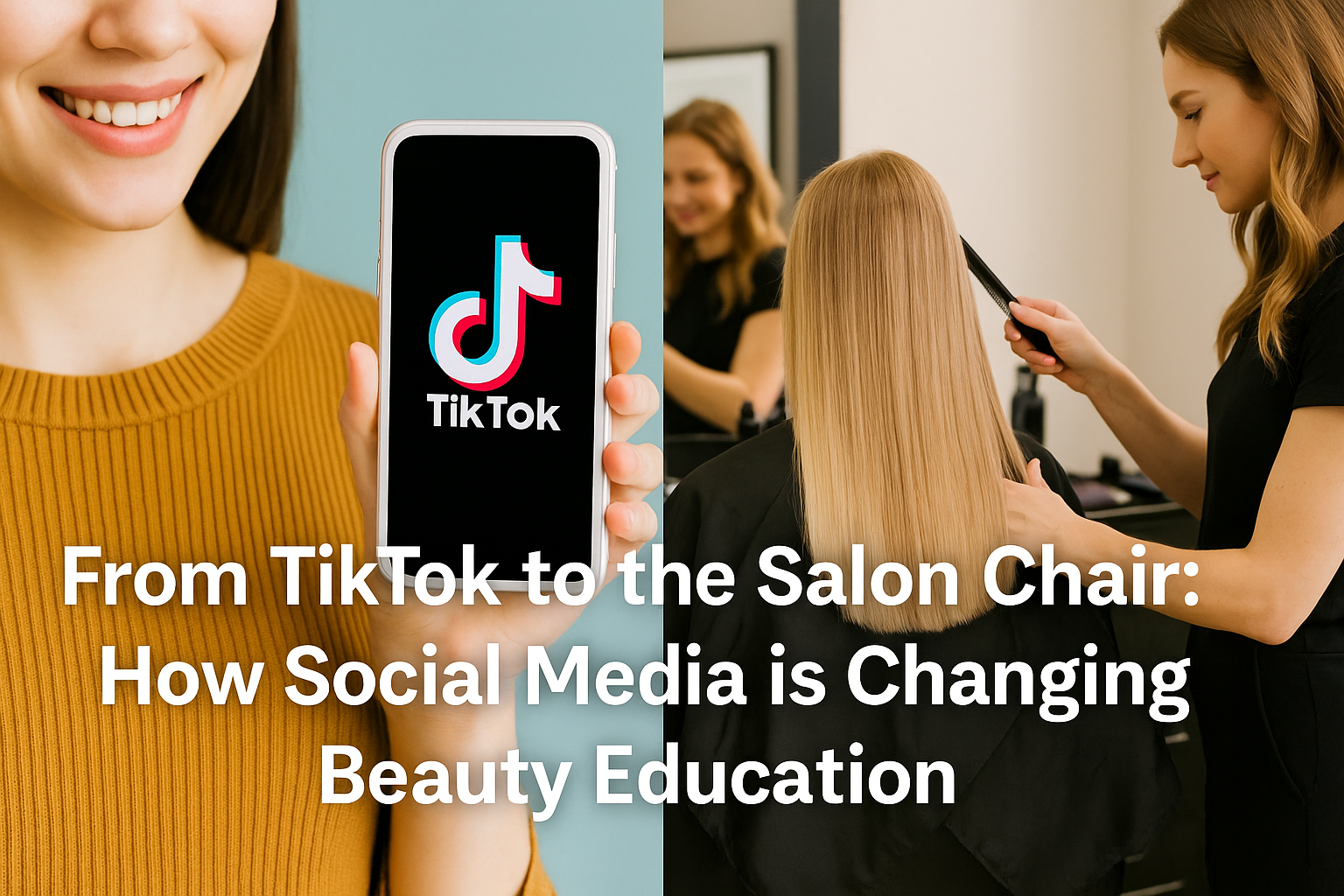
Five years ago, if you walked into a beauty school classroom, you’d see students hunched over mannequins, poring over thick textbooks, and learning techniques passed down from one instructor to the next. Today, those textbooks have competition: TikTok tutorials, YouTube walkthroughs, and viral Instagram hacks are just as likely to influence what’s taught—and learned—as any official curriculum.
The Digital Beauty Boom
Social media has turned beauty education on its head. A 17-year-old in rural Iowa can now learn a trending coloring technique the same day it takes off in Los Angeles or Seoul. The barrier to entry for new trends has disappeared; inspiration and innovation travel at the speed of a scroll.
“It’s wild—sometimes students bring me a TikTok video and ask if we can try what they saw that morning,” says Andrea Martinez, who teaches at a leading beauty academy in Illinois. “We’re constantly adapting our lessons, because the industry is evolving in real time.”
In fact, today’s beauty schools are seeing students arrive with more hands-on experience than ever before. “Some applicants have been practicing braids, color melts, and even nail art they learned entirely from social media,” Martinez adds. “They’re motivated and creative, but sometimes they need help separating the good advice from the risky stuff.”
Classrooms Go Hybrid
Rather than fight the trend, top cosmetology programs are learning to harness it. Instructors encourage students to analyze the science behind a viral hair treatment, test new methods in a safe, supervised environment, and compare the results to traditional techniques.
“We’ll watch a video as a group, then break down what works and what doesn’t,” says Martinez. “Students become more critical thinkers, not just content consumers. That’s a skill they’ll need for their entire careers.”
Industry leaders agree. The National Accrediting Commission of Cosmetology Arts & Sciences (NACCAS) now encourages schools to incorporate digital literacy into their curriculum. “Social media isn’t going away,” says a spokesperson. “Future professionals must know how to spot trends, market themselves online, and engage clients digitally.”
Trends, Pressure, and Performance
Social platforms have democratized beauty, allowing voices from all backgrounds to share their styles and stories. But this flood of content brings challenges, too—especially for students who compare their work to the picture-perfect results they see online.
“It’s easy to get discouraged when your first balayage doesn’t look like it does on Instagram,” admits Jenna Lee, a first-year cosmetology student. “But sharing my progress, and even my mistakes, has helped me connect with other students. We learn together, and that’s pretty powerful.”
Some schools, such as Cosmetology & Spa Academy, actively encourage students to document their learning journeys. “Building a professional social presence is part of their education now,” says Martinez. “We coach them on posting work safely, responding to feedback, and even protecting their mental health online.”
The Rise of “Beautyfluencers”
Perhaps the most dramatic change is the rise of students who double as content creators. These so-called “beautyfluencers” are building real audiences before they ever set foot in a professional salon. Some are even fielding job offers or client inquiries thanks to their online portfolios.
“Last semester, one of my students had a video hit 250,000 views,” says Martinez. “By graduation, she had bookings lined up and brands reaching out. That wouldn’t have happened a few years ago.”
For traditional beauty schools, this means adjusting expectations. “The line between student and professional is blurring,” she adds. “We want to give our students the tools to succeed—whether that’s behind the chair or in front of a camera.”
Not All That Glitters Is Gold
Of course, not everything trending on social media is good science or good business. There are plenty of tutorials promoting shortcuts that can damage hair or skin, and misinformation spreads fast.
“We spend a lot of time teaching critical thinking,” Martinez emphasizes. “If a technique seems too good to be true, it probably is. Safety, ethics, and science always come first.”
That’s why many schools, including Cosmetology & Spa Academy, blend hands-on training with digital analysis. Students might be tasked with recreating a trending style, but only after researching its origins and understanding the possible risks.
The Future: Global, Fast, and Always Evolving
So where does beauty education go from here? Most experts agree the next generation of stylists will need to be part artist, part scientist, and part digital marketer.
Expect to see more virtual classrooms, augmented reality demos, and even AI-powered styling tools entering the curriculum. But at the heart of it all, says Martinez, is the same passion for creativity and connection.
“Social media has given students access to a bigger world, but the fundamentals—safety, skill, and human touch—are more important than ever,” she says.
For students, the message is clear: Whether you start on TikTok or in a classroom, the future of beauty belongs to those who can learn, adapt, and stay curious. And who knows—the next big trend could be just one post away.