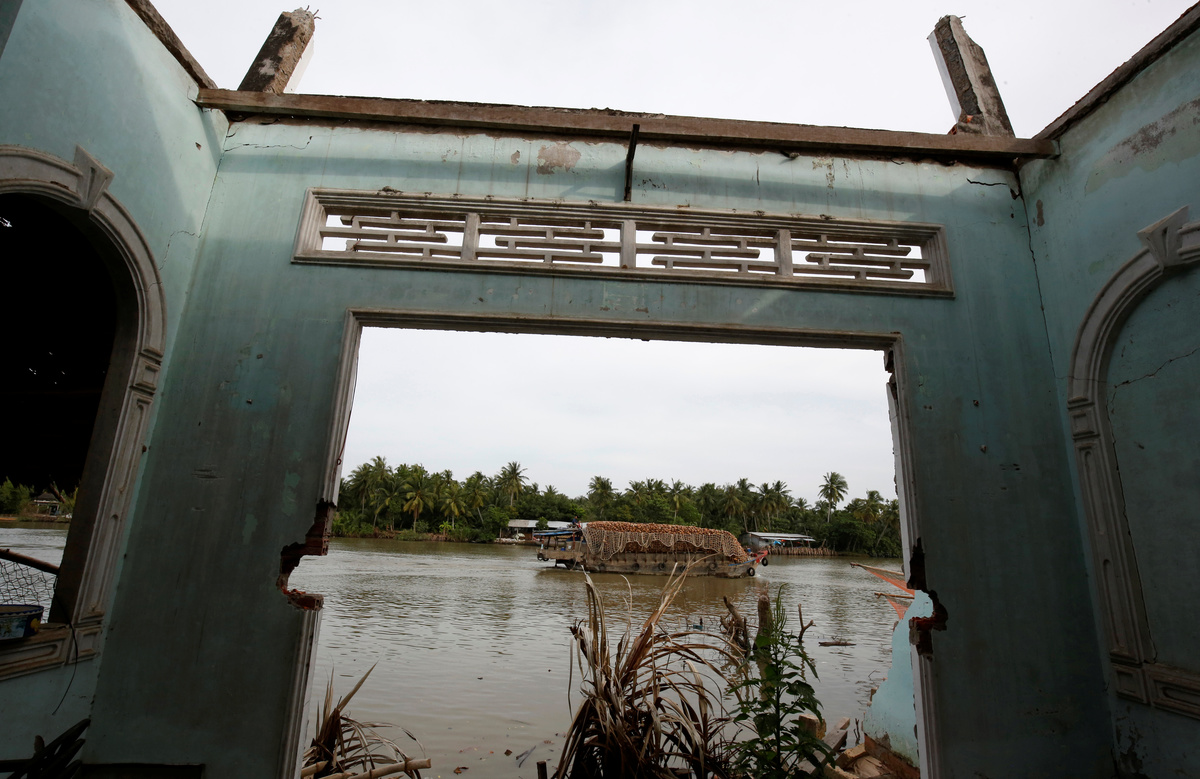
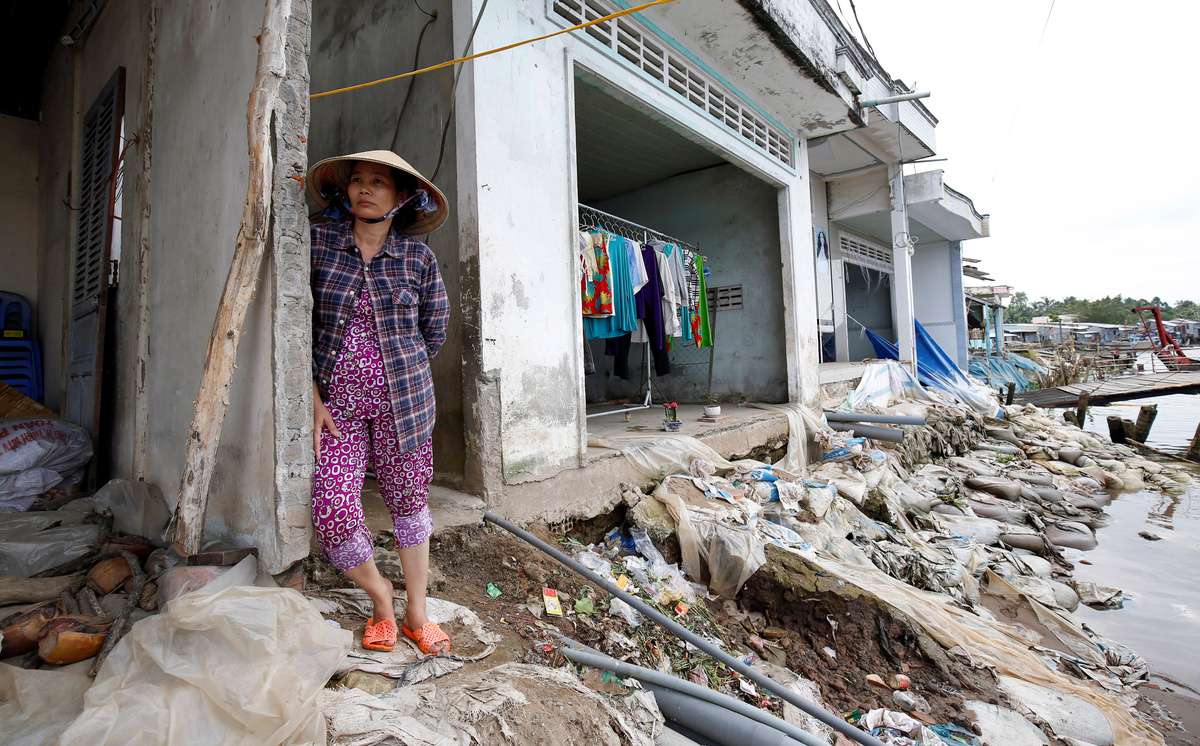
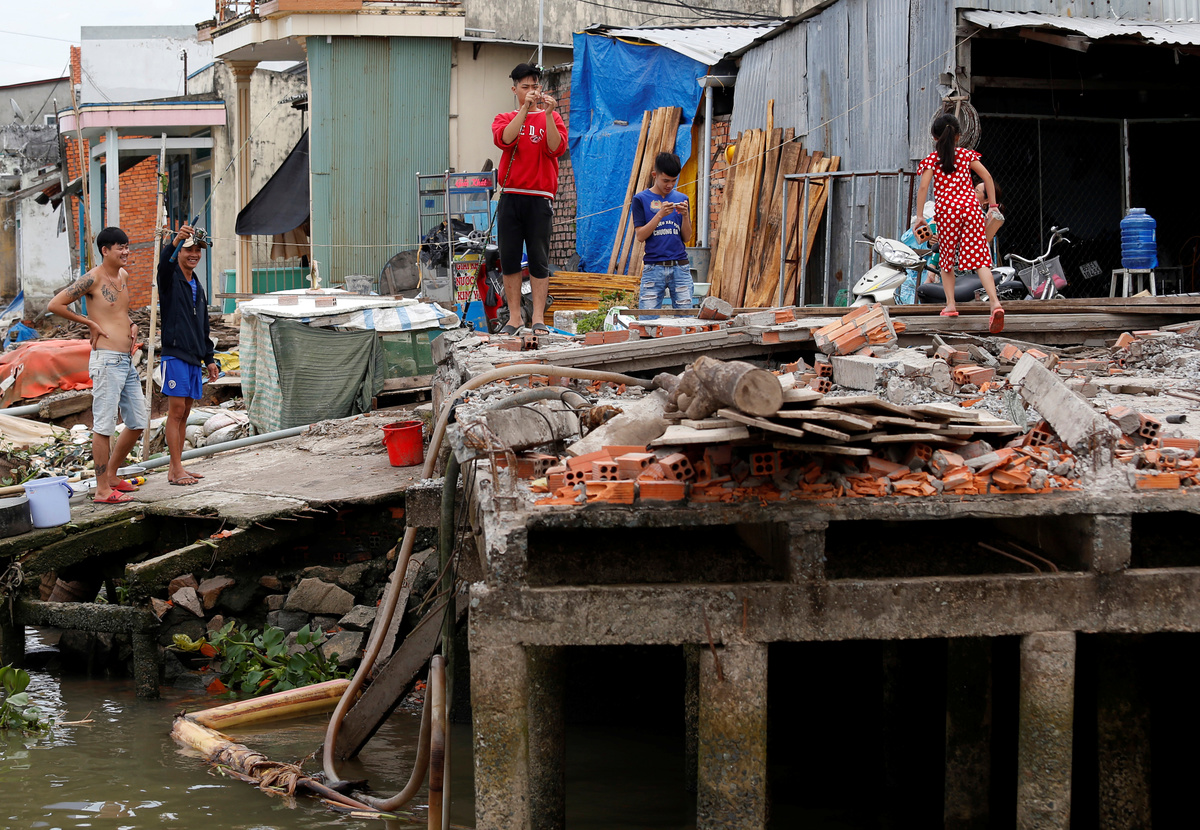
MO CAY, Vietnam (Reuters) - In the dead of night, the entire front half of shopkeeper Ta Thi Kim Anh's house collapsed. Perched on the sandy banks of the Mekong River, it took just a few minutes for one half of everything she owned to plunge into its murky depths.
"Our kitchen, our laundry room, our two bedrooms, all gone," said Kim Anh, speaking amongst the twisted metal and rubble of her house, from which she still sells eggs, soap and instant noodles to villagers in Ben Tre, a province in Vietnam's Mekong Delta region.
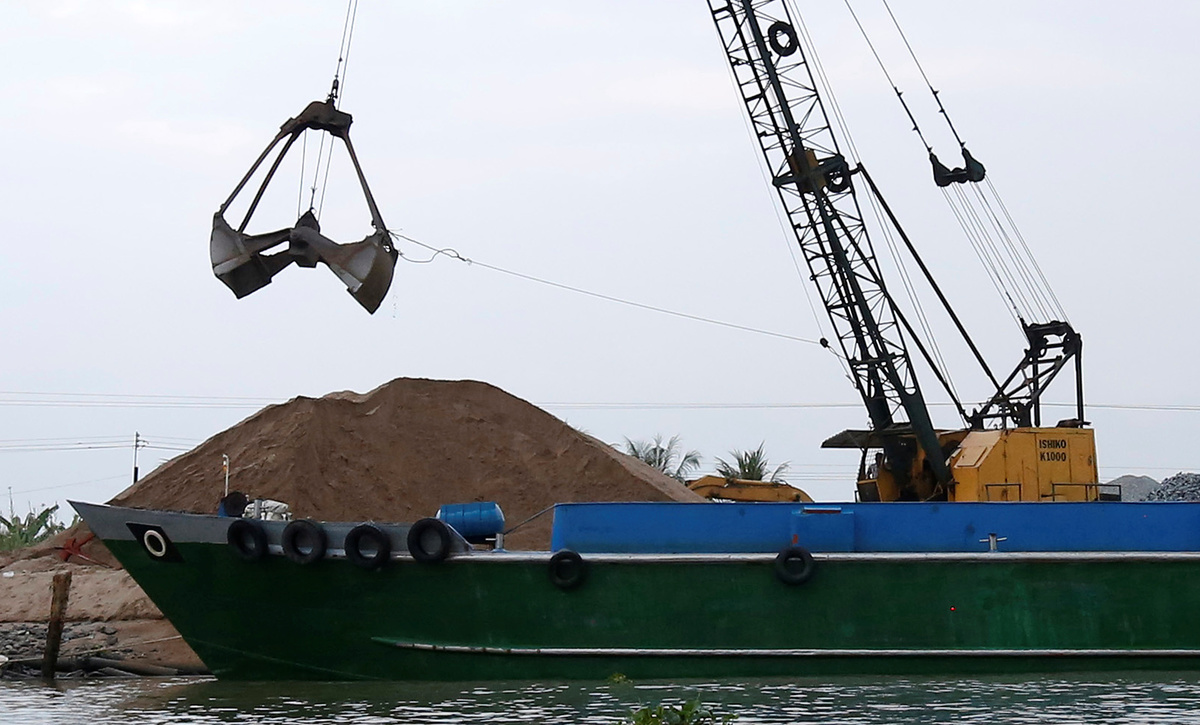
"We'd be better off living in a cave instead," said Kim Anh, who has used coconut husks and old tires to reinforce the riverbank under her home.
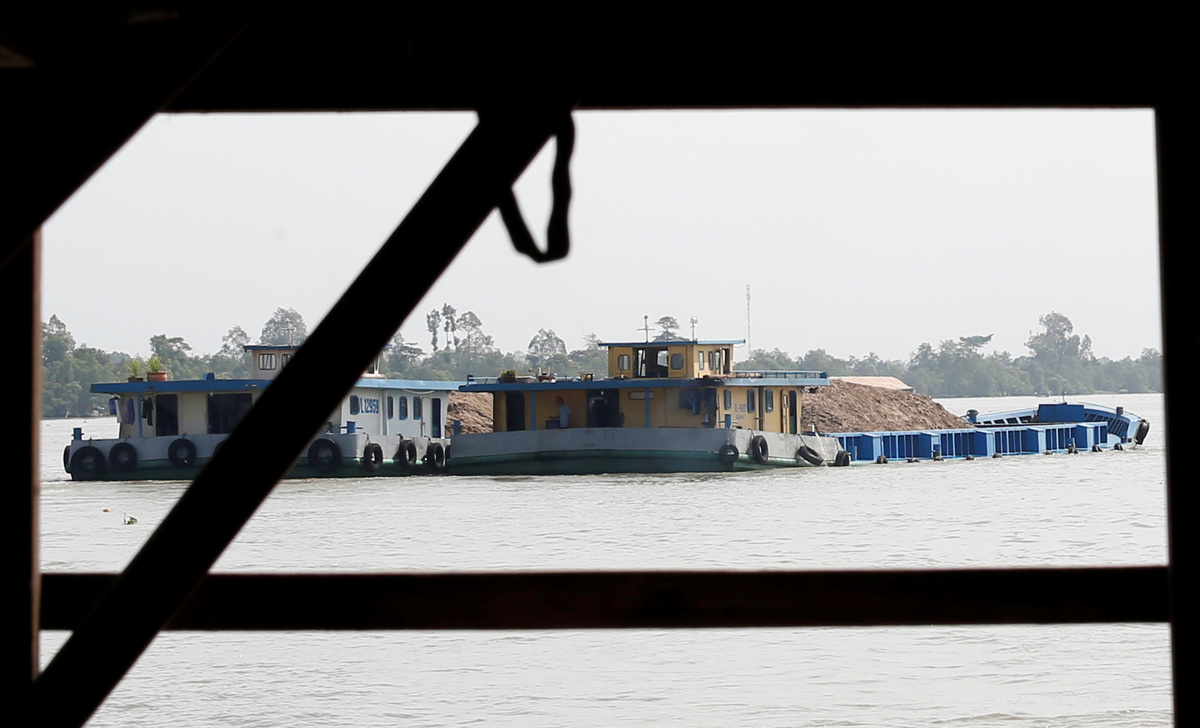
Upstream damming and extensive mining of the Mekong's riverbed for sand is causing the land between the sprawling network of rivers and channels near the mouth of one of the world's great rivers to sink at a pace of around 2 cm (0.75 inches) a year, experts and officials said.
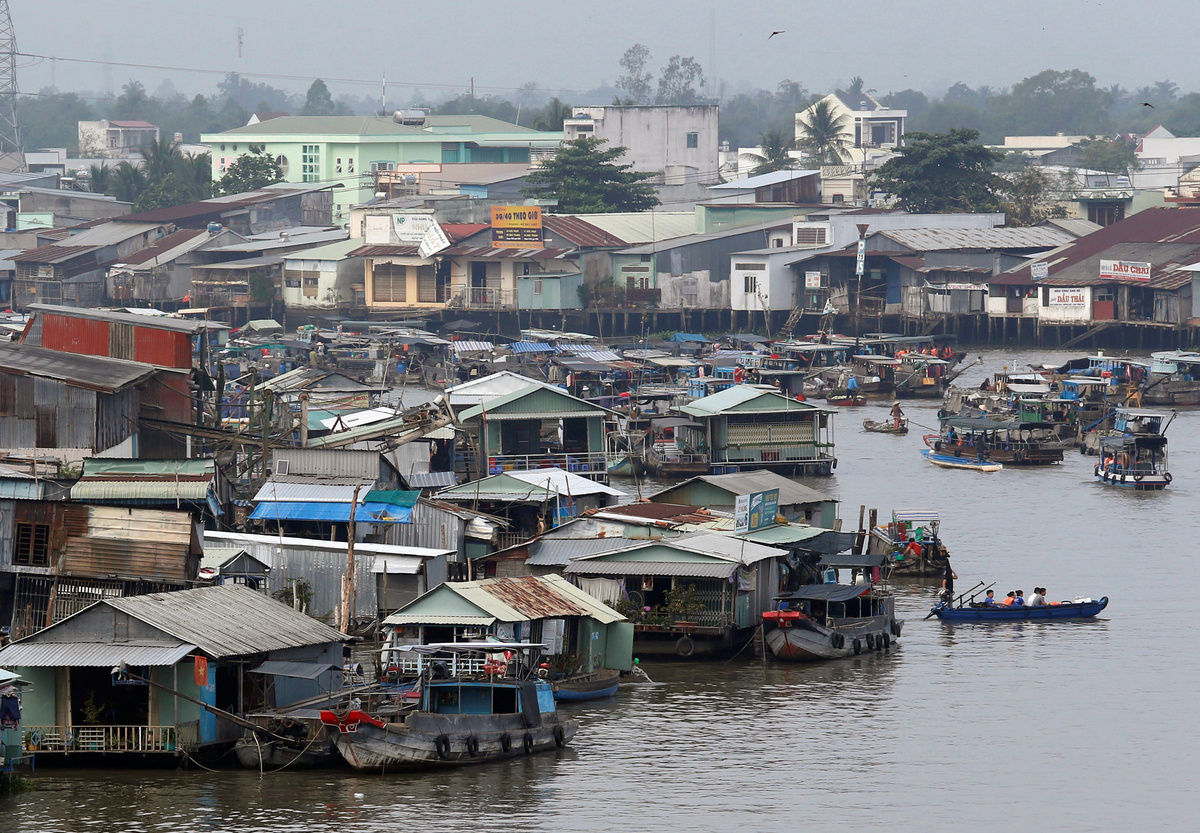
The 4,350 km (2,700-mile) river, known as the Lancang in its upper reaches, flows from China's Tibetan Plateau along the borders of Myanmar, Laos and Thailand, through Cambodia and finally Vietnam, where it forms the delta known in Vietnam as the "Nine Dragons".
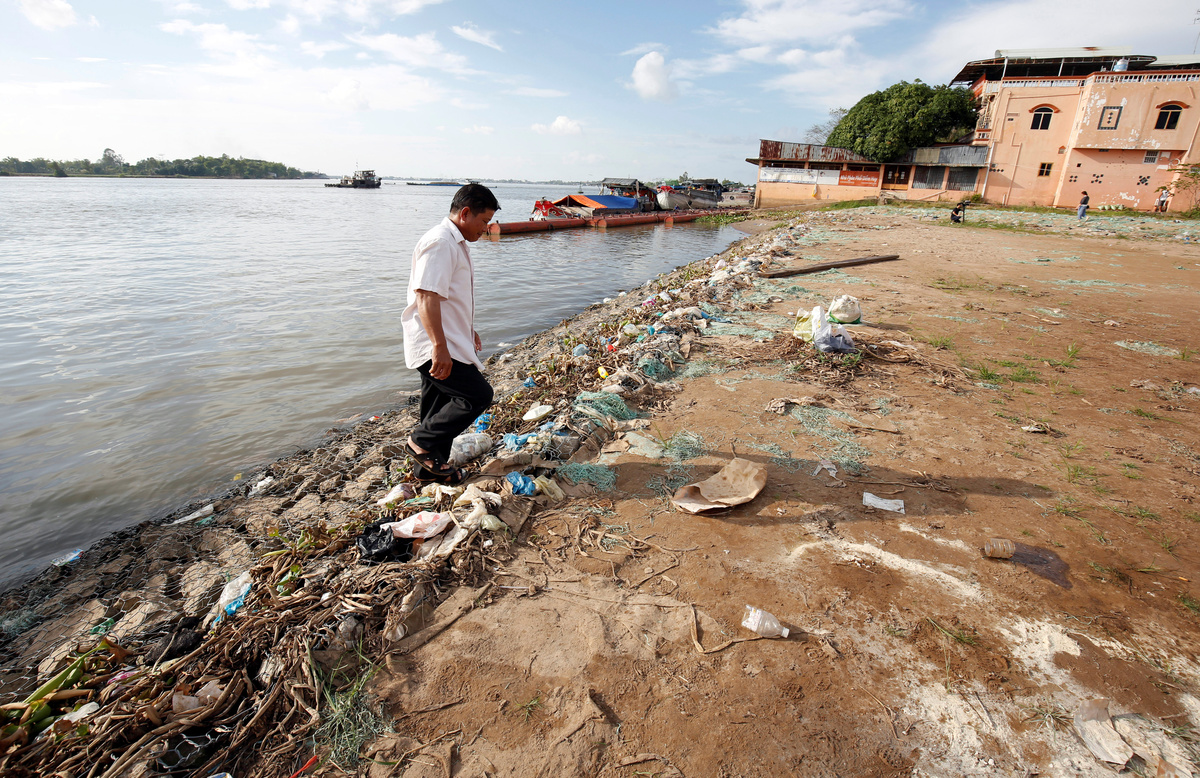
Reuters visited three provinces straddling different branches of the delta, where it has supported farming and fishing communities for millennia.
Across the region, local authorities are struggling with a rapid pace of erosion that is destroying homes and threatening livelihoods in the Southeast Asian country's largest rice-growing region.
A key cause is the years of upstream damming in Cambodia, Laos and China that has removed crucial sediment, local officials and experts said.
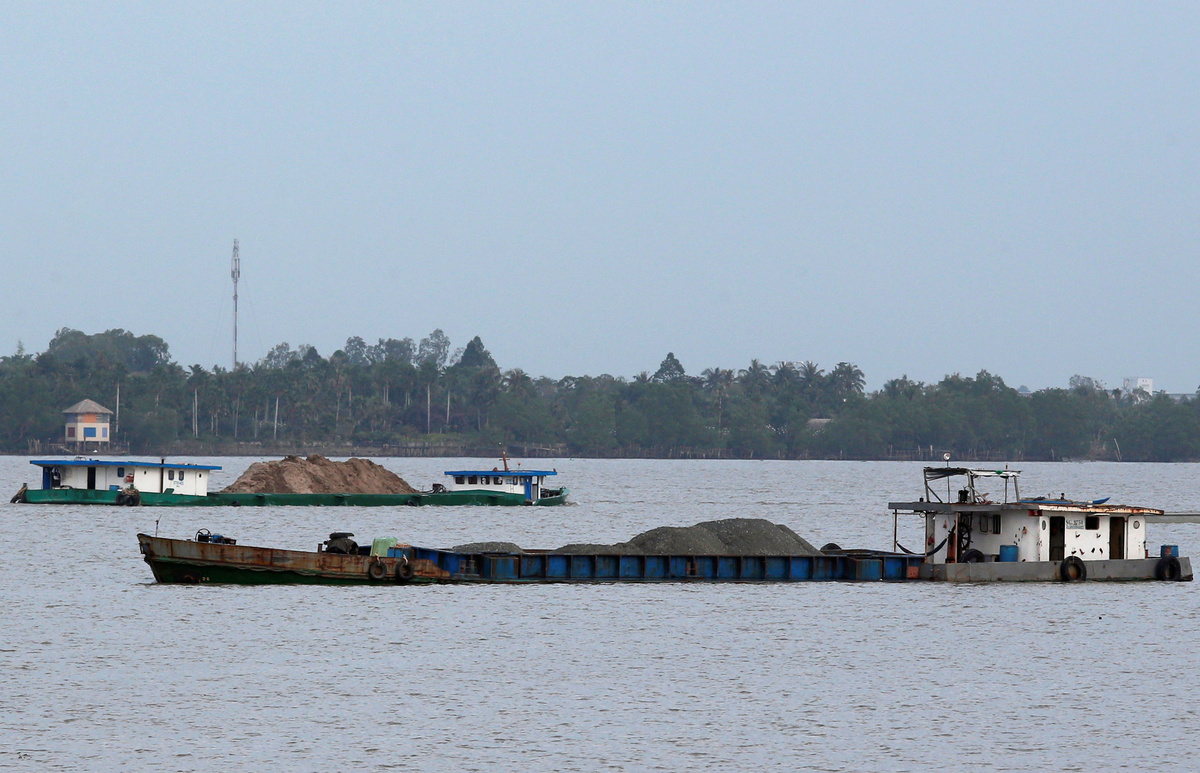
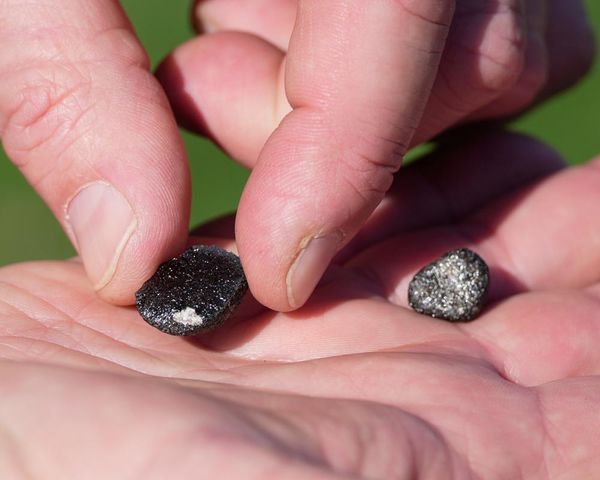
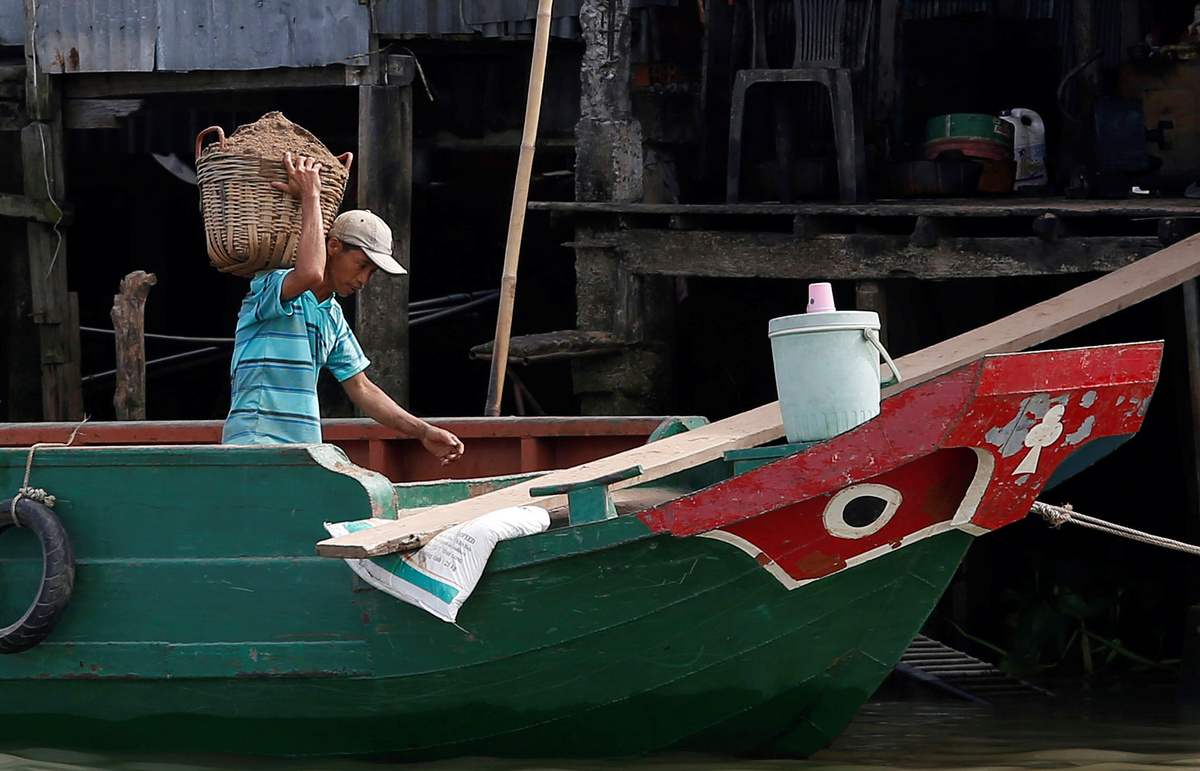
That sediment, vital for checking the mighty Mekong's currents, has also been lost due to an insatiable demand for sand - a key ingredient in concrete and other construction materials in fast-developing Vietnam - that has created a market both at home and abroad for unregulated mining.
"It's not a problem of the lack of water, it's the lack of sediment," said Duong Van Ni, an expert on the Mekong River at the College of Natural Resources Management of Can Tho University, the largest city in the Mekong Delta region.
"SAND NEVER REACHES US"
At this time of year the waters of the Mekong used to flow into Vietnam as a milky-brown crawl, locals and officials said.
Now, the river runs clear. And without fresh sediment from upstream, the deeper riverbed creates stronger currents, which in turn eat away at the banks of the Mekong, where those who rely on the river for their livelihoods have their homes.

The problems began when China built its first hydropower plants in the Upper Mekong Basin, said Ni at Can Tho University. That left Laos, Cambodia and Thailand as the main source of sediment for the Mekong in Vietnam, he said.
Sand mining in Cambodia boomed over the last 10 years, fueled in part by demand from wealthy but cramped Singapore, where it is used to reclaim land along its coast, and culminating in a government ban of all Cambodian sand exports in 2017 under pressure from environmental groups.
Hydroelectric projects have continued, however. Earlier this month, Cambodian Prime Minister Hun Sen opened a $816 million hydroelectric dam in Stung Treng province, near the border with Laos, built by companies from China, Cambodia and Vietnam.

The new dam is the southeast Asian country's biggest hydroelectric project to date and will have a catastrophic impact on fisheries and biodiversity in the Mekong river, environmental groups have said. Hun Sen has dismissed criticism of the project, which he says benefits Cambodia and its people.
"Since China built hydropower plants, new sand almost never reaches us," said Ni. "If we use up the sand we have here, there will be no more".
China's Foreign Ministry said in response to Reuters' questions that it "pays great attention to the concerns and needs of downstream countries on the Mekong", adding that its regulation of water flows from hydro dams "has already become an important instrument in preventing floods and droughts".

Singapore's Ministry of National Development said in a statement emailed to Reuters the city state imports sand on a commercial basis from various countries. "We have stringent controls to ensure that suppliers obtain sand in accordance with the source country's laws and regulations," it said.
SLINGSHOTS AND SAND THIEVES
Regional officials in southwest China's Yunnan province have defended the building of dams on the Mekong there as "fully legally compliant".
Downstream, however, the problem is made worse by thieves who illegally mine for sand, usually at night.
"The unlicensed sand miners are very quick and devious," Nguyen Quang Thuong, vice head of Ben Tre province's agriculture department, told Reuters in a recent interview.
"They escape very fast, so having groups of local people helping out the authorities is very helpful."
One such group in Ben Tre, some of whom are as old as 67, have been using homemade weapons such as slingshots and rudimentary catapults to drive the sand thieves away.
"We patrol 24/7, and in the first few months we managed to get rid of 90 percent of the thieves," said Nam Lai, one of the group. "Since 2018, none of them dare to go near our shore".

Still, activists and environmental groups worry that on the Mekong, which runs through six countries with competing needs to exploit the river's hydroelectric potential, the damage has already been done.
Pianporn Deetes, at the International Rivers campaign group, who has worked on the Mekong for two decades, said there was a lack of political will among the countries that share the river to acknowledge the cross-border impact of such projects.
"Without the recognition of the existing problems, I don't think there is any hope," she said.
(Reporting by Mai Nguyen and James Pearson; Additional reporting by Kham Nguyen and Minh Nguyen in MO CAY, Vietnam; Prak Chan Thul in PHNOM PENH; Aradhana Aravindan in SINGAPORE and Ben Blanchard in BEIJING; Editing by Alex Richardson)