For the majority of Celtic fans travelling to the Champions League qualifier in Sarajevo on Tuesday, this will be just another fun trip away. They will wander around the city, hang out with the locals and maybe try to learn some basic things about the country. Most likely they will do some sightseeing, try the food (do it, it is fantastic) and look for a cheap beer or two.
Many of them will probably end up at the lovely little pub named after their club, located in a pedestrian zone in Ferhadija, one of the busiest streets in central Sarajevo.
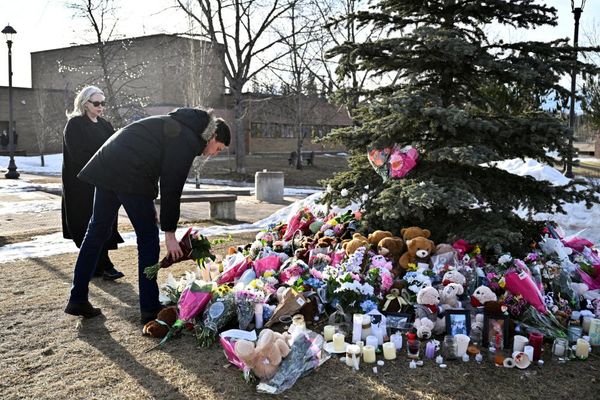
But this is not a normal city and FK Sarajevo are not a normal club. If the fans decide to take a half-an-hour-long stroll to the stadium, the first thing they will see when they leave the pub is a small plaque covered with flowers. It commemorates the 26 civilians killed waiting in a queue to buy bread in May 1992. Just a stone’s throw away is the Markale Market with a similar plaque dedicated to 101 civilians killed in two bombings carried out by the Army of Republika Srpska in 1994 and 1995.
A mile down Marshal Tito street, just before they take a right turn to Kosevo street that goes all the way to the Olympic stadium, the Celtic fans will pass by a glass monument surrounded by a fountain and several small columns with the names of 521 children killed during the Siege of Sarajevo. The longest siege of a capital city in the history of modern warfare was 1,425 days long and it took the lives of more than 11,500 civilians. Almost 2,000 are buried next to the stadium. It used to be the FK Sarajevo training pitch but it was turned into a graveyard.
It has been almost 24 years since the peace agreement was signed in Dayton, Ohio and the war in Bosnia and Herzegovina ended, but the wounds are still open. The war changed the perception of life – in this city and the whole country the time is divided between before and after the war.

It is safe to say domestic football in Bosnia was much better before. From the late 1940s to 1992 FK Sarajevo – together with their city rivals Zeljeznicar and Bosnian clubs from Mostar and Tuzla – were one of the regulars in the strong Yugoslav football league. They won two league titles (1967 and 1985), and that made them one of only three clubs outside the traditional big four of Red Star Belgrade, Partizan, Hajduk Split and Dinamo Zagreb to ever achieve that.
Despite being formed by the local communist government in 1946 and with almost no tradition, FK Sarajevo soon became one of the most popular football clubs in Bosnia. More than 40,000 attended the Kosevo City Stadium – which later hosted the opening ceremony of the 1984 Winter Olympics and was renamed Asim Ferhatovic Hase after the club legend – when FK Sarajevo hosted future winners Manchester United in the 1967 European Cup and the local derby against Zeljeznicar often attracted even more fans.
The war stopped everything but, like so many other things in this country, football was a victim of the post-war transition. During Yugoslav socialism, clubs were officially owned, financed and ruled by “the people” or – in real life – by regime officials. With most of the football infrastructure destroyed during the war and the failure of Bosnian law to regulate the ownership of clubs, football ended up being stuck between two eras and with no system. Or any chance to improve.
Since the country’s admittance to Uefa competition and the first ever match played at this very same stadium in 1998 between Zeljeznicar and Kilmarnock, no club have managed to qualify for the group stages of any European competition. The national team made it to the World Cup in Brazil in 2014, but only one player – the third-choice goalkeeper – was playing for a Bosnian league club. For decades the domestic league struggled with poor quality, even worse infrastructure and no money at all while being under constant but never proved corruption and match-fixing suspicions.
In 2013 FK Sarajevo became the first Bosnian club to be owned by a foreigner. It was not an official ownership as such, as Bosnian law still does not recognise private ownership of the clubs, but Vincent Tan and his advisers managed to bypass the law and become the major shareholders. In five years, Tan may have invested less than €10m but that was still more than enough to make FK Sarajevo the most powerful club in the country financially. It was a good start but did not yield the success Tan was after. They won only one league title and one cup during his time in charge.

However, the Malaysian businessman laid the foundations for a new era and the club built a training centre and turned their youth academy into the best in the country. This year Tan sold 60% of shares to an unknown Vietnamese businessman Nguyen Hoai Nam and his Vietnam Football Development and Investment Fund. Tan’s departure coincided with the best season in the history of the club: managed by the former Hearts striker Husref Musemic, the club won their first ever Bosnian league and cup double.
This hardly makes FK Sarajevo a serious contender for the Champions League group stages but they are determined to give Celtic a scare, especially at home.
“We don’t have a chance to play Celtic or teams on this level that often, so we feel privileged to be part of all this,” Musemic said this week. “Of course they are the favourites, but I hope we learned our lessons from last year [they lost 10-2 on aggregate to Atalanta] and that we are going to be smart, patient and well disciplined.”
In winning the double last season their best player was the 34-year-old striker Mersudin Ahmetovic, who scored 16 goals in 40 competitive matches. FK Sarajevo’s most significant acquisition in this transfer window was the centre-back Besim Serbecic, a Bosnian Under-21 international on loan from Rosenborg, where he last played a competitive match in August 2018.
FK Sarajevo is by far the best-organised club in Bosnia and Herzegovina, but in European terms this is just a beginning of the development process. This is why for them this match is seen as the chance to show their potential.
For the game in Bosnia and Herzegovina, meanwhile, it is an event more than anything else. The chance for the country and its football to live their dream for one night, to play one of the big names of European football, to pack the stands and enjoy the football on the biggest stage. It is football like it used to be.