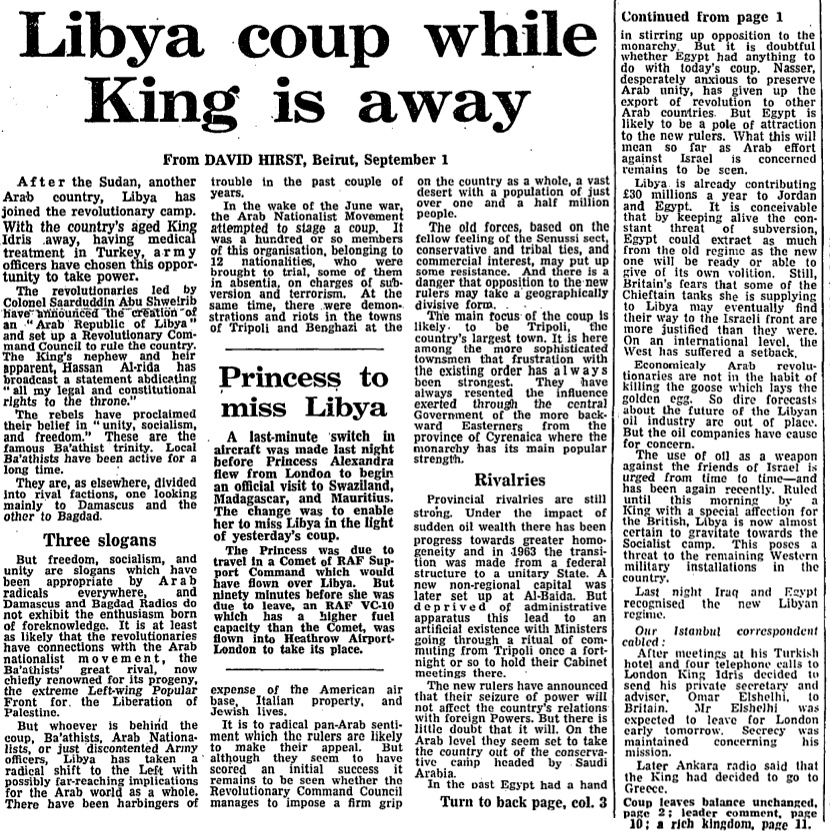
September 1969
Libya's monarch King Idris was ousted in a coup on 1 September 1969 while away in Turkey. 27-year-old Muammar Gaddafi, the chairman of the Revolutionary Command Centre, soon emerged as a key leader. David Hirst, Middle East correspondent for the paper, reported from Beirut.
1970s
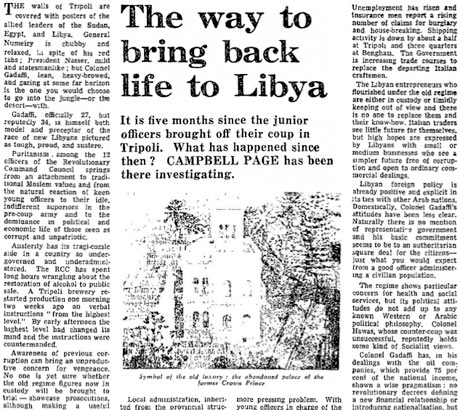
Gaddafi became prime minister and minister of defence in 1970. Campbell Page (Guardian journalist since 1963 and later executive editor of the paper), investigating Libya in the five months since the success of the coup, delivered this report on the country's new military government:
Throughout the 1970s Gaddafi focused on ties with the Arab world rather than the west, nationalising oil companies and shutting down British and American military bases. He also alienated the diplomatic community with his support of groups such as the IRA.
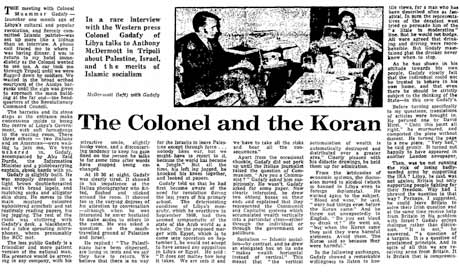
In April 1973 Gaddafi launched a programme of popular and cultural revolution. Later that year, he gave a rare interview with the western press. Anthony McDermott, a leading journalist on the Middle East for the Guardian in the 1970s, reported on exchanges ranging from socialism to drink-driving with a man he describes as being "arresting in any company'".
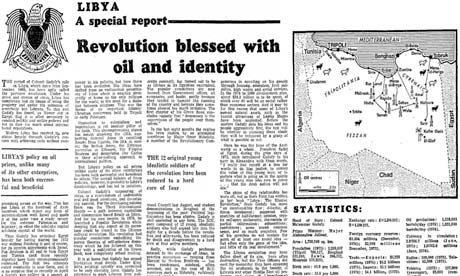
In 1975, Gaddafi published the first instalment of his Green Book, outlining political philosophy behind the Libyan revolution. In April 1976, the Guardian published a special report by Anthony McDermott, exploring the ramifications of Gaddafi's rule since 1969.
In 1977 Libya was renamed the Socialist People's Libyan Arab Jamahiriya (state of the masses), as Gaddafi declared a "people's revolution" with power invested in a network of people's committees.
1980's
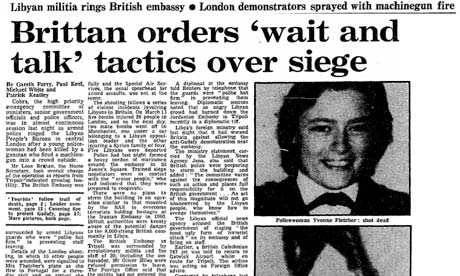
In April 1984, British policewoman Yvonne Fletcher was killed by shots fired from the Libyan embassy in London during an anti-Gaddafi protest, leading to Britain's breaking off relations with Libya.
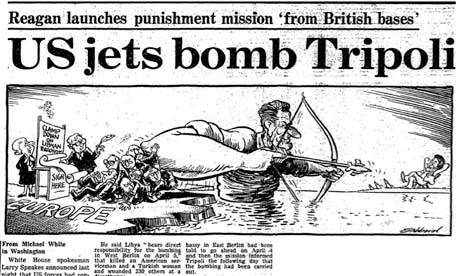
It was in 1986 that US president Ronald Reagan labelled Gaddafi a "mad dog". After a US soldier died in a bomb attack at a Berlin disco, Reagan ordered an air raid on the Libyan capital in retaliation. 101 people were killed, including Gaddafi's adopted daughter.
The front page of the Guardian on 15 April had this report from Michael White, accompanied by a cartoon by Les Gibbard (cartoonist for the Guardian since 1969).
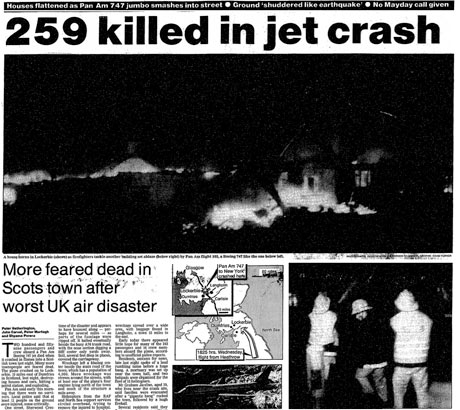
On 21 December 1988, Pan Am Flight 103 was blown up over Lockerbie in Scotland with the loss of 270 lives (including 11 on the ground). This would lead to years of legal wrangling over the chief suspects, and UN sanctions over air travel and arms supply.
1990s
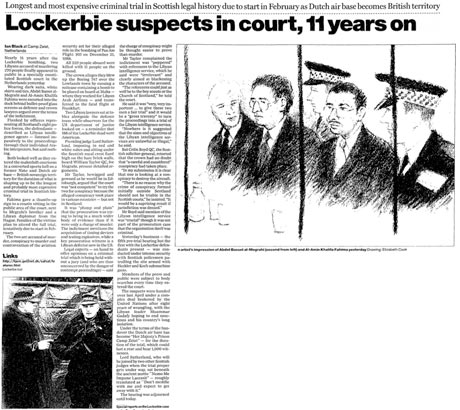
In 1998 it was agreed that the trial of the men suspected of the Lockerbie bombings would take place in the Hague, and the chief suspects, Abdel Baset Ali Mohamed al-Megrahi and Al-Amin Khalifa Fhimah, were handed over in 1999. Ian Black reported from the Netherlands.
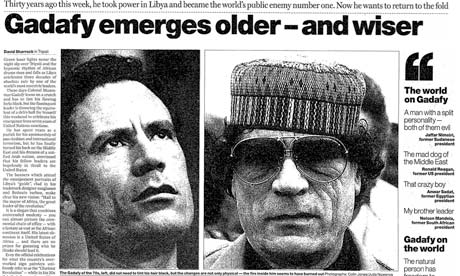
1999 also marked 30 years since Gaddafi came to power. On the anniversary of the 1969 coup, David Sharrock examined and assessed his rule.