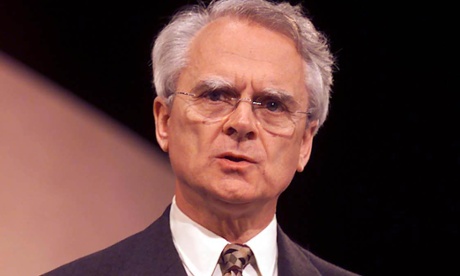
Mr Robert Maclennan was last night guaranteed election as the Social Democratic Party’s third leader and probably its last, against the wishes of his predecessor, Dr David Owen.
After a two-hour meeting of the five SDP MPs at the Commons Mr Maclennan, aged 51, MP for Caithness and Sutherland, said that his nomination was about to be lodged; and a few minutes later Mr John Cartwright, MP for Woolwich - and the only serious possible opponent, announced that he would not be contesting the election on behalf of the Owenite opponents of union with the Liberals.
The leadership question was therefore settled, but the wrangling will go on. It is clear that those who lost the membership ballot on the question of merger talks are preparing a passionate assault of the pro-merger faction at the party conference, which opens in Portsmouth on Sunday, and that they will claim for themselves the name of the SDP if a new party is formed and they break away.
Mr Maclennan, though he has the majority of members who voted in the ballot behind him in pursuing merger negotiations, starts his caretaker leadership with a majority of his parliamentary colleagues - Dr Owen, Mr Cartwright and Mrs Rosie Barnes, MP for Greenwich - against him.
He said after the meeting that it had been amicable, but indicated that he had rebutted strongly the suggestion that there should be no leader for the period of negotiations. This is the Owenite position, which was advocated at the meeting by Mrs Barnes. Mr Maclennan said that he would conduct the negotiations in good faith and hoped to preserve the unity and integrity of the SDP while they went on.
As they left the meeting Dr Owen and his colleagues did not wait for Maclennan’s statement but went away to prepare their own remarks.
Minutes later, Mr Cartwright, announcing his decision not to stand, said: “I believe that there is an obvious leader of the Social Democratic Party and only one, and the sooner that David Owen is restored to that position the better for all Social Democrats and for British politics.”
He said that Mr Maclennan now knew that when he took part in negotiations about a merged party “he doesn’t speak for the three of us.”
Despite statements from both sides that it had been an amicable meeting, there was not much effort to disguise the deep divide which now runs through the party and will be exposed to public view in Portsmouth.
The indications yesterday were that the all-important debate on Monday on the merger negotiations could be thrown into chaos by two contradictory motions which are both attracting considerable support in the policy-making Council for Social Democracy.
One calls for the party to be incorporated with the Liberals into a new organisation, and another calls, in effect, for what Dr Owen has referred to as “amicable separation,” with the Owenites keeping the party’s name.
Mr Maclennan therefore faces a difficult task in his leader’s speech on Tuesday. His style has always been that of the backroom politician and he is conscious of his lack of aptitude for the glad-handing aspect. However, there is a passionate streak in him, normally well hidden from parliamentary colleagues, and he is determined to establish himself as a formidable negotiator with the Liberals.
His leadership, in practice, is simply a caretaker arrangement to see the party through to merger, but he could expect high office in the new party which will be established if the negotiations are successful.
In his comments after last night’s meeting he was guarded about what has been discussed in detail, but hinted that he had been firm in dispelling any notion that he was ready to step aside.
Mr Cartwright’s decision not to stand, even though Dr Owen favoured his candidacy before the meeting, probably reflects a judgment that there was little to be gained. The anti-merger side will prefer to keep away from the negotiations, but subsequently argue that the negotiated deal does not preserve the party’s identity and is a sell-out to the Liberals.
Earlier, Mrs Shirley Williams, the party president, said she did not believe that the Portsmouth conference would be as bloody as had been predicted. But senior party figures on all sides of the argument are predicting angry scenes right from the start on Sunday.
Mrs Williams is among those who are angered by the Owenites’ claim that they represent the SDP and will keep the name if merger comes about and they form their own organisation. She intends to make that view plain in her presidential speech on Sunday, and it is on that question that the angriest exchanges may well occur.
Mr Mclennan will know at 6pm tomorrow whether other nominations for the leadership have been submitted - a development which would be incredible.
He is perhaps the least likely leader of a political party in Britain, having been a retiring figure throughout his 21 years as an MP. He held junior office in the last Labour government and has been a powerful figure behind the scenes in the SDP since its foundation, being the main architect of its constitution.