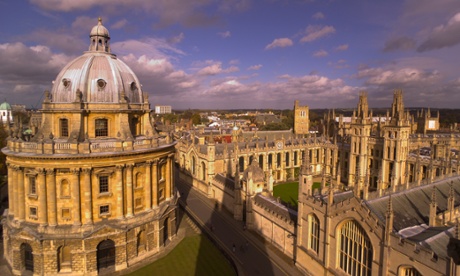
Oxford University used to be as much a part of the myth of Old England as Anne Hathaway’s cottage or the beefeaters at the Tower of London. One thought of punts gliding peacefully down river; summer dresses etched against cool green lawns; crusty old dons muttering over port; tipsy undergraduates climbing into college as dawn broke over Magdalen. It was a nice myth, a sort of conceptual Turkish delight: sweet, romantic - and in the end, indigestible.
For the last year or so it has been harder to digest than ever. First there was the scandal of the H-bomb campaign, conducted most scandalously of all from the very depths of All Souls, and Lord Hailsham’s denunciation of “government by undergraduate referendum”. Then a surprised public learnt that two third-year history students had been charged with a breach of the Official Secrets Act - thus providing the “Daily Sketch” with a heaven-sent opportunity to make spectacular disclosures, and the real enemies of British security with their loudest laugh for some time. Finally, at the end of the summer term, the affair of the “Isis” editorship erupted - a crisis which threatened to embroil even such a local potentate as the Regius Professor of Modern History.
Thirties again?
It would be easy for a sceptic to argue that none of this sound and fury (except perhaps the H-bomb campaign) signifies anything more profound than the self-importance of the protagonists. The average undergraduate, after all, is not interested in the editorship of the “Isis,” and rarely infringes the Official Secrets Act. Even to-day he is more interested in rowing than revolt, and when he notices the phrenetic activities of his articulate contemporaries it is at best with amused indifference. Oxford has frequently been washed by waves of revolt more turbulent than this; each one has receded, leaving the landscape unchanged. The sceptic would be wrong. This time there is something behind the headlines. Apathetic, mildly right of centre, Oxford is beginning to sit up and take notice - even if as yet it is only a minority that does so. Political activity - for years left to the semi-professionals of the political clubs and the Union - is once again becoming “smart.” And the Left, once the dreariest of the dreary political positions, is coming back into favour. It almost begins to look like the thirties all over again.
But in fact the thirties are as dead as ever. The real significance of the present wave of Left-wing politics is precisely its dissimilarity to that of twenty years ago, both in personnel and ideology. In the thirties the characteristic Oxford revolutionary hailed from an impeccable upper-middle-class background. Communist perorations were, typically, delivered in the cut-glass accents of the English public school. To-day the rebels are more often from the working or lower middle class, products of the Welfare State revolution which reached Oxford after 1945. This has given their political position an extra bite. Their predecessors of twenty years ago might condemn society on intellectual grounds, but they accepted its traditional institutions emotionally. Their revolt (though quite sincere) was safe, like the tantrums of a spoilt child. You could yell and scream in the nursery - because you knew the nursery walls were built to last. You could even kick and scratch old Nanny - because you knew she would never desert you and would even forgive you in the end.
Sentimentalism
To-day’s rebels have no nanny. For them the traditional Oxford pattern is emotionally alien, as well as intellectually disreputable. The working class, on the other hand, is not a romantic abstraction: it is the boys they went to school with. A university education followed by a professional career are not an accepted part of life: once they were an inaccessible pinnacle, and they are still a strange, not wholly pleasant experience.
All this can lead to a dangerous sentimentalism about the working class, the delusion that it is not just as good as any other class but better. It leads to an understandable reluctance to admit working-class faults, like the reluctance of an emigrant to admit faults in the Old Country. And so, if the working class appears to like the fatuities of popular press and television, this is because it is bamboozled into doing so - not because it really enjoys them. If the economic advance of the last decade has brought us only to “this commercial traveller’s paradise, with its slightly sexy royalist mystique,” this is the fault of the entrenched power of the Establishment or the treachery of the Labour party - not the inescapable dynamics of social progress, which has always to move at the pace of the slowest.
In spite of such soggy patches the Left at Oxford should not be dismissed out of hand. Often its voice is choking with sentiment; often so rasping with anger that it is impossible to hear what it says. But it does at least say something new.
This is an edited extract, read the full article