City streets were once unpredictable spaces for stray animals. Food was scarce, humans were distant, and survival depended largely on instinct. Today, cities have changed. With growing populations, expanding infrastructure, and constant human presence, urban spaces have become complex ecosystems. In the middle of all this live stray dogs and cats, quietly adapting their behaviour to survive, understand, and sometimes even thrive.
Stray animals in cities are no longer just surviving. They are learning, observing, and adjusting in ways that often go unnoticed. Their behaviour today looks very different from what it did a few decades ago. From understanding traffic signals to recognising friendly faces, city life is shaping them in surprising and deeply emotional ways.
Cities As Living Classrooms For Strays
For stray dogs and cats, the city is not just a place to live. It is a classroom. Every day brings lessons. Where food is available. Which streets are safe? Which humans are kind? Which areas must be avoided?
Unlike wild animals that rely on inherited survival instincts, urban strays learn through experience. A dog learns which shopkeeper leaves leftovers. A cat learns which building offers warmth at night. Over time, these lessons shape behaviour, making city strays more observant, cautious, and emotionally aware.
How Stray Dogs Are Learning Human Rules

One of the most fascinating changes seen in stray dogs is their understanding of human systems. In many cities, stray dogs are seen waiting patiently at traffic signals before crossing the road. This is not a coincidence. It is learned behaviour.
By observing humans and vehicles repeatedly, dogs learn patterns. Red means stop. Green means move. Busy hours mean danger. Quiet streets mean safety. This ability to read and respond to human-made systems shows not just intelligence, but adaptability.
Stray dogs also learn social cues from humans. They can often sense who is afraid of them and who is comfortable. A relaxed posture invites approach. A tense body means stay away. Over time, these dogs become skilled at reading emotions, something even humans struggle with.
Stray Cats And The Art Of Urban Survival

Stray cats adapt differently. While dogs are more social, cats rely heavily on observation and independence. City life has made stray cats more strategic. They choose hiding spots carefully, often above ground level, away from traffic and danger.
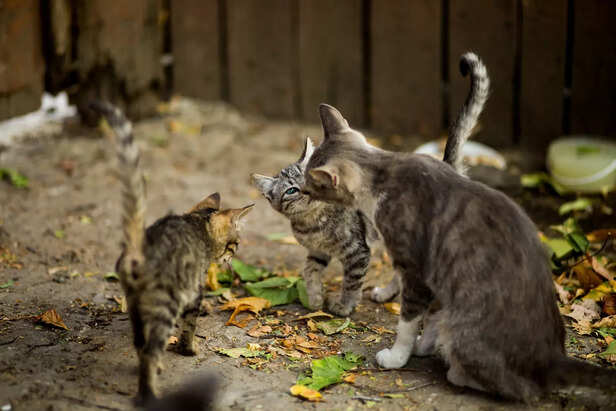
Cats learn schedules. They know when restaurants close, when garbage is taken out, and when streets are quieter. Many stray cats form invisible territories around food sources, negotiating space with other cats through subtle signals rather than open conflict.
Urban cats also show increased tolerance towards humans compared to their rural counterparts. Regular exposure to people makes them less fearful, though still cautious. Some even form selective bonds with specific humans while remaining distant from others.
Food, Fear, And Familiarity
Food availability is one of the biggest factors shaping stray behaviour. In cities, food is unpredictable but often accessible. Street vendors, households, garbage bins, and animal feeders all become part of a stray’s mental map.
Dogs and cats remember places where they were fed and people who were kind. Over time, this familiarity builds trust. A stray that once ran away at the sight of a human may later approach confidently if past experiences were positive.
Fear also plays a role. Strays remember trauma. A single act of cruelty can change behaviour for years. A dog that was once beaten may avoid certain streets or react aggressively out of fear. City life exposes strays to both kindness and harm, and their behaviour reflects this emotional memory.
Emotional Intelligence In City Strays
One of the most overlooked aspects of urban stray behaviour is emotional intelligence. Strays learn not just where to go, but how to behave. Many stray dogs comfort crying humans by sitting nearby. Some cats choose to stay close to people who appear lonely or calm. These actions are not trained. They emerge from repeated emotional interactions.
City strays learn that humans can be unpredictable. Some bring food. Some bring pain. To survive, they learn to judge emotions quickly. This emotional awareness helps them navigate crowded spaces and build selective trust.
The Impact Of Noise, Crowds, And Constant Change
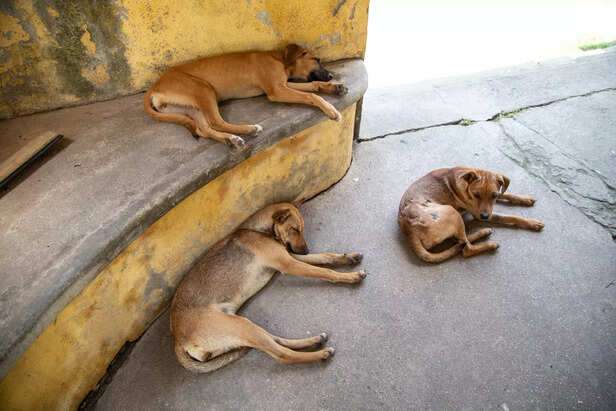
Cities are loud. Traffic, construction, crowds, and machines create constant noise. Stray animals raised in such environments develop higher tolerance to sound. Loud noises that would scare rural animals often do not faze city strays. However, this comes at a cost. Constant stress can affect health and behaviour. Some strays become anxious or withdrawn. Others become hyper alert. Sleep patterns change. Safe resting spaces become crucial.
Crowds also influence behaviour. Dogs learn to move around people without causing trouble. Cats learn to disappear into corners. Over time, these skills become second nature.
Human Kindness And Human Cruelty
Human behaviour is one of the strongest forces shaping stray animal behaviour in cities. Areas where people regularly feed and protect strays often see calmer, healthier animals. These strays show trust, reduced aggression, and social bonding. In contrast, areas where strays are chased or harmed see fearful, defensive behaviour. A dog that growls or snaps is often reacting from experience, not aggression. City life amplifies both kindness and cruelty. And stray animals carry the emotional weight of both.
How Strays Adapt Faster Than We Think
One remarkable thing about stray animals is their speed of adaptation. Within months, a stray puppy or kitten can learn complex routines. Where to sleep. When to eat. How to avoid danger. They also learn from each other. Younger animals observe older ones. Behaviours spread through silent teaching. A dog learns to wait at crossings by watching others. A cat learns safe hiding spots by following experienced cats. This collective learning allows stray communities to survive in environments that constantly change.
What City Strays Teach Us About Coexistence
Stray dogs and cats are not intruders in cities. They are part of the urban ecosystem. Their behaviour reflects our environment, our systems, and our treatment of them. They show us adaptability. They show us emotional memory. They show us that survival is not just about strength, but about understanding, patience, and connection.
When we choose kindness, strays respond with trust. When we offer safety, they offer coexistence. City life has changed them, but it has also revealed something deeply human in them.
A Quiet Relationship Between Cities And Strays
As cities continue to grow, stray animals will continue to adapt. Their behaviour will keep evolving alongside us. They are silent witnesses to urban life, carrying stories of resilience in their daily routines. Understanding how city life shapes stray dogs and cats helps us see them not as problems, but as survivors. And perhaps, in learning from them, cities can become kinder places for all lives that share the streets.
Celebrate the bond with your pets, explore Health & Nutrition, discover Breeds, master Training Tips, Behavior Decoder, and set out on exciting Travel Tails with Times Pets!