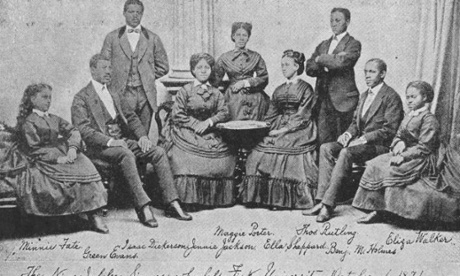
I first heard about Thomas Rutling as a student at Guildhall School of Music and Drama in London. I was writing my final-year thesis on the American spiritual and how it has influenced modern music such as jazz, gospel, rock’n’roll, Motown and hip-hop. I came across the Fisk Jubilee singers, an African American vocal ensemble who specialised in authentic performances of spirituals and field songs. The group toured the US and Europe in the late 19th century. Rutling was one of the two tenors in the ensemble, and sang with it from its foundation in 1871, until 1878.
Rutling was born a slave in Tennessee on 24 December 1854. From his earliest days, he would have been surrounded by the music of spirituals and field songs. He was also surrounded by tragedy – one of his first memories was being torn away from his mother as she was sold off to another plantation. He was three years old. After the American civil war, he was liberated and able to enter Fisk University, “a free university for free people”, where he joined and toured with the choir that had been formed to raise money and awareness for the new institution.
At the end of the second European tour, he became very ill and it decided to remain in Europe to recuperate. He spent time in Switzerland, Italy, Germany and France, all the while studying, singing and learning languages. He finally settled in Harrogate, where he taught singing and languages as well as touring – as “the African tenor” – in and around Yorkshire, speaking about his life and giving many successful solo recitals.
Rutling was a pioneer and a man to be admired. In his own words “I want the elimination of racism, to try to help the Britons to realise more and more that the Negroes have a right after much suffering under Christian civilisation to be admitted as sons of God, among the natives of the earth.”
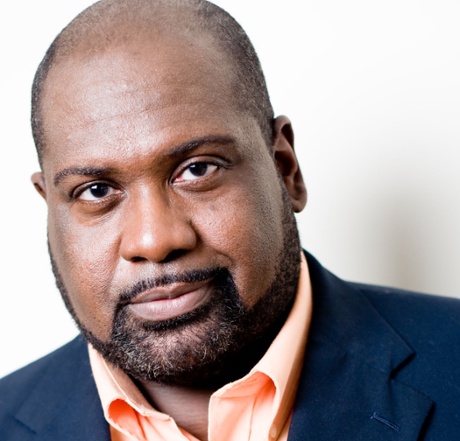
It’s thanks to people such as him that a young man from the West Indies like myself could realise a dream to become an opera singer. Like him I also teach and have a love for singing in many languages. Our connection doesn’t quite end there – I’m playing him in a dramatisation of his life and of the music he sang in a new show at the Harrogate international arts festival this week.
As an African Caribbean man in the world of opera, I wonder how much circumstances and possibilities have really changed since Rutling’s time. There is always the talk and constant question of how to get more people of colour on to the operatic stage, behind-the-scenes and as directors, composers and audience members. Things have certainly improved since Rutling’s time, but today’s imbalance is still far from ideal. Frankly, if I were a young person of colour in an audience, I would expect to a see in the opera company a reflection of the society we live in, especially in the UK. I have sung many roles all over Europe, but the two I do most frequently are the title role in Verdi’s Otello and Sportin’ Life in Gershwin’s Porgy and Bess. I recently made my English National Opera debut in Tansy Davies’s wonderful modern opera Between Worlds, playing the character of a black security guard, and one of the lead characters, played by the black American baritone, Eric Greene, was the Janitor. Say no more.
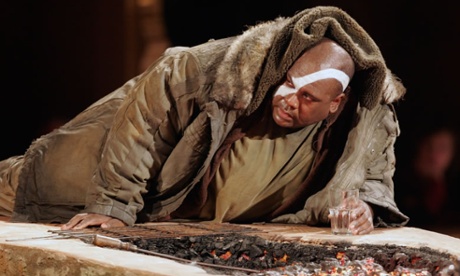
Opera directors, casting directors, artistic directors and the powers that be need to be willing to push the boundaries. There are some already out there. Graham Vick cast me as Siegmund in Die Walküre at Teatro de São Carlos in Lisbon and my fraternal twin sister was German soprano, Anna Katharine Behnke. Vick continues to push boundaries particularly with his work at Birmingham Opera Company and has been recognised for doing so, judging from the number of awards that company has received.
Over a century ago, Rutling challenged the status quo and showed that a love of opera, the spiritual and classical music was open to everyone. I can’t help but wonder what he would think of today’s world. His pioneering spirit made it possible that a man such as myself could imagine and realise the dream of being an operatic tenor, but he should continue to inspire us all – positive action with effective results needs to take place. Brainstorming with bold decisions to bolster the upcoming generations is the only way ahead. Thomas Rutling should continue to inspire us all.
- Ronald Samm leads the cast on 24 July at the Harrogate international festival in a production by the Geraldine Connor Foundation of Sweet Chariot, a dramatisation of Thomas Rutling’s life, through words and music. Sweet Chariot is supported by the Arts Council England.