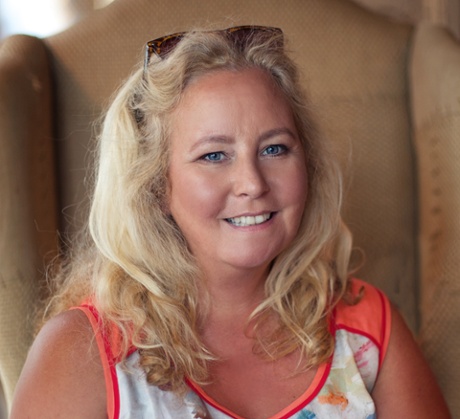
Tales of overcoming adversity are rarely more inspiring than that of Judy van Niekerk. Abused for years from the age of six by her father, who was eventually jailed, she has managed to turn her life around to become a successful entrepreneur, author, speaker and empowerment coach. After years of hating her body, her latest project is all about teaching women to love theirs. She tells us how she plans to empower women through her app that measures breasts to custom-build bras.
Where did the idea for the business come from?
Having been quite badly abused for the first 20 years of my life I grew up hating my body, and specifically my breasts. This was compounded by the difficulty of getting comfortable bras. I am not small-breasted so it is even more challenging to get a bra that’s nice.
One of the things I learned from my research was if you want to make £1m you have to positively impact the lives of a million people. That’s partly where the concept of The Digital Bra came from. It’s about loving your breasts, loving your body, loving yourself. But there’s a material side to it, too. I want to impact the lives of a billion women globally.
How does your business aim to do this?
Digital Bra is an app that you download for free and will work on your smartphone. You create an account and scan yourself. At this point somebody needs to scan you and you need to be naked to scan. But the important thing is that the image is not captured on your phone.
Then the 3D scanner sends data to our server, and that creates a pattern based on the measurements it takes – between 120 to 140 measurements. Then the system will go through our range to find the bras most suited to your size.
Is trust an issue?
I was concerned about how women would react to being scanned naked. There’s a lot of internet porn, revenge porn out there. That was something I was very mindful of and concerned about. But in the end I was amazed by how many women said ‘I don’t give a damn, the pain [of having a badly fitting bra] is just too awful.’ For those that do have an issue– and there are some, absolutely – I hope that over time they will start really trusting it.
What’s wrong with high street bra fittings?
I realised that high street brands generally base their designs on two or three measurements based on a size 34B. My personal research has indicated that close to 90% of people have a badly fitting bra. Generally it is said to be between 70% and 80%, but my research shows it is closer to 90%.
The problems this causes are two-fold. First there are medical and postural issues. But for me it also lowers our self-esteem, our self-confidence and disempowers us. The bra is the closest apparel we wear to our heart every single day.
How much market research did you do before you launched the business?
I have done extensive research myself over the past six months, and I have spoken to thousands of women. I have also done Facebook advertising asking people to take part in a survey. On top of this I am part of a business community with a global reach of about 40 million people, and I asked them to help me.
How challenging was it to design the bras you wanted?
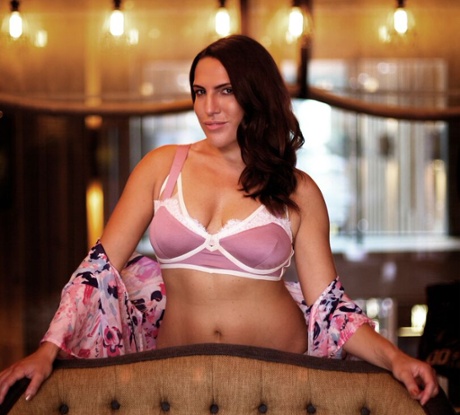
I welcomed the technical side of the project with open arms, but the fashion industry did not. Design was my biggest challenge. I had to find fashion designers who were young and prepared to take the risk – and prepared to listen to what I wanted – no wires, no padding, no push ups, just support. I kept throwing the bras back at them and saying ‘No, you are not listening’. But we eventually got there.
Why do you manufacture the bras in Lithuania?
I discovered they are the biggest exporters of lingerie in the whole of the EU as 80% of Russian lingerie comes from Lithuania. I thought that’s a good place to start.
What reaction have you had so far?
I have been overwhelmed with the support I have received, because so many people want this project to work. It was very obvious from early on that this was something that was really needed in the marketplace. My target market essentially is for women aged 34 plus.
You are about to launch a Kickstarter campaign. How much money are you asking for?
We are looking for £195,000 as a business. It is a high amount of money for Kickstarter, where if you don’t hit your target you don’t get anything at all. Our reason for setting such a high target is because we worked out if we can get a minimum of 3,000 women to pre-order that will give us tremendous data to work with to refine our algorithms. The more data we have, the better we can adjust those algorithms.
What’s next?
Depending on how successful we are in our Kickstarter campaign, one of the things we’d like to do is develop the technology even further, so we can develop the 3D sensors in the phone to another level. Another thing is to develop robotic technology for sewing, which will bring the price right down.
Sign up to become a member of the Guardian Small Business Network here for more advice, insight and best practice direct to your inbox.