Piak* had never received a single visit. His parents were migrant rubber tappers who had relocated to a remote plantation so deep that there was no mobile signal and it was so far that travel was simply beyond their means. Their son, Piak, a teenager in a juvenile rehabilitation centre, waited.
Too often, boys like Piak get lost in the system, becoming a file passed between overworked professionals. But fortunately for Piak, his case was part of the Individual Routing Counsel pilot project, known as IRC. He was assigned a social worker who kept asking questions no matter what obstacles he faced.
Through sustained effort, contact with the family was re-established. Special permission was arranged for phone calls, an exception at the time. It wasn't much, but it was something and that something turned out to be enough to make a difference to Piak.
Encouraged to develop an interest he already had -- cutting hair -- Piak began to train in the skill. His social worker worked to bring the pieces together: a job placement near where his family had settled, an employer willing to take a chance and a local barber prepared to mentor him.
After six months working under that guidance, with continuous monitoring and support, Piak completed the programme and was released early. In the year that followed, under continued supervision, he did not reoffend.
Stories like Piak's are what the IRC model was built to deliver.
Thailand's IRC pilot operates under the Department of Juvenile Observation and Protection within the Ministry of Justice. Adapted from a Dutch model, it has been quietly reshaping the country's approach to juvenile rehabilitation since its inception, with the central objective of reducing recidivism among children and young people.
The programme is built around a single, deceptively simple idea: continuity in care. Each social worker is responsible for 16 youths, guiding them from their first day inside a centre through vocational training, internship placement and reintegration into society. They remain a consistent presence for a full year after release.
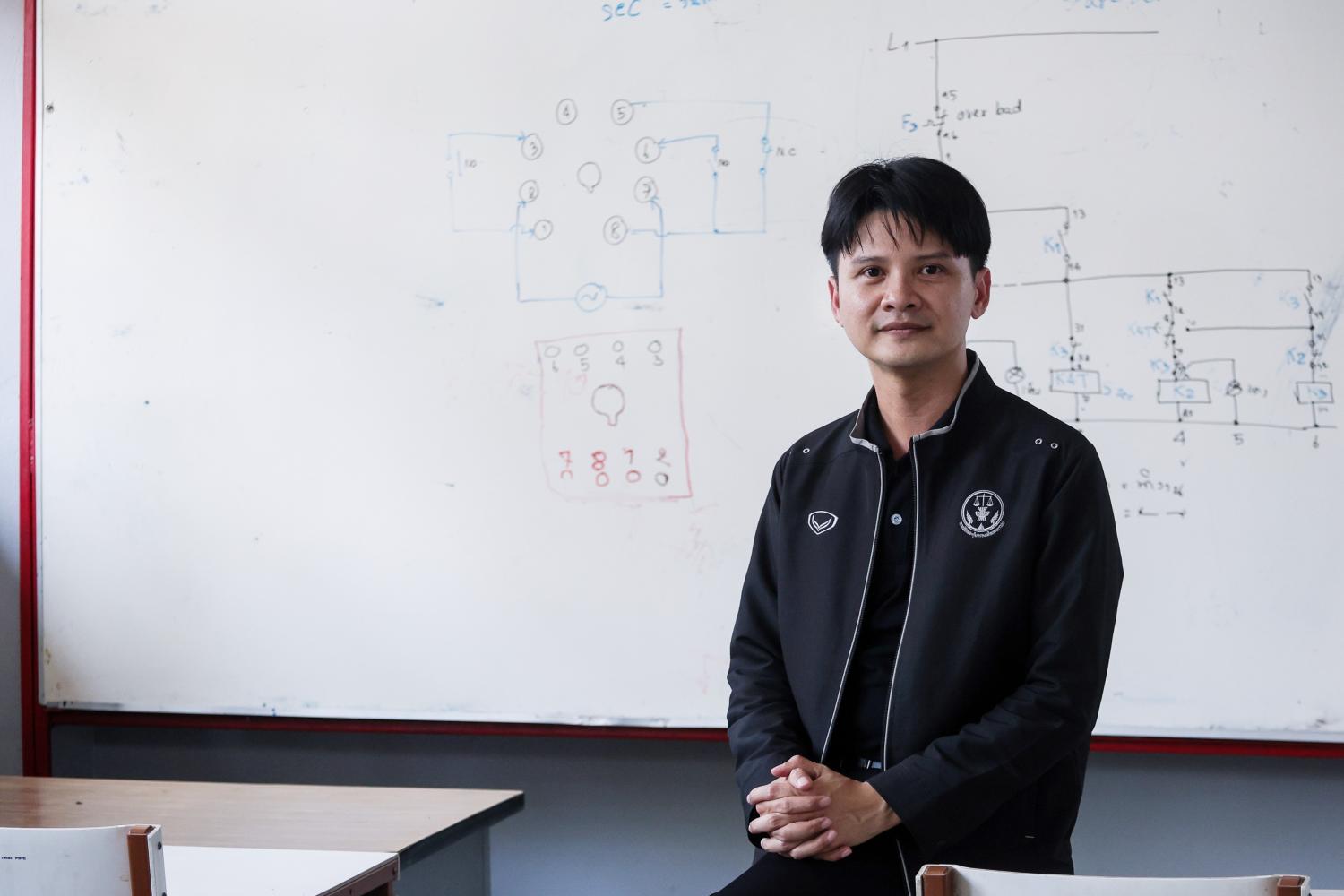
"The IRC approach is built on relationships," says Aphichat Phuphanit, a senior professional social worker who was involved in the pilot from 2014 to 2016. "With time and consistency, social workers build trust, pace together tailored individual life plans and motivate real behavioural change grounded in each child's strengths and aspirations."
This is a radical departure from the norm. Under the traditional system, a handful of social workers, often just two or three, might oversee several hundred youths. Children are assessed by one person, referred to another and supported by a third. No single figure accompanies them through the whole journey. Trust, already fragile in institutional settings, was easily broken in those transitions and with it the chance for meaningful change.
Aphichat is clear about what the model is for: not to keep children in detention, but to help them leave as soon as they are genuinely ready.
"The longer they stay, the harder it becomes to adjust outside," he explains. Prolonged institutionalisation can leave young people overwhelmed by sudden freedoms and responsibilities they haven't been prepared for.
That is why reintegration begins long before the gates to freedom re-open. Before a youth starts an internship, typically lasting six months, their social worker works to rally the full circle of support: families, employers, communities.
Employers are asked to provide workplace mentors who guide not only technical skills but also social behaviour.
Families are encouraged to actively participate in their child's goals, not merely await their return.
Rehabilitation, the model insists, does not rest on the child alone -- it requires a network of belief and opportunity built deliberately around them. Without that shared commitment, even the most determined young person risks slipping back into familiar patterns.
The results are hard to argue with. Introduced as a pilot initiative at the Rayong Juvenile Vocational Training Centre between 2014 and 2016, the IRC programme involved 78 children and youths and recorded a reoffending rate of just 2.1%. By comparison, a sample group of 60 youths from the same period who did not participate recorded a rate of 40.4%.
Following the pilot's success, the Department of Juvenile Observation and Protection scaled the IRC approach nationwide, increased social worker staffing to ensure appropriate staff-to-youth ratios, and introduced one year of post-release monitoring and support.
As a result of nationwide implementation, the overall reoffending rate among released youths fell to 17.8%, which is significantly lower than before, though still well above the pilot outcomes. These results suggest that appropriate staffing levels and a well-balanced workforce distribution could further enhance the effectiveness of reoffending prevention efforts, indicating that additional improvements may be achieved through stronger workforce capacity and implementation fidelity.
However, Aphichat is aware of the limits to any system. "Even if we prepare a child perfectly," he says, "if no one gives them a chance, they will likely return to the same cycle." Rehabilitation, the model insists, does not rest on the child alone. It requires a network of belief and opportunity built deliberately around them.
For all its promise, the IRC approach faces a structural challenge that no amount of good design can wish away: Thailand does not have enough social workers to sustain it at scale. A recently launched Assessment of the Social Service Workforce in Thailand -- conducted by the Thailand Association of Social Workers in collaboration with Unicef Thailand -- confirms this.
Thailand has just five licensed social workers per 100,000 people, up slightly from 4.5 in 2021, but still far below neighbouring Malaysia at 25, Cambodia at 33 and the United States at more than 200.
The Assessment of the Social Service Workforce in Thailand report also highlights that social workers are heavily concentrated in Bangkok and other urban centres, leaving many remote communities, precisely where at-risk children most often come from, underserved.
The system leans heavily on volunteers, who make up around 96% of the workforce but frequently lack formal training and professional supervision. The report calls for clearer role definitions, stronger career pathways, better compensation and supervision systems capable of assuring quality and keeping people in the field.
"IRC is a good example of why it's essential to strengthen the social service workforce," says Nantaporn Ieumwananonthachai, Child Protection Officer at UNICEF Thailand. "It is the foundation for sustaining and expanding models that will ensure continuity of care and access to quality support for vulnerable children.
"Sufficient numbers, especially at community level, can also drive more effective prevention -- catching children before they become at risk or ever reach a rehabilitation centre at all."
The IRC pilot has demonstrated what becomes possible when professionals are given the time, training and support to accompany a young person through their entire journey. Unicef has worked closely with government agencies, including the Department of Children and Youth and Local Administrative Organisations, to advocate for greater investment in professional social service workforces.
As Thailand becomes an aged society, it is more important than ever to invest in young people -- especially those at risk -- not just to improve their quality of life, but to give them a real chance to succeed. The question now is whether we are willing to invest in that future.
Inside a training room at Sirindhorn Juvenile Training Center, sparks fly as boys in full protective gear bend over their workstations, welding pieces of metal with steady concentration. For them, this is more than a technical exercise. It is preparation for a life beyond the facility's walls.
"I'm looking forward to getting my chance to start an internship," one boy says with a hopeful smile.
*Piak is not his real name.