From schools in Shanghai to picnics in Caracas: How coronavirus is moving global life online
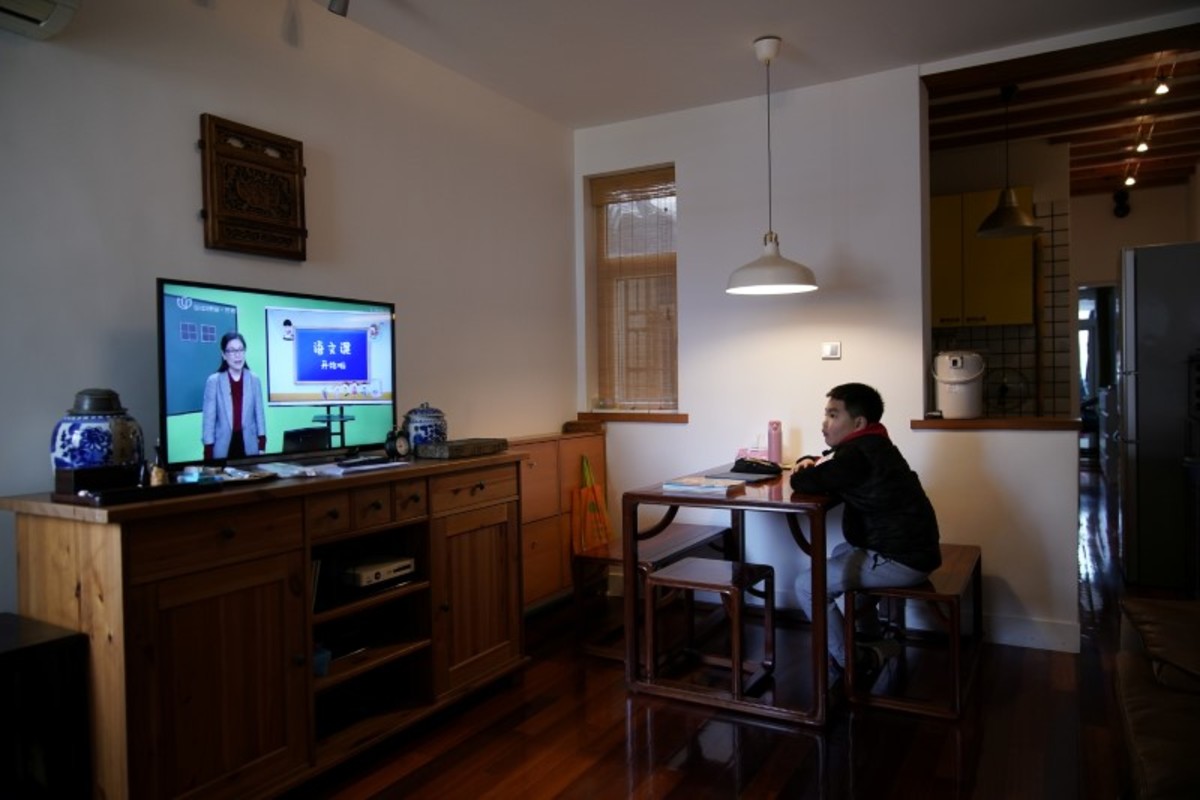
Sha Jie, 10, a primary school student, attends an online Chinese class as he sits at home during the novel coronavirus disease (COVID-19) outbreak, in Shanghai, China, March 3, 2020. REUTERS/Aly Song
Millions of people worldwide are having to embrace life under lockdown - confined to their own four walls or neighbourhoods for weeks on end as countries battle to reduce the spread of the coronavirus.
This new way of living poses huge challenges. Teaching, working and socialising have moved online as never before. The lockdown has also prompted some people to reassess their lives and what is most important to them, bringing unexpected realizations and touching moments with their families.
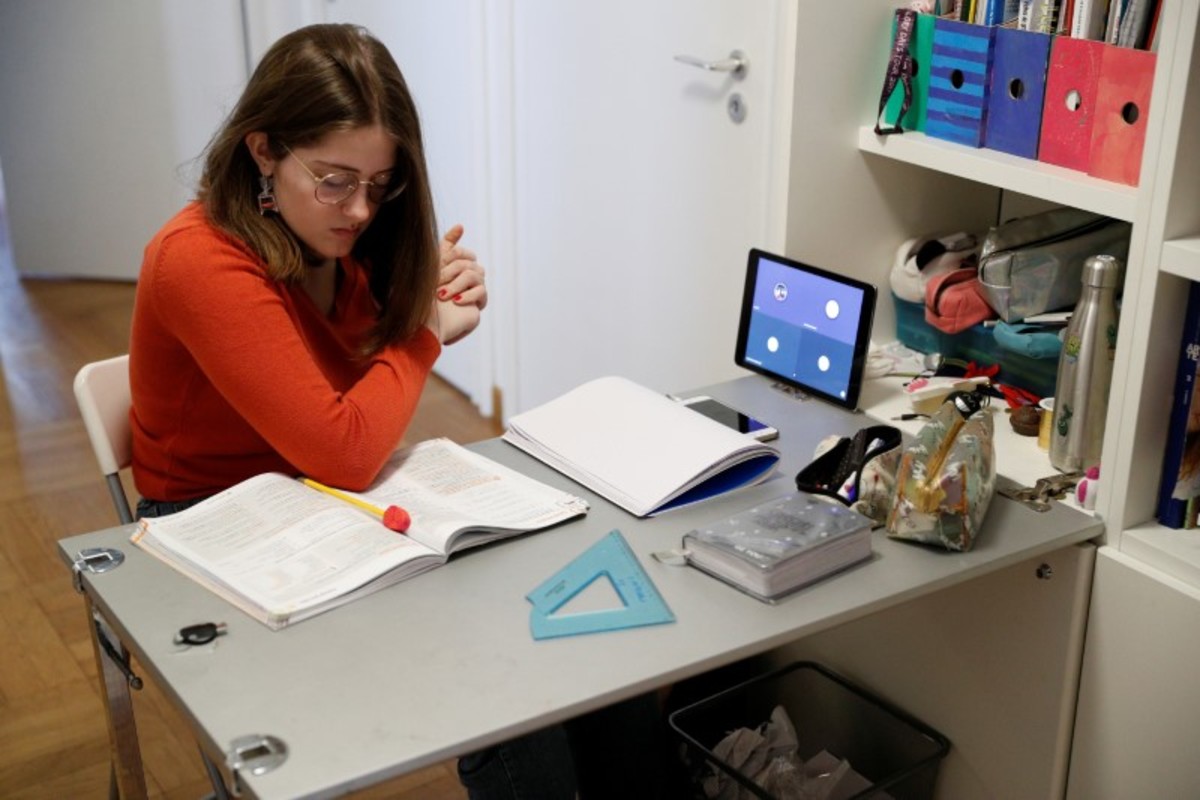
Lavinia Tomassini, 14, uses her iPad to take part in an online French class, as part of a home-schooling programme put in place by her school, following the Italian authorities decision to close schools and universities as well as urging people to work from home as a protective measure to prevent the spread of the novel coronavirus disease (COVID-19) outbreak, in Milan, Italy, March 6, 2020. "I hope all this will come to an end... I am really struggling to study from home as I have so many distractions here at home. Also I really want to be able to go out again without being worried of catching a disease," said Tomassini. REUTERS/Guglielmo Mangiapane
Sha Jie, a 10-year-old primary school student, is continuing his schooling online. He sits at the kitchen table of the 70 square meter flat he shares with his parents and grandmother in Shanghai to follow a Chinese lesson on the television screen.
"I go out once a day at most, just hanging around our neighbourhood. My parents told me to wear masks if going outside and to wash hands carefully after coming back home.
"I study, draw, watch movies at home ... And I build models. I even made a programmable LEGO model car," he said.
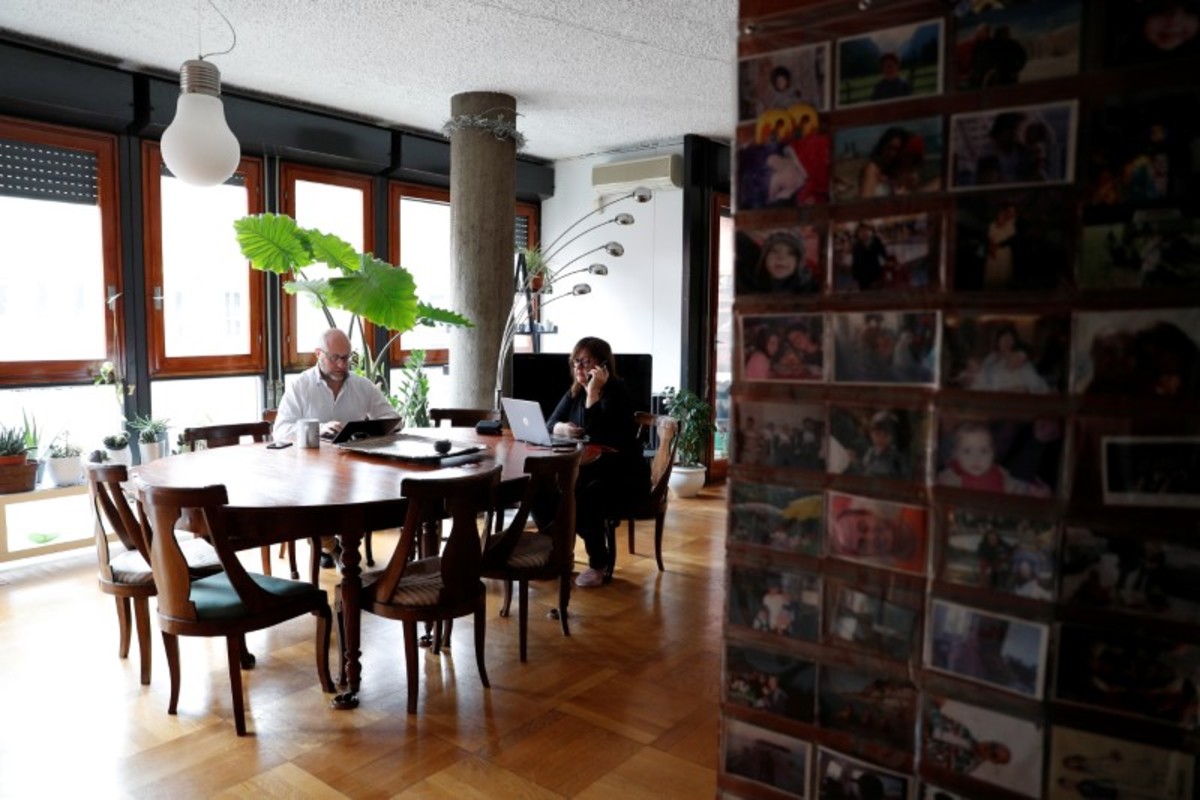
Corrando Tomassini, 49, and his wife Rosanna Maserati, 49, work from home following the Italian authorities decision to close schools and universities as well as urging people to work from home as a protective measure to prevent the spread of the novel coronavirus disease (COVID-19) outbreak in Milan, Italy, March 6, 2020. "I had never experienced this kind of continuative smart working before. Even if my company launched the smart working programme several years ago, I never took advantage of it because I found it easier to go to the office, which is close to where I live. Working everyday from home has complicated things but it has also improved the quality of life," said Tomassini. REUTERS/Guglielmo Mangiapane
Asked what he would like to do most when life gets back to normal, he said: "hang out with my friends and play games at Toys 'R' Us."
Thousands of miles away, in Milan, 14-year-old Italian Lavinia Tomassini is also trying to study at home.
"I get up much later and I go to bed later than usual. I focus less when I am home, I like to go to school and study there more. I focus more when I am at school as I have less distraction.
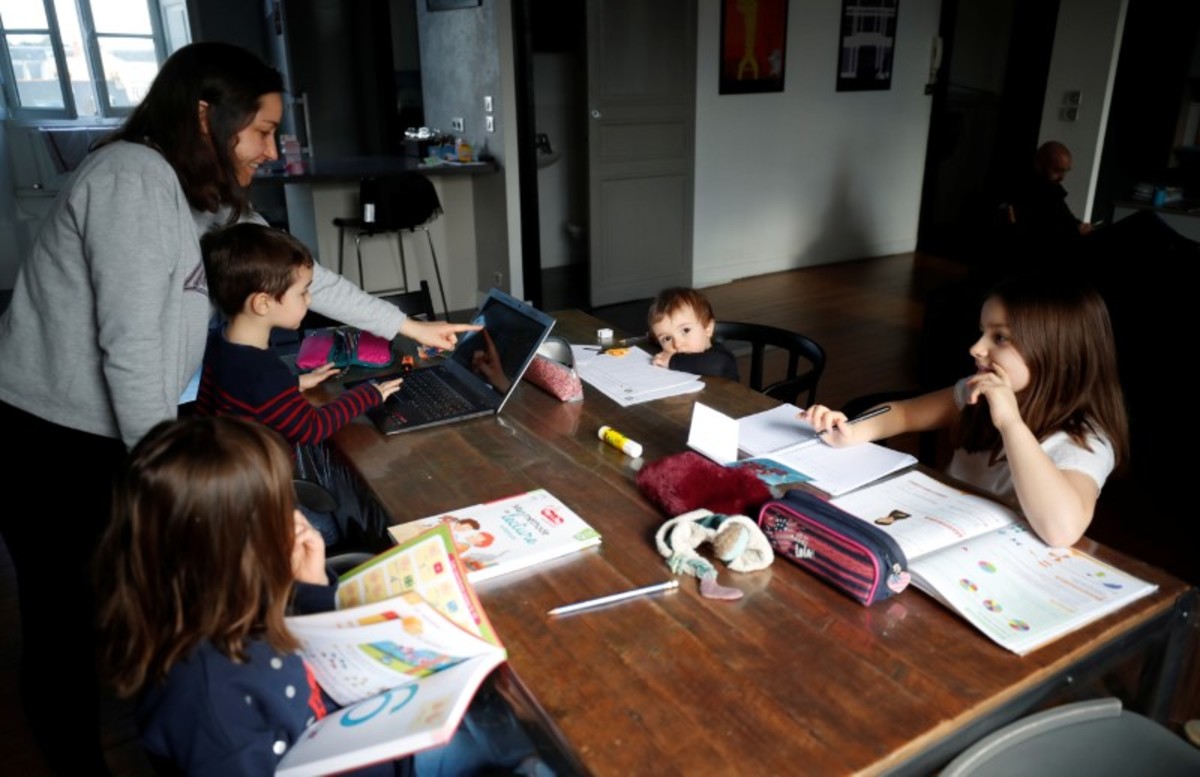
Marina Brebion, a French school teacher, helps her four children with school work,?during an imposed lockdown to prevent the spread of the novel coronavirus disease (COVID-19) outbreak, in Nantes, France, March 17, 2020. "We respect the lockdown instruction as much as possible," Brebion said. "For now, the confinement remains quite flexible, we can go out for the imperatives, like shopping." REUTERS/Stephane Mahe
"I hope all this will come to an end ... I am really struggling to study from home as I have so many distractions here at home. And also I really want to be able to go out again without being worried about catching a disease."
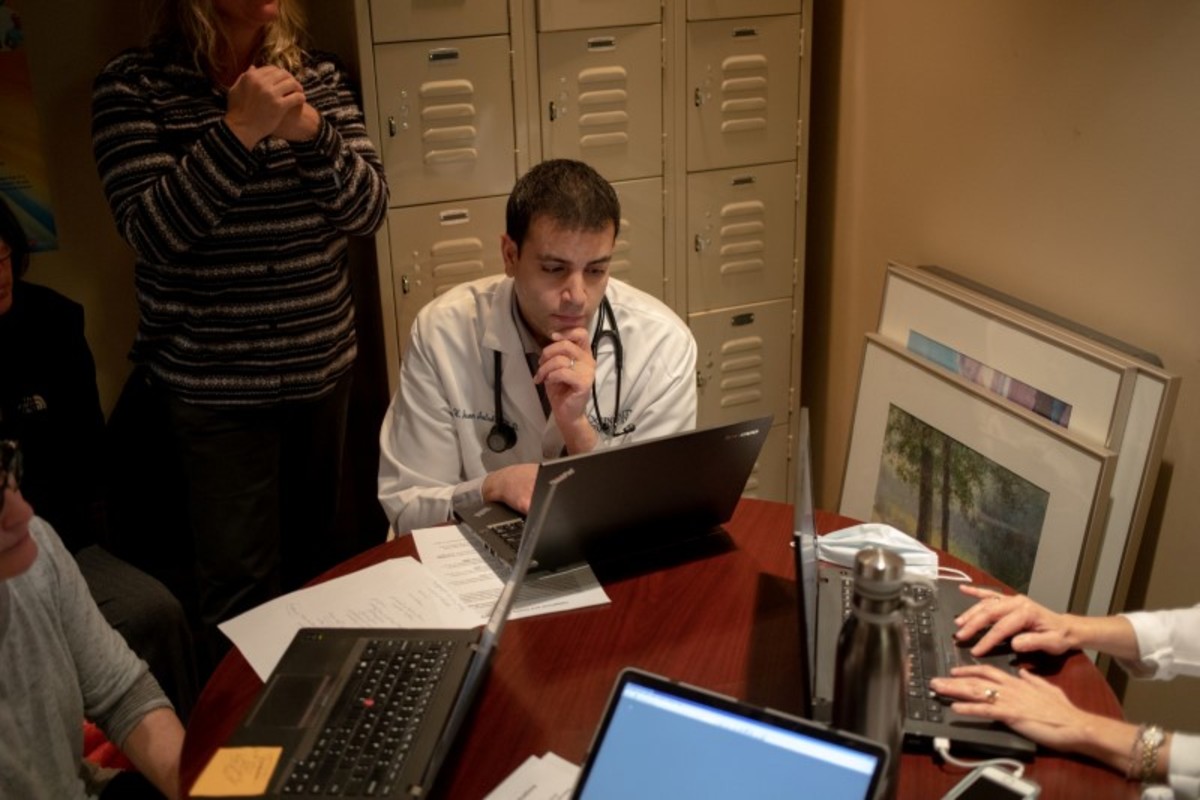
In the United States, as in other countries struck by the virus, Dr. William Jason Sulaka has learned how to conduct consultations online as he can no longer meet his patients face to face.
Dr. William Jason Sulaka, 40, a physician with Infinity Primary Care, looks at his computer as Dorene Blain, an Information Technology Support Analyst, leads a tutorial session on how to conduct virtual appointments through OTTO Health, a technology software which allows medical professionals to video chat with their patients without risk of exposure whilst physicians across the United States have begun online-consultations to help prevent the spread of the novel coronavirus disease (COVID-19) outbreak, in West Bloomfield Township, Michigan, U.S., March 16, 2020. "I would rather see a patient in the office ... I prefer real visits to virtual visits," Sulaka said. "I just miss the freedom of going out in general and not having to worry about the person next to me." REUTERS/Emily Elconin
"I would rather see a patient in the office ... I prefer real visits to virtual visits," he said.
But the 40-year-old, based in West Bloomfield, Michigan, has been staying at home with his wife and children as much as possible.
"I just miss the freedom of going out in general and not having to worry about the person next to me."
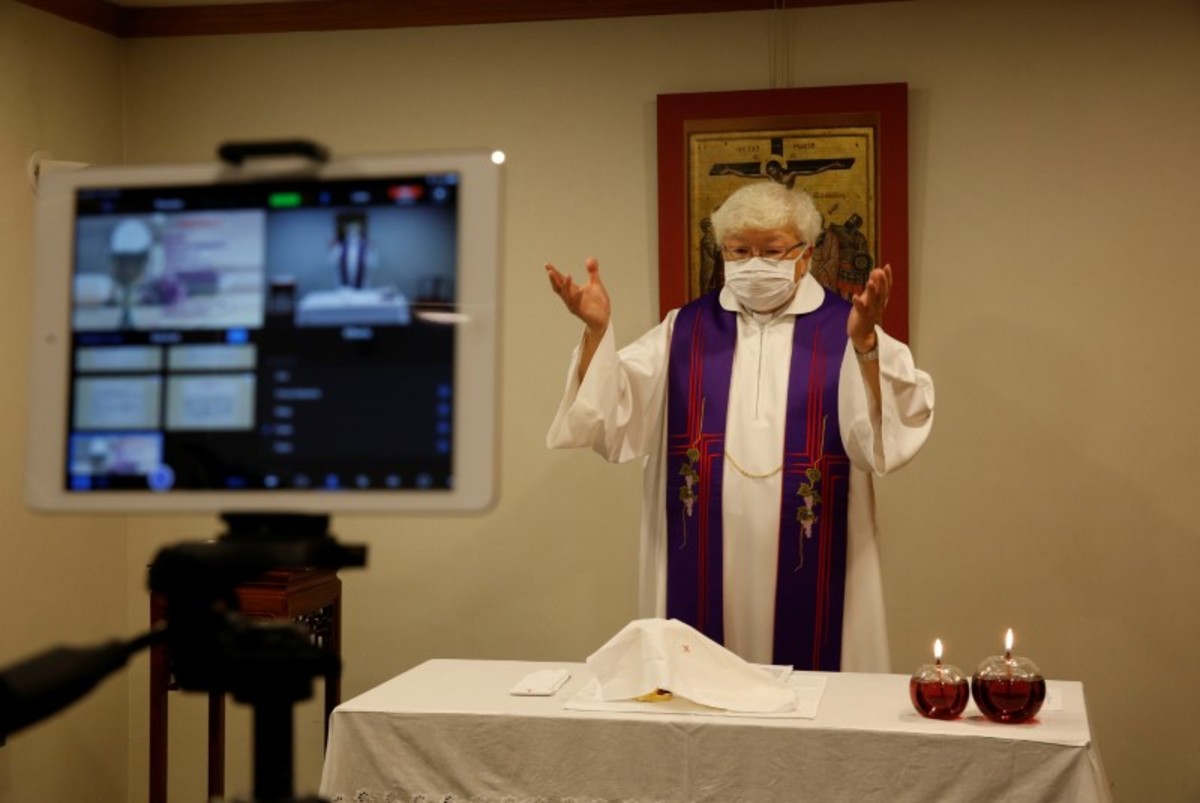
Thomas Law Kwok Fai, a priest, conducts Mass streamed online for people to mark the second Sunday of Lent, after the Roman Catholic Diocese of Hong Kong temporarily suspended public masses at churches, following the the novel coronavirus disease (COVID-19) outbreak, in Hong Kong, China, March 7, 2020. "It was a painful decision. However, it was a faithful decision as we believe in God. God has given us the power to make sacrifices that make it a loving decision," said Fai. REUTERS/Tyrone Siu
Using online consultations, Dr Lisa Elconin, 57, also in West Bloomfield, Michigan, is getting 10 times more communications from patients.
The closure of workplaces has given people time with their families they never had before.
Dino Lin, a 40-year-old who works in an auto-part manufacturer, was lucky enough to move into a more spacious apartment in Shanghai just before the virus took hold, allowing his 5-year-old daughter Wowo Lin to have her own room.
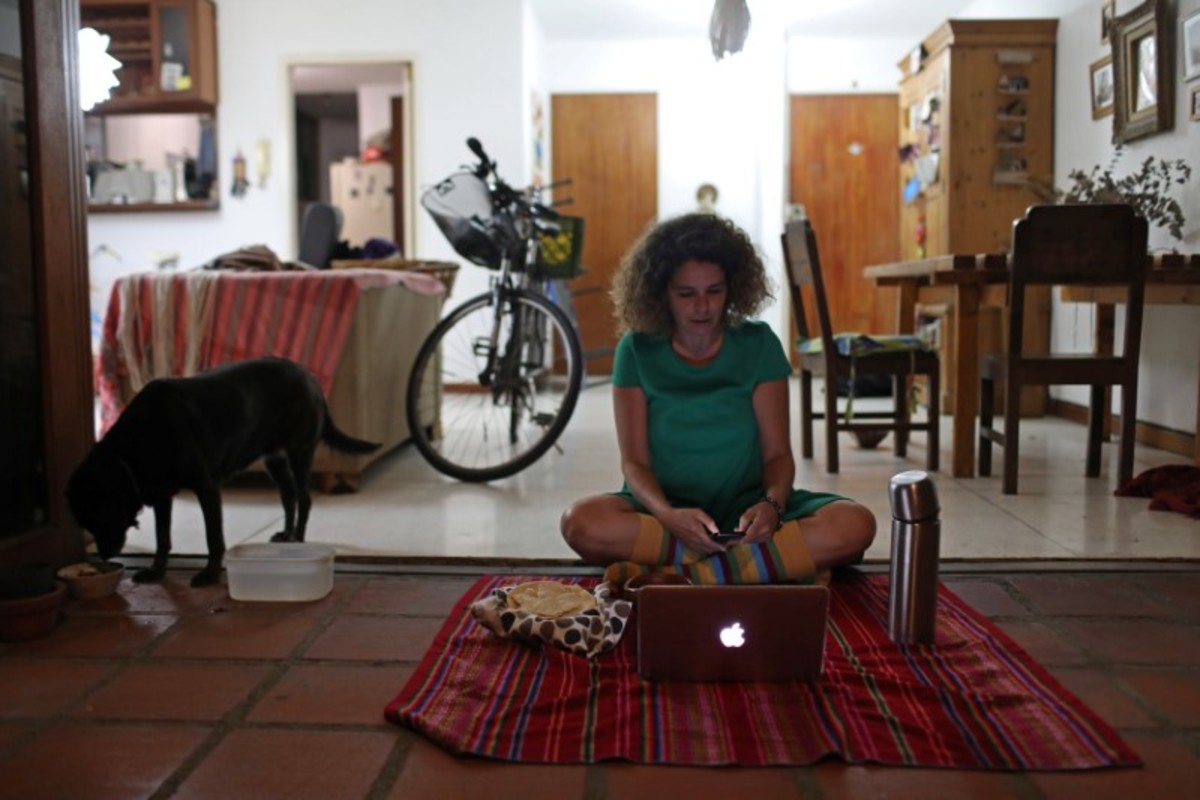
Ana Pereira, 51, uses her computer to go online and join a virtual picnic with her friends at her home, during the novel coronavirus disease (COVID-19) outbreak, in Caracas, Venuzuela, March 17, 2020. "I realised that I had a half packet of lentils and a half packet of rice in my fridge and some garlic, so I went to the market and bought enough food for about two or three weeks," Pereira said. When asked what she missed most while self isolating she said, "I want a hug, because you can talk to people but the physical contact is what I miss most." REUTERS/Manaure Quintero
"We have been staying at home mostly. We are not forced to do so but believe this is the best way to keep our family away from infection ... I occasionally go downstairs for daily supplies and food. My wife and daughter don't get out of the front door at all."
Lin was previously commuting weekly from Shanghai to the city in central China where he worked.
"Now I finally got a lot of time to spend with my daughter and wife. We help our daughter build her own daily plan, which includes English, maths study, cello practice, reading as well as her favourite, watching cartoons.
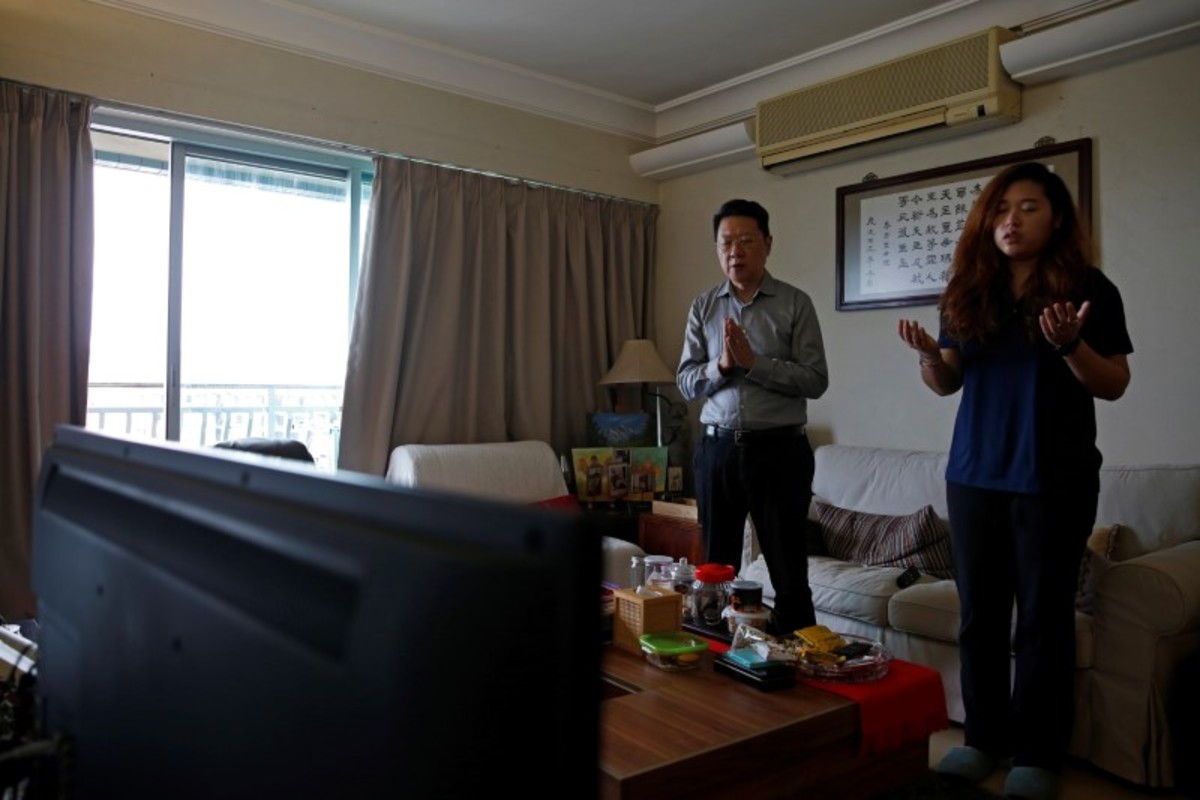
Stephen Wong and his daughter Amanda participate in an online mass at their home after the Roman Catholic Diocese of Hong Kong temporarily suspended public masses at churches, following the novel coronavirus disease (COVID-19) outbreak in Hong Kong, China, March 8, 2020. "I don't think it can totally replace the traditional service of the mass... it becomes very individual. So you lose the sense of community," Wong said. "[Online mass is] the best solution we have at this moment. But I hope after the coronavirus situation we can all resume the service very quickly because a lot of parishioners have been debating, arguing and saying they have missed the service. So let's hope we can get over it soon". REUTERS/Tyrone Siu
"After life returns to normal, I think the first thing for me is to have a big meal in a decent restaurant. My daughter’s wish is definitely to meet and play with her best friends right away."
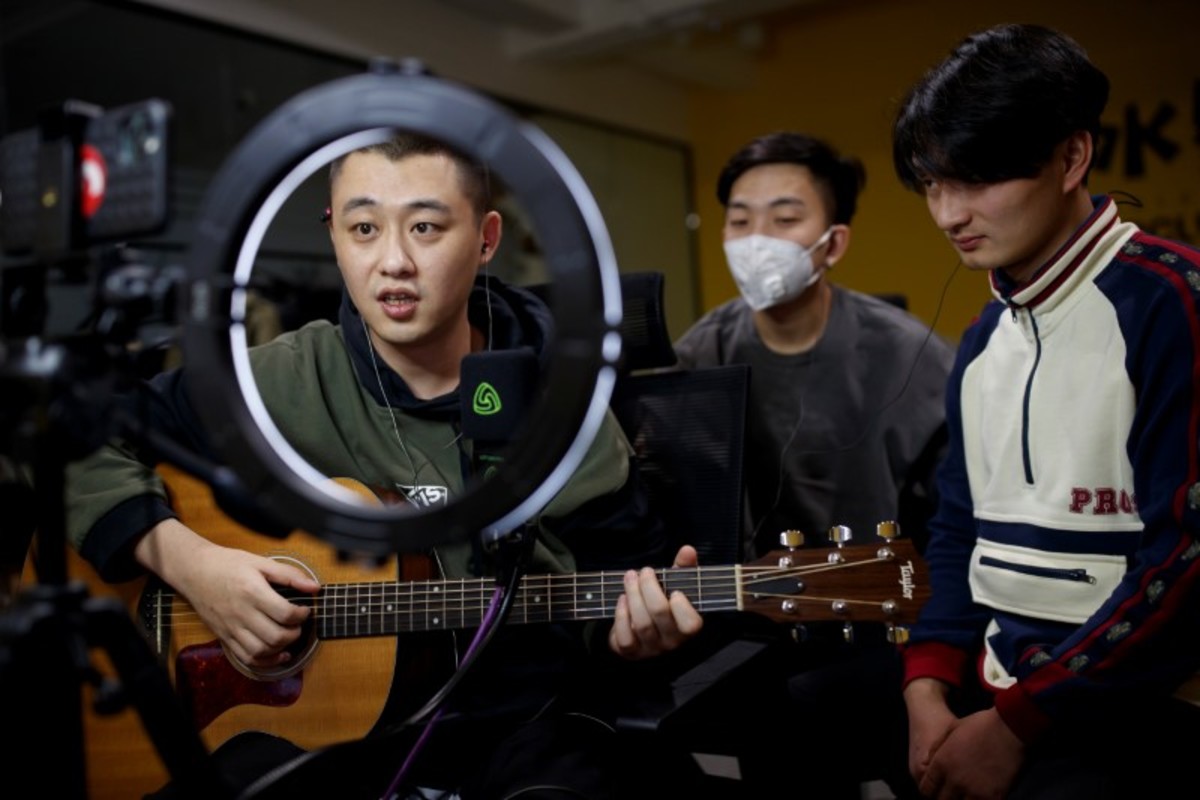
Musicians from the Beijing-based Chinese group 'The 2econd' could not meet for weeks, but have now been able to come together and livestream a performance for their fans.
DJs Eddy and Rhythmic perform a set during a live-streamed electronic music event at a closed nightclub, during the novel coronavirus disease (COVID-19) outbreak, in Beijing, China, March 7, 2020. "The advantage is that there will be more people who get to know me through the internet, and to feel the different vibe that music could bring," said Eddy. REUTERS/Carlos Garcia Rawlins
"I never thought that I wouldn't see my band mates in nearly two months. As members of the one-child generation, we don't have siblings. We are best mates. We share everything in life, joys and sorrows. I am used to meeting them every weekend for a drink or for a chat. Something felt wrong when that suddenly had to stop," said singer Zhang Cheng, 30.
"I see this period as a double-edged sword. Although some performance plans have been postponed, it gave us more time to cool down and reflect on our work and to make it more mature."
Thomas Law Kwok Fai, a 70-year-old Catholic priest in Hong Kong, has also turned to livestreaming, after the diocese temporarily suspended public Masses at churches.
Jo Proudlove, 48, works online from a garden office in her home, whilst self-isolating with her daughter Eve, as the number of coronavirus disease (COVID-19) cases increase around the world, in London, Britain, March 17, 2020. Following British government guidelines, the family believed and were also asked by Eve's school that Eve should self-isolate for 14 days when the nine-year-old began to feel unwell and had a brief fever. "I did have quite a lot of food in the house but we've had friends that have kindly got us a few supplies from a local shop," Proudlove said. "The first thing I'm going to look forward to when this is all over, will be just mingling again with everybody and I intend to have a very big party." REUTERS/Toby Melville
"It was a painful decision. However, it was a decision of faith as we believe in God. God has given us the power to make sacrifices that make it a loving decision."
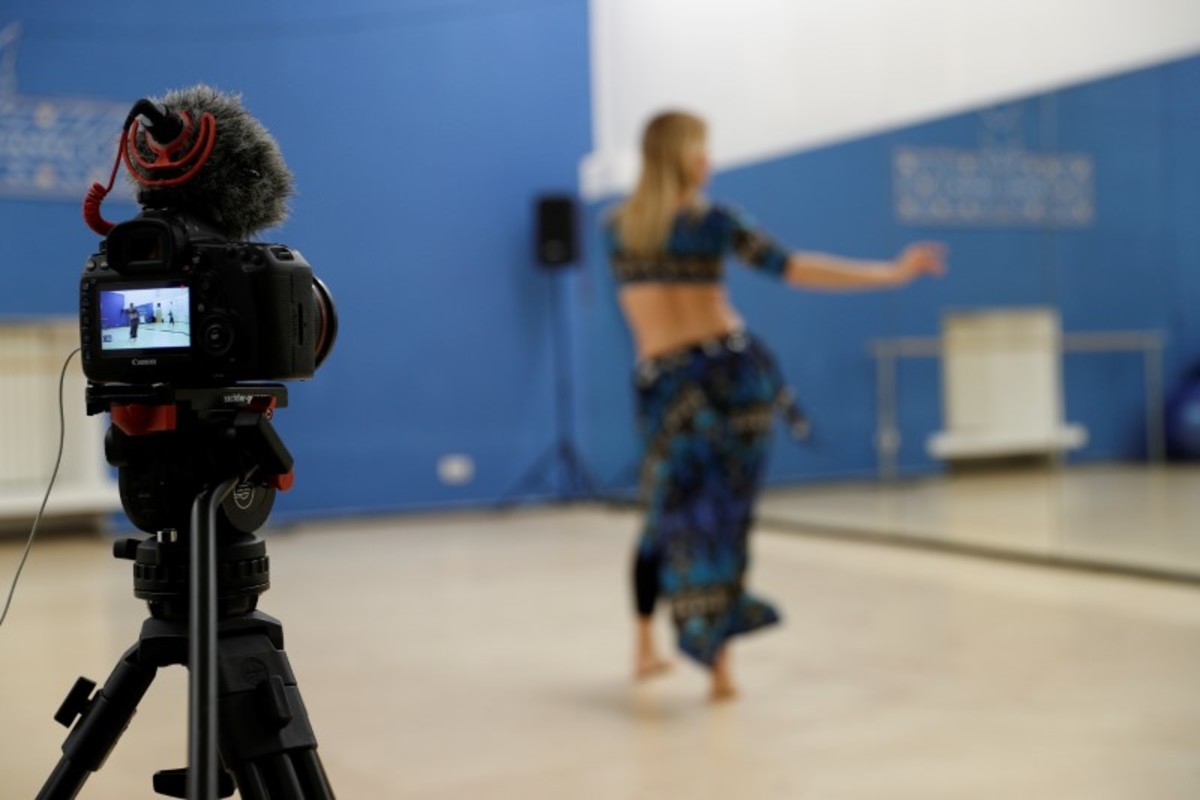
Rather than livestreaming, dance teacher Alessia Mauri, 34, who lives in Milan, is recording lessons her students can watch and follow at home.
"I thought it would be interesting to give them some specific dance lessons. Not like the ones I am seeing being livestreamed publicly on Instagram. I think it's much more constructive for my girls to have a video of a teacher who gives them a dedicated lesson they can have at home and help them keep on training."
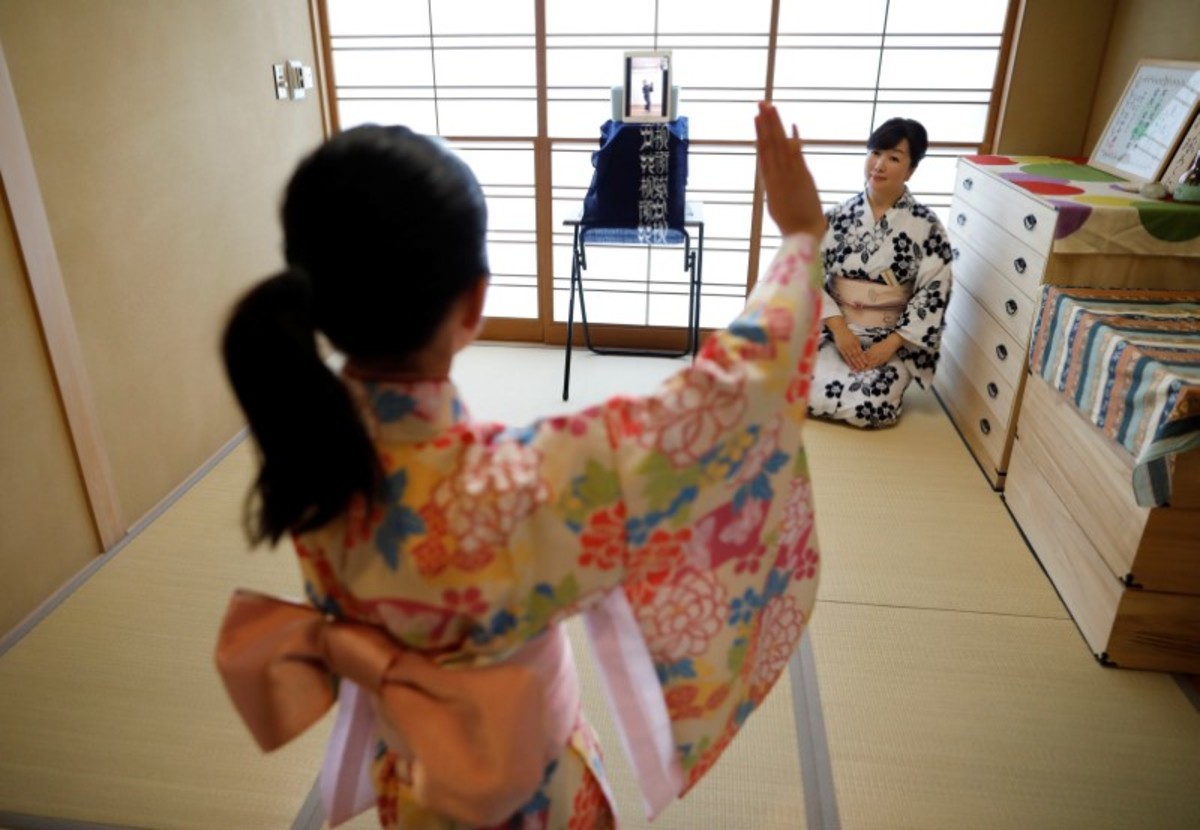
Komaki Yamashita, 49, and her daughter Konoha, 9, receive an online dance lesson by Takujiro Hanayagi, a Japanese traditional dancer, during the novel coronavirus disease (COVID-19) outbreak at their home in Tokyo, Japan, March 17, 2020. Konoha is staying at home while her school is closed. Although the family sometimes go out to a park, they don't want to travel by public transport so are taking the dance classes online. REUTERS/Issei Kato
In the Venezuelan capital Caracas, 51-year-old Ana Pereira lives alone with her dog and cat. She is sitting down in front of her computer to a virtual picnic with friends, as they can't actually meet as they have done weekly since 2011.
It is a poor replacement.
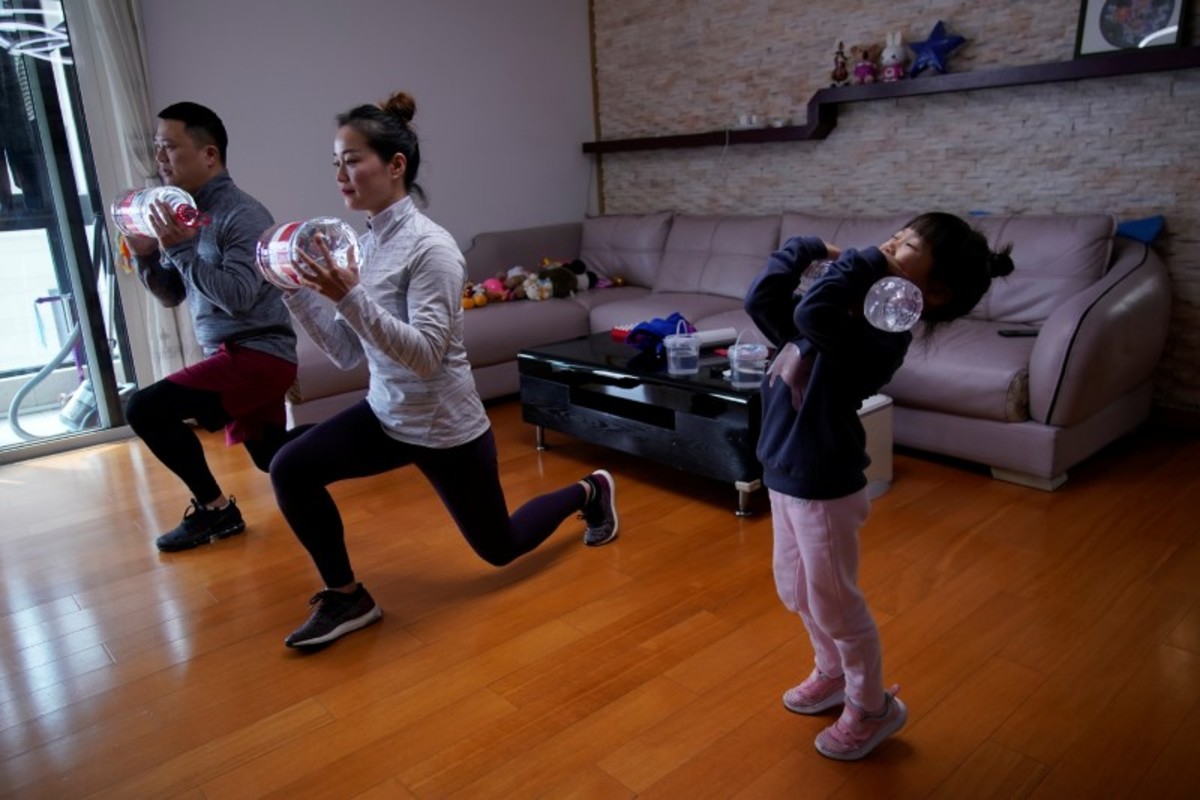
Dino Lin, Stella Zhang and Wowo Lin, 5, exercise using filled water bottles as weights as they watch a fitness class online at their house, during the novel coronavirus disease (COVID-19) outbreak, in Shanghai, China, February 25, 2020. "We have been staying at home mostly. We are not forced to do so but believe this is the best way to keep our family away from infection ... I occasionally go downstairs for daily supplies and food. My wife and daughter don't get out of the front door at all," said Dino Lin. REUTERS/Aly Song
"I need physical contact and I'm missing it a lot," she said. Asked what is the first thing she wants when life get back to normal, she said, "a hug."
For a photo essay see: https://reut.rs/3948g9R
(Reporting by Reuters bureaux; Writing by Alexandra Hudson; Editing by Mike Collett-White)
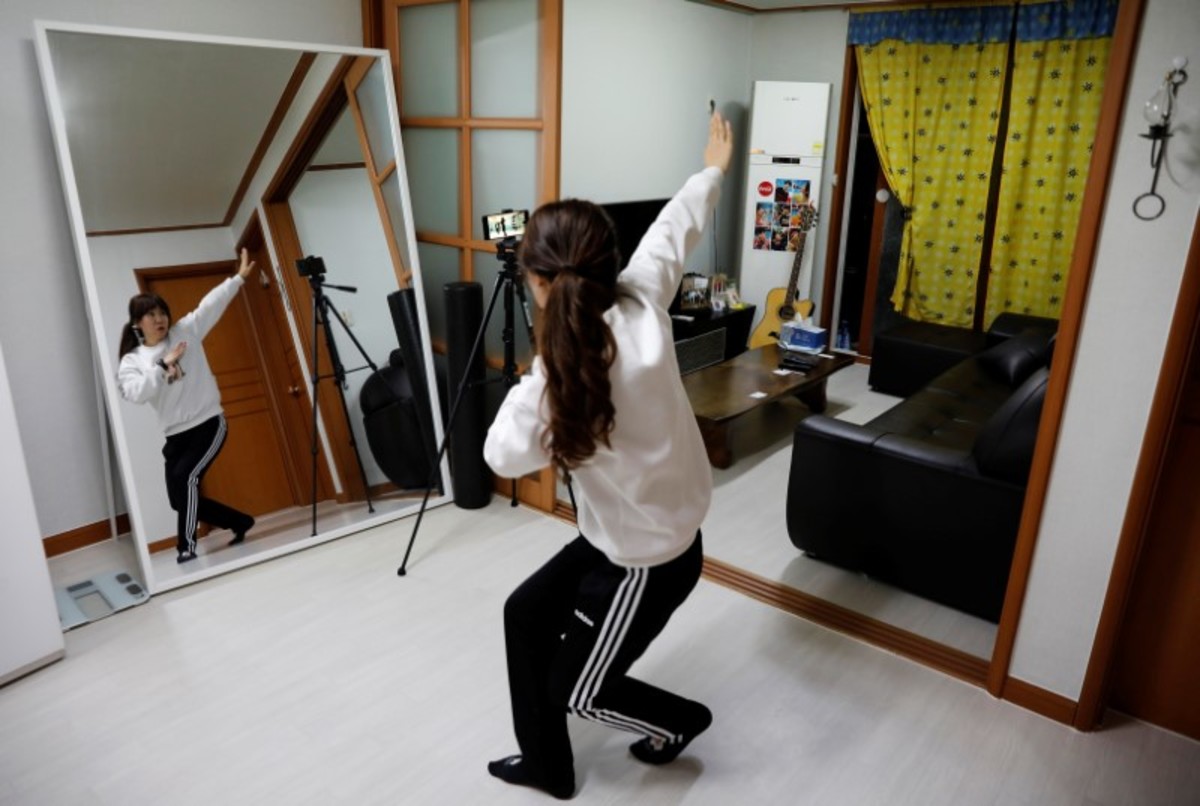
Kim Myung-hae, 46, a pre-school teacher, practices a dance by the South Korean boyband BTS as she watches a YouTube video at her home, during the novel coronavirus disease (COVID-19) outbreak, in Gumi, Gyeongsang Province, South Korea, March 13, 2020. Kim has been self-isolating since the end of February. "Since I can't go outside, I do a lot of online shopping. I surf the internet a lot too... I tend to watch a lot of YouTube," Kim said. "I miss everyday life. It all feels more special now. Before the coronavirus came, I went out everyday and would meet people all the time. I actually enjoyed going to crowded places, but ever since the coronavirus, I have to be careful about even just having a cup of tea with someone." REUTERS/Kim Kyung-Hoon Musicians from the Chinese group "The 2econd" Zhang Cheng, Zhuang Fei and Wen Zheng, perform for their fans during a live-streaming session broadcast on the video sharing website Bilibili at an office in Beijing, China, March 14, 2020. REUTERS/Thomas Peter Alessia Mauri, 34, who is a dance teacher, records a lesson to send to her students, while gyms are closed as a protective measure during the the novel coronavirus disease (COVID-19) outbreak, in Milan, Italy, March 3, 2020. "I thought it would be interesting to give them some specific dance lessons. Not like the ones I am seeing being live streamed publicly on Instagram. I think it's much more constructive for my girls to have a video of a teacher who gives them a dedicated lesson they can have at home and help them keep on training," said Mauri. REUTERS/Guglielmo Mangiapane
Sign up to read this article
Read news from 100's of titles, curated specifically for you.