When most Indian internet companies were still figuring out how to turn eyeballs into earnings, billionaire Sanjeev Bikhchandani was writing cheques into startups nobody had heard of. One went into a food delivery app at a pre-money valuation of Rs 9.4 crore. Another backed an insurance aggregator at Rs 21 crore. Both are now listed juggernauts - Eternal (Zomato) and PB Fintech (Policybazaar). Together, they have changed how India eats and buys insurance.
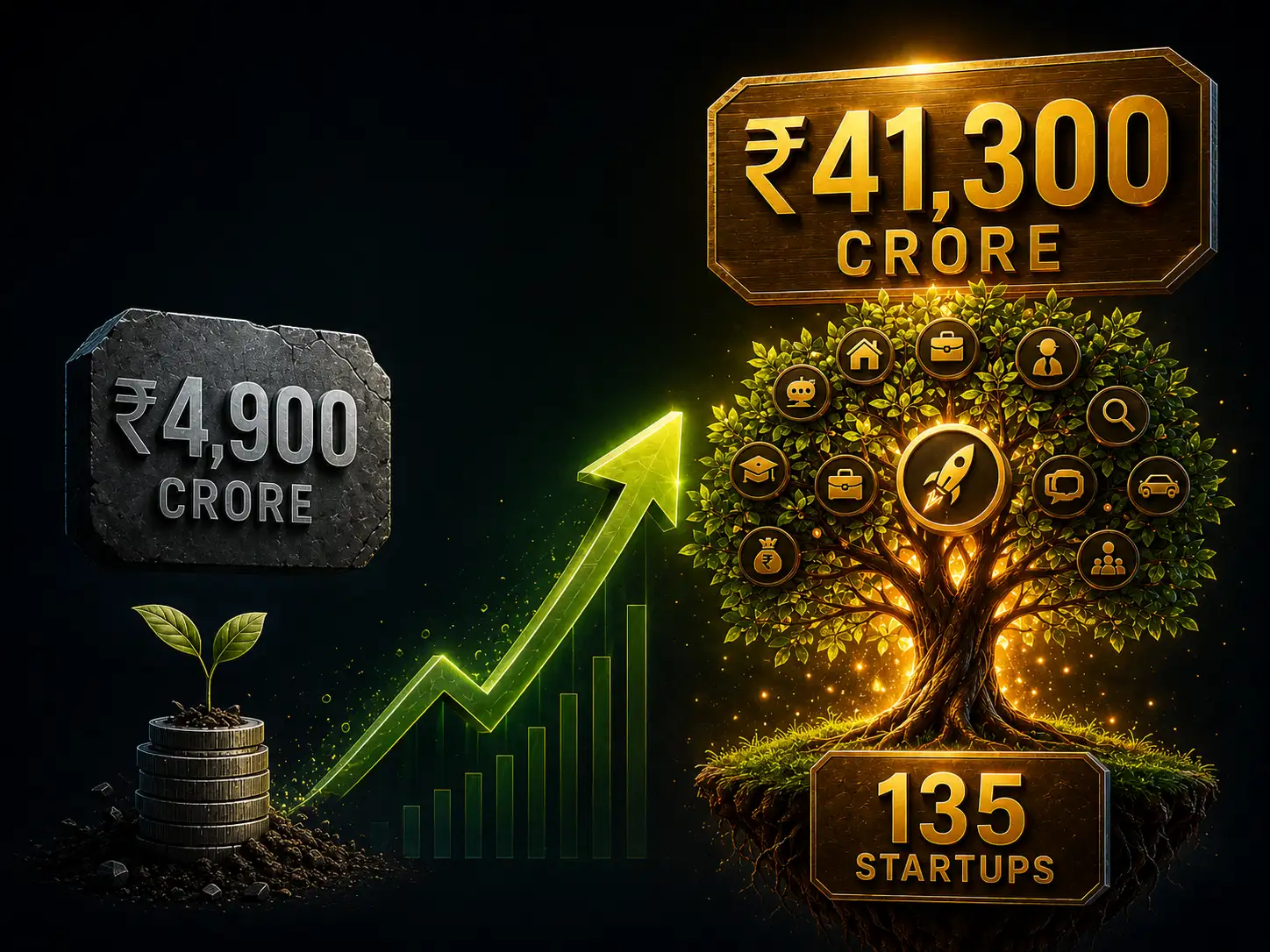
That early discipline of entering before consensus forms, holding longer than most investors are willing to, has now produced one of the most striking capital compounding stories in Indian venture. Info Edge (India) Limited, the NSE-listed parent behind Naukri.com, has deployed approximately Rs 4,900 crore across 135 startups since 2007. That capital is now valued at roughly Rs 41,300 crore — an 8.4x multiple and a ~33% gross IRR, according to a shareholder letter written by Bikhchandani.
"We are not in the business of chasing IRRs — our ambition is to invest in early stage companies that go on to become great," Bikhchandani wrote. "IRRs are a happy incidental outcome of this effort and not the main object."
Sanjeev Bikhchandani portfolio in numbers
Info Edge's consumer technology and consumer AI portfolio, the oldest and largest sleeve, has delivered the most dramatic outcomes. The company has deployed Rs 2,755 crore across 45 consumer-tech and consumer-AI companies, a pool now valued at Rs 37,214 crore. That is a 13.5x gross multiple and a ~34% gross IRR. The bulk of this value sits in two listed companies: Eternal (the entity housing Zomato and Blinkit) and PB Fintech, the parent of Policybazaar.
The AI portfolio, built since 2020 across 28 companies, has returned a 2.1x gross multiple on Rs 614 crore deployed, now valued at Rs 1,268 crore, at a ~31% gross IRR. Fifteen of those 28 companies have raised externally led follow-on rounds from institutional investors, including Insight Partners, Peak XV, SIG and Vertex.
The deeptech book, which is younger, riskier, and backed almost entirely at the IP and R&D stage, has deployed Rs 455 crore across 30 companies, now marked at Rs 559 crore, a 1.2x multiple and ~15% gross IRR. Thirteen of those 30 companies have already attracted external institutional capital.
Taken together, Info Edge and its group companies have put in approximately Rs 3,600 crore, with the remaining Rs 1,300 crore coming from external limited partners in the alternative investment funds the company manages. The combined gross IRR of those AIFs stands at ~22%.
AI and deeptech bets
Perhaps the most strategically significant dimension of the shareholder letter is what it reveals about timing. Info Edge began investing in AI and deeptech circa 2020, well before the global AI investment wave that followed the launch of large language models. The company has since deployed over Rs 1,003 crore across 54 AI-native and deeptech companies, spanning enterprise AI, robotics, semiconductors, space tech, biotech and electric mobility.
"Investing ahead of consensus, at the IP and R&D stage, has given us attractive entry points and close, long-term relationships with founders," the letter stated.
The government has taken notice. Voice AI startup Gnani.ai , an Info Edge portfolio company building a voice-first agentic platform for enterprises, was selected under the IndiaAI Mission and received Rs 177 crore worth of government GPU compute credits, and was featured at the IndiaAI Summit 2026. Two other portfolio companies, ePlane and Manastu Space, received the country's first allocations under the new Research, Development and Innovation (RDI) Scheme. ePlane secured the single largest national allocation worth Rs 285 crore out of 22 approved proposals. Manastu Space received ₹115 crore. Both allocations are subject to matching capital from investors.
The deeptech portfolio's standout performer is Unbox Robotics, a swarm-robotics business for warehouse automation that has turned profitable, built a substantial international deployment footprint and closed a Series B round.
Investment philosophy
Bikhchandani's letter is unusually candid about what drives and what does not drive his decision-making.
On entry valuations, the letter pushes back against a now-popular view in venture circles that price paid should not matter at the early stage. "We like to come in early and be disciplined about the entry price as it sets the company up for success," it said, noting that expensive early rounds almost always hinder a company's ability to raise capital during difficult periods.
Fund size, he said, is the enemy of returns. The company deliberately keeps fund corpuses limited, deploys capital sustainably and manages some of the longest-duration funds in the country — 12 years with a 2-year extension.
Bikhchandani regards intermediate IRRs with some degree of scepticism and takes them with a generous pinch of salt. "We await either exits from investments or IPOs of companies to fathom the real IRRs."
The structural advantage, the letter argues, comes from Info Edge's balance sheet itself. The robust cash flows from the Naukri.com fund a significant portion of the AIF corpus, freeing the investing team from the fundraising cycle that constrains most venture managers. "This gives our investing team an unfair advantage — they don't have to spend an inordinate amount of time raising money and can instead focus on the real job of identifying and investing in startups."
What comes next
The letter identifies three themes as the primary drivers of future value: artificial intelligence, deeptech and consumer technology — with AI expected to reshape both startup formation and established internet businesses.
"In our view, India is entering a period where globally relevant technology companies will increasingly be built from India, not just for India," the letter stated.
Within Info Edge's own operating businesses, that shift is already visible. Naukri.com, the jobs platform that funds much of this investing activity, is deploying AI across search, matching, recruiter productivity and candidate engagement.
Bikhchandani is careful not to declare victory. Early stage investing, he notes, requires seven to ten years before results become legible. Several portfolio companies still carry early-stage mortality risk even after being marked up. And the real proof, as always in venture, will come at exit.
"A large part of the value in our recent investments, we believe, remains unrealised and ahead of us," the letter concluded.
( Disclaimer : Recommendations, suggestions, views and opinions given by the experts are their own. These do not represent the views of The Economic Times)