Ask people to think of physical education (PE) and the same traditional school sports spring to mind, often with a grimace at the memory.
Everyone has a sport they are good at and can enjoy, no matter what their perceptions. We seem to have slipped into an age of technological distraction where kids will happily spend hours inside rather than trying out the huge range of sports available to see what suits them.
I find it slightly depressing to witness, especially how technology helps feed young people’s insecurities. This is why sport is becoming increasingly important and why we need to get more creative in promoting it. I would love to see more teachers and schools striving to help young people build their confidence through sport. The upshot is that they would benefit both in and out of the classroom.
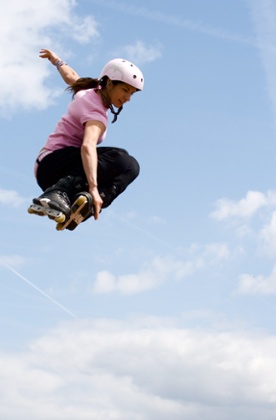
I grew up in a deprived area of Barnsley, south Yorkshire, with a single mum who took me to ballet and dance classes. But they really weren’t for me. I first put on a pair of inline skates at the age of seven and looking back it was literally life changing. I can honestly say I felt immediately comfortable and loved it from that moment on.
Today my ambition is to help youngsters to find a sport that suits them. I’ve been working with the Youth Sport Trust, visiting schools up and down the country for the past five years to help achieve this.
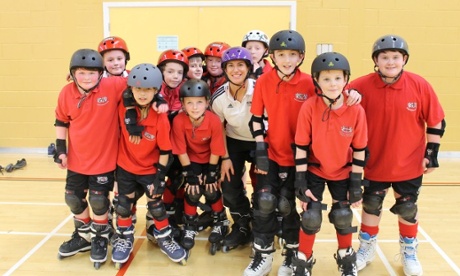
Through the Youth Sport Trust’s Matalan’s Sporting Promise and Sky Sports Living for Sport (SSLFS, a part of the Sky Academy) programmes we are reaching out to introduce young people to alternative sports. Sports like jump rope, parkour and dodgeball as well as inline skating.
In my capacity as a mentor I witness the positive effect sport can have on young people’s lives in building their confidence, resilience, respect, and improving their behaviour and attitude to learning.
When speaking in the classroom I see the gulf between the quiet shy kids and the noisy ones, but in my skating workshops all those stereotypes wash away. Everyone’s having fun on a level playing field; the shy kids shine as they learn a new jump or trick while the confident kids who fall over usually quietly pick themselves back up again.
It’s these skills that can be taken back to the classroom. I always ask the children, “If you can fall five times on skates and each time pick yourself back up, then why can’t you do this in class with a maths problem?”. Kids often give up too easily but sport helps to build their resilience when inevitably things go wrong.
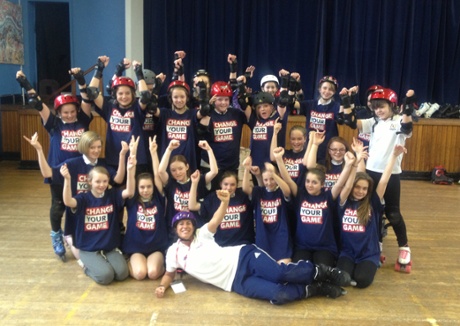
One girl on the SSLFS programme sticks in my memory. She didn’t fit in, was overweight, didn’t like sport and was bullied. In a workshop she reluctantly put on skates but discovered she loved it. She shone and continued skating. Over a year her confidence rose, she started putting her hand up in class, started doing drama and dance, and when I went back to visit the school I saw her, although only in year 10, taking a session with year 11 children on bullying.
She is just one of many children who have achieved so much more thanks to the power of sport. In an ideal world I would love to see schools being able to access a wider range of sports. I believe that there is a sport for every young person out there. This way we can all help young people to find a sport that they enjoy doing and can become passionate about, forming healthy habits which stay with them for life.
To find out more about the Youth Sport Trust’s programmes, or to register for free athlete mentor visits through Youth Sport Trust membership, visit www.youthsporttrust.org.
Jenna Downing is the world’s number one female inline skater and 10 times British champion. A natural competitor, Jenna has taken part in rollerblading events since she was eight and became the youngest ever female to turn pro aged 12.