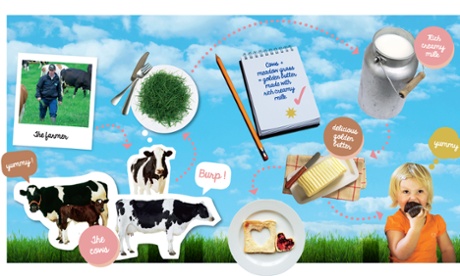
When golden Kerrygold butter sizzles in the pan, melts over steamed vegetables or is spread on toast, it’s the last part of a process that involves hard work, contented cows and grass – lots of grass.
Pasture makes up 80% of the agricultural land in Ireland and it’s these green meadows that give Kerrygold its rich colour and creamy taste. And as only a tiny percentage of this land is sold each year, every farmer knows the quirks and rhythms of the fields that their cows graze.
Kerrygold farmers and their herds belong to a wider community, too. As part of a commercial co-operative, the farmers have an active role in its development and success, and are paid a good price for the creamy milk they produce and then send to one of Ireland’s 36 co-operative dairies to be transformed into Kerrygold.
Milk from grass-fed cows is naturally rich in beta-carotene and higher in unsaturated fatty acids (omega 3 and 6) than milk from cows fed indoors. This nutrient-rich meadow milk produces butter with a distinctive golden colour, spreadable texture and creamy taste.
The priority for Kerrygold farmers is to allow cows as much access to the outdoors as possible – depending on the weather, Irish dairy cows can graze outside for up to 300 days a year. They benefit from being part of a small herd – the average size is about 65 – meaning they can also enjoy individual attention when they need it.
In contrast to the systems used in many other milk-producing countries, where cows are kept indoors, fed exclusively on grain and milked intensively, the Kerrygold approach to dairy farming allows cows to behave naturally. Milk yields are lower, but Kerrygold believes it leads to happier cows and better products.
The tradition of keeping cows in Ireland may be old, but Kerrygold farmers have a modern outlook on sustainability. Thanks to the country’s temperate climate and abundant rainfall there’s no need for mechanical irrigation, which helps to make Ireland’s grassland production system the most carbon efficient in the world. Kerrygold farmers are also playing their part in an initiative to reduce greenhouse gas emissions by 16% by 2018. Nature is respected on Kerrygold dairy farms, too, and farmers are supported to encourage wildlife that controls pests.
When the sun is shining and the grass is green, Kerrygold farmers – and their cows – know there’s no better place to be than in a Kerrygold pasture. The grass that feeds the cows makes the butter taste great, from meadow to muffin.
A Kerrygold tale: pure and simple
The Kerrygold story is a simple one. “We work with small co-operative farms where small herds are free to graze on lush Irish meadows. It means Kerrygold cows are healthy and happy, free to roam outside. It’s these cows, and countless generations of dairy knowhow, that makes our butter taste so good. We always know where all of our milk comes from, which is why we promise to only produce the most delicious, golden dairy, pure and simple.”