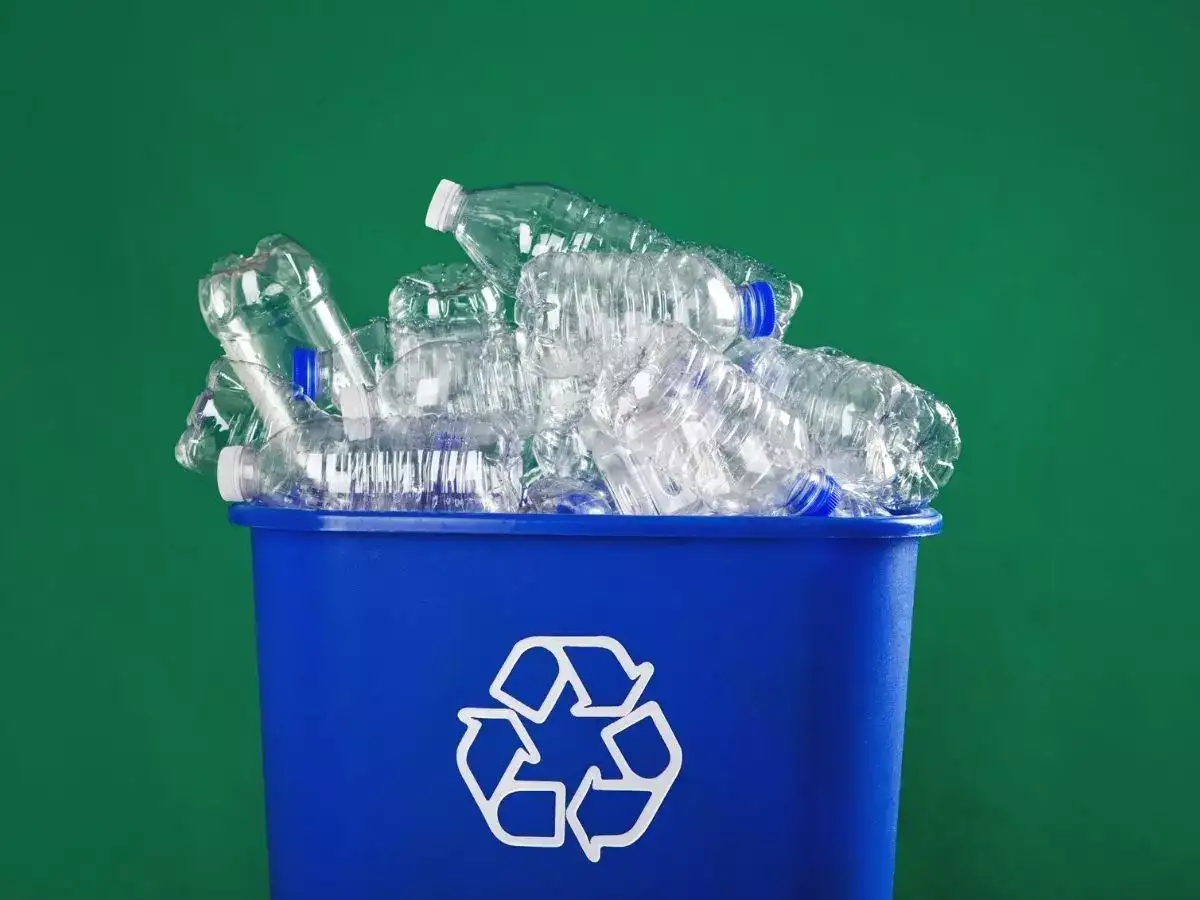
India’s battle against plastic waste may finally move from policy papers to people’s homes. A used plastic bottle that once ended up in a landfill or roadside drain may soon carry a small financial value attached to it. The simple idea behind Deposit Refund Schemes (DRS) could reshape India’s plastic recycling system and broader plastic economy. Put simply, consumers would pay a small refundable deposit while buying packaged products and get the money back when the empty packaging is returned for recycling. But in a country like India, where plastic containers often find a second life in kitchens and households before becoming waste, the transition may be more complex than it appears. As states such as Goa and Himachal Pradesh begin experimenting with DRS models for non-biodegradable packaging, policymakers and industry players are closely watching whether the system can become a turning point in India’s plastic economy.
What is a Deposit Refund Scheme?
Under a DRS model, manufacturers register eligible packaged products on a digital platform and assign unique QR codes to track the packaging through the supply chain. Consumers pay a small deposit in addition to the product price. Once the packaging is returned at an authorised collection point, the amount is refunded.
The system aims to improve collection rates for plastic, glass and metal packaging while reducing litter and boosting recycling efficiency. Countries across Europe and parts of Africa have already used DRS to improve recycling outcomes. Several Middle Eastern countries have also experimented with reward-based recycling systems. Although many of these markets initially faced operational hurdles and consumer confusion, phased implementation helped stabilise the system over time.
Why India is looking seriously at DRS
India’s sustainability push has gathered pace in recent years with measures such as the Plastic Waste Management Rules and Extended Producer Responsibility (EPR) framework placing accountability on Producers, Importers and Brand Owners (PIBOs) for post-consumer waste.
At the same time, urban consumers are becoming more aware of waste segregation, recycling and responsible consumption. Children and young consumers, in particular, are increasingly exposed to sustainability messaging in schools and on digital platforms.
“India is at a stage where environmental awareness is translating into consumer behaviour and policy innovation simultaneously,” said Rajiv Takru , IAS (Retd) Ex-Secretary, Government of India. “A well-designed Deposit Refund Scheme can help create accountability across the entire packaging value chain while improving recycling outcomes.”
Industry experts believe DRS can help bring more traceability into India’s fragmented waste collection ecosystem, which currently depends heavily on informal workers.
India’s recycling reality is different
Unlike many developed economies, India already has a large informal recycling network. Waste pickers, scrap dealers and local aggregators recover a substantial amount of recyclable material and feed it back into the supply chain. This existing ecosystem creates both an opportunity and a challenge for DRS implementation.
If poorly designed, a new system could disrupt livelihoods or duplicate existing waste recovery efforts. If integrated properly, however, it could strengthen collection efficiency and formalise sections of the informal sector.
“India cannot simply copy global DRS models without adapting them to local realities,” said Rajiv Takru. “The informal waste collection network is already performing an important environmental service and must be integrated into any future framework.”
Another behavioural challenge is unique to Indian households. Many consumers reuse plastic containers and bottles for storing grains, oil, spices or household items before discarding them. That delays the return cycle and may affect collection rates.
Infrastructure remains a major hurdle
For DRS to work efficiently at scale, India would need investments in reverse vending machines, digital tracking systems, sorting centres and transport networks. The financial structure of the scheme is also likely to remain under debate. Questions around operational costs, producer fees, unclaimed deposits and government support are yet to be fully addressed in many state-level discussions.
Brand owners may also face complications if states introduce different rules, QR systems or packaging requirements. Industry players fear that multiple state-specific frameworks could create compliance challenges, especially when products move across state borders. There are also concerns about overlap with the existing EPR system. Companies want clarity on whether packaging counted under DRS would also be counted under EPR targets.
Why convenience will decide success
The success of DRS in India may depend less on technology and more on consumer convenience. If returning empty packaging becomes time-consuming or confusing, consumers may simply opt out. Experts say refund systems must be easy, accessible and digitally smooth to encourage participation.
“Consumer trust and convenience will determine whether DRS succeeds at scale,” Rajiv Takru said. “If the process becomes complicated, the environmental intent may not translate into actual behavioural change.” That is why several experts support pilot projects before any nationwide rollout. Smaller test programs can help governments understand logistical gaps, consumer behaviour and financial sustainability before scaling the system.
The case for ‘One Nation, One Policy’
Many stakeholders are pushing for a unified national framework instead of fragmented state-specific systems. "A centralised DRS structure could help standardise QR codes, refund mechanisms and packaging compliance requirements across India. It could also reduce confusion for consumers travelling between states. Public-private partnerships may also play an important role. Municipal bodies, recyclers, producers and waste worker organisations would need to collaborate closely to create an efficient collection network," Rajiv Takru said.
Formalising waste pickers through cooperatives or authorised collection centres could strengthen both traceability and social inclusion within the recycling chain.
India’s plastic economy may be entering a new phase
India generates millions of tonnes of plastic waste every year, and policymakers are increasingly aware that collection systems need to improve alongside recycling targets. DRS is not being viewed merely as a waste management tool, but as a mechanism to build a more circular economy where packaging materials remain in continuous use rather than becoming environmental waste.
The transition, however, is unlikely to be immediate or seamless. Success will depend on policy coordination, industry participation, infrastructure readiness and consumer acceptance. For now, India’s experiment with Deposit Refund Schemes signals a broader shift in thinking, from treating plastic as disposable waste to recognising it as a recoverable resource with economic value.