The AITEX Summit Fall 2025, on the theme “From Intelligence to Impact,” gathered over 400 AI professionals from 25 countries for an online hackathon-conference that balanced competition with collaboration. Organized by the Association of Information Technology Experts (AITEX), the two-day event became an international intersection of code, creativity, and conscience. Coders, designers, and data scientists built, refined, and defended projects tackling urgent issues across business, healthcare, sustainability, and accessibility.
Guided by the official AITEX evaluation framework, participants vied for recognition in four tracks: Open Innovation, Creative AI, AI for Business, and AI for Good. An expert board, comprising industry veterans and academic leaders, evaluated their work using a detailed five-factor scoring system that balanced originality, technical execution, social impact, user experience, and documentation quality.
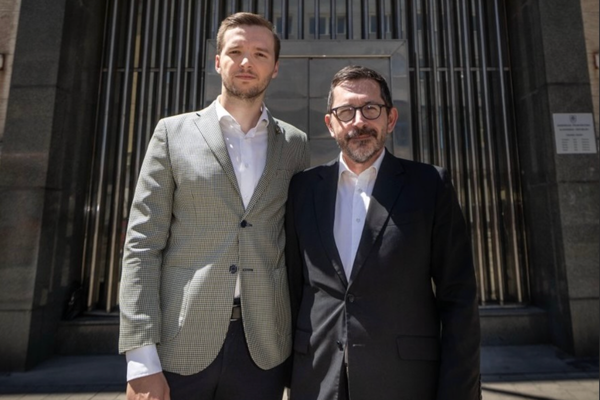
Judge Vitalii Pelypkanych, Director of Strategic Development at INBICOM LLC (Florida, USA), is a Ukrainian-born technology and innovation leader specializing in digital transformation, renowned for uniting analytical precision with an ethical perspective. With extensive experience leading digital-transformation initiatives across Europe and now across North America, he brings a balance of technical expertise, strategic vision, and principled leadership to every innovation he evaluates. As he assessed a suite of breakthrough solutions, ranging from privacy-centric caption generators to offline humanitarian planning tools, his judgments helped shape the list of winners announced on the closing day of the Summit.

This fall, the AITEX Summit was held entirely on the organization’s digital platform, enabling participants across multiple time zones to collaborate seamlessly. More than four hundred registered attendees interacted via integrated mentoring sessions, live code reviews, and direct Q&A discussions with the judges.
We spoke with Vitalii after the closing ceremony to discuss the event’s significance, the standout projects, and his perspective on what truly defines responsible, future‑minded innovation.
Vitalii, as both a professional and a member of the judging board, how would you describe your overall assessment of AITEX Summit Fall 2025?
The first word that comes to mind is discipline. The projects weren’t hobby experiments; they were deployable systems. The judging framework itself kept everything grounded: one-fourth devoted to innovation, one-fourth to technical depth, one-fifth to real‑world impact, and the remaining 30 percent divided equally between design and documentation. It ensured that creative brilliance never outran responsibility.
What impressed me most was that AITEX didn’t treat creativity as a free‑for‑all. It gave it a moral compass. That mix of technical rigour and social responsibility reminded everyone that innovation has to advance with integrity. That’s something tech ecosystems are still trying to learn.
Among dozens of submissions, eight finalists captured the Summit’s theme of “From Intelligence to Impact”. Which entries impressed you most for innovation and originality?
SlideRevive immediately drew my attention. They tackled something painfully relatable, bad lecture slides, and turned them into clarity. Using Gemini 1.5 Pro, they structured PDF presentations into formatted PowerPoint files. What stuck me was their empathy: they weren’t showing off technical muscles; they were helping people learn more easily. You don’t always need a new neural network; you sometimes need a humane neural intention.
Then there was VisionAi. The project stands out by analyzing websites visually. Its strength lies in how existing technologies are brought together to deliver practical, business-ready insights, translating intelligence into clear, real-world impact.
The AI for Good track highlights technology’s humanitarian side. In your opinion, which project defined the 2025 benchmark for combining technical innovation with tangible social and community impact?
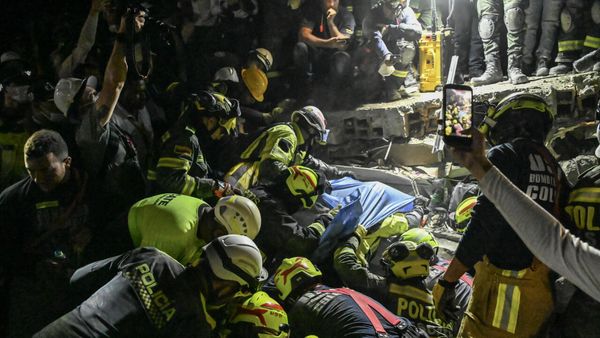
Without hesitation, RescueMind. They built this offline‑ready web planner for disaster response using Groq’s GPT‑OS models, and it’s a game‑changer. Normally, emergency coordination can drag on for hours, people passing around spreadsheets, making radio calls, and confusion everywhere. Their AI does it in minutes. It merges satellite insights with real‑time updates from people on the ground.
In fact, it’s an algorithm wearing a rescue jacket. I appreciate that image because that’s exactly what it feels like: technology stepping up when humans need help the most. And what really set it apart was the architecture: modular, open‑sourced so future municipalities can build on it, and built to work even when the internet goes down, because, let’s face it, that’s usually the first thing that fails in a crisis. That’s more than coding - it’s technology built to help people.
How would you evaluate the Video Translation Tool’s effectiveness in merging transcription, translation, and AI voice-synthesis to overcome language barriers and make educational content globally accessible?
It was elegantly pragmatic, nothing flashy, no overpromising hype, just solid, thoughtful engineering. The team used Whisper for speech-to-text, ran the text through Google Translate, then brought it all to life with AI-driven voice synthesis. Individually, those elements aren’t revolutionary. But the way they fused them, that’s what caught my attention. They turned a handful of familiar tools into a single, seamless workflow. It just worked, clean, simple, purposeful.
I think universities and humanitarian groups are adopting it right away to make lectures and learning materials instantly multilingual. It’s the kind of innovation that doesn’t make noise, but genuinely makes a difference. And really, that’s the heart of innovation for me: when engineering carries a sense of compassion. You don’t always have to invent something brand new; sometimes, it’s enough to connect what already exists, and do it with intention. That’s where technology quietly becomes transformative.
Let’s move to business-oriented entries. What patterns or standout approaches did you observe regarding how teams applied AI to enhance productivity, user trust, and overall operational efficiency?
Two projects particularly stood out. First, AI Notes. It solved that endless productivity nightmare, post-meeting chaos. Using Faster Whisper locally, it produces summaries, action items, and key decisions, all secure and offline. It wasn’t flashy, it was elegantly useful.
And then FitForge. They used MindsDB Cloud with a Flask interface to deliver AI-driven fitness guidance. But here’s what I admired most: they knew their limits. They weren’t pretending to diagnose you; they were coaching you. Overall, the platform prioritizes accessibility and functionality rather than advanced engineering.
Although Doorstep30 didn’t incorporate artificial intelligence, what specific qualities or innovative aspects made you appreciate its concept and consider it valuable within an AI-focused competition environment?
Exactly, not a single neural network in sight! But that’s what made it stand out. They built a peer-to-peer marketplace that works completely offline using Bluetooth Low Energy. It lets neighbors trade stuff within a few hundred meters, no internet, no server, no data harvesting. It was a tiny rebellion against over-connectivity. The fact that it functions without the internet embodies digital sustainability. I rated its design spirit high, even if it used zero neural networks.
As AITEX prepares for its next Summit, how do you view the legacy of the 2025 program, and what are your aspirations for the continued evolution of artificial intelligence in the years ahead?
I think the 2025 Summit set a new benchmark for what responsible innovation looks like. From what I observed throughout the judging process, artificial intelligence is no longer confined to laboratory experiments; it now informs real human environments: classrooms, emergency coordination centres, wellness platforms, and neighbourhood networks. The year 2025 demonstrated how to scale AI without sacrificing integrity, proving that progress and ethics can advance together.
The next great challenge, as I see it, is learning to trust the intelligence we’ve created. In 2026, I hope we move beyond building capable systems to fostering credible ones, proving that progress in AI depends as much on integrity as on intelligence, and that technology, when guided by conscience, remains humankind’s most powerful force for meaningful impact.