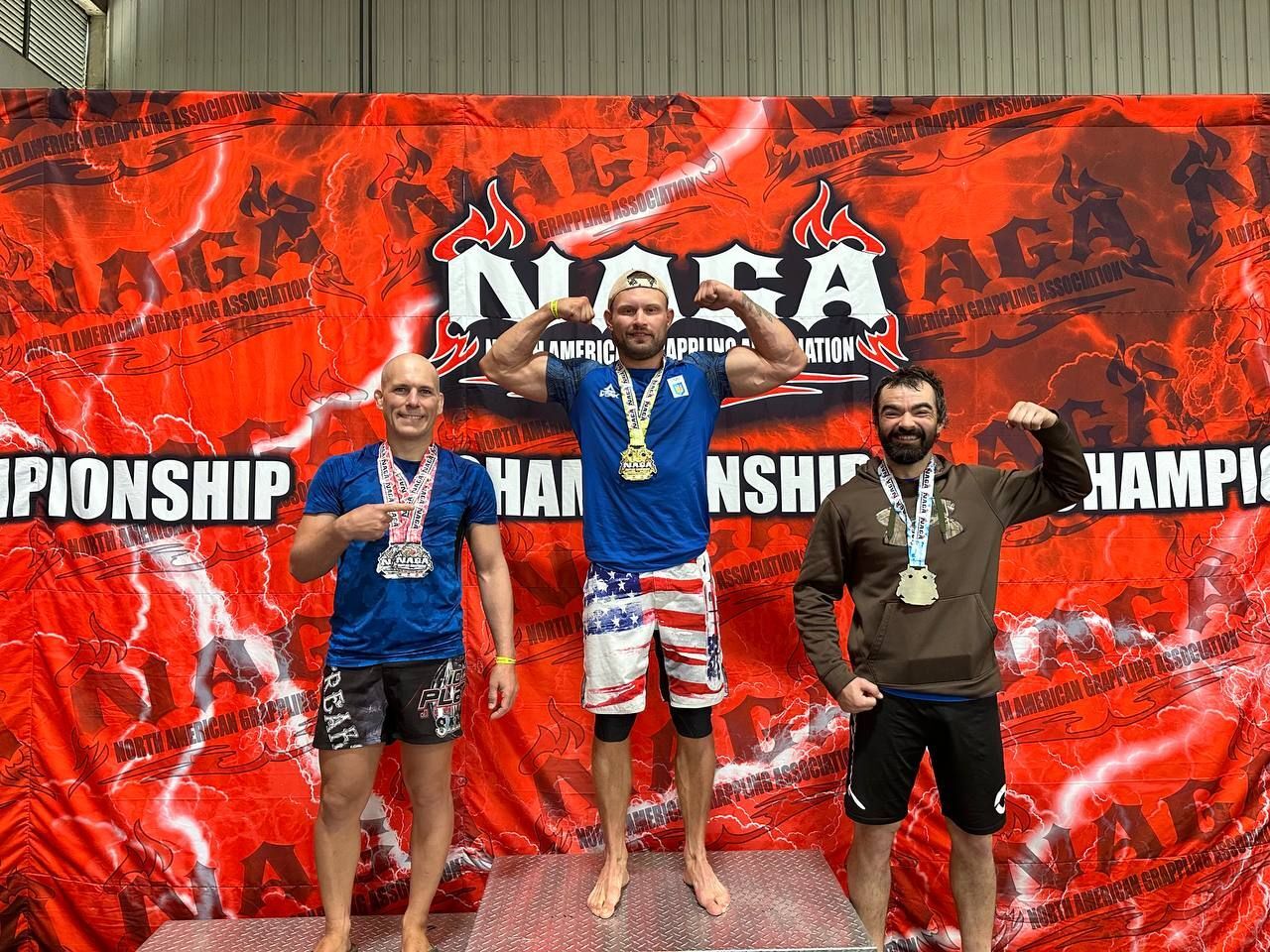
Andrii Poliakov, winner of the world’s top tournaments, explains why the Ukrainian path in sports works — and how it’s starting to influence fighters worldwide.
In the world of Brazilian Jiu-Jitsu, it's no longer just the names of elite academies that are making headlines — it's the stories of fighters who rise on their own. By 2024, approximately 87% of martial arts schools in the U.S. were independent gyms.
Today, independent fighters form the backbone of Brazilian Jiu-Jitsu: they run most of the gyms, build local communities, compete in tournaments outside major federations, and dominate in open championships. This makes the discipline flexible, accessible, and appealing to newcomers.
And it’s in this very environment that champions emerge from countries where Jiu-Jitsu has yet to gain wide recognition. Independent Ukrainian fighter Andrii Poliakov spent years training solo — renting gyms, finding sparring partners through social media, and developing his own training system.
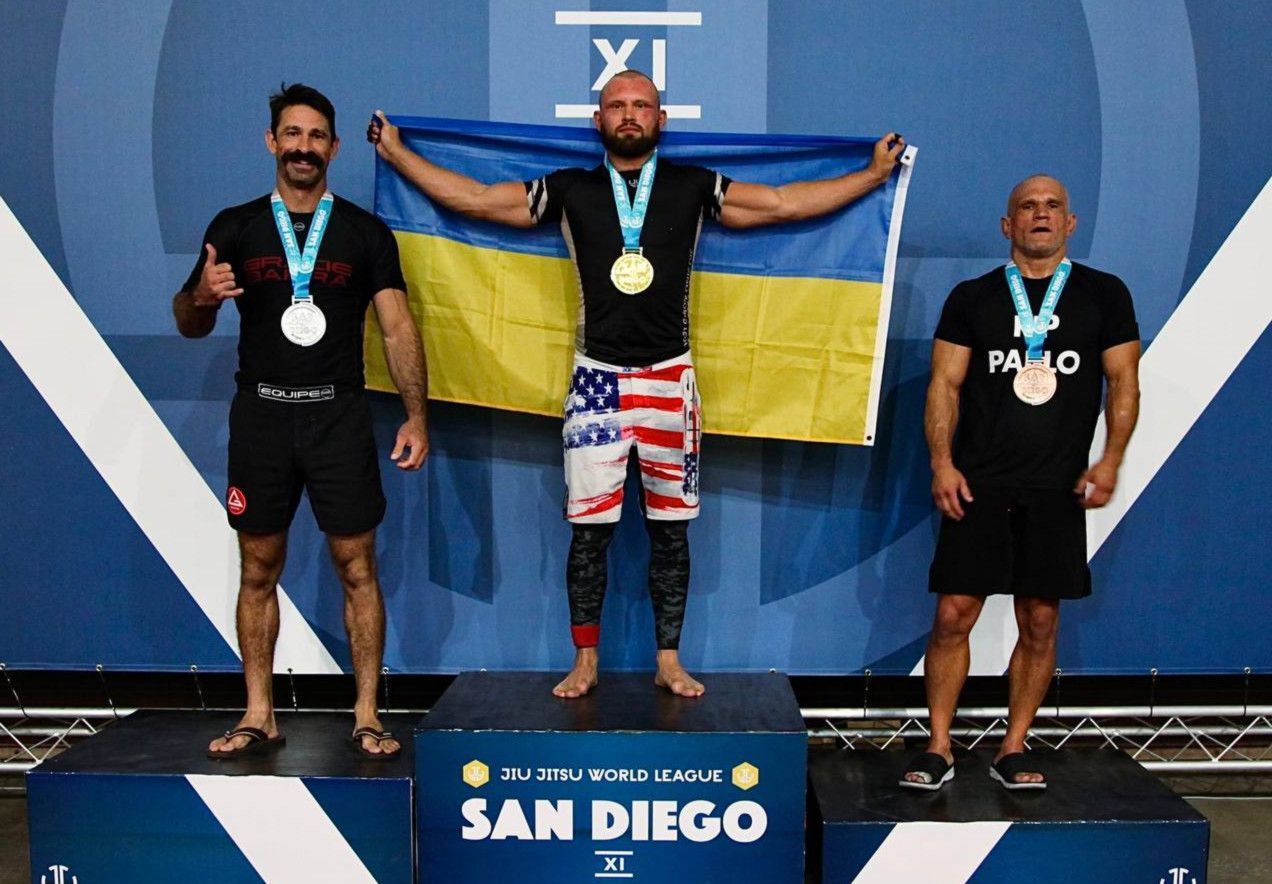
Today, he’s a World Master medalist, an AJP champion, and a winner of dozens of international tournaments — including double gold at the 2024 Los Angeles Open, hosted by the International Jiu-Jitsu League. Footage of his matches impresses even coaches from the U.S. and Brazil, who now study his fighting system.
Inkl sat down with Andrii to discuss why his approach works, how the Ukrainian mentality helps him compete with the world’s best, and what it takes to achieve such success without relying on institutional support.
Ukrainian Mentality and Independence
When athletes talk about how their journey began, they usually mention their coaches and their first steps in the gym. For Poliakov, it was different. His sports path started with bodybuilding competitions, followed by tournaments in Cossack duel combat. However, his athletic career was nearly derailed during the pandemic, when all MMA events were temporarily halted. At the time, Andrii was living in the UAE, where he frequently encountered Jiu-Jitsu, a national sport there.
“I saw depth and an intellectual component in it. I was drawn in by the idea of dominating not just physically, but strategically,” the athlete recalls about his first experience.
Soon after, he began competing in Jiu-Jitsu tournaments more as an MMA fighter than as a professional Jiu-Jitsu athlete. However, a new challenge arose — Andrii lacked state support, sponsorships, and the opportunity to compete under a national federation. He started building his own training system as an independent fighter.
He based his system on his knowledge from bodybuilding and his sports education — Andrii graduated from college as a trainer-nutritionist. At the core of his training, the future champion placed deep self-analysis: constant review of fight footage, testing of new techniques, and tracking progress.
“I learned to make decisions on my own, to analyze every moment, and to become independent of others’ opinions. That kind of approach makes you especially resilient,” Andrii emphasizes.
When asked where such endurance and stubbornness come from, Poliakov replies simply: “I’m from Ukraine, from the city of Druzhkivka in Donbas. We never waited for perfect conditions — we always worked with what we had.”
This experience, hardened by circumstances, shaped a mindset where a lack of resources is not an obstacle, but a starting point.
“You learn to win not because everything was handed to you, but because you didn’t give up,” the Jiu-Jitsu fighter affirms.
Individuality Is Not a Weakness, but a Strategy
In a world of constantly changing opponents and the absence of a stable team, the strongest foundation isn’t someone else’s style — it’s your own.
It’s precisely this ability to be “uncomfortable” and predictable only to himself that makes Andrii Poliakov’s style a subject of study even in the United States and Brazil. Coaches from international federations often analyze footage of his matches to examine the unique aspects and strengths of his personal approach.
According to the international Jiu-Jitsu tournament winner himself, his technique is a mix of various styles, while his strategy is a self-developed product honed through intense training. This individuality is what captures the attention of Western coaches.
“I focus on fundamentals, universal principles, and control. In a fight, I don’t adapt to my opponent — I impose my own game,” says Andrii.
Poliakov currently holds numerous medals from top placements in international Jiu-Jitsu competitions, including double gold from a major international Jiu-Jitsu league tournament held last year in Los Angeles. There, Andrii proved his dominance in two divisions — both gi and no-gi.
However, his proudest achievements, he says, are not the medals, but the support he offers to other independent athletes. Many self-trained Jiu-Jitsu practitioners, training alone in home garages, see hope in his story: if Andrii made it, they can too.
“Over the years, I’ve realized that the most important victories aren’t medals, but the moments when you didn’t give up — even when it was tough and lonely,” Andrii reflects on his journey.
The School of the Future: Jiu-Jitsu as a Form of Character Building
Today, Andrii Poliakov lives in the United States and is considering a new chapter — opening a martial arts school for children. But once again, it’s not about just another gym.
“It won’t just be a training facility — it’ll be a space where champions are raised not only on the mats, but in life,” he explains.
The foundation will include discipline, resilience, respect, and basic education in nutrition and mental endurance.
Andrii’s plan is to start with a small training facility and gradually expand the program — from physical training to teaching the fundamentals of nutrition and helping kids build confidence in themselves.
The story of Andrii Poliakov is a manifesto for anyone who wants to take the unbeaten path and isn’t afraid to build their journey alone. His success is proof that victory lies not in who leads you, but in where you choose to go.