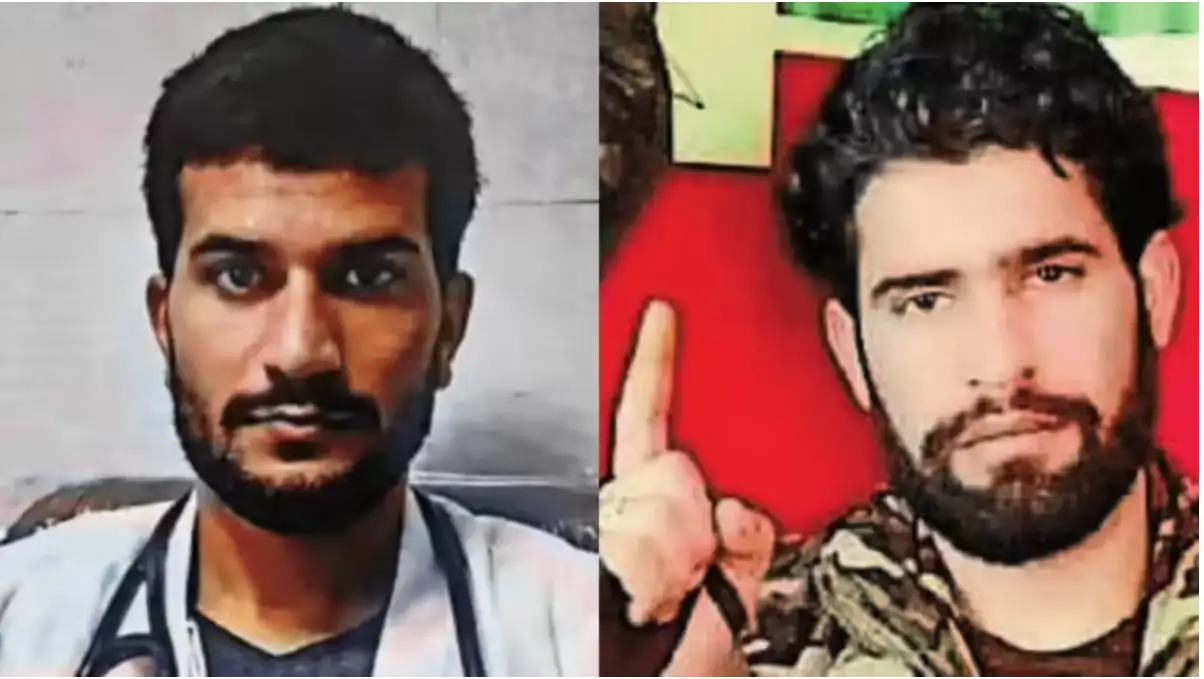
The National Investigation Agency (NIA) chargesheet has uncovered a sophisticated doctor-terror module, indicating a major shift in the trajectory of Ansar Ghazwat-ul-Hind (AGuH) from a forest-based insurgent outfit to an urban terror network, reports TOI.
According to intelligence inputs cited in the findings, the transformation of the group was orchestrated by Pakistan-based handlers who moved away from the visual propaganda model of the Zakir Musa era to a technologically advanced, pan-India digital network. This network, officials said, was designed to connect militancy in Kashmir with broader global jihadist objectives.
Zakir Musa’s ideological framework
An anti-terror officer said Musa’s ideology rejected the “azadi” narrative in favour of a “shariat” and martyrdom-centric approach. His worldview, the officer said, was rooted in a pan-Islamic identity that framed the Kashmir conflict as a religious obligation rather than a political dispute.
Urban radicalisation model linked to Delhi bomber
Officials noted that both figures shared hostility towards democratic systems and aligned with the “Ghazwa-e-Hind” ideology. Nabi, like Musa, had also released a video attempting to justify suicide bombing as martyrdom.
As per the 7,500-page chargesheet submitted before the NIA Special Court at Patiala House Courts, all 10 accused, including alleged mastermind Dr. Umer Un Nabi who was killed in the blast, were found to be associated with Ansar Ghazwat-ul-Hind (AGuH), a breakaway faction of al-Qaida in the Indian Subcontinent (AQIS). The Ministry of Home Affairs had designated AQIS as a terrorist organisation in 2018.
According to investigators, both individuals bypassed traditional terror command structures and used encrypted digital platforms to recruit radicalised individuals disillusioned with established militant organisations.
Al-Qaida linkage and alleged external influence
A retired Delhi Police anti-terror official said the strategy allowed handlers to maintain plausible deniability by projecting an al-Qaida-centric identity rather than direct Lashkar-e-Taiba or Jaish-e-Mohammed affiliations, while simultaneously expanding radicalisation efforts within India.
Role of ISI and operational restructuring
It cited the example of Sanaul Haq, a resident of Sambhal in Uttar Pradesh, who was later transformed into Asim Umar, the first chief of AQIS. Officials said this was part of a structured process aimed at “Indianising” leadership roles within transnational terror networks.
A special cell officer involved in dismantling AQIS modules in 2016–17 said the appointment was finalised at a meeting in Meeran Shah, North Waziristan. The officer added that the move ensured the leadership appeared locally rooted while operational control remained external.
Shift from traditional to digital terror ecosystem
The NIA chargesheet highlights how encrypted communication platforms, ideological rebranding, and decentralised recruitment models are being used to sustain and expand extremist networks beyond the Valley into urban centres across India.