Santo Domingo, Dominican Republic – trucks filled with bags of rice and beans, and jugs of cooking oil, used to roll through Yuderky Gomez Ferreira’s impoverished neighbourhood here distributing government food aid.
The food was free, but Gomez, a mother of three, never joined the long lines that snaked for blocks leading up to the trucks. “It was chaos. There were too many people,” she said. “Besides, the food never got to the people it was supposed to. It was really disorganised.”
Today, Gomez walks a few hundred metres to one of this Caribbean country’s ubiquitous corner stores – known as colmados – and chooses her own rice and beans, swiping a Solidaridad debit card to pay for it all.
In 2004, the administration of incoming President Leonel Fernandez ordered an overhaul of the way the government delivered subsidies. His government wanted to equip Dominicans with a single debit card that would give them access to monthly subsidies for food, health care services, cooking gas and other basics.
A decade later, nearly 1 million Dominicans are using so-called Progresando con Solidaridad Visa debit cards and more than 5,000 merchants have been set up to accept the cards. The programme has cut costs for the government, generated economic activity by putting money into the hands of residents, and exposed a new generation of Dominicans to the financial system in a country where only roughly half of the population has a bank account.
“The social programmes have evolved and grown rapidly in terms of the number [of people] covered, since its inception 10 years ago,” said Ramon Gonzalez Paulino, director of the government’s administrator of social subsidies (ADESS), which oversees the initiative.
“The success of the programme has allowed us to reach a huge part of society that had little if any exposure to the use of the banking system” said Gustavo Zuluaga Alam, executive vice president of sales for Associacion La Nacional de Ahorros y Prestamos, the savings and loan association that first created the Solidaridad scheme.
As governments seek to streamline the way they deliver social subsidies, the Dominican Republic’s approach is being seen as a potential model. Emissaries from Guatemala, Colombia and several Asian countries are studying the Dominican system in hopes of replicating it in their country.
“In terms of the payment of government benefits, I see it going electronic very fast because it provides such tremendous benefits for governments, including on the anti-corruption and cost savings side,” said Elisabeth Rhyne, managing director of the Washington-based Center for Financial Inclusion.
“Governments using cards to pay benefits and therefore providing people with access to a bank account is one of the biggest trends in efforts to increase financial inclusion,” she said.
Few foresaw the Dominican programme’s vast potential back in 2004.
When the government asked Zuluaga and his team to create a more efficient system, they began tinkering with the idea of digital payments.
Within a few months, the team had designed a system that would allow the government to deposit monthly subsidies into bank accounts created for the beneficiaries. Those funds could then be used at local merchants, which were supplied with card readers free of cost.
Most of the merchants had never before accepted credit cards.
“There was a lot of [financial] education that took place between Visa and financial institutions and the users,” says Lorna Atiles, vice president of sales in the Caribbean for Visa, who was involved in the programme from its inception. To help increase understanding of how to use the cards, instructional teams went city-by-city and the program aired public service announcements on the radio.
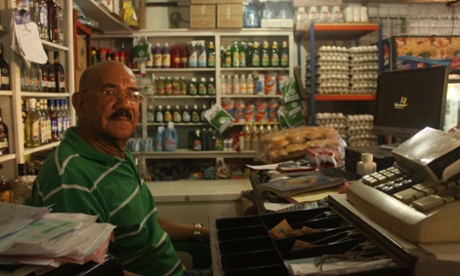
Juan del Friaz, who owns the colmado where Gomez shops, joined the programme in 2005. He estimates today that clients make roughly 400 transactions per month, including some Visa cardholders who are not part of the Solidaridad program.
“It has definitely helped me grow my business, because that’s a source of customers that I didn’t have before,” he said.
In fact, since its inception the programme has pumped nearly US$1.4 billion into the economy, according to statistics provided by ADESS.
“That’s money that previously wasn’t generating an economic impact,” Zuluaga said. “By putting it in the economy, we’ve seen small businesses grow and expand, hire new employees, and buy more local products.”
While ADESS does not have a specific estimate for how much the programme has cut costs, today the government spends an average of just $0.40 per month to maintain each beneficiary’s account.
For Gomez, the monthly subsidy has become indispensable.
“My husband lost his job three months ago, so this is one of our only sources of money to buy food with,” she said.
Despite exposing the majority of beneficiaries and merchants for the first time to a Visa card, the programme has struggled to convert them into bank account holders.
Only 20% of beneficiaries have opened a savings or checking account to complement the subsidy account. Across the country, only 22% of Dominicans have a checking account and 34% have a savings account, according to a 2013 survey by the Spanish consultancy Tecnocom.
A two-year pilot project to enroll 91,000 beneficiaries for free bank accounts within five years and provide the financial education users need to make the most of the service is underway, according to Zuluaga. Meanwhile, Solidaridad merchants will be able to make banking transactions on their Visa card readers, effectively converting them into local bank agents.
“We’ve created a card and people have learned to use it responsibly and appropriately,” Zuluaga said. “Now we have to leverage that. What we have to focus on now is financial inclusion.
Content on this page is paid for and provided by Visa sponsor of the Guardian Global Development Professional Network.