The following article and videos include highlights and key discussions from the Business Call to Action Annual Forum 2014
Samruddhi means ‘prosperity’ in Sanskrit. In the seven years since BASF launched an initiative of the same name, Samruddhi has also meant a new way of life for hundreds of thousands of soybean farmers across India.
In 2007, the multinational company established a pilot project with 30,000 soybean farmers to help them boost productivity in their crops and incomes in the marketplace.
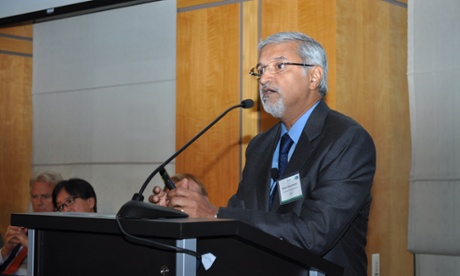
“The single biggest need gap we found was in information,” said Raman Ramachandran, chairman of BASF Companies in India, during the recent Business Call to Action Forum 2014. “How to you grow soy better and make it more economical?”
The answer, it turns out, rested with providing farmers tips on how and when to fertilise and safely utilise pesticides. BASF hosted town hall sessions for farmers, conducted field trials and worked directly with farmers during harvest season and when it came time to sell their products at market.
BASF is one of nearly 100 members of the Business Call to Action, which was established in 2008 to accelerate progress toward the Millennium Development Goals (MDGs) by challenging companies to develop inclusive business models that cater to people in emerging markets earning less than $8 (£5) per day.
By 2013, more than 221,000 farmers had joined in BASF’s program, Ramachandran reported. He pointed to a PricewaterhouseCoopers impact assessment of Samruddhi, which found that participating farmers have increased yields by 25% and incomes by 36%. This assessment also determined that a large portion of the farmers reinvest their earnings in food, medicine and education for their families. The initiative not only benefits the farmers, but also BASF since farmers who have profited are buying more farm equipment like tractors and inputs like seeds, as well as fertilisers from BASF.
When asked if BASF would invest in this project as a business initiative – and not a break-even or potentially expensive corporate social responsibility project – Ramachandran’s answer was unequivocal.
“Definitely,” he said. “We knew that if (participating farmers) developed better practices, many of our inputs would work.”
Watch: video interview with BASF’s Raman Ramachjandran
Samruddhi is a relatively well-established project, but other companies are just starting to find their footing in terms of harnessing their products for customers at the base of the pyramid. For example, Panasonic, which is best known for its consumer electronics products, is making a major transition as it sees profits from products like TVs decline. Part of its turnaround plan relies heavily upon earnings from its automotive and industrial systems units.
At the same time, Panasonic is looking for business and sustainability impact wherever it can reasonably extend itself. That includes base of the pyramid customers. The company is selling a new solar lantern, which it says can illuminate for up to 90 hours thanks to a 3.5W solar panel. The system, which also includes a USB port for cell phone charging, is available in Indonesia, Myanmar, Thailand, Bangladesh, Cambodia, Kenya and Malaysia.
This is new territory for the electronics giant, which estimates that 30,000 tons of carbon emissions could be cut through the sale of 1m lanterns over five years. The problem doesn’t seem to be the technology, but rather the challenge of selling it.
“We do not have the sales channels required to deliver solar lanterns to the base of the pyramid,” said Genichiro Shimada, general manager for Panasonic’s International Relations Group, during the Business Call to Action forum. “We need to create new sales channels with inclusive business partners.”
So far, many of those channels have included selling to donor organisations. Shimada says the firm is working hard to build relationships with NGOs, microcredit firms and loosely affiliated sales networks in order to get its product into the hands of those who really need it. (Forging those relationships is one of the goals of the Business Call to Action and the forum.)
“Competition is needed in the market,” Shimada said. “We can compete [with established social enterprises]; we want to create a better quality product than them. And that’s good for the market.”
Watch: video interview with Panasonic’s Genichiro Shimada
For some companies at the forum, the social mission has migrated from the back burner to front and centre of their business operations. DataWind Ltd., which makes a $35 (£22) tablet for low-income markets, is one such company. CEO Suneet Singh Tuli said that DataWind is competing “neck and neck in India” with Samsung for low-income customers.
Tuli said that DataWind determined the price point for the tablet because it represents roughly a week’s salary for low-income Indians, proportionately the same as a tablet costs a typical worker in a developed economy.
“The 4.5 billion people worldwide without internet will evaporate in three to five years,” he stated. “We hope to create price pressure on hardware, but also start new business models.”
One such business model is delivering faster processing speeds despite the fact that most customers in India are only able to access slower 2G networks. DataWind also plans to field web-based ads, using that revenue to offset the cost of providing internet services to its devices.
Watch: video interview with DataWind’s Suneet Singh Tuli
Disruption of business models, especially those that contribute to cycles of poverty, was another theme at the forum. Bart Hartman, CEO of NOTS Impact Enterprises, aims to completely overhaul the process of charcoal production, which is dirty, time consuming and adds to deforestation across sub-Saharan Africa.
Click here to see a video on the process.
Hartman explained that the company’s solution, which involves a low-cost and highly efficient oven – as well as planting trees to offset those lost in the production of coal – has been tested and proven to reduce carbon emissions by 75% while reducing charcoal production to a three day process instead of the typical 11 day cycle. It could also shift the balance of power in the business relationship of charcoal production.
“Traders currently earn a disproportionately greater share than producers … what we want to do is to help charcoal producers get a larger stake,” Hartman said.
Watch: video interview with NOTS’ Bart Hartman
Some 75% of production and consumption of charcoal is happening in 15 countries in sub-Saharan Africa, where the majority of people use charcoal for cooking. Hartman stated that with proper investment (which he estimated at €100m (£78.3m)), charcoal production will be sustainable by 2025.
As the MDGs are nearing their deadline in 2015, the United Nations is crafting the Sustainable Development Goals (SDGs) to take their place. Those 17 goals, still in draft form, include over 100 targets and will focus on improvements in health, sanitation and education. Every single one will be relevant for businesses – both environmentally and economically.
While there is a lot to criticise about the MDGs, they did move companies, NGOs and governments toward new alliances, even if those alliances were beta versions when it comes to actual impact. The SDGs by design have engaged more companies in their formulation, according to Paul Ladd, senior policy advisor and lead author, post-2015 and SDGs at the United Nations Development Programme.
Stuart Hart, who led the panel that included both Shimada and Hartman, posed the question: in 15 years, will those companies that fail to integrate the SDGs into their core business operations be at a competitive disadvantage? Hart, the Grossman Endowed Chair in Sustainable Business at the University of Vermont Business School and the S.C. Johnson Chair emeritus at Cornell University, clearly thought so, as did other members of the panel. As evidenced by statements earlier in the week from the Rockefeller family divesting its dirty energy assets, it’s hard not to agree.
But Ladd was more circumspect. “It would be great if everyone came to the table out of a social obligation”, he said. But despite the “backslapping” around alliances and triple bottom lines, some companies “unfortunately will do just fine working in a less than sustainable way” – ie business as usual. That is why we need more pressure from civil society and the streets, in which just days earlier in New York City some 400,000 people demonstrated for real action on climate change by the United Nations General Assembly.
Ladd seemed to share the protesters’ sense of urgency. “We’re running out of time,” he said.
Access the event summary report here with links to event videos and other resources.
Scott Anderson is the managing editor of NextBillion.net, a website and blog bringing together the community of business leaders, social entrepreneurs, NGOs, policy makers and academics who want to explore the connection between development and enterprise.
More from the Business Call to Action partner zone:
- Time to start challenging our assumptions that start-ups can’t reach scale
- Low-cost tablet PC looks to aid education in poor communities
- Empowering farmers through mobile communication in west Africa
Content on this page is paid for and provided by Business Call to Action, supporter of the role of business in development hub
Launched at the United Nations, the Business Call to Action (BCtA) is a global alliance hosted by the United Nations Development Programme headquarters in New York. Follow: @BCtAInitiative