From disease to bushfires, Australia's iconic koalas face bleak future
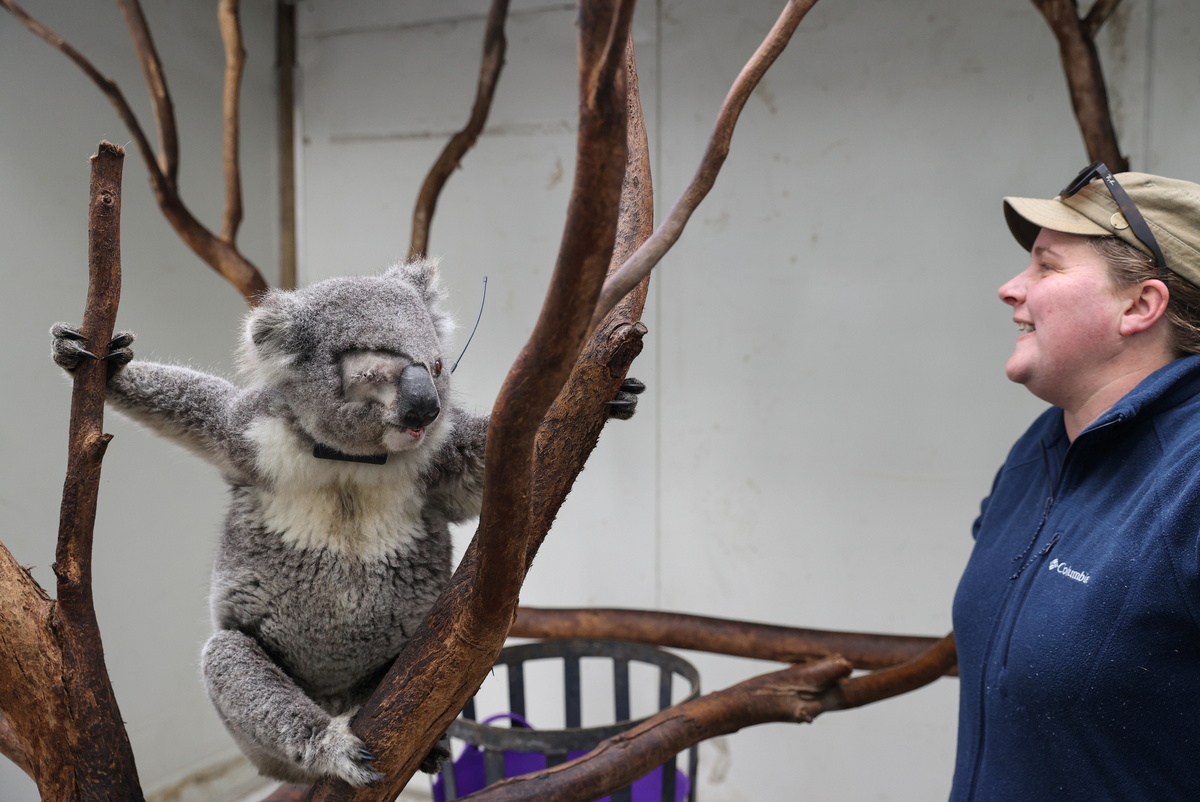
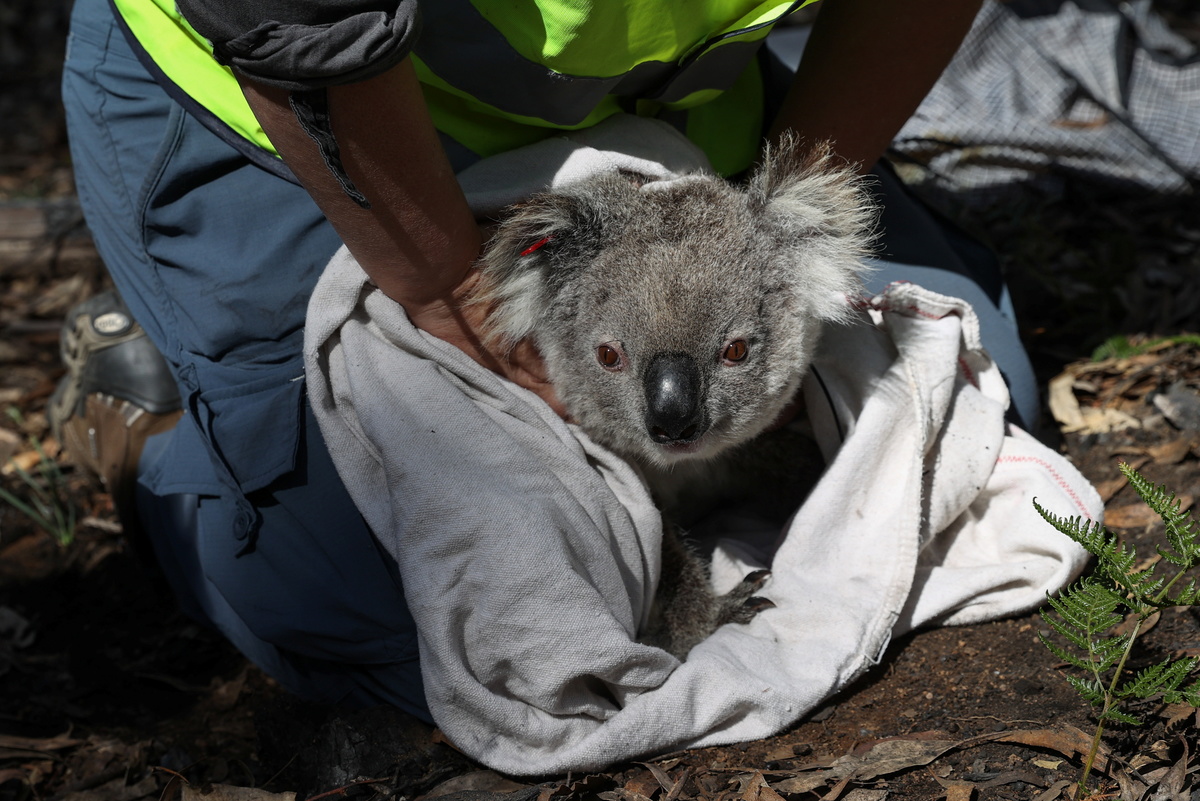
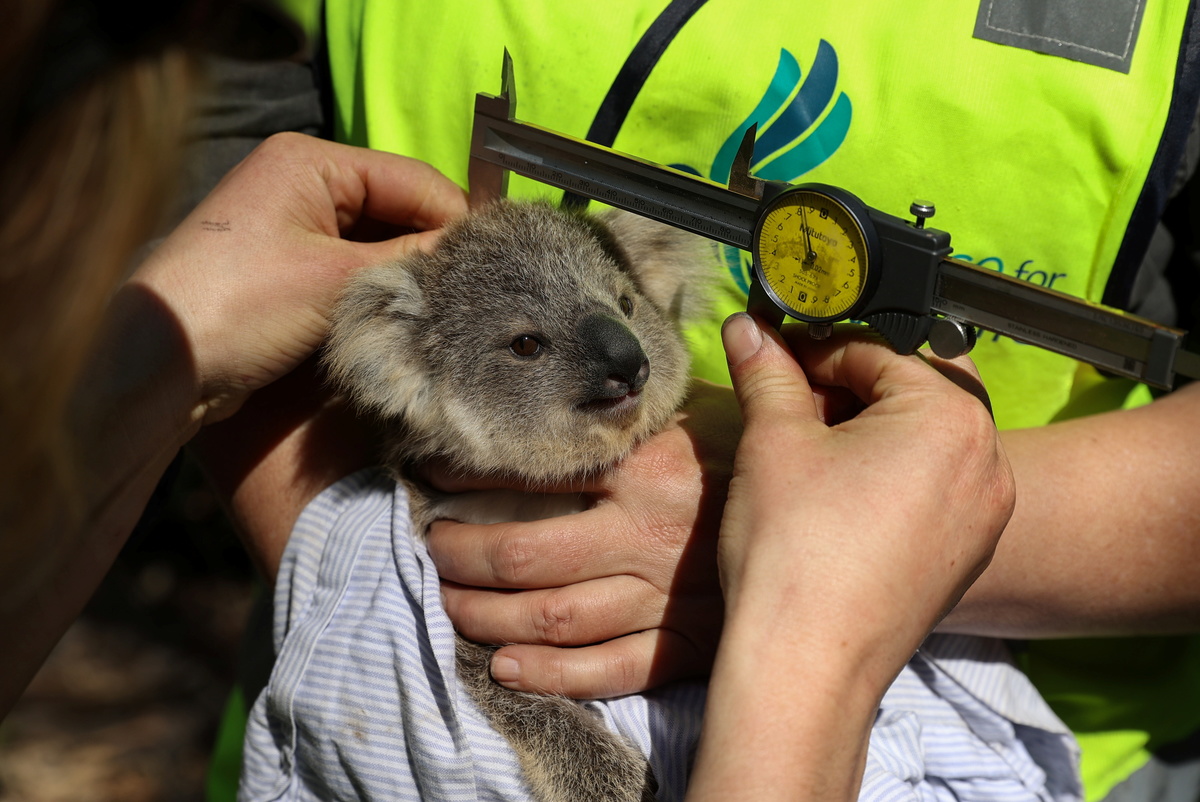
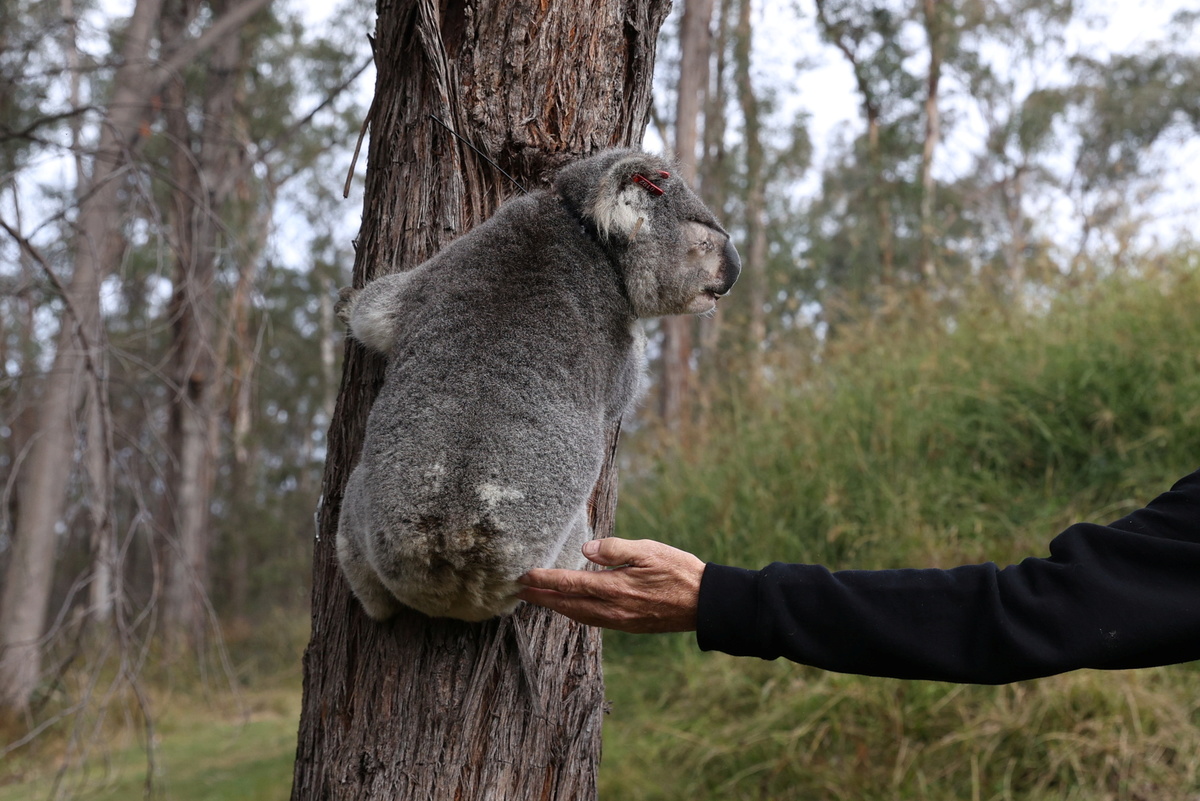
Brie Sloggett, a field ecologist at the not-for-profit conservation organisation Science for Wildlife, assesses the health of a rescued koala named Ernie, following medical treatment for chlamydia, where he had to have one of his eyes removed, before he is released back into his natural habitat, in Windsor, Australia, July 25, 2020. REUTERS/Loren Elliott
At work, Morgan Philpott cares for sick children. In his off-hours the Australian paediatric nurse turns his attention to an equally defenceless group: unwell koalas.
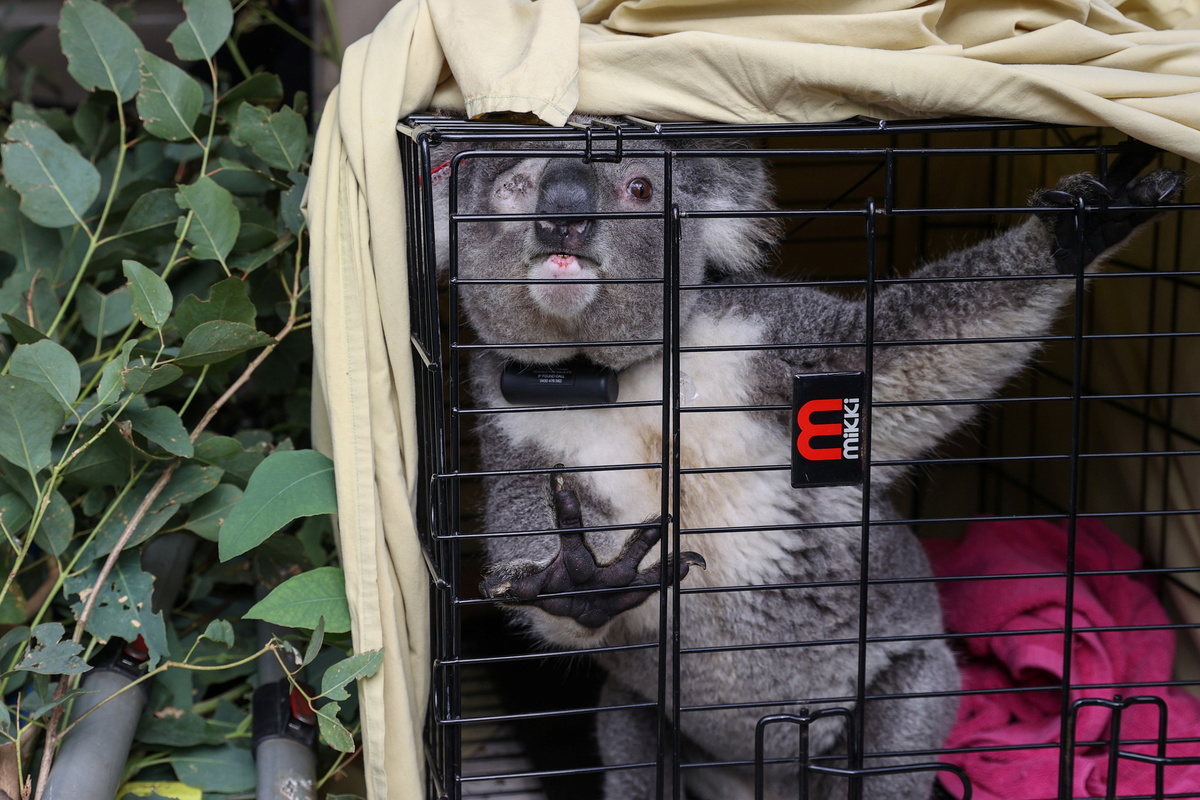
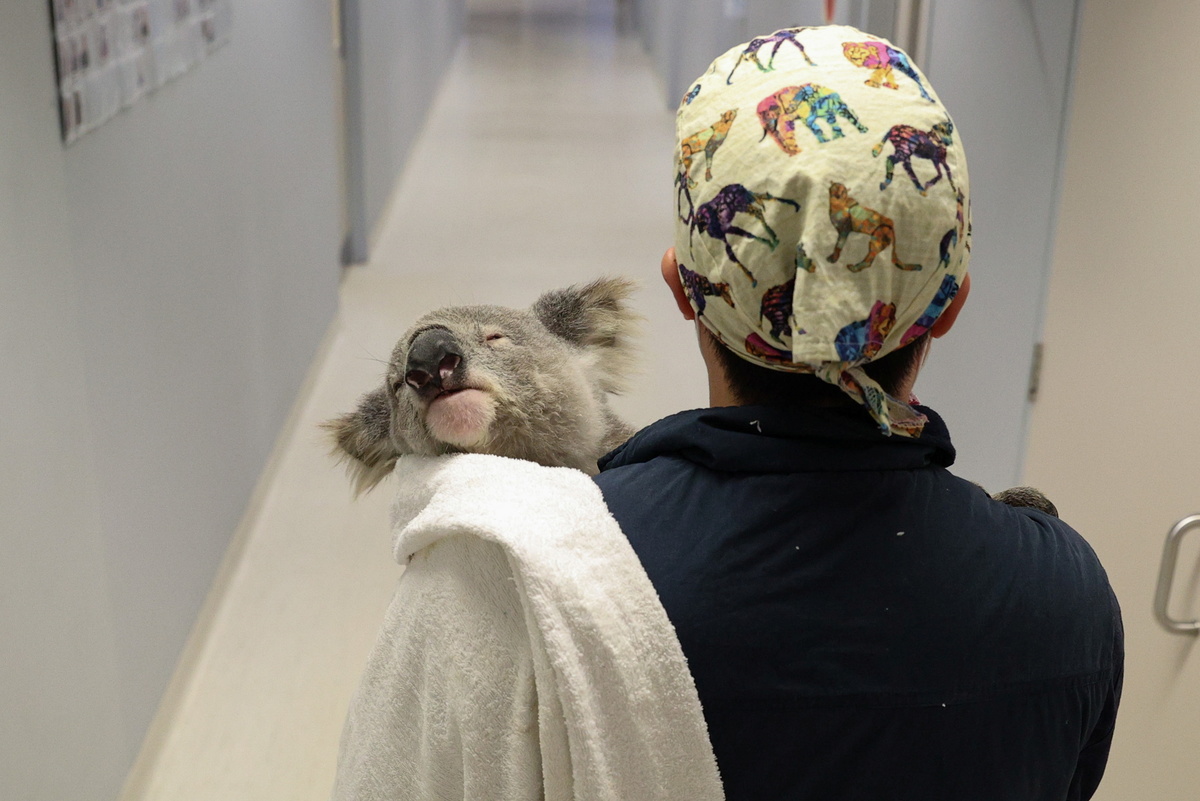
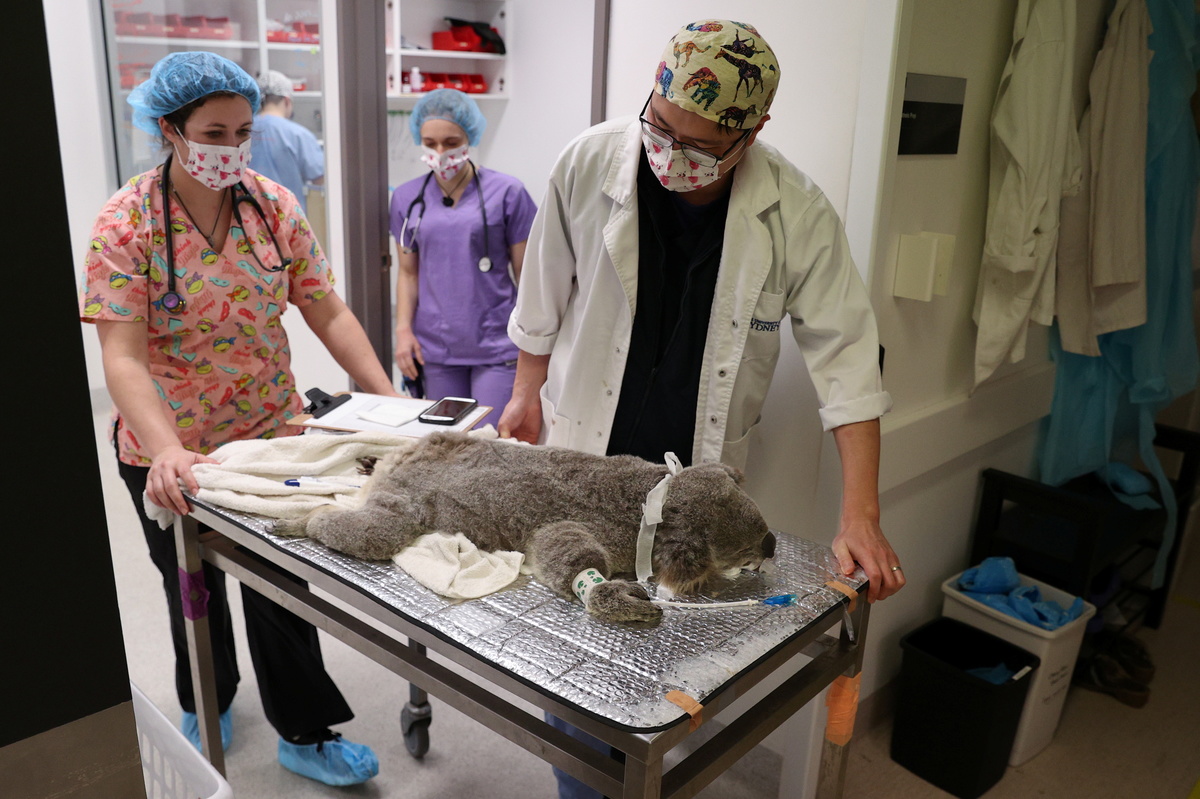
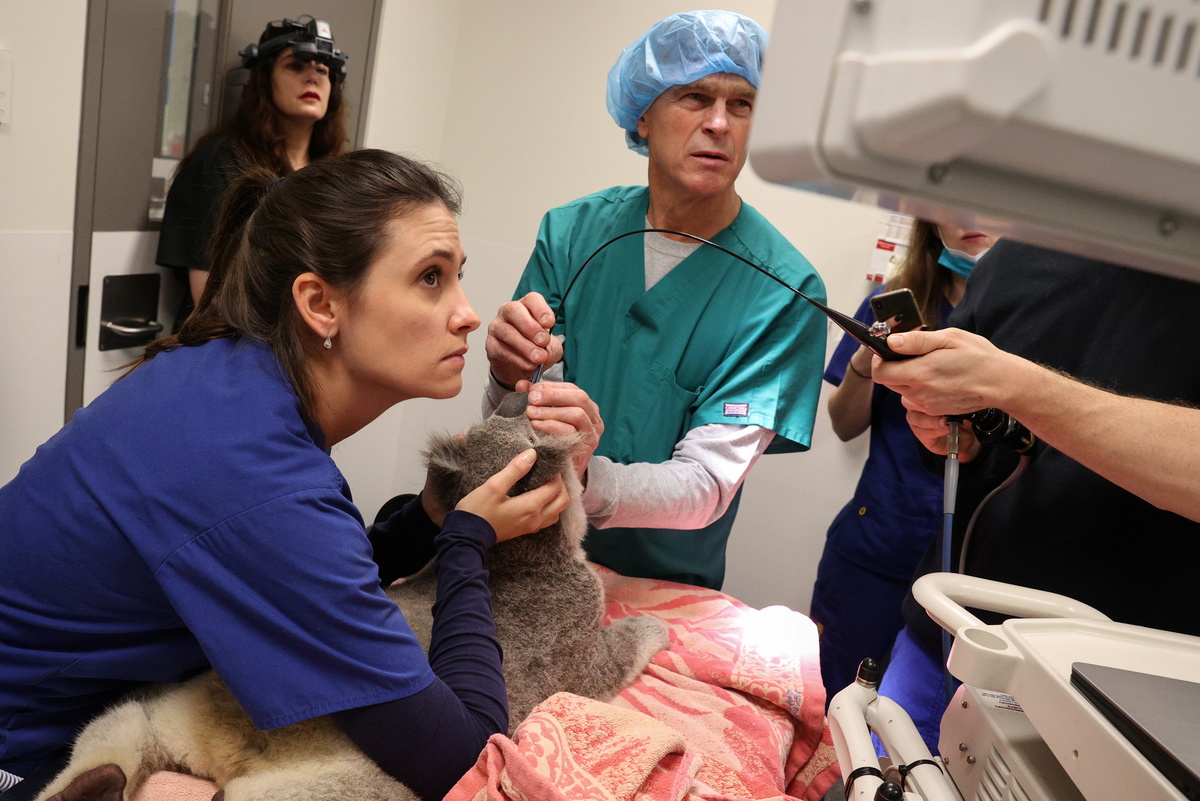
"They really run the risk of becoming extinct inside our lifetime," Philpott said of the New South Wales koala population at an animal hospital on Sydney's outskirts while helping a veterinarian treat a rescued koala infected with the bacterial disease chlamydia.
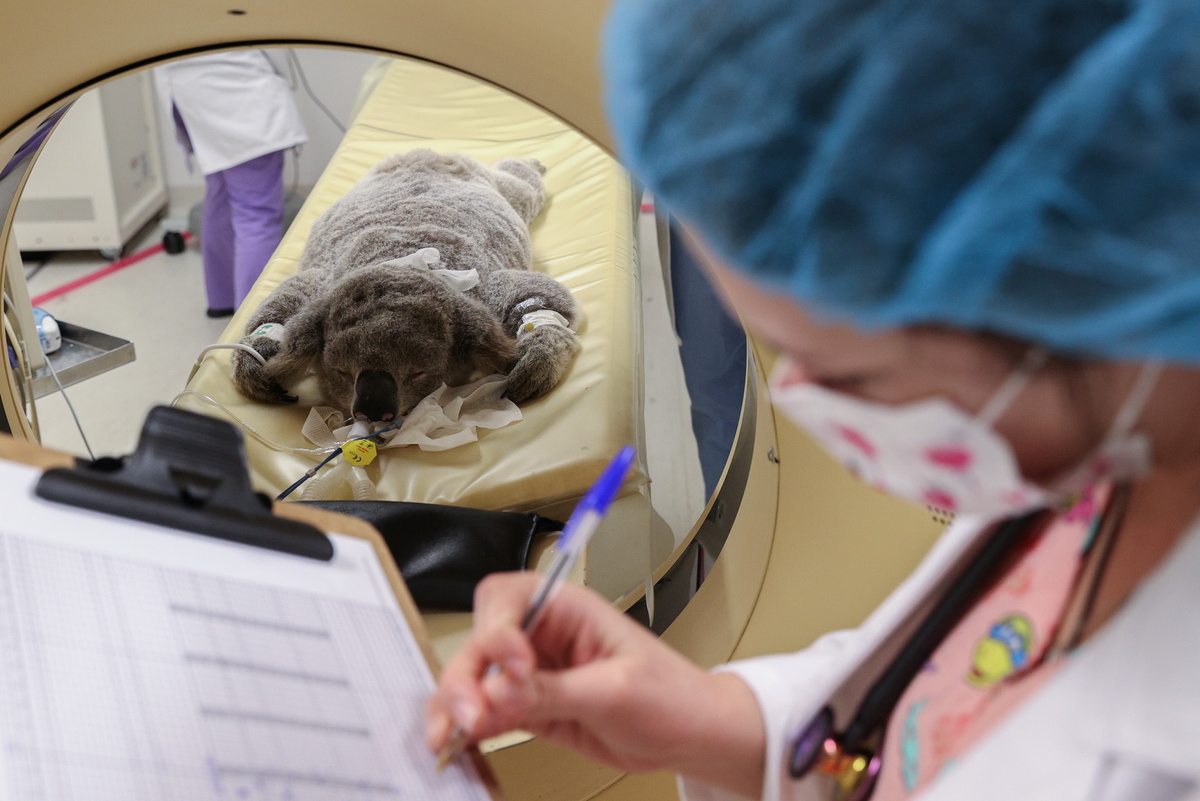
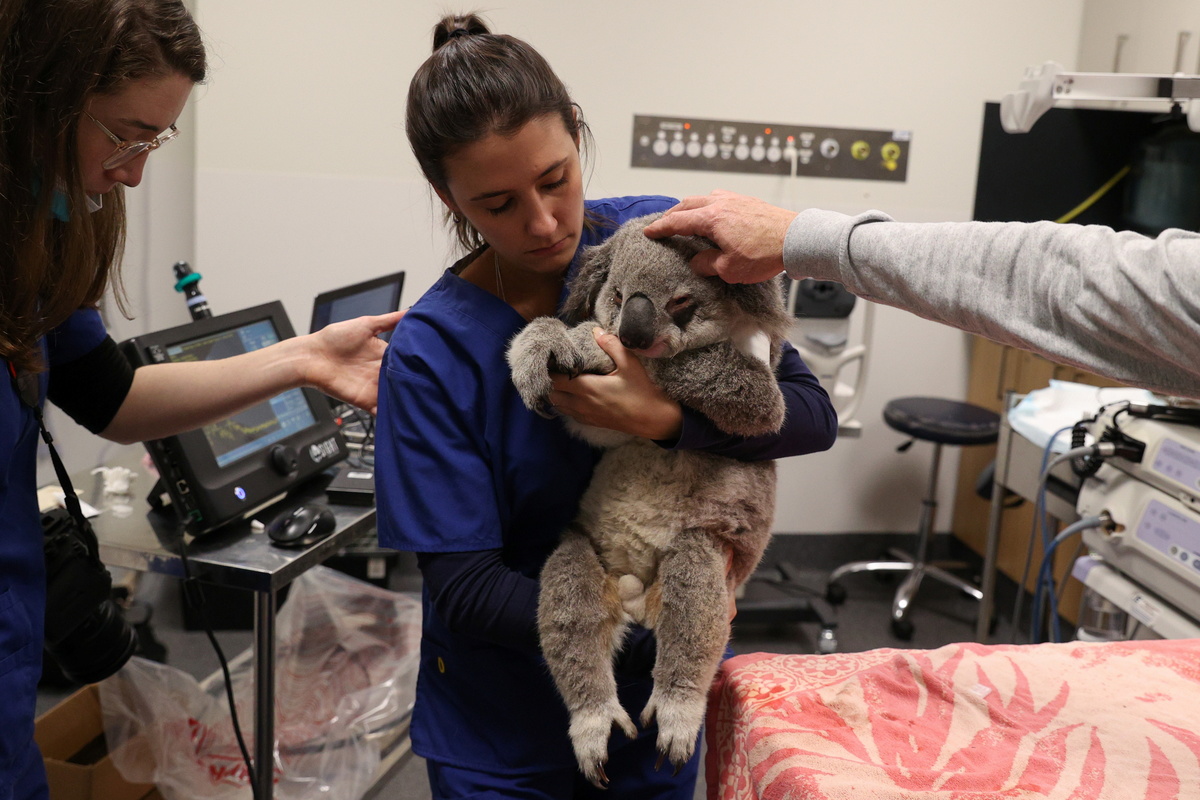
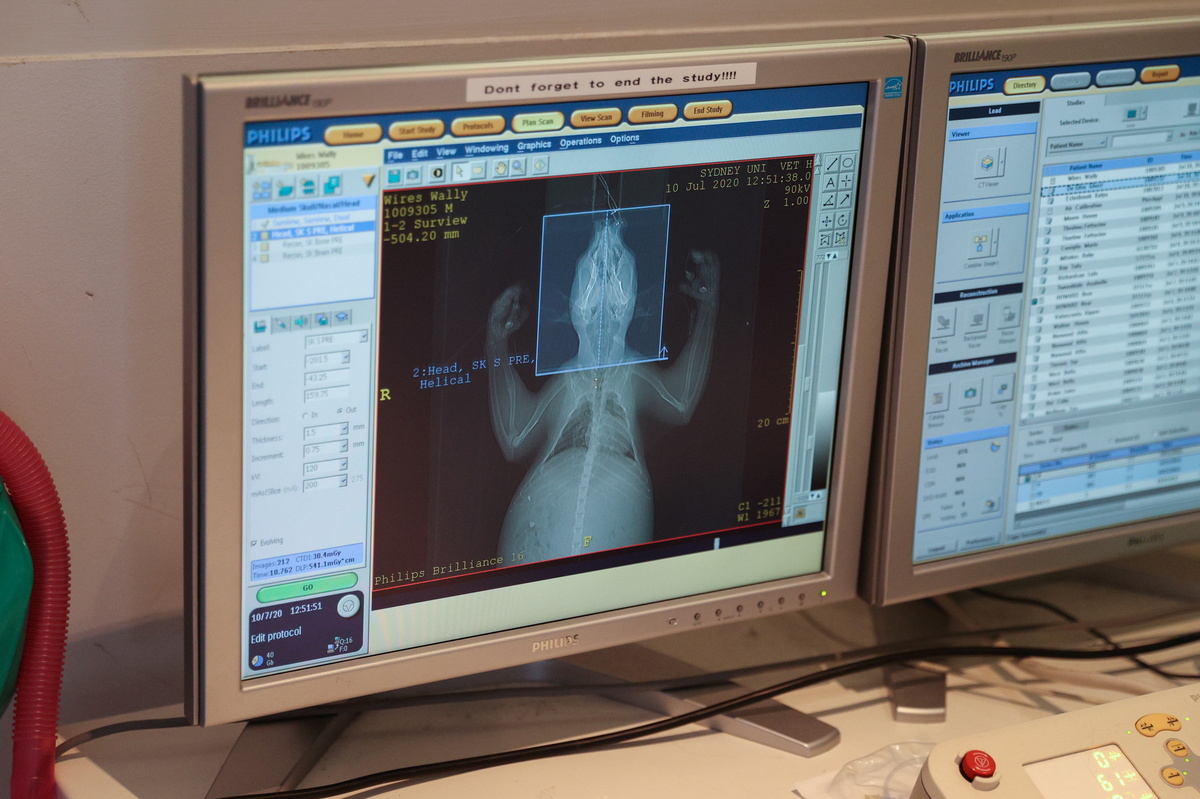
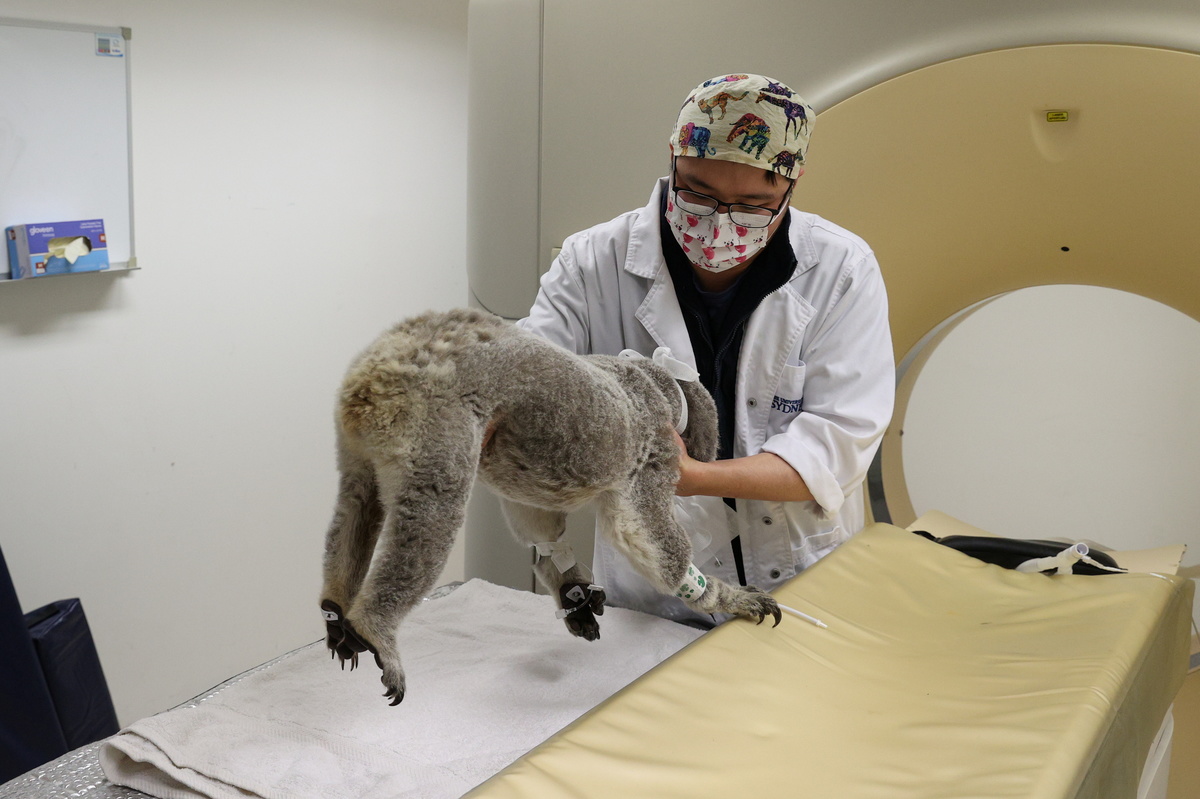
A sick koala named Wally, rescued by the animal rescue agency, Wildlife Information, Rescue and Education Service, also knows as WIRES, on the outskirts of Sydney in an area where urban development is encroaching on koala habitat, is treated as part of a rehabilitation process at Sydney University Veterinary Teaching Hospital in Sydney, Australia, July 10, 2020. REUTERS/Loren Elliott
(Click https://reut.rs/3k77kaS to see a picture package of Australia's sick koalas.)
The pervasive infection among the koalas, blazing bushfires, drought, logging of forests and urban encroachment of their habitat are some of the many destructive forces that continue to threaten their survival. These forces, a government report warned in June, could make Australia's symbolic animal extinct in New South Wales - the nation's most populous state - by 2050.
"If the areas that didn't burn last year burn this year, that would really be catastrophic," for the koalas, said Philpott, who joined the country's biggest animal rescue agency, Wildlife Information, Rescue and Education Service, or WIRES, at the urging of his daughter.
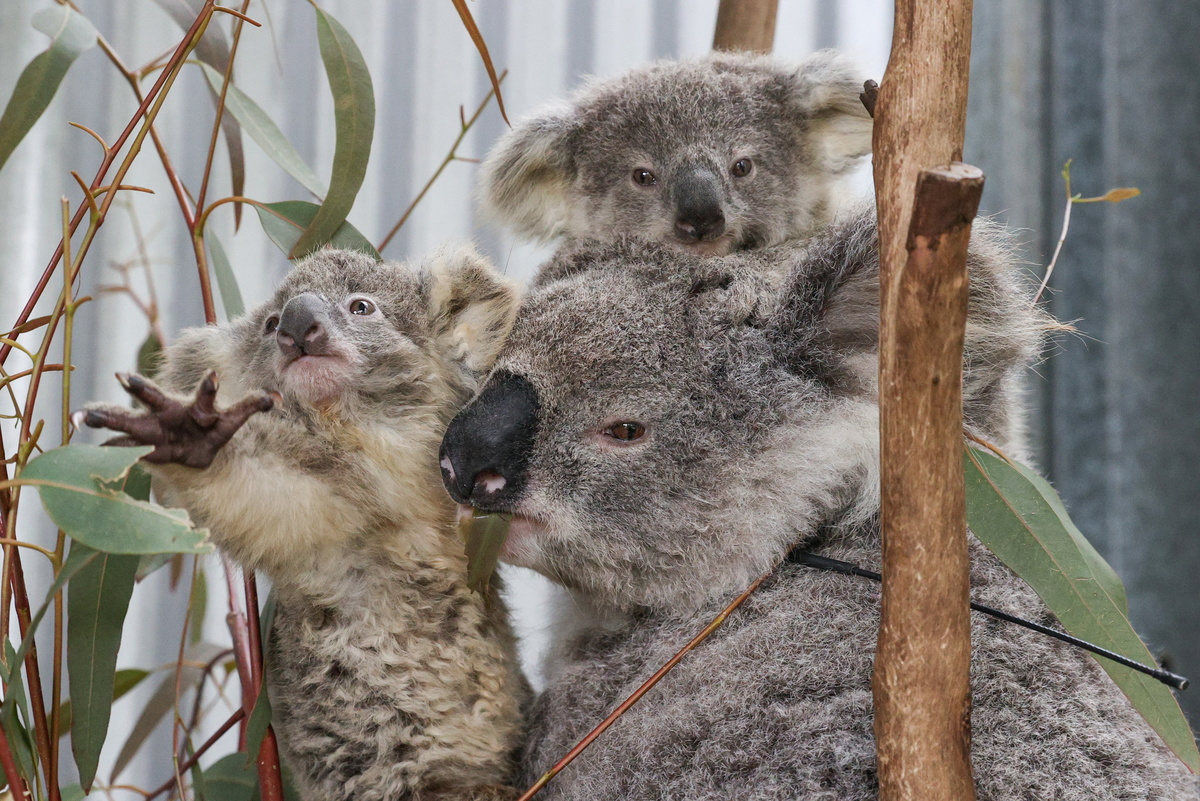
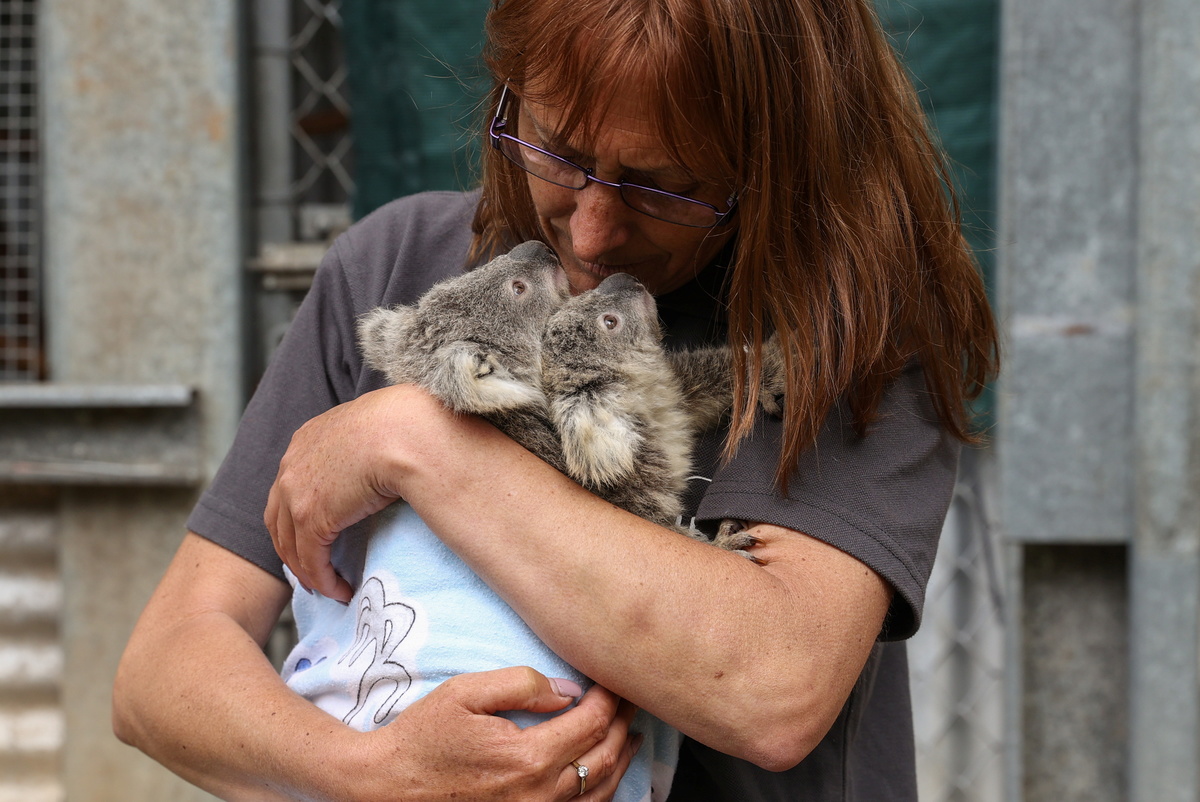
A mother koala named Gladys is pictured with her twin joeys, who have been medically diagnosed as being underweight, at a rehabilitation enclosure next to their carer's home, who volunteers for the animal rescue agency, Wildlife Information, Rescue and Education Service, also knows as WIRES, where they are being rehabilitated, in Wedderburn, Australia, September 11, 2020. Gladys and her joeys were rescued from an area where urban development is encroaching on koala habitat. REUTERS/Loren Elliott
"Future fires could spell the end of them."
The country's worst summer of bushfires in a generation razed more than 11.2 million hectares (27.7 million acres), nearly half the area of the United Kingdom, thrusting the grey, tree-hugging marsupials into the centre of the national conversation and a hot political issue.
In New South Wales, at least 5,000 koalas were killed in the fires that burned 80% of the Blue Mountains World Heritage Area and 24% of koala habitat on public land, the government's June report said.
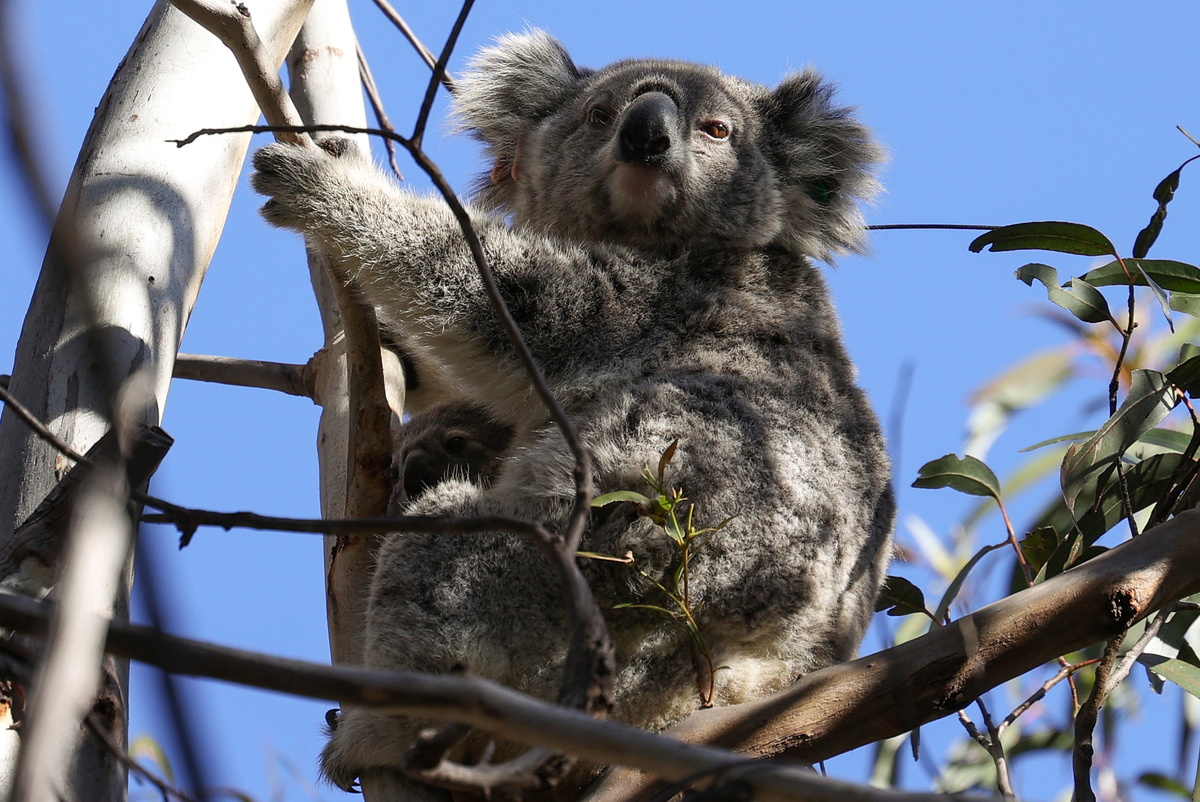
A mother koala named Kali and her joey, monitored by not-for-profit conservation organisation Science for Wildlife, as part of the Blue Mountains Koala Project spearheaded to plan for koala recovery in the region, are seen in their natural habitat in an area affected by bushfires, in the Greater Blue Mountains World Heritage Area, near Jenolan, Australia, September 14, 2020. REUTERS/Loren Elliott
As another summer looms, koalas face the threat of more bushfires, although weather forecasters expect a wetter, cooler few months than in the previous year.
New state laws have sought to limit the ability of farmers to clear land deemed important for koala habitat, setting off a political brawl between urban conservationists and people in the bush who wanted to manage their own property.
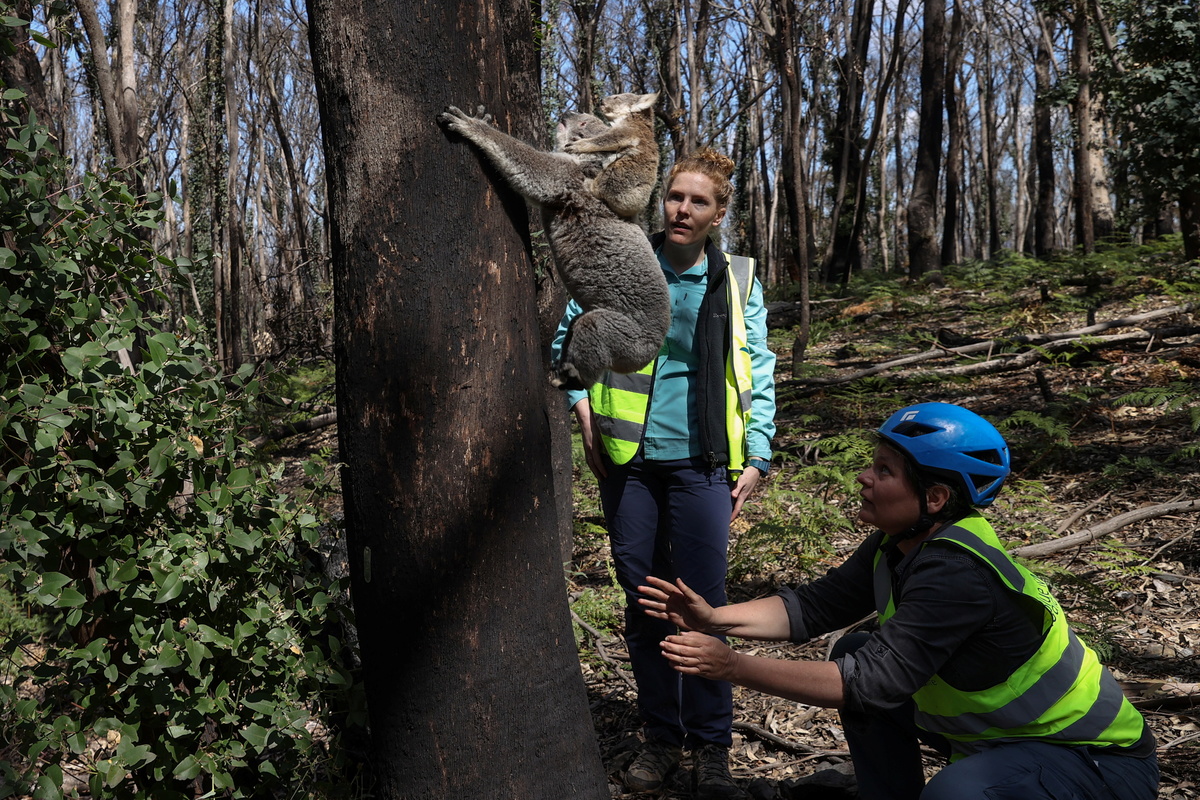
"The rate of tree-clearing and loss of habitats (are) behind all of the other factors that threaten them in those developed areas which include domestic dog attacks and vehicle strikes," said Kellie Leigh, head of Science for Wildlife, a non-profit conservation organisation, before releasing a koala mother and its joey onto a charred tree sprouting green chutes in the Kanangra-Boyd National Park, about 200 km (124 miles) west of Sydney.
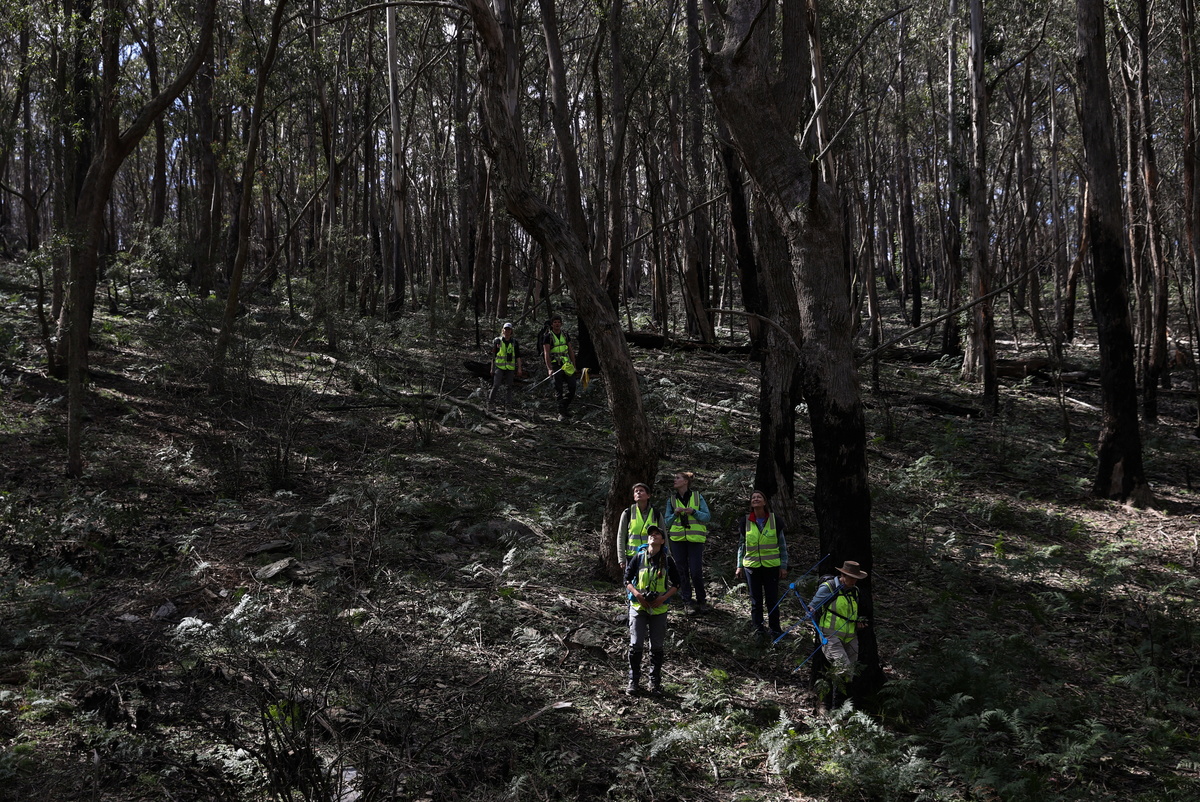
Dr. Kellie Leigh, the executive director of the not-for-profit conservation organisation Science for Wildlife, conducts a health assessment on a koala named Pele as part of The Blue Mountains Koala Project, a population monitoring program spearheaded to plan for koala recovery in the region, in the Greater Blue Mountains World Heritage Area, near Jenolan, Australia, September 15, 2020. Science for Wildlife uses advanced methods to track koala movements and monitor populations in bushfire affected areas. "At some of our sites, the forests are really tall, the canopies really thick, so you can't necessarily find koalas just by looking up," Leigh said. REUTERS/Loren Elliott
The release was part of her research, the Blue Mountains Koala Project, on koala recovery in bushfire-hit areas.
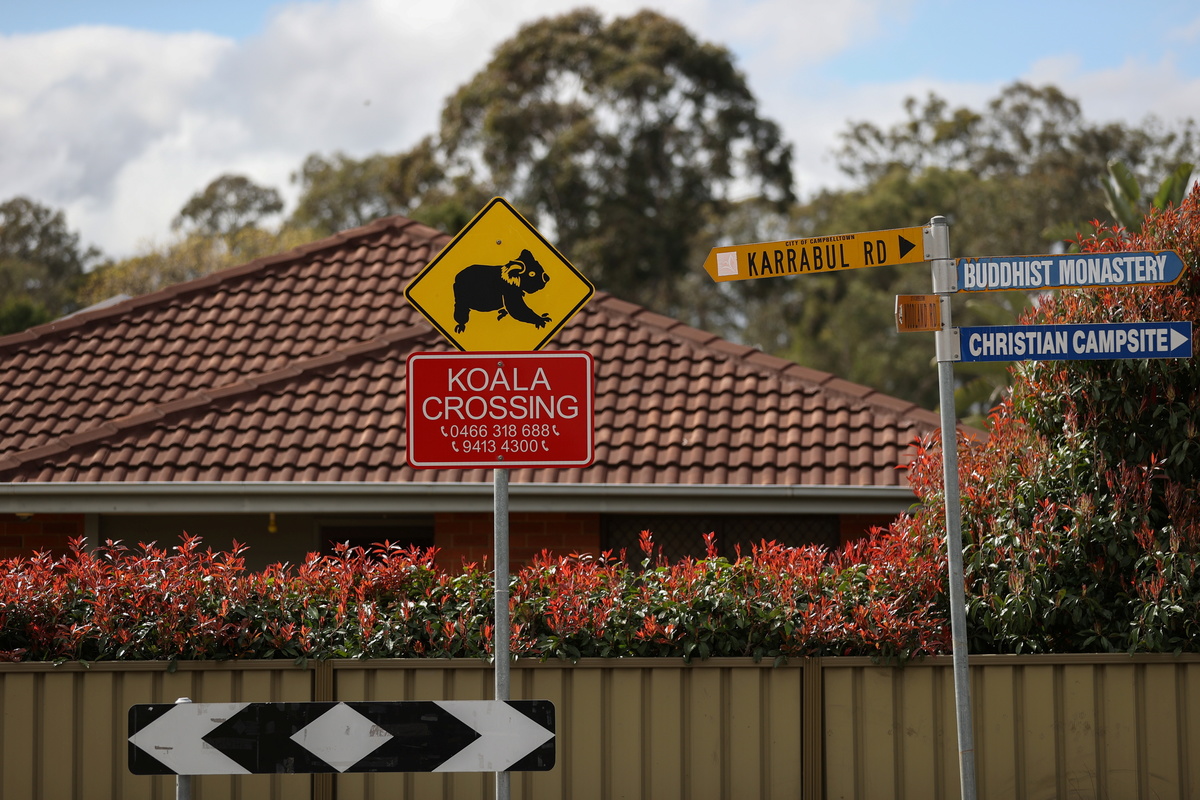
Koala conservationists, who blame climate change for much of the bushfires, are also focusing on cities as population growth in metropolises like Sydney drives demand to clear forests and make way for homes. Traffic safety signs have popped up now in developed suburbs warning of the risk of koalas crossing the road.
"There needs to be a balance to ensure that these species survive," said Tracey, a WIRES volunteer, who asked not to give her surname, as she fed a mother and twin joeys eucalyptus leaves inside a rehabilitation enclosure next to her home.
Research scientist Dr. Victoria Inman and Dr. Kellie Leigh, the executive director of the not-for-profit conservation organisation Science for Wildlife, release a koala named Pele and her joey back into the wild, after a team from Science for Wildlife, briefly captured them in order to conduct maintenance on Pele's radio collar and assess her and the joey's health, as part of The Blue Mountains Koala Project, a population monitoring program spearheaded to plan for koala recovery in the region, in Kanangra-Boyd National Park, the Greater Blue Mountains World Heritage Area, near Jenolan, Australia, September 15, 2020. Science for Wildlife uses advanced methods to track koala movements and monitor populations in bushfire affected areas. "At some of our sites, the forests are really tall, the canopies really thick, so you can't necessarily find koalas just by looking up," Leigh said. REUTERS/Loren Elliott
(Reporting by Loren Elliott; Writing by Byron Kaye; Editing by Shri Navaratnam)
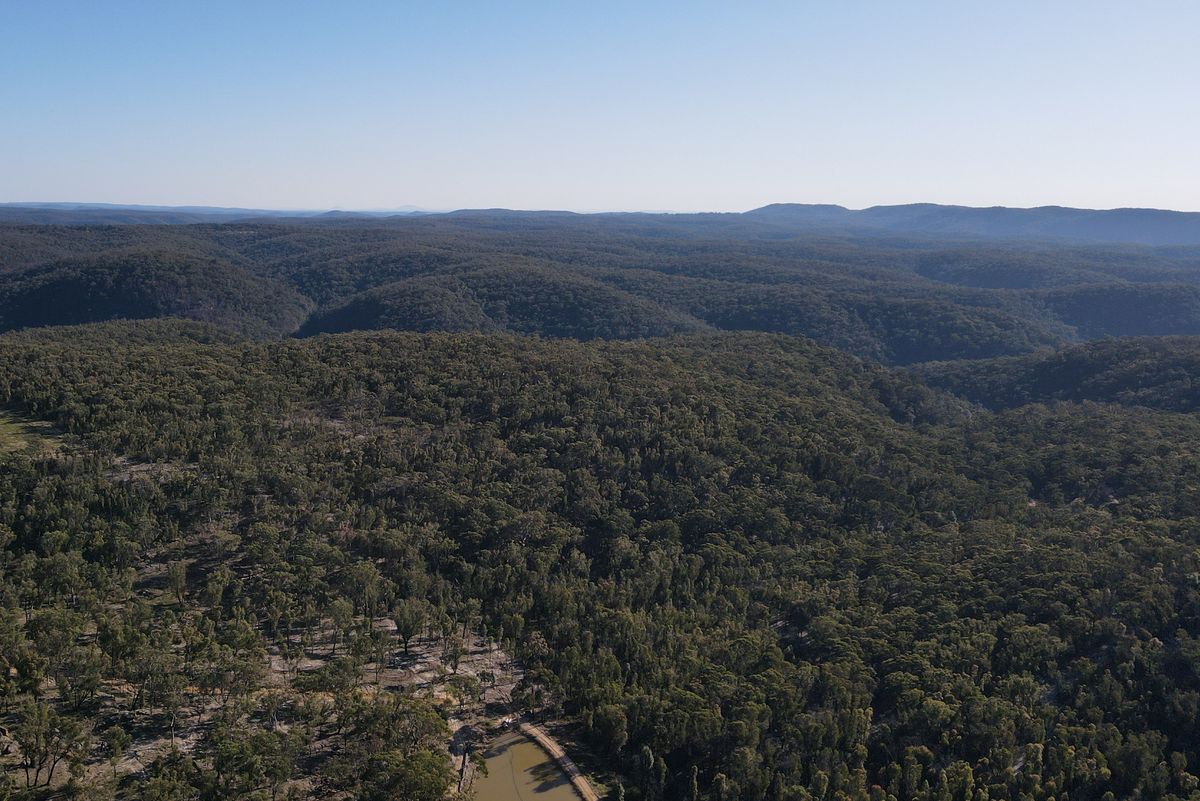
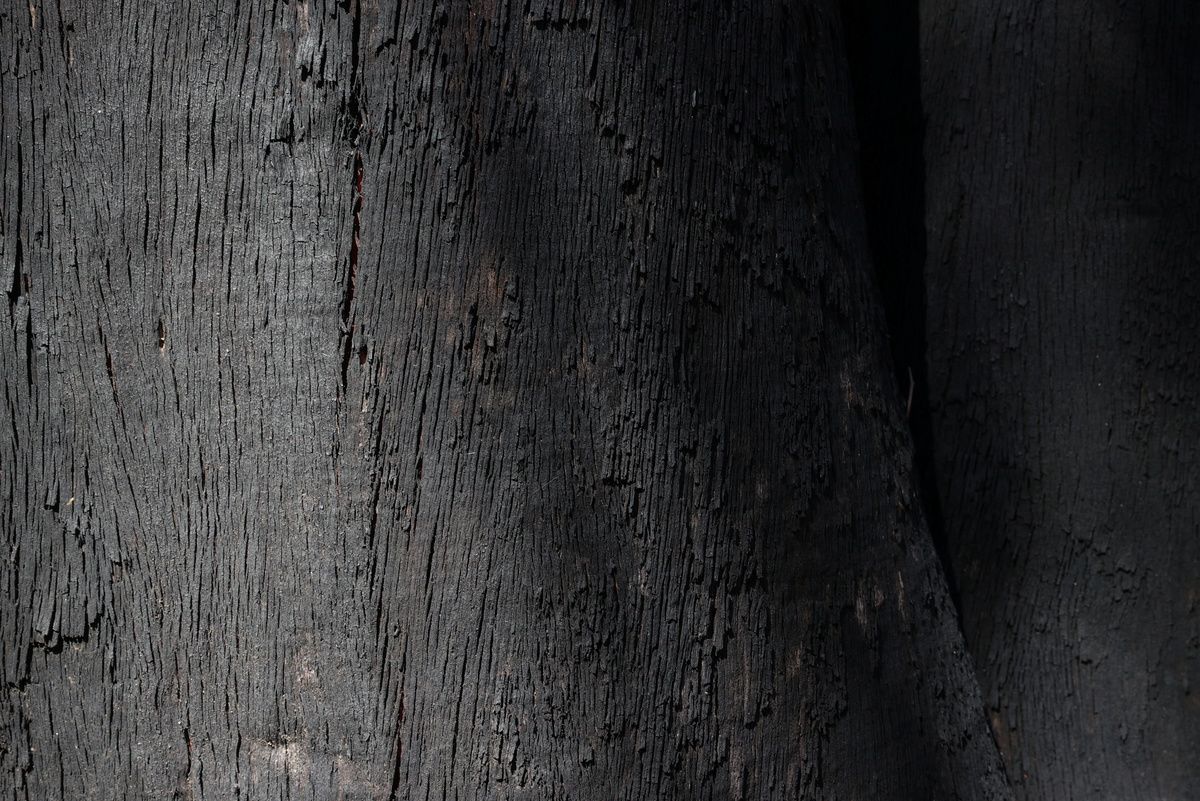
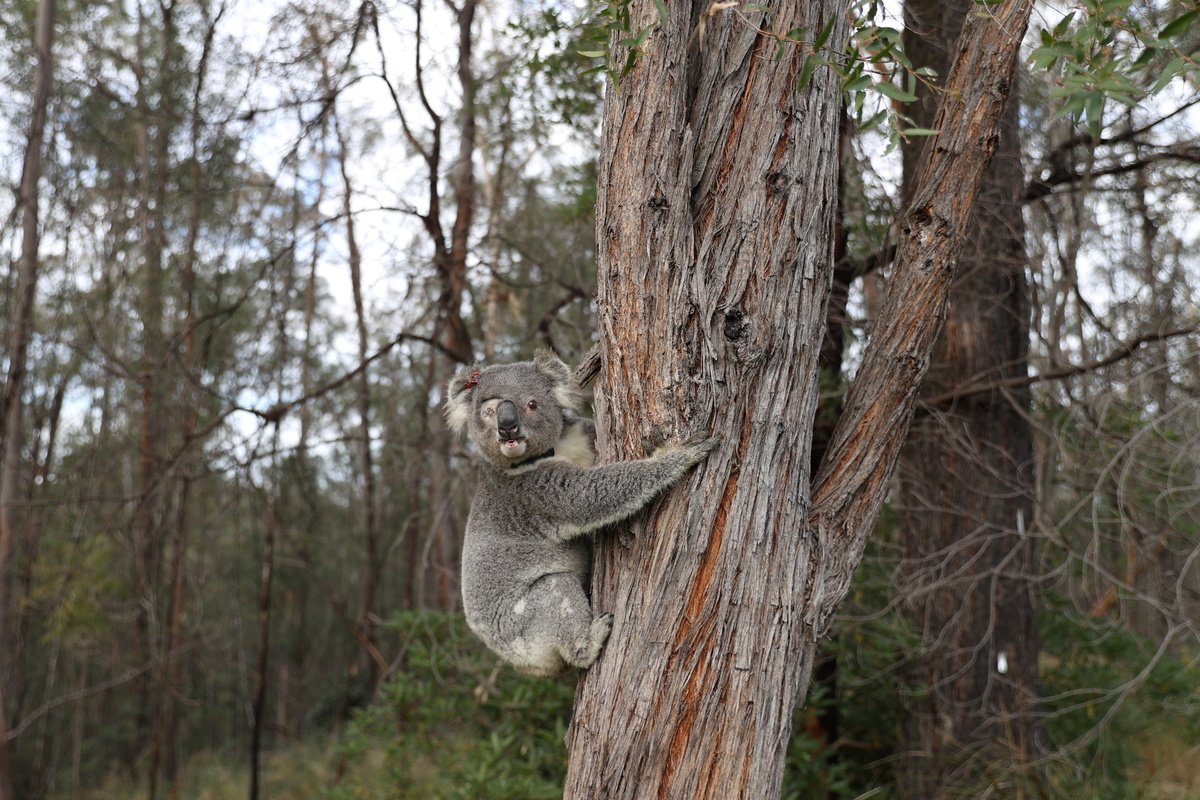
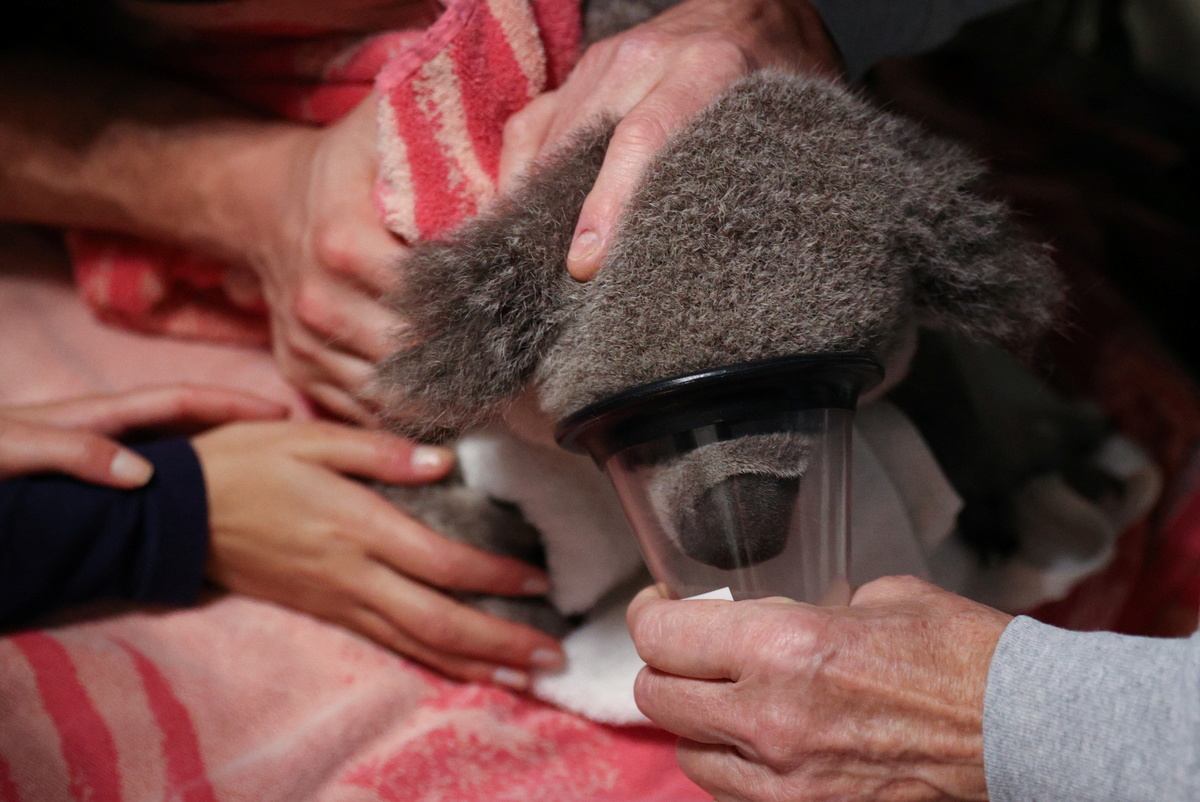
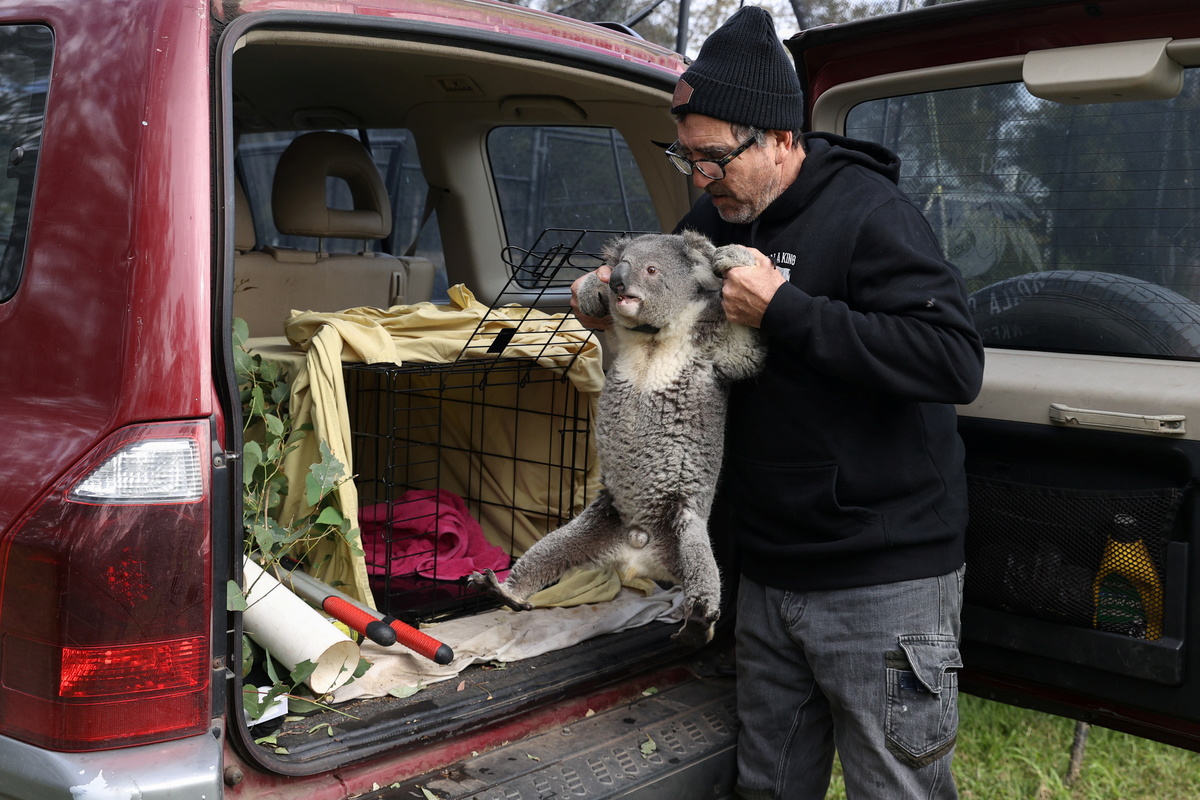
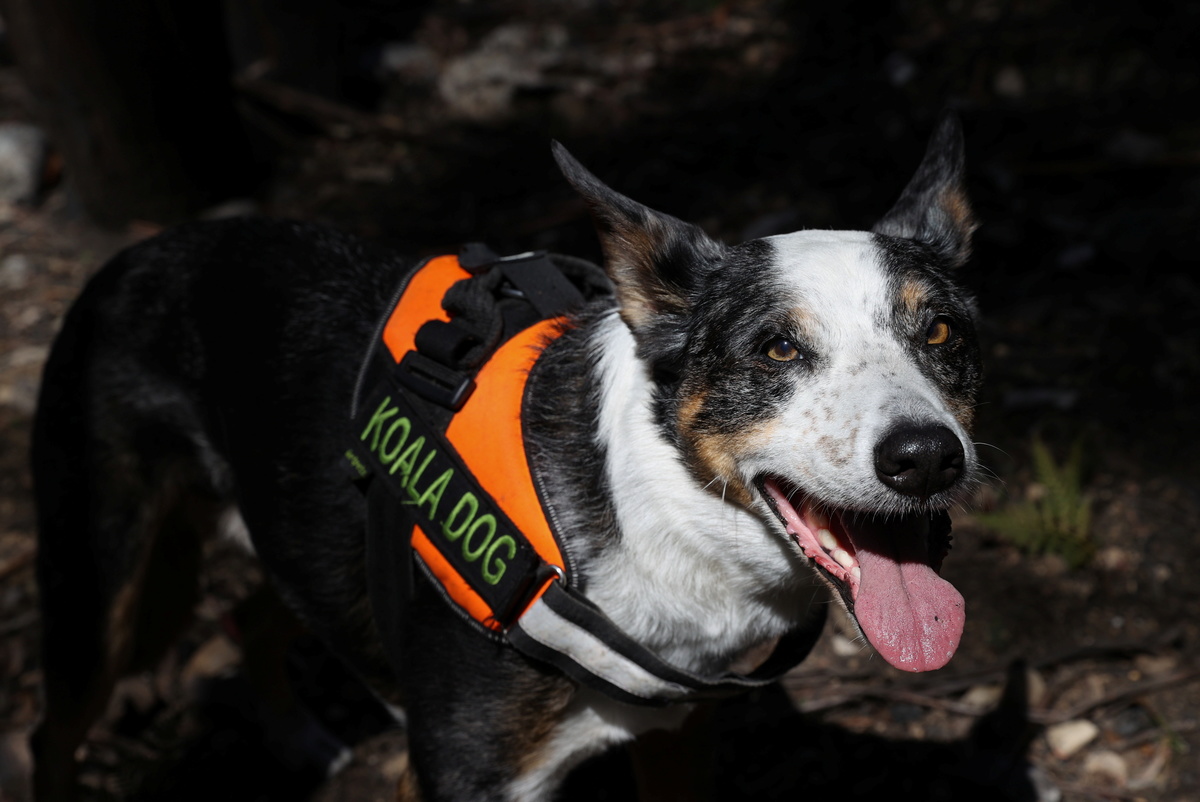
Trees stand in a habitat populated by koalas in the Greater Blue Mountains World Heritage Area, near Bilpin, Australia, October 13, 2020. Picture taken with a drone. REUTERS/Jill Gralow Team members from Science for Wildlife, a not-for-profit conservation organisation, use a radio-tracking device to locate a koala being monitored, as part of The Blue Mountains Koala Project, a population monitoring program spearheaded to plan for koala recovery in the region, in Kanangra-Boyd National Park, the Greater Blue Mountains World Heritage Area, near Jenolan, Australia, September 15, 2020. REUTERS/Loren Elliott The burnt bark of a tree is seen in a forested area, in a habitat populated by koalas, that was damaged in a bushfire, at Kanangra-Boyd National Park, in the Greater Blue Mountains World Heritage Area, near Jenolan, Australia, September 14, 2020. REUTERS/Loren Elliott Dr. Kellie Leigh, the executive director of the not-for-profit conservation organisation Science for Wildlife, and her team, conduct a health assessment on a wild koala joey with its mother close by, as part of The Blue Mountains Koala Project, a population monitoring program spearheaded to plan for koala recovery in the region, in Kanangra-Boyd National Park, the Greater Blue Mountains World Heritage Area, near Jenolan, Australia, September 15, 2020. REUTERS/Loren Elliott A rescued koala named Ernie climbs up a tree as he is released back into his natural habitat, following medical treatment for chlamydia, where he had to have one of his eyes removed, in Grose Vale, Sydney, Australia, July 25, 2020. REUTERS/Loren Elliott A rescued koala named Ruben, who has cataracts, is tended to by veterinary ophthalmology nurse Mayara Galetti while under anaesthesia, as he is treated for cataracts at Eye Clinic For Animals (ECA), a specialist veterinary ophthalmology practice, while being rehabilitated before a planned release back into his natural habitat, in Sydney, Australia, July 28, 2020. Ruben was captured from a low tree by a main highway, in an area where koala habitat is being encroached upon by urban sprawl. Koalas near main highways, are at high risk of being hit by a car when moving amongst trees. REUTERS/Loren Elliott Tracey, who volunteers for the animal rescue agency, Wildlife Information, Rescue and Education Service, also knows as WIRES, cares for twin koala joeys, who have been diagnosed as being underweight, and their mother named Gladys, who were rescued from an area where urban development is encroaching on koala habitat, at a rehabilitation enclosure next to her home, in Wedderburn, Australia, September 11, 2020. Koala conservationists are focusing more than ever on the city as population growth in metropolises like Sydney - home to a fifth of Australia's 25 million population - drives demand to clear forests and make way for homes. Traffic safety signs normally associated with tight corners and speed bumps now show the risk of koalas crossing the road in developed suburbs. "We do need housing to live in but there needs to be a balance and there needs to be a balance to ensure that these species survive," said Tracey. REUTERS/Loren Elliott A koala named Ernie, is transported to the area from which he was rescued, in preparation for being released back into his natural habitat, following medical treatment for chlamydia, where he had to have one of his eyes removed, in Grose Vale, Sydney, Australia, July 25, 2020. REUTERS/Loren Elliott Christopher Sun, a veterinary anaesthesia and analgesia resident, carries a sick koala, under anaesthesia, named Wally, who was rescued by the animal rescue agency, Wildlife Information, Rescue and Education Service, also knows as WIRES, back to an enclosure to await pick-up by his carer, after receiving treatment at Sydney University Veterinary Teaching Hospital in Sydney, Australia, July 10, 2020. Wally was rescued on the outskirts of Sydney in an area where urban development is encroaching on koala habitat. REUTERS/Loren Elliott A rescued koala named Ruben, is put under anaesthesia while being treated for cataracts at Eye Clinic For Animals (ECA), a specialist veterinary ophthalmology practice, while being rehabilitated before a planned release back into his natural habitat, in Sydney, Australia, July 28, 2020. Ruben was captured from a low tree by a main highway, in an area where koala habitat is being encroached upon by urban sprawl. Koalas near main highways, are at high risk of being hit by a car when moving amongst trees. REUTERS/Loren Elliott A sick koala named Wally, rescued by the animal rescue agency, Wildlife Information, Rescue and Education Service, also knows as WIRES, on the outskirts of Sydney in an area where urban development is encroaching on koala habitat, is taken to have an MRI scan as he is treated during a rehabilitation process at Sydney University Veterinary Teaching Hospital in Sydney, Australia, July 10, 2020. REUTERS/Loren Elliott A scan of a sick koala named Wally, rescued by the animal rescue agency, Wildlife Information, Rescue and Education Service, also knows as WIRES, on the outskirts of Sydney in an area where urban development is encroaching on koala habitat, is seen as he is treated as part of a rehabilitation process at Sydney University Veterinary Teaching Hospital in Sydney, Australia, July 10, 2020. REUTERS/Loren Elliott Veterinary anaesthesia and analgesia resident Christopher Sun treats a sick koala named Wally, rescued by the animal rescue agency, Wildlife Information, Rescue and Education Service, also knows as WIRES, on the outskirts of Sydney in an area where urban development is encroaching on koala habitat, at Sydney University Veterinary Teaching Hospital in Sydney, Australia, July 10, 2020. REUTERS/Loren Elliott John Stark, who volunteers for the animal rescue agency, Wildlife Information, Rescue and Education Service, also knows as WIRES, releases a rescued koala named Ernie back into the wild, following medical treatment for chlamydia, where one of his eyes had to be removed, in Grose Vale, Sydney, Australia, July 25, 2020. REUTERS/Loren Elliott John Stark, who volunteers for the animal rescue agency, Wildlife Information, Rescue and Education Service, also knows as WIRES, prepares to release a rescued koala named Ernie back into his natural habitat, following medical treatment for chlamydia, where he had to have one of his eyes removed in Grose Vale, Sydney, Australia, July 25, 2020. REUTERS/Loren Elliott A rescued koala named Ruben, is treated for cataracts, while under anaesthesia, by veterinary ophthalmology nurse Mayara Galetti and veterinary anaesthesia doctor Colin Dunlop, at Eye Clinic For Animals (ECA), a specialist veterinary ophthalmology practice, while being rehabilitated before a planned release back into the wild, in Sydney, Australia, July 28, 2020. Ruben was captured from a low tree by a main highway, in an area where koala habitat is being encroached upon by urban sprawl. Koalas near main highways, are at high risk of being hit by a car when moving amongst trees. REUTERS/Loren Elliott A koala crossing caution sign is seen in an area where urban development is encroaching on koala habitat in Wedderburn, Australia, September 11, 2020. REUTERS/Loren Elliott Smudge, a dog who is trained to follow the scent of koala droppings, stands during a population density survey conducted by not-for-profit conservation organisation Science for Wildlife, in a habitat that was burnt in a bushfire, in the Greater Blue Mountains World Heritage Area, near Jenolan, Australia, September 14, 2020. REUTERS/Loren Elliott
Sign up to read this article
Read news from 100’s of titles, curated specifically for you.