From death to no-contact, ancient martial art revived in Egypt
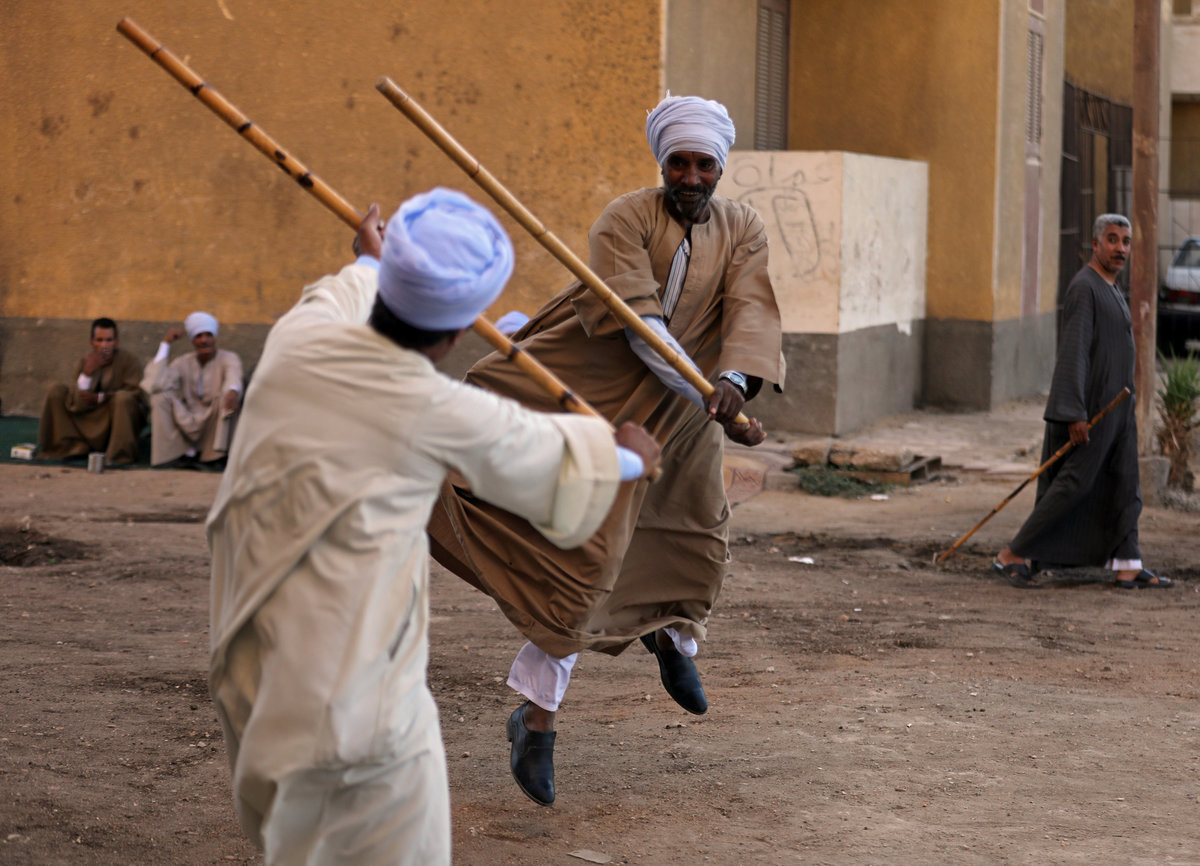
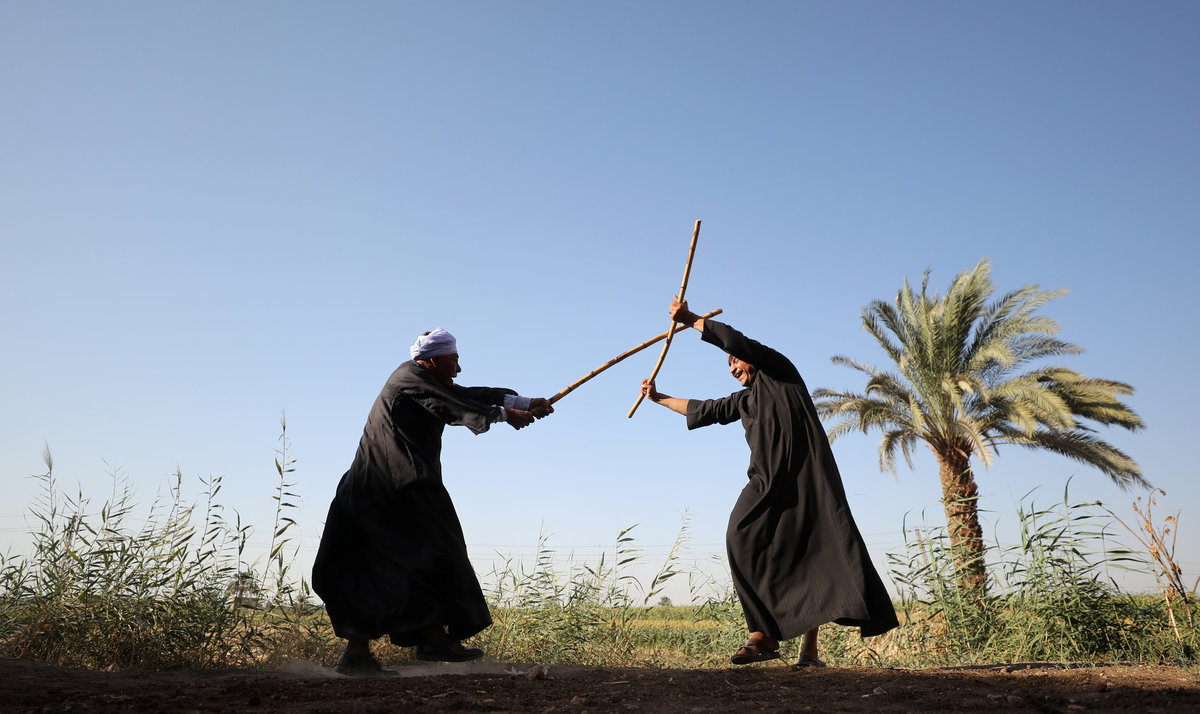
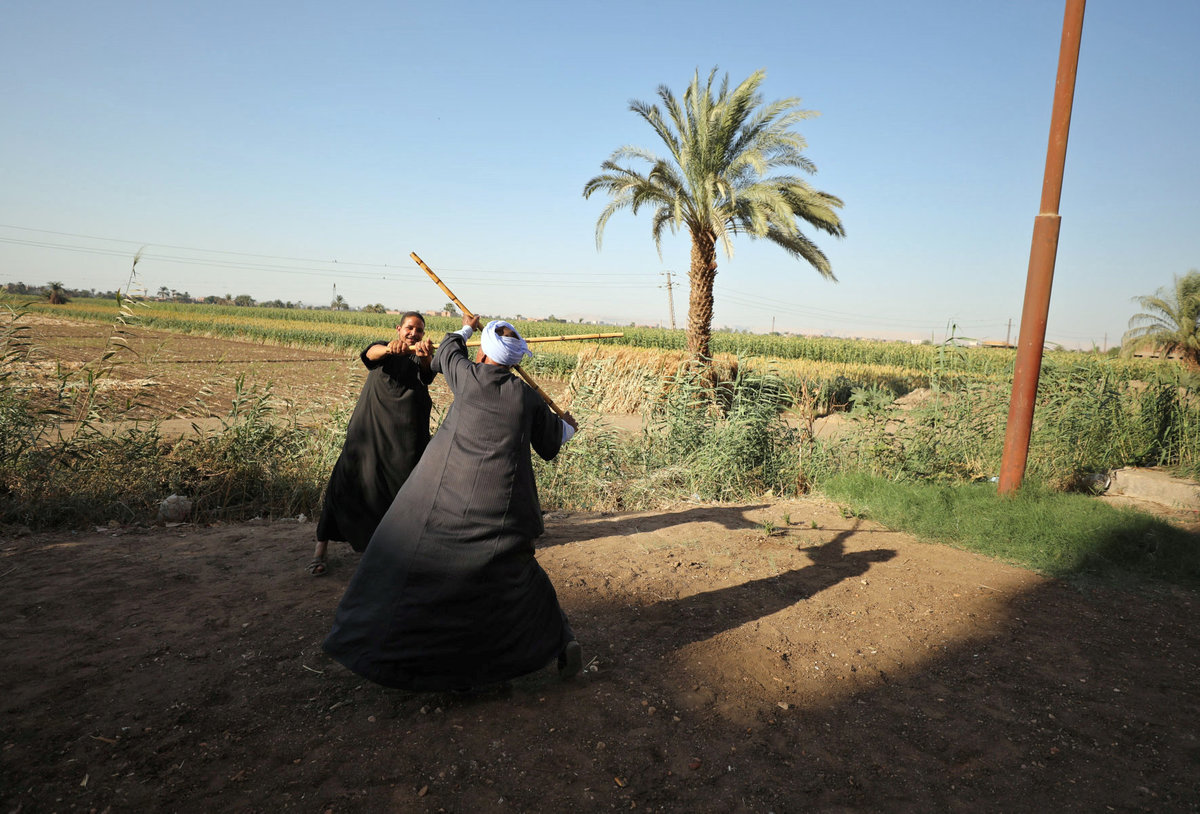
Zayed Abd El Naiem and Masry Abd El Fatha dance with their 'El Nabout' canes as they perform Tahteeb, an ancient form of martial arts and dance, in Sohag, Egypt, September 19, 2017. REUTERS/Mohamed Abd El Ghany
Sohag, EGYPT (Reuters) - Turn the clock back just over half a century and a contest between two men in the ancient Egyptian martial art of tahteeb could see the loser injured, or even killed.
Today however, striking is no longer permitted in this form of stick-fighting, references to which were discovered written inside ancient Egyptian tombs.
In the city of Sohag which lies on the banks of Nile in central Egypt, one martial arts school is working to keep the ancient sport alive.
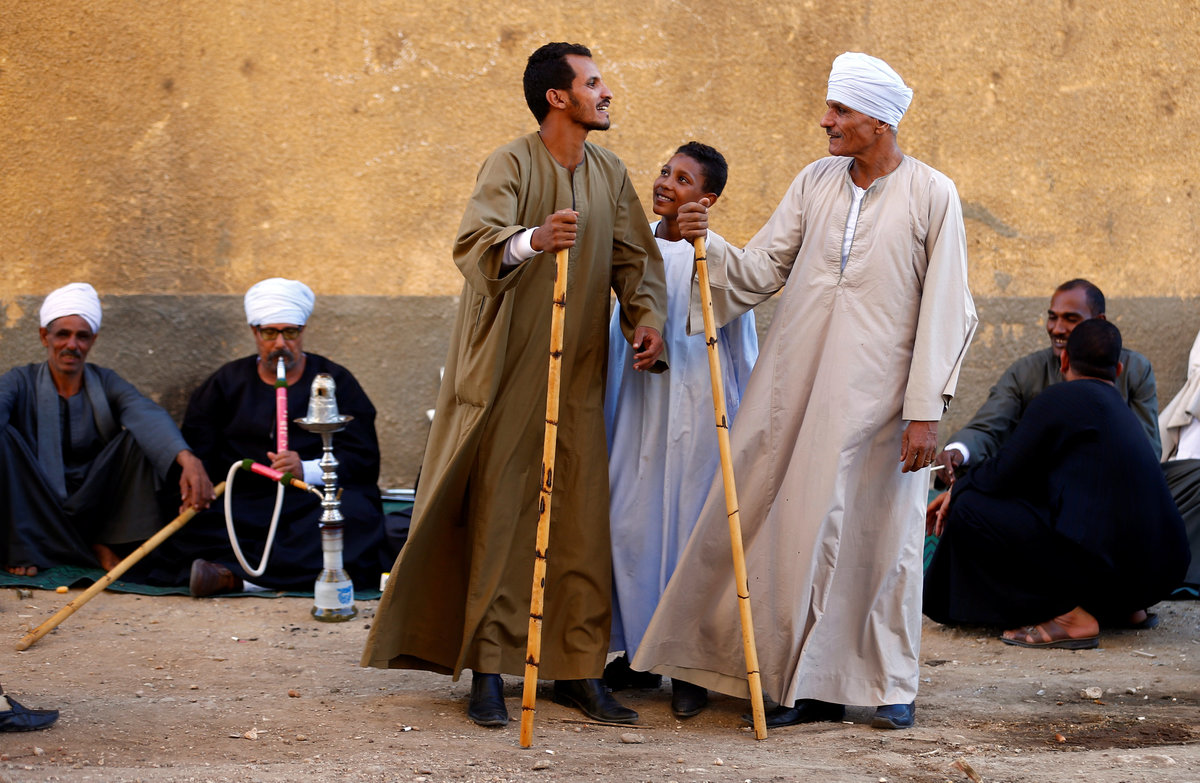
Dancers hold their 'El Nabout' canes as they talk while resting during a practice session of Tahteeb, an ancient form of martial arts and dance, in Sohag, Egypt, September 19, 2017. REUTERS/Mohamed Abd El Ghany
"Long ago, this game was violent, and about 60 or 70 years ago, it was similar to fighting games, because that was the era known as one of manhood," said Sabry Mohamed, who founded the International Centre for Tahteeb in 2012.
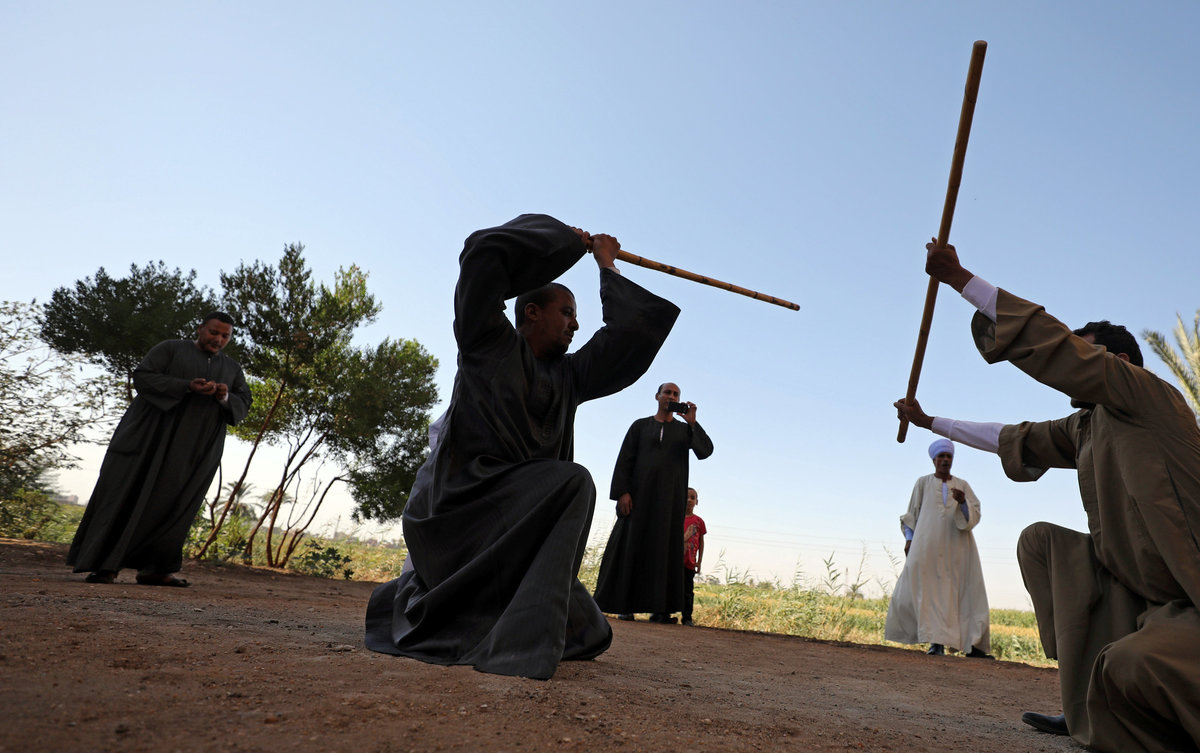
Tahteeb requires a great deal of skill and control, and there are rules which govern how to hold the stick and the kinds of blows permitted, some of which were aimed to be deadly before the martial art became a no-contact discipline.
Sabry has set his sights on organising international championships for the martial art.
Abdu El Kholy and Hamdey Abo El Hamed dance with their 'El Nabout' canes as they perform Tahteeb, an ancient form of martial arts and dance, in Sohag, Egypt, September 19, 2017 REUTERS/Mohamed Abd El Ghany
"We can make use of tahteeb by forming an international body that can organise international championships and we'll benefit from this a great deal, monetarily, and also by spreading our culture and heritage to other people."
(Reporting by Abd Mohamed El-Ghany; Writing by Mark Hanrahan in London; Editing by Raissa Kasolowsky)
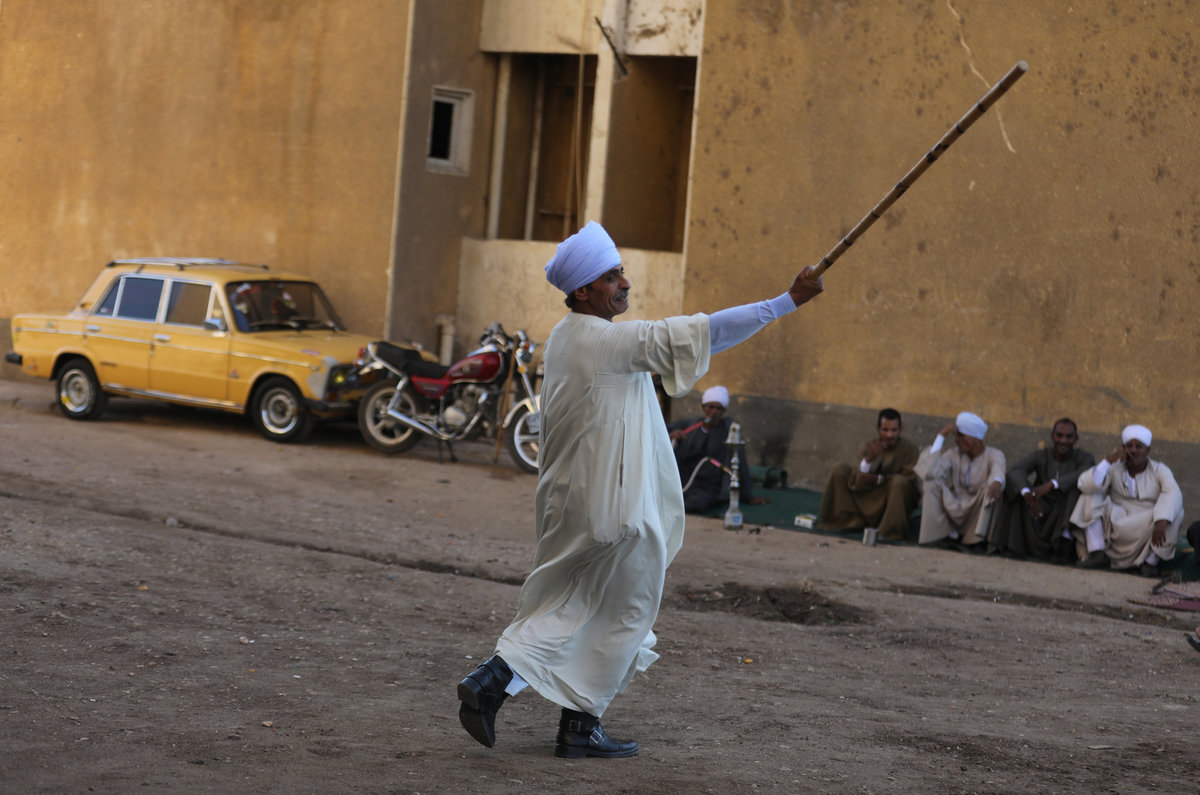
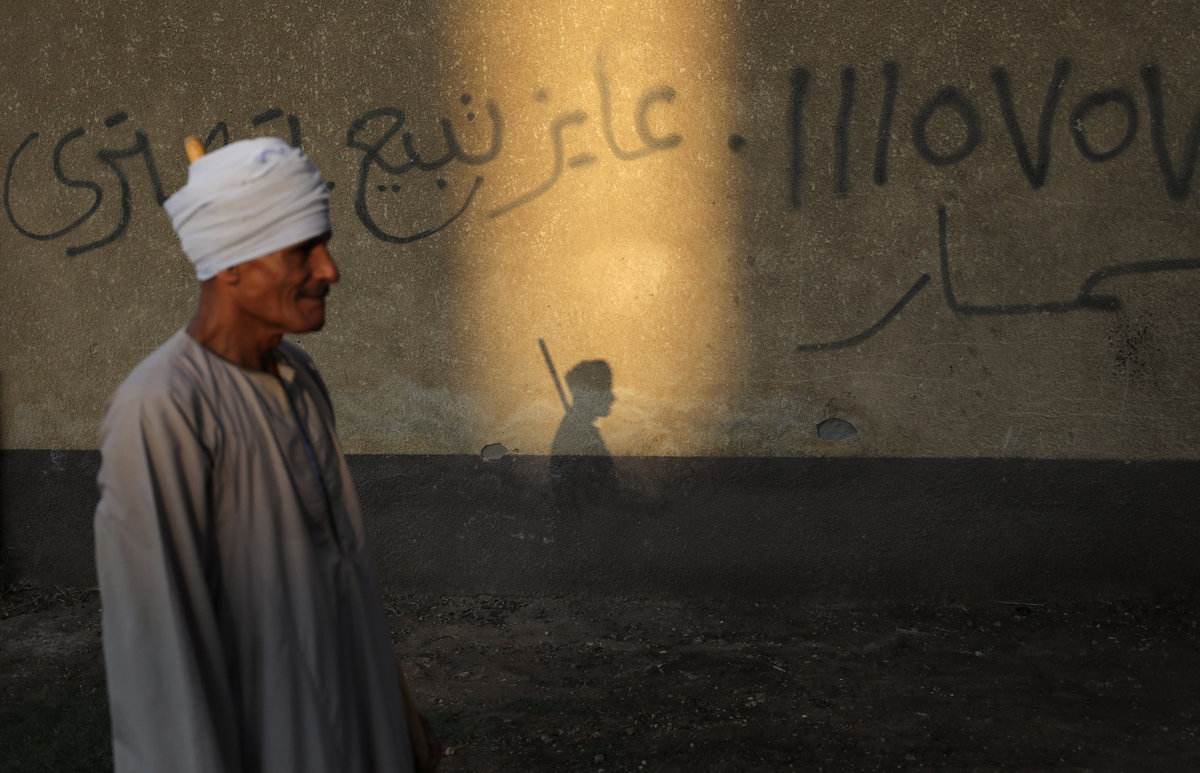
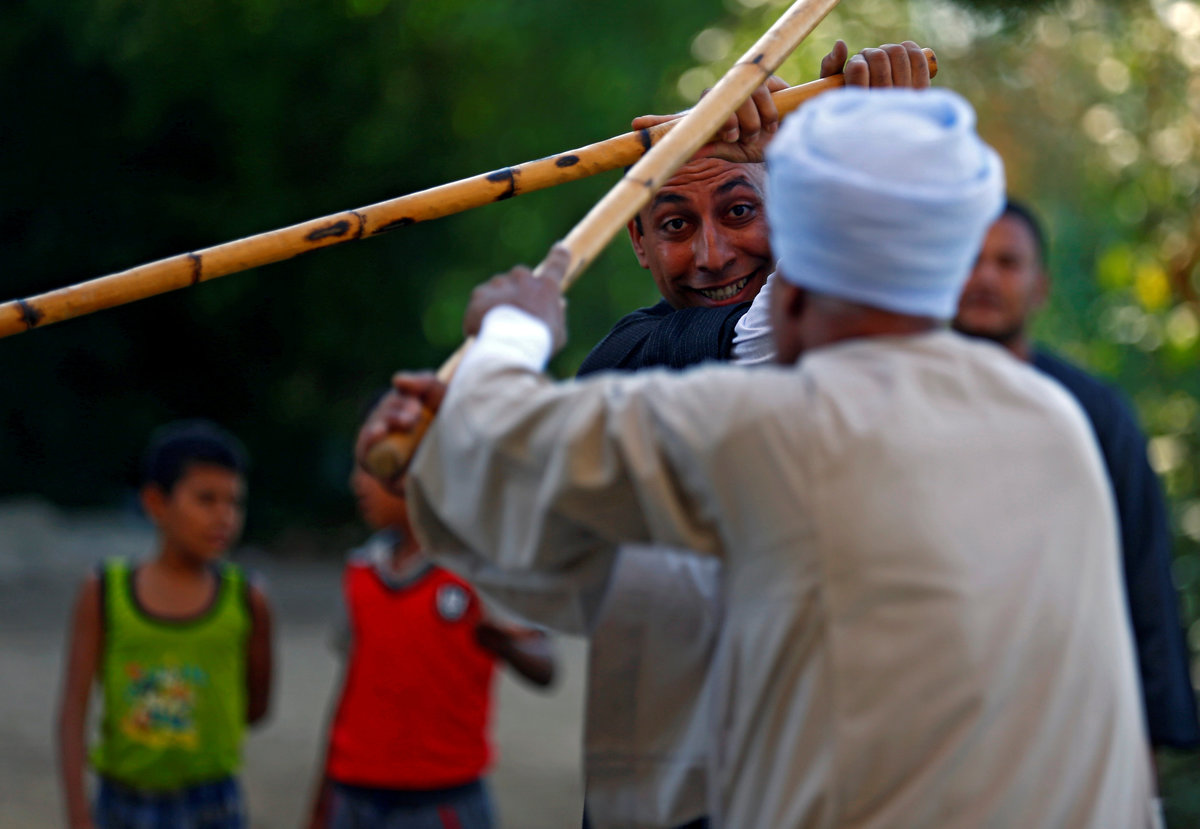
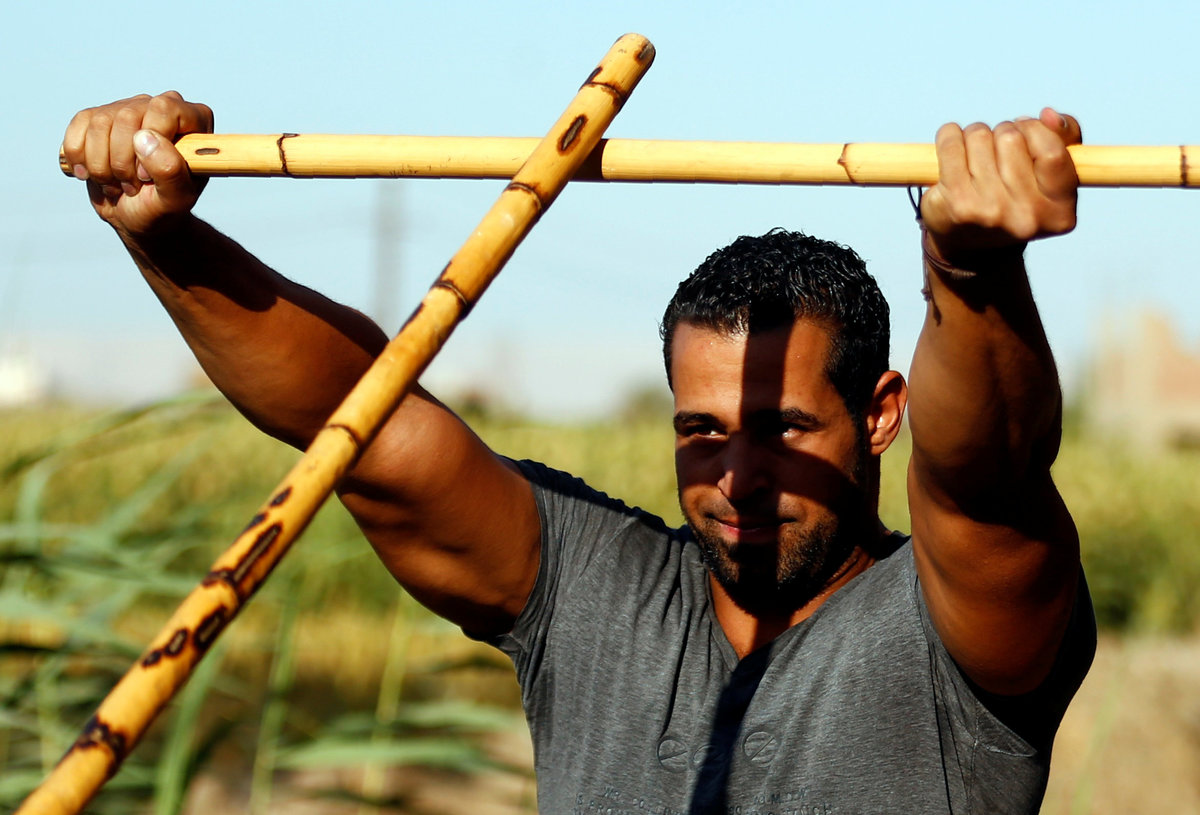
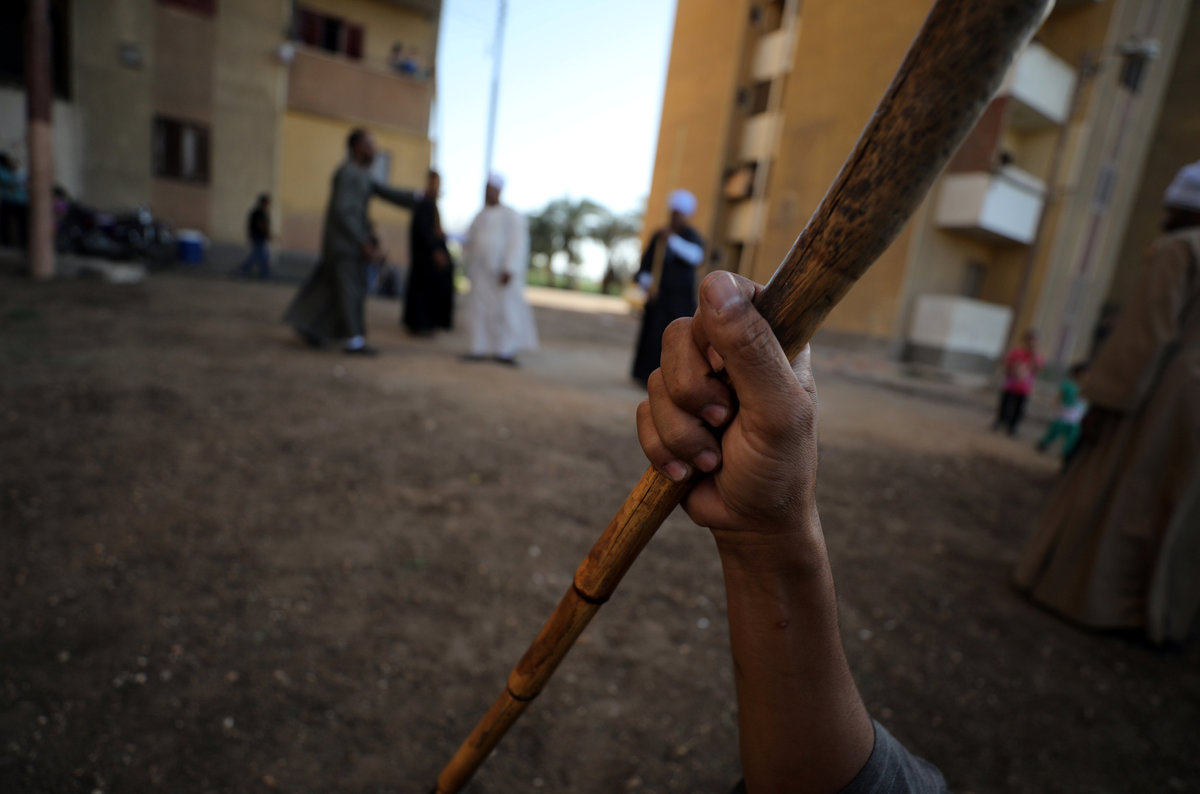
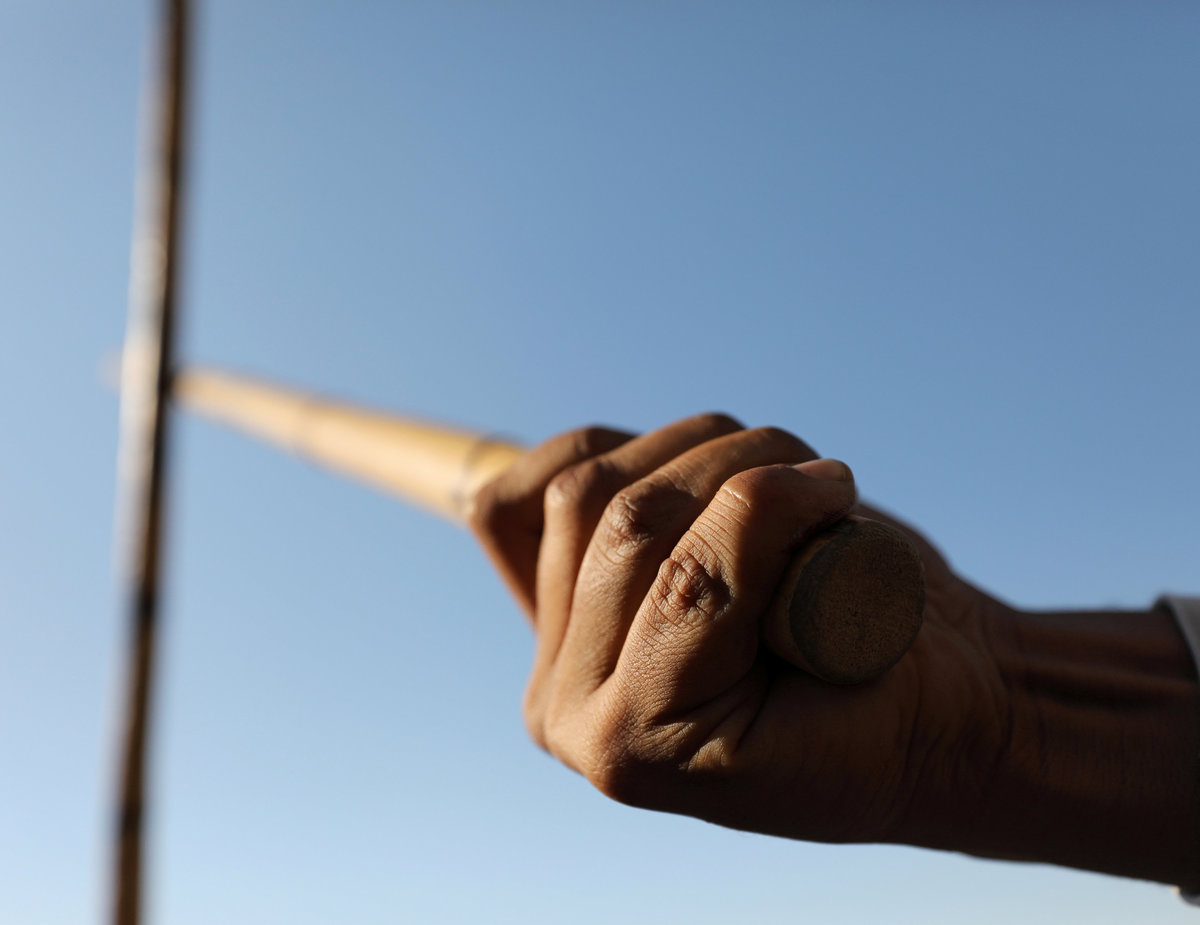
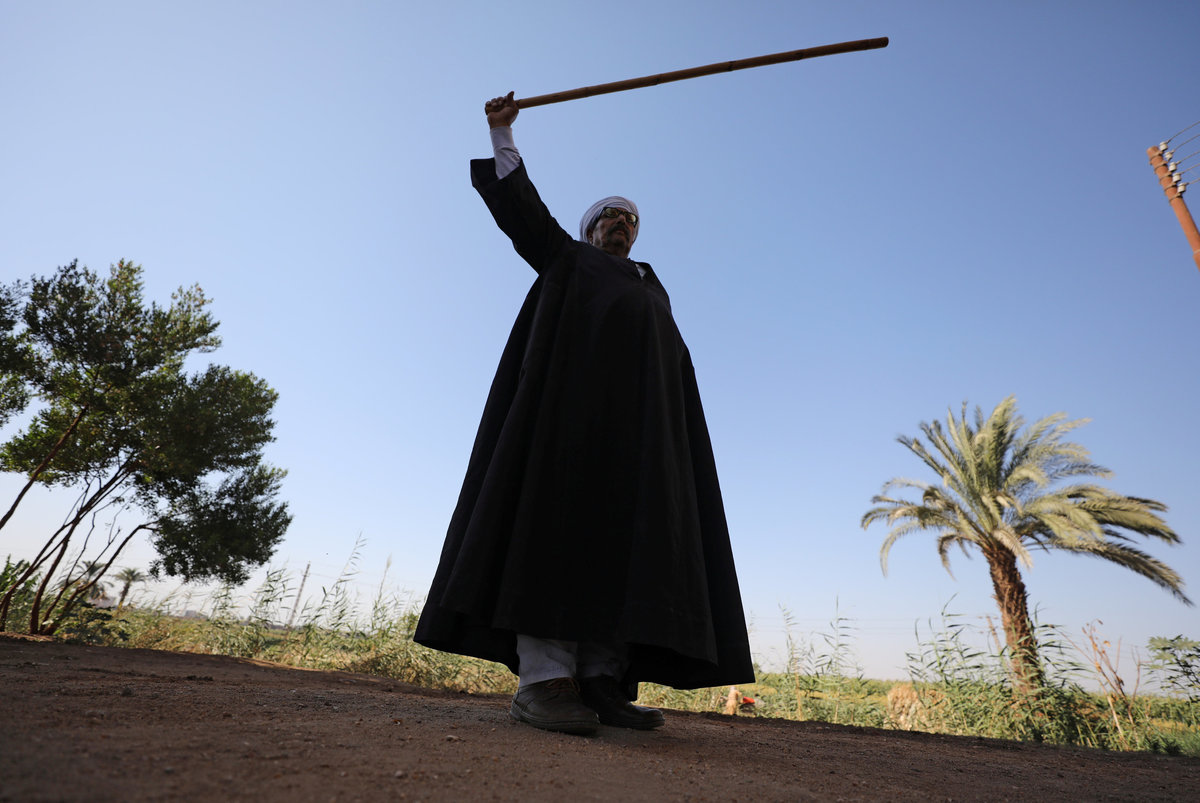
Zayed Abd El Naiem dances with his 'El Nabout' cane as he performs Tahteeb, an ancient form of martial arts and dance, in Sohag, Egypt, September 19, 2017. REUTERS/Mohamed Abd El GhanyDancer "El Omeda" Motamed Abdelnaim carries his 'El Nabout' cane as his shadow is cast on the wall of a local martial arts centre after a practice session of Tahteeb, an ancient form of martial arts and dance, in Sohag, Egypt, September 19, 2017. REUTERS/Mohamed Abd El GhanySabry Mohamed and Zayed Abd El Naiem dance with their 'El Nabout' canes as they perform Tahteeb, an ancient form of martial arts and dance, in Sohag, Egypt, September 19, 2017. REUTERS/Mohamed Abd El GhanyStrong shadows are cast over the face of dancer Hasan Abd El Atief by his 'El Nabout' cane as he performs Tahteeb, an ancient form of martial arts and dance, in Sohag, Egypt, September 19, 2017. REUTERS/Mohamed Abd El GhanyPeople watch as a dancer performs with his 'El Nabout' cane as he practices Tahteeb, an ancient form of martial arts and dance, in Sohag, Egypt, September 19, 2017. REUTERS/Mohamed Abd El GhanyAbdu El Kholy and Hamdey Abo El Hamed dance with their 'El Nabout' canes as they perform Tahteeb, an ancient form of martial arts and dance, in the evening light in Sohag, Egypt, September 19, 2017. REUTERS/Mohamed Abd El GhanyA dancer grips his 'El Nabout' cane as he performs Tahteeb, an ancient form of martial arts and dance, in Sohag, Egypt, September 19, 2017. REUTERS/Mohamed Abd El GhanyDancer Abdu El Kholy strikes a pose with his 'El Nabout' cane as he performs Tahteeb, an ancient form of martial arts and dance, in Sohag, Egypt, September 19, 2017. REUTERS/Mohamed Abd El GhanyDancers strike poses with their 'El Nabout' canes as they perform Tahteeb, an ancient form of martial arts and dance, in Sohag, Egypt, September 19, 2017. REUTERS/Mohamed Abd El Ghany
Sign up to read this article
Read news from 100’s of titles, curated specifically for you.