
In golf, there are few things more satisfying than a nice up-and-down. The fact that a golfer can almost lose it on a hole but recover thanks to one great shot is fulfilling. This is partly why golf is so addictive. Golfers have moments of greatness and moments where they feel lost—rounds and emotions ride a roller coaster of glory to plummeting sorrow.
We can all look back and see pivotal moments that shaped us, our careers and our life. Transferring from the University of California, Berkeley to the University of Minnesota as a 19-year-old collegiate golfer was one for me. After my freshman year on Cal’s golf team I gave up my status as a Golden Bear and became a Golden Gopher. This decision was not a “make-it-or-break-it” moment, but it shifted the trajectory of my golf career and ultimately my life.
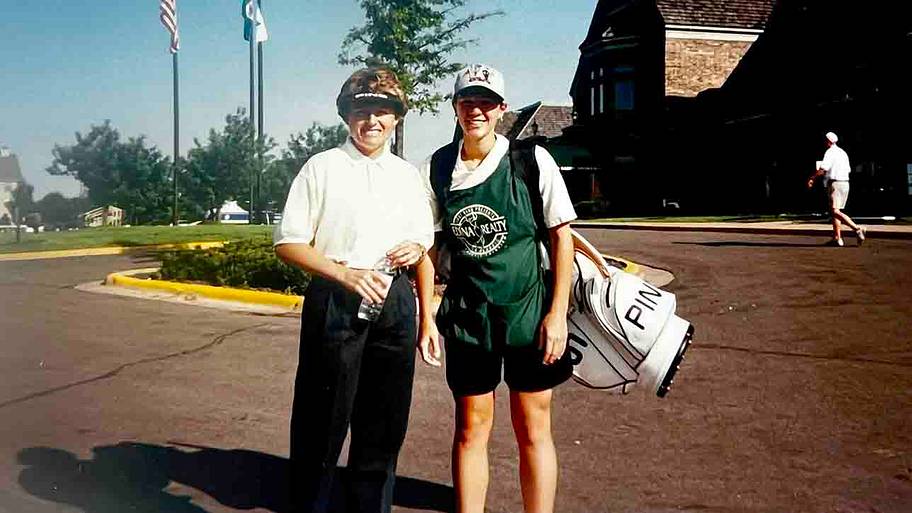
I grew up in Minnesota and had ample opportunities to play, practice and learn from top golf instructors due to my father being a PGA Golf Professional, but as a youngster, golf was the least of my priorities. That is, until one hot summer day when I was 13. A course near my hometown was hosting an LPGA tournament. My father knew the caddiemaster and together they thought it would be a good idea to throw me, a young teen girl, into the pool of local caddies made up of all males at least five years my senior.
I got a loop despite never having caddied before and was wearing slip-on shoes (ballet flats, to be exact). My debut was anything but pretty. A few holes in, I attended the flagstick for my pro and failed to loosen the pin. Her putt started on-line rolling toward the hole with perfect speed, I tried to remove the flagstick but it wouldn’t come loose. I tried again, this time with all my might. The flagstick came up—along with the cup halfway above the putting surface. Thank God her putt veered just left of the hole or it would have been a penalty. My pro was not happy, and I was mortified.
As the round went on, she asked me a few times if I was all right. She could see I was struggling. It must have looked like I wasn’t going to make it through 18 holes. My feet were killing me. Not only did my ballet flats offer no comfort or support, they had zero traction to keep me from sliding on the grassy hills. My improper footwear combined with the heat and weight of a tour staff bag on my shoulder was wearing me down. The bag felt heavier and heavier on each hole. I’m sure I was the worst caddie she had ever had.
The good news was that I made it through 18 holes and the pro was not disqualified for any of my mishaps. In fact, she had me caddie for her again the next day and paid me afterward.
The better news: I went home and told my parents that my new dream was to become a professional golfer.
A few years later, with my dream still in mind, I convinced myself that in order to achieve my goal I needed to play collegiate golf in the best women’s golf conference—the Pac-10. My reasoning was nonsensical. Prior to my professional golf career epiphany, basketball, not golf, had been my main athletic interest. This put me behind the curve compared to other junior golfers my age.
I contacted every women’s golf program in the Pac-10 and they all rejected me—except one. Somehow, I managed to earn a spot at Cal as a walk-on. I even received what may be the smallest athletic scholarship in NCAA history—a books scholarship. But I was on a golf team in the Pac-10 and headed for California!
Freshman year was the most golf I’d ever played in my life. Our team played and practiced daily after classes. Our coach held qualifying matches during practice to see who would travel with the team to tournaments. I played in one tournament and shot in the 80s. Not only were my long-term golf goals not looking so good, my financial situation wasn’t, either. And I was homesick.
Being on the golf team hindered me from getting a steady part-time job due to the requirements of attending practices, team workouts, meetings, school, etc. My kind-hearted coach knew my predicament, and she would pay me to babysit her toddler while she and her husband went on date nights.
I had a plethora of eye-opening experiences during my freshman year. Culturally, it was quite a change from what I had known growing up in the Midwest. My personal-life realities included missing Minnesota for many reasons, the biggest being my family, my boyfriend and my friends back home.

My red-shirted roommate, Anne Walker, helped me decide to transfer. She was a 17-year-old from an ostrich farm in Scotland, who had an accent so heavy I could barely make out what she was saying even though she was speaking English. Anne knew my plight and spent time with me analyzing my circumstances: my financial situation, life realities and long-term golf goals. We concluded that if I wanted to play golf professionally after college, Minnesota was a better option.
After I transferred to Minnesota I was able to earn the No. 1 spot on the team, traveled to all tournaments, won a tournament (The Peggy Kirk Bell Invitational in Florida), earned All-Big Ten Athletic honors, and graduated debt-free.
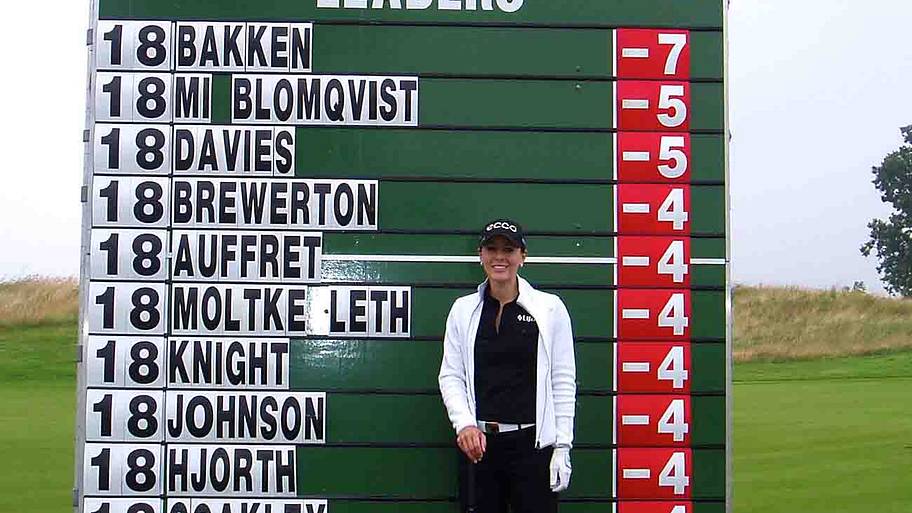
The decision I made in college put me on a path that led to my seven-year career as an international touring professional and eventually to my current role as a PGA of America golf instructor. Playing competitively around the globe was amazing, from the Ladies Asian Golf Tour to the Dubai Desert Classic at Emirates Golf Club, from Ladies European Tour events in Switzerland, India and the Canary Islands to LPGA majors (the U.S. and British Opens). I loved my pro career and it was one of the greatest joys of my life, second only to becoming a mom, years later.
Years after my caddieing debut, while playing professional golf in Australia, I competed in the same event as the pro I caddied for at age 13 back in Minnesota. No, I did not identify myself and say hello—she may not have remembered the incident from 10 years earlier, but I felt embarrassed.
As a side note, my Cal teammate Anne wasn’t just trying to get rid of me. She had and still has a natural gift for coaching—she is the head women’s golf coach at Stanford University and has led her players to multiple NCAA titles! She also appeared in Bank of America and Masters commercials promoting Youth on Course. Her sweet Scottish accent has softened and I’m sure no one has any trouble understanding her today.
The pivotal moment I experienced in college, when I chose to transfer, was not a decision made in the spotlight or worth millions of dollars. It did, however, require weighing the risks and rewards of a golf-life decision. Be it a college golfer leaving the West Coast to return to the Midwest or a pro golfer leaving LIV Golf to return to the PGA Tour, these decisions don’t come easily. Consideration must be taken of one’s financial situation, personal-life realities and long-term golf goals. No one has a crystal ball or knows the outcome of their own future. Ultimately, we go with the decision we feel at that time was the best one and live with the ramifications.
Wherever you are on your golf-life journey, I’m looking forward to helping you make good decisions that spur you on to reaching your own golf goals—here is my website. Keep an eye out for my upcoming golf tips on SI Golf!