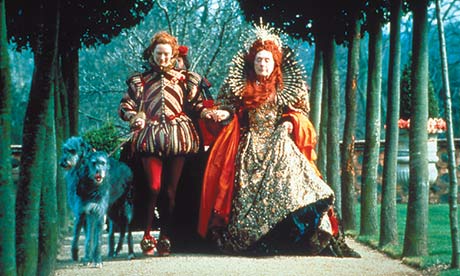
Napoleon forgot to pack the winter clothing for Russia, the US army got the trousers wrong in Korea and the second-world-war habit of striking matches on trouser zippers was an open invitation to snipers.
So said Margaret Atwood, in a Guardian book club session on The Blind Assassin, in which she also revealed she had a large library of military books. "I'm very interested in clothing technologies and the effects that they had on armies. It's a neglected field of study," she said. For instance, "the pants in the Korean war were made of nylon, but nylon when you walk goes poosh, poosh, poosh. It made people very audible. Bad clothing to have for a war that was fought a lot in the dark by guerrillas."
Atwood was responding to a question about how she researched her historical fiction, and it set us thinking about the role of clothing in literature. Clearly, it's important for writers of historical romances to know their basques from their bustiers (as it is for chick-lit authors to have a good brand sense), but clothes in fiction are far more than mere window dressing.
Would Jane Austen's Mrs Bennet be quite as prone to the vapours were it not for the effect of make-do-and-mend Regency corsetry on her increasingly matronly physique? In Virginia Woolf's Orlando, costume and character are, at a literal level, inseparable. And in Jonas Jonasson's word-of-mouth hit The Hundred-Year-Old Man Who Climbed Out of the Window and Disappeared (which I read recently on the recommendation of our Tips, Links and Suggestions community), the irresistible soft-sole comedy is directly related to 100-year-old Allan Karlsson's night-time escape in a pair of bedroom slippers (a pair of tightly laced brogues would have created a very different sort of humour).
In this week's books podcast, we'll be talking about clothes and fashion, so we'd like to know which writers you think get it right or wrong, and to hear about your favourite examples of sartorial style.