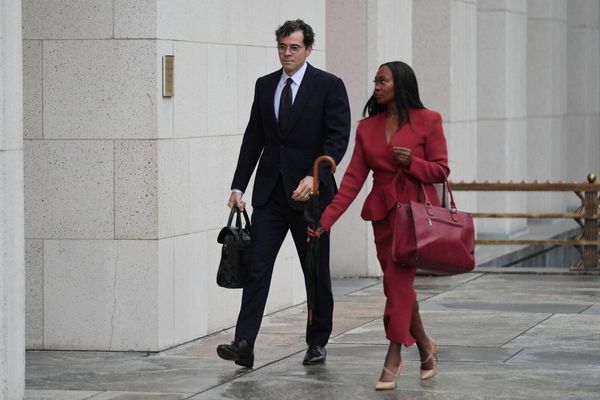
Bremner has done more to puncture Tony Blair's pompousness than anybody else in the past two and a half years. His William Hague isn't bad either. A vastly accomplished and successful satirist and impressionist, his unique interpretation of the nation's politics and foibles often shapes the way audiences perceive important issues. He gets bigger audiences than most political shows. Earlier this year he displayed yet another side to his talents when he translated Kurt Weill's opera Der Silbersee.
152 John Pluthero, 35 CEO, Freeserve (-)
If Tim Berners-Lee created the concept, Dixons-owned Freeserve made the Internet a reality for a mass market. It was the first free Internet service provider - there are now more than 130 in the UK - and introduced more than one million subscribers to the Net within its first year. At flotation it was overvalued at £2 billion. The share price has subsequently fluctuated and staged a recovery in recent weeks. Pluthero is by training an accountant who worked at Coopers & Lybrand, P&O and Bass before arriving at Dixons and coming up with the Freeserve idea.
153 Linus Torvalds, 29 Computer software pioneer (-)
Within the next decade, Linus Torvalds, a boyish 29-year-old from Helsinki, may well come to be considered the man who beat Microsoft. Torvalds is the inventor of a computer operating system called Linux (pronounced Linnucks). Two years ago it ran 1.5 million computers; today 10 million machines - including some at Nasa, Boeing, Wells Fargo bank and the US Postal Service Ð rely upon its simple code to function. Red Hat, the company behind Linux, was floated in July for an estimated £500 million. The reason it poses such a threat to Microsoft - there are estimates that it has already cost Bill Gates $2 billion Ð is that anyone can download Linux from the Internet.
It's free. Torvalds has brought an element of freedom back to a software world dominated by the fixed designs and codes of the Microsoft Windows 98 and 2000 programmes. The opportunity for Linux came when Microsoft delayed the launch of Windows 2000 because of problems with bugs in the programme.
Computer users began to discover the freedom of Linux in ever greater numbers. Linux is an 'open source' programme: if you know how to write its simple code, you can change how it functions and customise it for your system. 'It's the world's first global programme,' says Dr Simon Moores, a leading IT industry analyst and chairman of The Research Group. 'It's a living creature, constantly updated and modified by tens of thousands of users all over the world. 'Microsoft gives people a closed programme. That's like having a car and not being able to look under its bonnet,' continues Moores.
'Linux is very much a brainchild of the Net. It offers people a real choice of where to go in the future. It represents a reformation.' The competition is running scared. Heavily endorsed by big businesses keen not to be left behind (IBM, Intel, Oracle, Sun Microsystems, Hewlett-Packard, Silicon Graphics, Compaq, and Dell), Linux took an estimated £1.25bn worth of business from Bill Gates last year. 'Linux is ideal for using the Internet,' says Moores. 'It's robust, flexible and far more secure than what is used at the moment.' Added to this is Linux's affordability Ð a plus for companies looking to install a system throughout an entire organisation. Torvalds is proud that the software is free.
He told a magazine recently: 'If I had grown up here [the US] I would have taken a different approach to money. Perhaps I would have said "let's have a start-up company for this operating system". Living in Finland, like most people in Europe that was not my first thought.' He also seems content to watch his invention revolutionise the way we use computers. Linux was never about world domination. If it were, the inventor would have chosen something a little more fetching for its icon than a penguin. No wonder Microsoft is worried by the man from Helsinki who only discovered business in the US.
154 Nobuyuki Idei, 62, CEO, Sony Corporation (77)
Idei joined the powerful Japanese muiltinational in 1960 at the bottom of the corporate ladder and took 39 years to reach the top, becoming chief executive last June. The keen golfer and movie buff worked his way through the Sony ranks, developing the company's audio, video and computer businesses throughout the Eighties.
155 Sir Ian Prosser, 56 Chairman and CEO, Bass (52)
All the big beer barons have fallen down the Power 300 list as their companies seemed vulnerable to niftier rivals. Bass's share price has fallen in recent months. Its diversity exposes it to global fluctuations through its Inter-Continental hotel chain. In the UK it retains a healthy share of the pub and bar market, having bought more than 600 of Allied Domecq's pubs - via a deal with Punch Taverns - and developed the All Bar One chain.
156 Sir Elton John, 52 Musician (125)
Sir Elton's position on last year's list was related to the impact of his song 'Candle in the Wind' and his performance at Princess Diana's funeral in 1997. He showed he had a public profile capable of raising £20 million for the Diana Princess of Wales Fund. But his fall of 31 places suggests that his power is currently on the wane, especially in an ever-changing music industry. His production company, Rocket Pictures, is behind the new Helena Bonham Carter film Women Talking Dirty, as John branches out. (See also page 66).
157 Lucian Freud, 76 Artist (163) 4 One of the most prominent figures in British art, Berlin-born Freud's portrayal of the human figure has won him both acclaim and financial success. A painting of his mother was sold in New York this year for £2 million - the largest sum ever paid for the work of a living artist. Meanwhile new wave artists like Damian Hirst have dropped off the list.
158 John McGrath, 61 Group CEO, Diageo (95)
Diageo, the over-sized offspring of Guinness and Grand Metropolitan, is the largest drinks company in the world, with a portfolio of brands including Smirnoff, Burger King and, of course, Guinness. Profits of £1.47bn were announced in September, which just met City expectations. Diageo's share price rose when it was confirmed that Paul Walsh will succeed McGrath next January.
159 Dr Jane Henney, 52 Commissioner, Food & Drug Administration (-)
The first female head of this powerful US consumer protection agency. The FDA is responsible for researching and evaluating a wide range of subjects, including the tobacco industry, food production, and new medicines. Its verdicts can affect stock prices of the companies involved and influence government policy. Henney began her tenure in 1998, after serving as vice-president of the University of New Mexico Health Sciences.
160 Jenny Abramsky, 53 Director of Radio, BBC (-)
While others in the BBC were betting on who would be the next Director-General, Abramsky was concentrating on her first love - radio. Having not hitched her wagon to any particular candidate she is now tipped to be the first female deputy director general in the Corporation's history. Abramsky has spent the past 20 months reorganising BBC radio and is still best remembered as the force behind the creation of Radio 5 Live.
161 Sinclair Beecham, 41, Julian Metcalfe, 39 Founders, Pret a Manger (-)
Beecham, a former banker, is the business face of the sandwich shop chain while Metcalfe devotes his energies to improving the products - tasting sessions of 60 sorts of carrot cake are not unusual. They met when both went back to college to study urban estate management. A foray into property failed but the pair soon struck a winning formula, backed by a £20,000 bank loan, with Pret. It now owns more than 80 stores employing over 1,700 staff and has a turnover of more than £80m.
162 Pope John Paul II, 79 Catholic leader (90)
A fall of 72 places for the man who more than one billion people look to as their spiritual guide.. It reflects both a fall in organised churchgoing and John Paul's failing health. He continues to lead the Catholic Church, both at the Vatican and abroad, but the jockeying for his successor has begun. He is known to endorse the Jubilee 2000 campaign to relieve Third World debt but paradoxically refuses to condone the use of contraception in the developing world. The Vatican has again been hit by criticism from former insiders alleging corruption.
163 Lord Neill of Bladon, 73 Chairman, Committee on Standards in Public Life (246)
The Neill Committee, as it became known after Lord Neill succeeded Lord Nolan in 1997, aims to uphold the probity of those in public service. The Committee is currently updating the first Nolan Report in 1995 - which was a reaction to the 'cash for questions' case involving MPs taking money from a lobbyist - and reviewing the extent to which its recommendations have been implemented. Lord Neill himself read Law at Magdalen and served as Oxford University's Vice Chancellor from 1985 to 1989.
164 Alex Salmond MP, 44 National Convenor, SNP (-)
The largest tartan thorn in Labour's side. Having run Labour close in the Scottish Assembly elections in May the SNP came within a whisker of winning the Hamilton South by-election - where Labour had a 1997 majority of 15,878. Salmond has made the SNP 'respectable' in business eyes and brought the prospect of a breakaway Scotland closer.
165 Baroness Helena Kennedy, 49 Chairman, British Council (231)
New Labour loyalist barrister who forms part of a Blairite circle of high-flying women. As a QC she campaigned against miscarriages of justice and represented IRA suspects. A personal friend of the Prime Minister's, Kennedy is now one of the most prominent figures in the new establishment.
166 Sir Brian Pitman, 67 Chairman, Lloyds TSB Group plc (75)
Pitman measures a company's success by its percentage return on capital, rather than size, so he should be satisfied that Lloyds is the biggest and most profitable bank in Britain. He took charge 15 years ago and has since become an icon in banking, making his name with the TSB merger.
167 Sir Paul McCartney, 57 Musician, campaigner (190)
Paul McCartney's inclusion has more to do with the debate over genetically modified food and animal rights than his recent pop career. He spent £3m ridding Linda McCartney's vegetarian food range of traces of GM soya, and said he did not think the public were worrying unnecessarily about GM food.
168 Terence Conran, 68 Chairman, Conran Holdings (27)
Was among the first people to bring the concept of affordable design to the mass market. Having founded the Habitat chain, Conran has spent much of the past decade building another empire in design, retailing and restaurants.
169 Garfield Weston, 72 Chairman, Associated British Foods, Fortnum and Mason (145)
The sixth richest man in the UK, Weston transformed the Associated British Foods chain from a £90m struggle to a £5bn global leader. Owner of Twinings Tea, Silver Spoon and Ryvita, Associated's share price fell from 600p to 450p this year. Weston is nearing the end of his tenure and preparing to hand over to the next generation of Westons.
170 Professor Janet Bainbridge, 52 Chairwoman, Advisory Committee on Novel Foods and Processes (-)
Bainbridge has outraged the organic and green movements by warning that the banning of genetically modified foods would be a technological disaster for the nation. Her committee has enormous influence over the foods that we will soon be eating and their labelling.
171 Professor Joachim Milberg, 56 Chairman, BMW (-)
The unassuming professor was catapulted into the top job at the German car company, which owns Rover, in early 1999 after an boardroom fireworks which saw both the top men ousted. Milberg set out a clear strategy to restore harmony at BMW, begged and secured a bail out for Rover from the UK government and continued with former the strategy of reviving Rover with a plan for a range of new cars, including a new Mini. The man who will ultimately secure the future, or oversee the death of, the heart of the British motor industry.
172 Paul Conroy, 50 President, Virgin Records UK (220)
Served an apprenticeship that took in the legendary Stiff Records, Warners and then Chrsyalis. Virgin was bought by EMI in 1992 and Conroy was bought with it. In the business since 1971, he is now one of the powers behind the Spice Girls and chairman of the judges for the Brit Awards - the annual shop window for the pop industry.
173 Carol Galley, 51 Co-head, Mercury Asset Management (62)
Asset managers used to be the invisible titans of the financial world, investing billions of pounds of pension funds in share holdings. Carol Galley, as co-head of Merrill Lynch Mercury Asset Management, is one such asset manager. But unlike her male colleagues, she is described in the media in terms previously applied to Margaret Thatcher and Lady Macbeth. She wields formidable influence in boardrooms although the £4bn Unilever pension fund is suing MAM for £100m for 'damages'.
174 Nicola Horlick, 38 Joint Managing Director, Societe Generale Asset Management (-)
How does a profile of Nicola Horlick avoid the epithet 'superwoman'? She was asked to launch Societe Generale's fund management business and subsequently topped the league table of the most successful investment managers in the City, all the while fighting an acrimonious lawsuit with a former nanny.
175 George Michael, 36 Musician (210)
Has developed a more three-dimensional public image since his arrest in a Los Angeles lavatory. His popularity in the UK has increased but he now faces a £6m lawsuit from the arresting policeman for the distress caused by a subsequent pop video. However his public admission of being gay and support for the NetAid benefit concert have won him support from non-pop music quarters.
176 Jac Nasser, 51 Chief Executive, Ford (-)
Since taking up the role in January, Nasser has spent more than £4bn in an attempt to shake up the world's second largest car-maker. The bulk of Nasser's spending was on Volvo but he has also invested in an overhaul of design and struck a deal with Microsoft to embrace the Internet.
177 Madonna, 41 Musician (-)
One of the most famous mothers in the world and a powerful, iconic figure in the mainstream male-dominated music industry. She continues to champion innovative producers, such as William Orbit and Nellee Hooper, and runs a successful record label, Maverick, whose roster includes Alanis Morrissette and the Prodigy.
178 Lord Bingham, 66 Lord Chief Justice of England (166)
A controversial choice as Lord Chief Justice when he was appointed three years ago but he has since forged a reputation as a liberal without courting controversy or publicity. He believes, as does Home Secretary Jack Straw, that too many criminals are being caught up in the prison system when they could better serve their sentence in the community.
179 David Liddiment, 47 Director of Programmes ITV (79)
Liddiment has to deal with the day-to-day problems of maintaining ITV's audience share in an increasingly competitive environment. Who Wants To Be A Millionaire and Champions League football are two of his weapons in an attempt to keep ITV's peak time share at 39 per cent. The first figures released by ITV since News at Ten was dropped show that its average ratings at that time have risen to 7.2m from 5.1m.
180 Phil Hall, 44 Editor, News of the World (205)
The newspaper sells more than four million copies on Sundays and, to an extent, sets - or at least influences Ð the weekend news agenda. Editor Phil Hall and one of his investigative reporters, Mazher Mahmood, are famed for their drug stings, which regularly snare the foolish and indiscreet. Notches on Hall's belt include Lawrence Dallaglio, Blue Peter's Richard Bacon, and Tom Parker-Bowles.