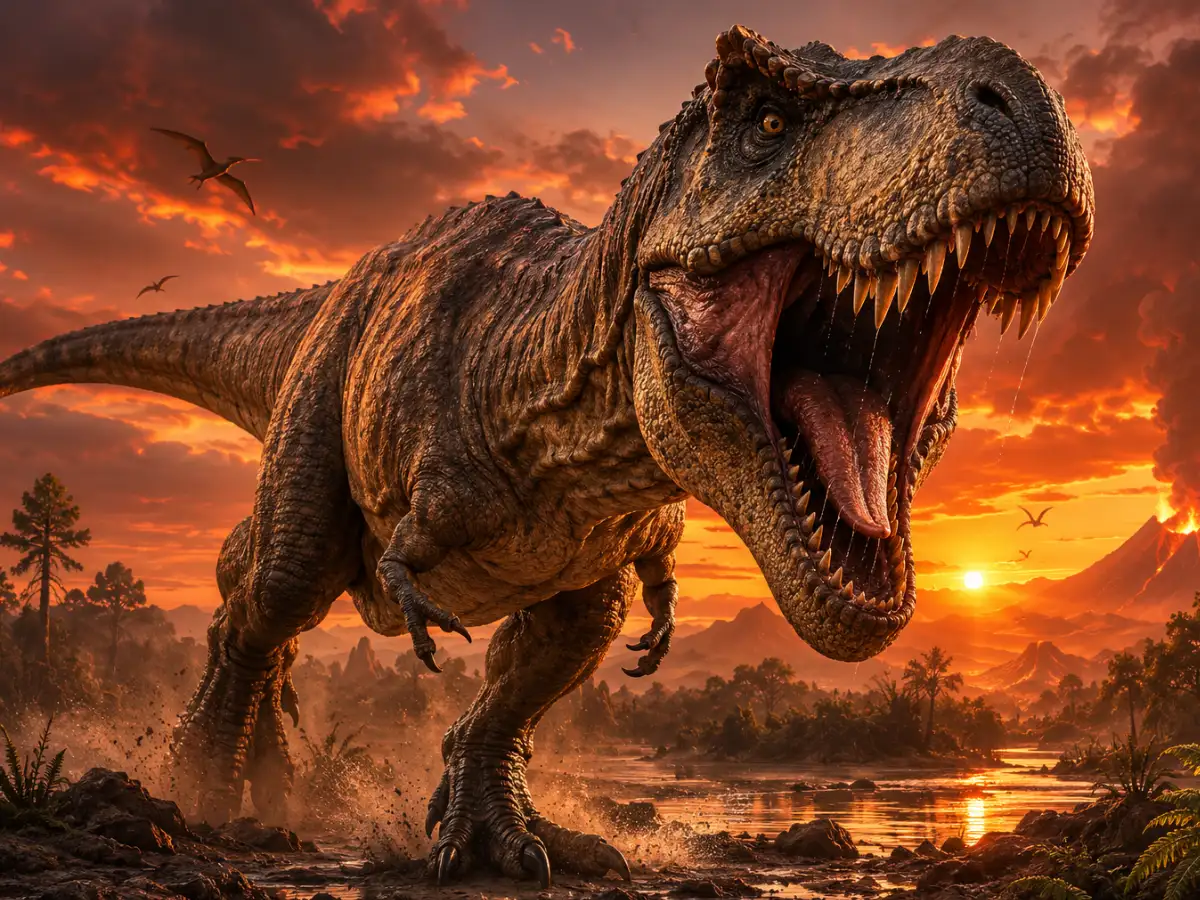
For most Americans, Tyrannosaurus rex is the ultimate symbol of prehistoric dominance: massive, fearsome, unstoppable. But science just threw us a curveball: the king of the dinosaurs was in no hurry at all to become one.
According to a new study titled ‘Prolonged growth and extended subadult development in the Tyrannosaurus rex species complex revealed by expanded histological sampling and statistical modeling’ published in PeerJ by paleontologist Holly Woodward of Oklahoma State University and colleagues, T. rex likely grew to its adult size of about eight tons in about 40 years. That's some 15 years longer than scientists had previously believed, and it's among the most detailed reconstructions of T. rex growth ever attempted.
What scientists thought before
The scientific baseline for understanding T. rex growth was largely shaped by a landmark 2004 study in Nature by Erickson et al. , ‘Gigantism and comparative life-history parameters of tyrannosaurid dinosaurs’, which found that T. rex reached skeletal maturity in roughly two decades and lived for up to 28 years. According to the 2026 PeerJ study, the best estimates from those earlier studies were that T. rex typically stopped growing around age 25, a figure the new research now extends by about 15 years.
How scientists read a dinosaur's age
The way paleontologists age dinosaurs is, appropriately, like reading tree rings. Researchers take thin slices from fossilized leg bones and examine them under a special light to count annual growth rings, according to the PeerJ study. Each ring represents a year of life and provides clues about how fast the animal was growing at that time.