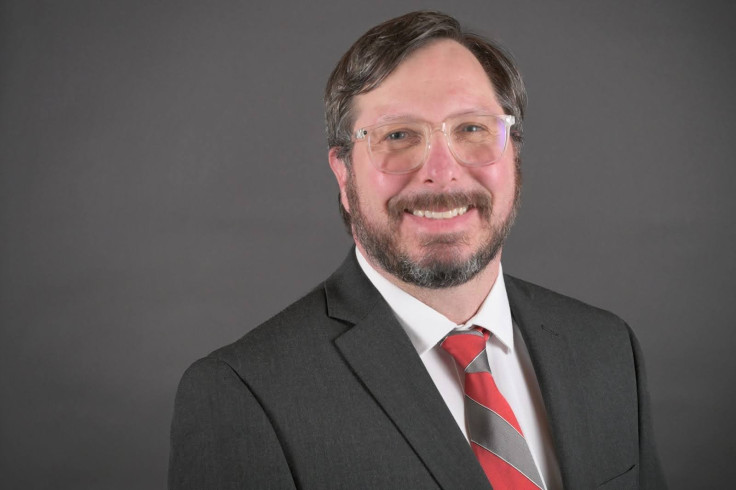
There is a familiar thought many people experience when looking at public life, a sense that something should change, often followed by the assumption that someone else will take action. For Josh Kolasinski, founder of FlexBiomedical, that moment became a decision point. Rather than leaving it unresolved, he chose to step forward, transitioning from small business owner to a first-time congressional candidate.
According to Kolasinski, the decision was driven by a series of developments that unfolded in a short period, prompting him to reconsider his role in the process. "I reached a point where I felt like I could not just sit back anymore," he says. "I decided to put my name forward and see where it could lead."
His path into public life reflects a background outside traditional political routes. He grew up in Toledo, Ohio, spent time working in national parks and ski resorts, and later returned to Ohio with his wife, where they settled in Delaware. His wife works as a nursing instructor, and from his perspective, that family foundation plays an important role in how he approaches responsibility and long-term decision-making.
Professionally, Kolasinski worked as a biomedical equipment technician within a hospital system before founding Flex Biomedical LLC. The company operates as a small, service-focused business that supports healthcare providers through equipment repair, installation, and preventative maintenance. He explains that starting the company in 2020 required navigating uncertainty from the outset, and maintaining operations during that period shaped how he thinks about resilience and accountability.
From his standpoint, running a small business reinforces the importance of trust. "If you do not operate with integrity, people will not rely on you," he says. "In a small business, that becomes clear very quickly."
Kolasinski frames his transition into politics around a broader view of representation, emphasizing it as an ongoing process rather than a periodic interaction. He suggests that while many candidates speak about representing their communities, the connection can feel limited when engagement happens only at certain points. His response has been to explore ways to make that relationship more continuous.
One of the approaches he is developing involves using digital platforms to create structured community engagement. He explains that he has begun forming private, verified groups organized at the township level, where registered voters can participate in discussions about local issues and policy ideas. According to him, the intention is to gather perspectives directly and allow solutions to emerge through dialogue. "We already use this technology every day," he says. "The goal is to use it to actually communicate with people in a meaningful way."
Kolasinski notes that these groups are designed to include only verified voters to maintain relevance and focus. He frames a process where discussions within one group can be shared with others, allowing ideas to be tested across different communities and refined over time. As participation grows, he anticipates expanding from township-level conversations to broader district-wide engagement.
He also points to the potential role of analytical tools in identifying patterns across discussions. From his perspective, this can help surface areas of agreement and provide a clearer sense of where consensus may exist. In his view, this creates a model where representation becomes more interactive and continuous, rather than limited to specific moments.
Underlying this approach is a broader concern about how influence is distributed. Kolasinski frames this as a question of whose voices are most clearly heard within the system. "The loudest voice is often the one with the most resources," he says. "But that does not always mean it is the right voice."
Rather than positioning his campaign around slogans, he frames his focus as building a system that allows for more consistent input from the people he aims to represent. From his perspective, that process can help ensure that ideas are shaped through participation rather than assumption.
At the same time, Kolasinski emphasizes relatability as part of his approach. He presents himself as a husband, father, and small business owner who entered public life after recognizing a gap between intention and action. That framing, he suggests, reflects a broader desire for leadership that feels connected to everyday experiences.
"I am not coming from a traditional political background," he says. "I am coming from a place where trust, responsibility, and follow-through matter every day."
As his campaign develops, Kolasinski's perspective highlights a wider conversation about how representation can evolve. His approach suggests that existing technology may offer new ways to facilitate dialogue and bring more voices into the process on an ongoing basis.
"If people are part of the process, then the outcome reflects them," he says. "That is the direction I am trying to move toward."