CARMICHAEL, Calif. _ Lynn Sargent's backyard used to look like a lot of others in the Sacramento area.
"It was a big pool and lawn," recalled Sargent, who has lived in her Carmichael home for 44 years. "But the pool was a lot of work; there's so much expense and upkeep, all the chemicals and the water."
That backyard lawn-pool combination served her well while her three sons were growing up, she noted, but didn't make much sense later, especially with rising water bills and several years of drought.
"So we 'sunk' the pool," she said, noting it's now under the new garden.
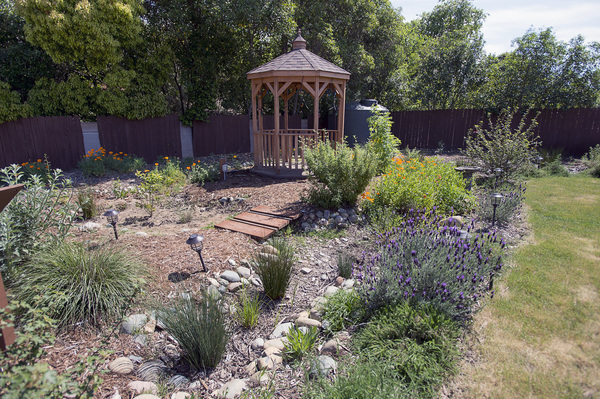
In its place, a rain garden carpets the backyard with California native plants. Instead of filling up an unused pool, Sargent lets her new backyard "harvest" rain to supply its landscaping needs.
"I really, really like it," she said. "It's beautiful. Something is blooming all the time. It's like new every day."
Sargent's rain garden was among those featured during the 2016 Gardens Gone Native tour, hosted by the Sacramento Valley chapter of the California Native Plants Society.
Rodger Sargent, Lynn's son, transformed his mother's backyard into a rain-harvesting haven for birds, bees and beneficial insects. A 3,000-gallon cistern holds rainwater, collected off the home's roof. A series of three shallow ponds and terraces allow water to seep slowly into the soil. A heavy layer of mulch retains that moisture.
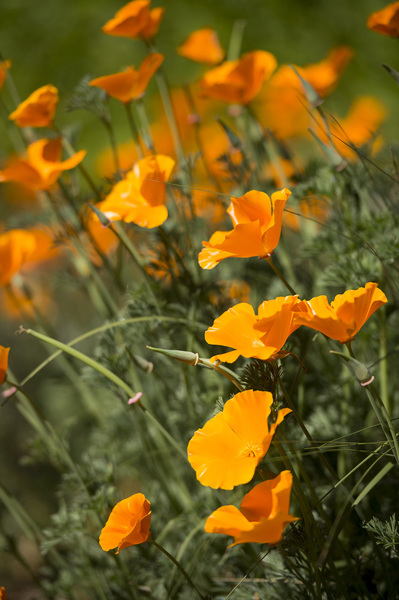
In early spring, the rain garden overflowed with California poppies. Blue-eyed grass bloomed in low spots. On the surrounding terraces, blue flax and goldenrod vie for the attention of bees and butterflies. Black sage, white sage, flannel bush, lupine and other California natives join the flower show in late spring and summer.
"The plants all started small, but they grew," Lynn Sargent said. "What I like best is it's so calm and serene. I can come out here with a book, sit and read."
Rodger Sargent knew what he was doing. He's the president of Grow Water in Carmichael, which specializes in creating rain gardens and water-wise makeovers.
Last winter, his mother's garden put more than 15,000 gallons of rain water into the soil, he said.
"It drains so well, I can't keep it filled up," he said of the garden's collecting ponds. "Even with all the heavy rain we had, the water percolated right down. Under the mulch, the soil is amazing. It stays moist for weeks."
During the rain garden's first full season, the new landscape needed no supplemental water until October, he added.
"The secret to a California native garden is to water it once a week _ if that _ then leave it alone," he said. "A lot of these plants don't like summer water at all."
In addition to saving water, the rain garden and its assortment of native plants attract abundant wildlife. As Sargent spoke, swallowtail butterflies flitted from plant to plant. Magpies and blue jays took turns swooping in for a look.
"Listen to that hum," he said, leaning in close to a large, flower-covered shrub. "There must be 50 bees in this one plant."
The backyard still has a small lawn that's a play area for Lynn Sargent's dog as well as Rodger's son. Kyle. But the new grass is native, too.
"It's native bentgrass," he explained. "It's sold as 'California native sod' from Delta Bluegrass. Its roots grow 12 to 16 inches down. It needs just a fraction of the water of normal lawn. It goes dormant in winter, but as soon as the weather warms, it greens right up."
His mother said she's also pleased with the real savings the rain garden has produced. Her water bill dropped from more than $100 a month to about $30. And there's less work, too.
"Now, it takes 10 minutes to mow the lawn," she said.
Native gardens take a few years to reach maturity and will look more beautiful each spring, Rodger Sargent said.
"In two years, it will be outrageous," he said. "In five years, it will look insane. It takes about five years for a native garden to really get established, but it will be amazing."