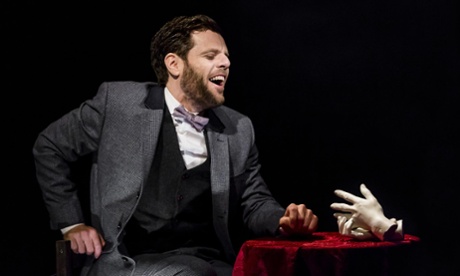
Gecko are back in Edinburgh again this year for a full three-week run on the fringe. The company knows that it’s not just about getting future touring dates, but also building a loyal following – and you never know when you might need one.
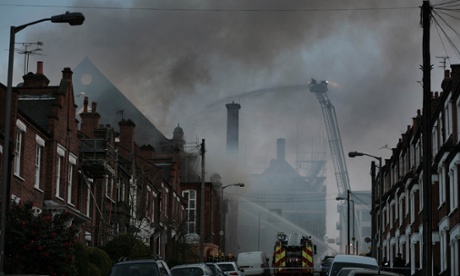
When Battersea Arts Centre (BAC) in London caught fire earlier this year, Gecko had been set to perform their hit show Missing in the grand hall. As the fire engines began to arrive, the first thought of Gecko’s artistic director, Amit Lahav, was that he hoped the fires would be put out quickly so that the show could still go on. Within minutes, it was clear that the situation was more serious. As the bell tower collapsed through the roof of the hall on to the Missing set, Lahav sank to his knees.
BAC is where the company began. I still recall seeing their first show, Taylor’s Dummies, there in 2002 and it was one of those nights in the theatre that had the shock of the new.
There was a huge outpouring of love and support for BAC following the fire, but the response to Gecko’s loss of its bespoke set for Missing (which had been due to be shipped to Mexico the following weekend for a three-week tour) was no less inspiring – whether it was the National Theatre clearing space in its workshops to get the set rebuilt, or the Southbank Centre offering use of Queen Elizabeth Hall so that the company could stage a benefit performance of Missing without costumes or set. The 900-seater QEH sold out in just five hours.
As Lahav observes, it was both one of the worst and best weeks of his life; a disaster which also brought with it affirmation that Gecko really is loved and valued. “You can’t get through these moments alone, and we didn’t have to,” he says. But it wasn’t just the industry that backed Gecko to rise from the ashes; it was audiences, too. One of the most inspiring things was the number of individual donations made to the company by audience members who had seen and loved the company’s work. And many of them were introduced to it in Edinburgh, during runs of its hit shows such as The Race or The Overcoat or The Arab and the Jew.
The company’s long-term commitment to Edinburgh may well have played a part in the support they received. This year, Gecko are back in Edinburgh with Institute, a challenging but visually stunning piece, set in what appears to be a highly bureaucratic hospital. As is always the case with this distinctive company, whose shows are never finished but keep on evolving, this version of Institute is likely to be different from the premiere at the London International Mime Festival earlier this year. Gecko shows reward a second viewing because the devising is never done.
Even though they are not in the British Council showcase this year, Gecko are as committed as ever to a full three-week run at the festival. Because although the company regularly plays prestigious venues such as the Linbury in London’s Royal Opera House, their Edinburgh audience is always going to be their biggest.They have been steadily building it since they first came to the festival in 2002 with Taylor’s Dummies, and they’ve been a regular presence ever since.
Undoubtedly, the biennial British Council showcase has an impact on Edinburgh. In the years that it takes place, there is a greater depth of quality shows – and not just from the companies whose work is being showcased. Other established companies not represented realise that coming to Edinburgh in a British Council year means a larger and wider range of promoters and producers will see your work.
The showcase skews quality towards the back end of the festival, because many shows only play the final week of the fringe. In British Council years, I always advise friends and family heading to the fringe to wait until week three.
It’s understandable that British Council-selected companies want to minimise their costs and limit their exposure to risk by only coming in the showcase week. Unlike the other companies at the fringe, hoping that good reviews and interest early in the run will help entice industry movers and shakers, they know that they will almost certainly get producers and promoters to their shows, by virtue of being showcased. But are they being short-termist by only playing for the minimum period possible?
For an Arts Council NPO such as Gecko, which can work regular visits to Edinburgh into its business plan whether showcased or not, a three-week run in Edinburgh is a far less daunting proposition than for smaller, unfunded outfits which get offered slots in the showcase. But Gecko weren’t wasn’t always an NPO, and they made the commitment to build an audience in Edinburgh long before they were funded.
“When we first came, we played to other theatre groups, but over the years we’ve steadily built an audience,” says Lahav. “The Edinburgh audience is much bigger than our London audience. It’s not just that we can do 24 shows and play to thousands of people; it’s the fact that we can meet the audience and talk to them about the show.”
For Gecko, going to Edinburgh is not just about securing the international touring dates which are so crucial to the company’s future and development, but also about building an audience at home. When the chips are down, as they were following the BAC fire, it may be that a real and long-term relationship with an audience can be the difference between surviving or not.