Conglomerates have been distinctly unfashionable among investors for decades. But that may be about to change.
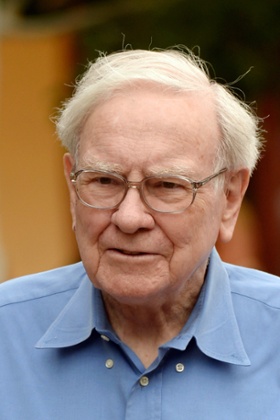
Just as Warren Buffett put the final touches to a $37.2bn deal to add a nuts-and-bolts maker to his sprawling Berkshire Hathaway empire last week, Google founders Larry Page and Sergey Brin unveiled a restructuring that borrowed liberally from the sage of Omaha’s rulebook.
Suddenly, the word “conglomerate”, not heard frequently in the UK since the heyday of Hanson Trust in the 1980s, is on everybody’s lips.
Google’s founders have always admired Buffett. Google’s IPO letter to shareholders in 2004 disclosed that it was inspired by the octogenarian’s essays in Berkshire’s annual reports. And when asked recently how Google would manage an ambitious expansion without becoming bloated and impossible to run, Page said he would follow the example set by the famed investor.
So when the technology group announced a restructuring last week, with various businesses operating under the umbrella of a holding company called Alphabet, it was no surprise that analysts detected the subconscious influence of Buffett. Stifel analyst Scott Devitt labelled Google the Berkshire Hathaway of the internet.
Google is proposing a structure in which the profitable search business funnels some profits into its more speculative ventures like driverless cars or Calico, which aims to extend the human lifespan.
Page explains: “Alphabet is mostly a collection of companies, the largest of which, of course, is Google. This newer Google is a bit slimmed down, with the companies that are pretty far afield of our main internet products contained in Alphabet instead.”
There are those who feel the Buffett analogy is not fair on the investor. His businesses – from brickmaking to clothing and insurance – might be run under a similar structure to the one being described by Page, but they are expected to be profitable in the medium term. He is not trying to develop new businesses but reinvigorate old ones. And his model relies on well-timed acquisitions. “Google’s Alphabet sounds like a 21st-century Berkshire Hathaway, but with a lot of very large venture bets,” Jeff Weiner, LinkedIn’s chief executive, tweeted last week.
Some also fear the greater transparency of Alphabet will be damaging to the experimental businesses, such as driverless cars and kite turbines.
“Startups remain private for a reason,” says Scott DeRue, professor of management at the University of Michigan’s Ross School of Business. “The primary reason is that management in startups can take full risks and be free to make errors. The market is going to increase the pressure on the moonshot businesses under this structure.”
DeRue thinks the newer businesses under the Alphabet umbrella will not thrive without strong-willed executives driving them on. “If they can withstand the market pressure and maintain a high level of exploration, then it could work,” he believes. But that is a big if.