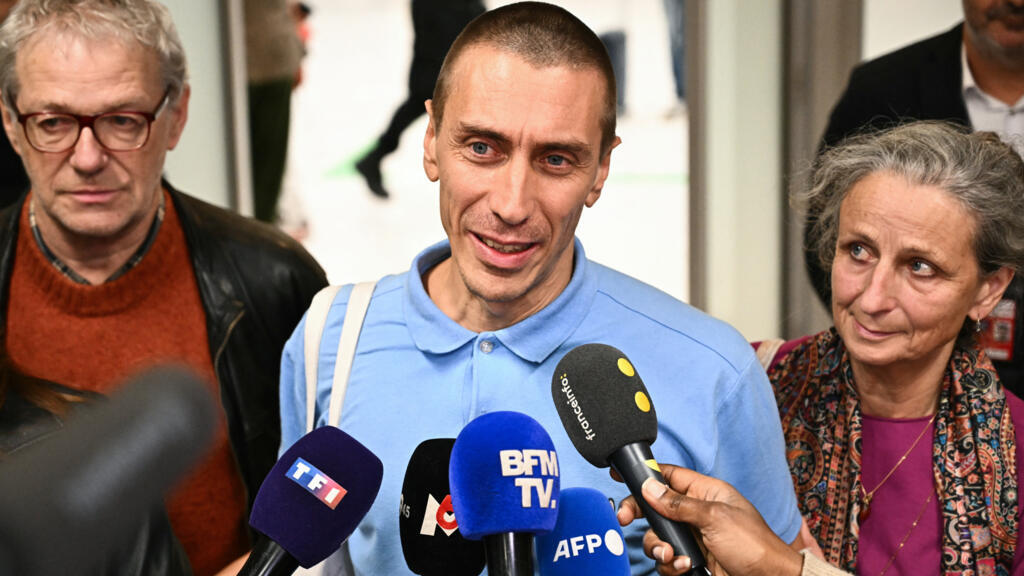
Camilo Castro was on Monday spending his first full day of freedom in France after he was released from four months of detention in Venezuela.
Castro, 41, arrived on Sunday at Orly airport just outside Paris several hours after President Emmanuel Macron revealed on social media that he would be freed.
“Long live liberty, long live equality, and long live fraternity!” Castro told reporters at the airport.
“May all beings on this earth live free from all suffering, live in peace, in love. May all beings live in peace, joy, and abundance.”
Castro disappeared on 26 June at the Paraguachon border crossing, which separates Venezuela from Colombia, where he lives.
The yoga teacher had gone to renew his expired Colombian residency visa, his family said in August.
France’s foreign minister Jean-Noël Barrot was at the airport to greet Castro.
“He expressed his gratitude toward the President of the Republic and the government for creating the conditions for his release,” Barrot said.
Nigeria rejects US push to accept Venezuelan deportees
“The Venezuela authorities had unjustly accused him of being a CIA agent, which he absolutely is not,” Barrot added.
Hélène Boursier, Castro’s mother, told the French news agency AFP: “You cannot imagine the emotion it represents compared with all the joys we experience in life, all the good surprises, all the relief.”
After his release on Saturday morning, Castro went to the French embassy in Venezuela.
"He was extremely happy to be out, a bit overexcited and at the same time still somewhat anxious as long as he had not yet left Venezuelan territory,” said his step-father Yves Guibert.
“You don’t leave prison on the day you’re released," Guibert added. "It takes time to readjust to the world, time to reconnect with normal life.
"And it will now be our task to protect him and create the conditions that will allow him to start life again on the right foot.”
Campaign group Amnesty International has denounced what it said was a policy of "enforced disappearances" of opponents and foreign nationals since the electoral authorities declared President Nicolas Maduro winner of a disputed vote in July 2024.
"The Venezuelan authorities appear to be using this practice to justify their narratives about 'foreign conspiracies' and as a bargaining chip for use in negotiations with other countries," it wrote in a report published in July.
(With newswires)