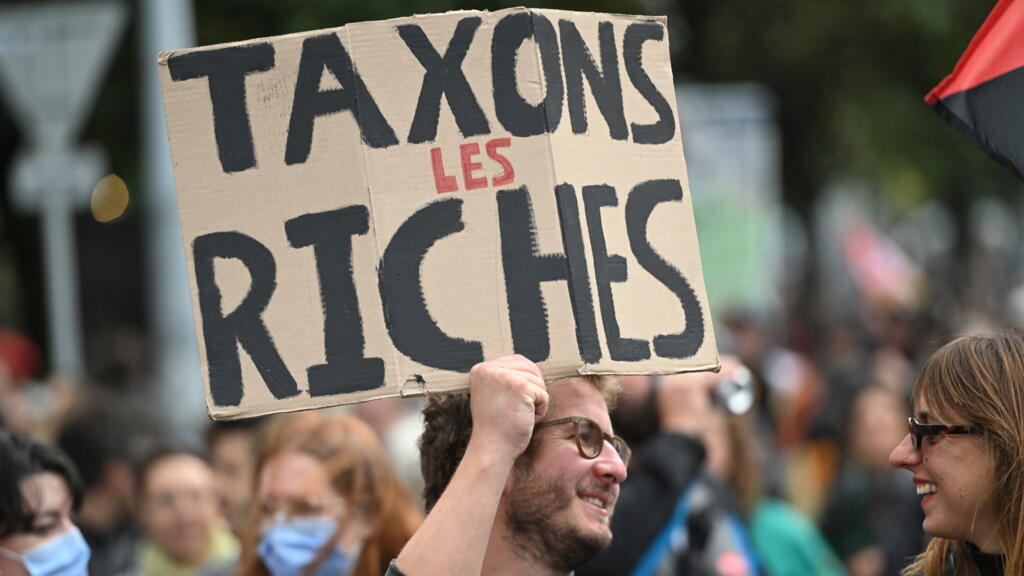
Revenue from a tax targeting high earners in France is expected to be far below forecasts this year, as wealthy people find ways to reduce their tax bills. However, a new corporate tax could bring in more than first predicted in 2026, which might help offset the disappointment.
The tax on top earners that was introduced last year is expected to raise only €650 million this year compared to the €1.65 billion initially forecast, sources at the Ministry for Public Accounts told journalists, confirming a report by French daily Le Monde.
First conceived under former Prime Minister Michel Barnier, the "differential contribution on high incomes" (CDHR) was introduced in the 2025 budget adopted last February. It sets a minimum tax rate of 20 percent on individuals earning more than €250,000 a year, or €500,000 for couples without children.
Revenue projections have been revised downwards. Last year, the CDHR raised only €400 million, almost five times less than the €1.9 billion originally expected, according to Le Monde.
Many high earners are thought to have anticipated the tax and adjusted how they receive their income, in particular by shifting it into dividends, which are taxed at lower rates.
They were helped by deadlock in France's parliament, which meant the budget came into effect later than planned – preventing the government from applying the tax retroactively to 2024 revenue and instead limiting it to income earned in 2025.
Podcast: Taxing the ultra-rich
Corporate tax to the rescue?
Yet revenue from the corporate tax introduced in 2025 came in on target – and Economy Minister Roland Lescure said it could top forecasts in 2026.
The tax brought in just under €8 billion in 2025, the minister told RTL radio on Thursday, and it did not seem to disrupt business, as some had warned.
"It did not stop growth, nor investment to meet their targets," he said.
Initially billed as a one-off, the surtax on companies with revenue of €1 billion or more has been rolled over into 2026 under a budget compromise announced last week.
Would tax hikes for the wealthiest really drive them to flee France?
Projected revenue for this year will be a little less than in 2025 because around 100 smaller businesses will be exonerated, but the tax is still expected to raise more than the projected €4 billion included in the government's initial budget.
Lescure said that 99 percent of French businesses are not impacted by the tax, which targets the 300 largest corporations to "support the purchasing power of working people".
Companies are charged around 20 percent if they earn €1-3 billion, rising to 41 percent if earnings exceed €3 billion.
As part of ongoing debates on how to tackle a growing public deficit, France also considered introducing a minimum 2 percent annual wealth tax on individuals worth more than €100 million, but lawmakers rejected the proposal.