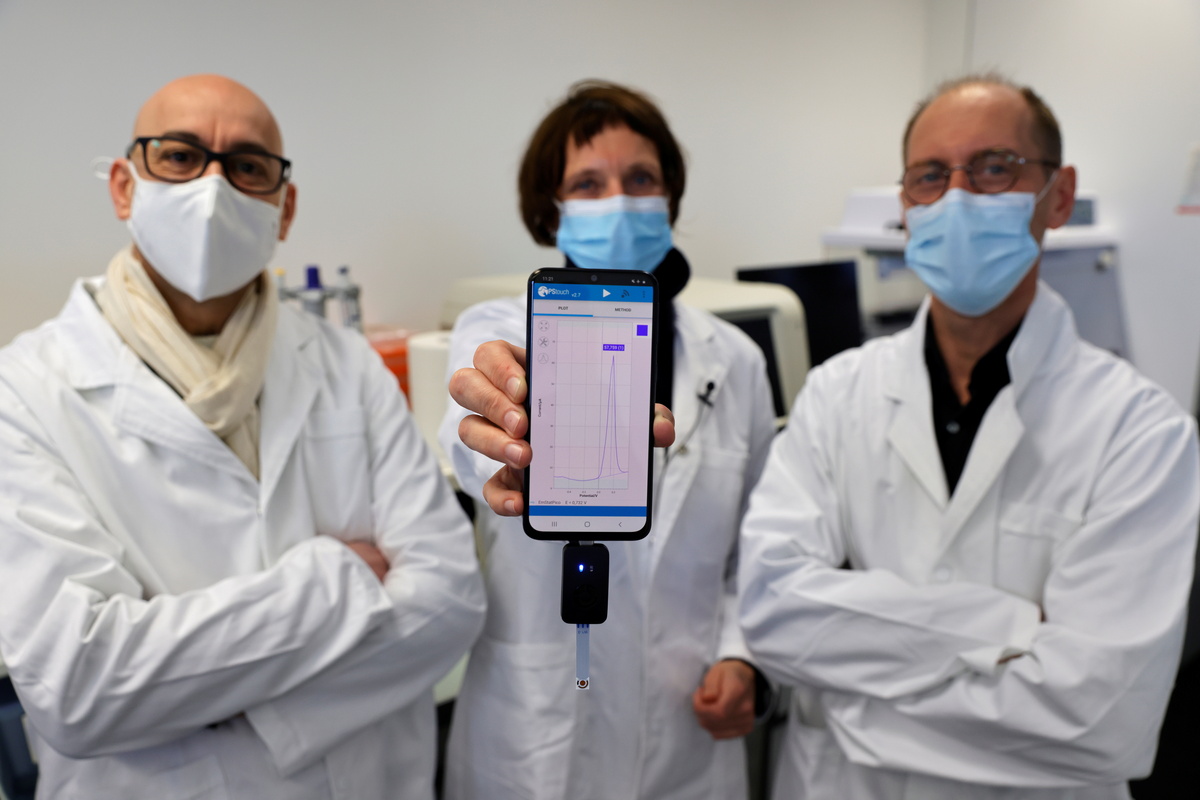
- French researchers are using tiny antibody particles extracted from the family of animals that includes camels and llamas to produce a test they say can detect if patients have COVID-19 faster and more accurately than existing methods.
The prototype test, called CorDial-1, has not been approved for use, but initial trials on 300 samples showed a 90% accuracy rate compared to a Polymerase Chain Reaction (PCR) test, the most reliable commonly-used method of detecting COVID-19.
The prototype test can deliver results within 10 minutes, and can be used outside the laboratory, according to the team developing it, while PCR testing typically takes hours and needs lab conditions.
There are other quick and portable COVID-19 tests available, but scientists have raised doubts about their reliability.
The CorDial-1 test uses antibody fragments called nanobodies. They are derived from camelids -- a group that includes camels, dromedaries, llamas and alpacas -- because they are more stable than antibodies from other creatures.
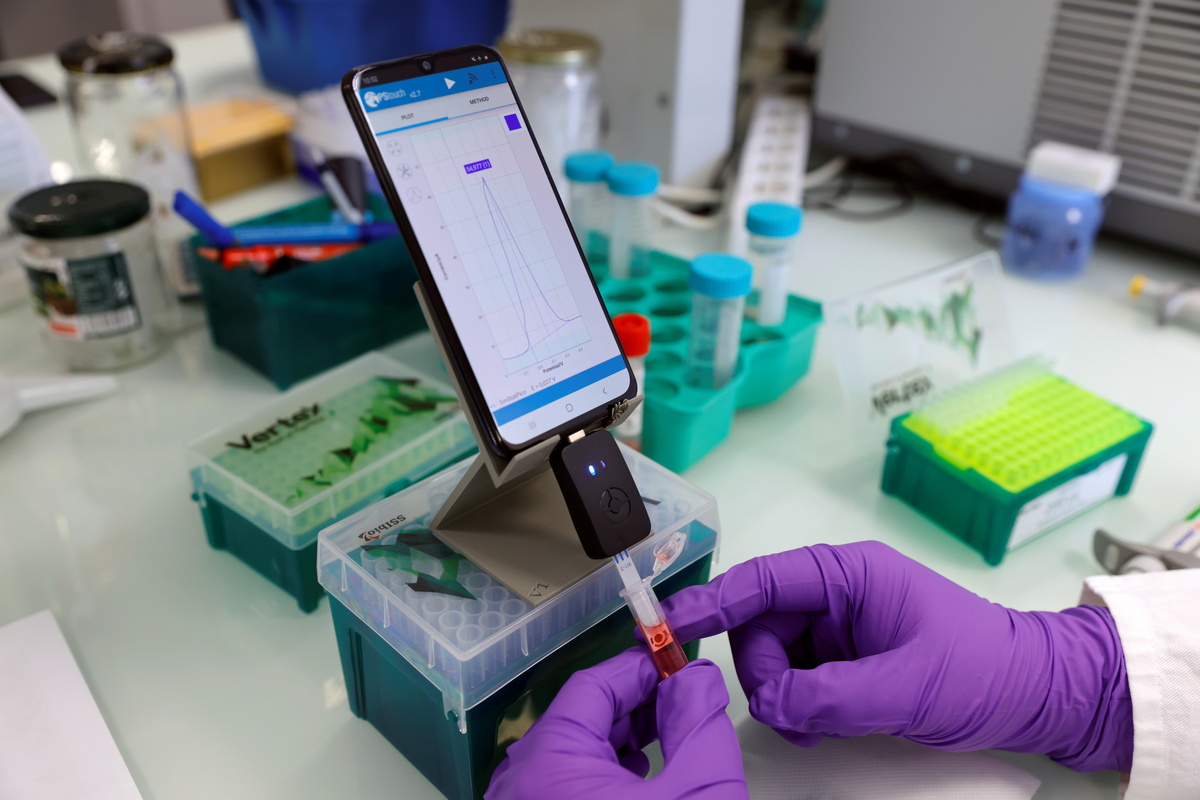
For the COVID-19 test, the nanobodies are grafted onto the surface of an electrode. When those nanobodies come into contact with the "spike" protein of the COVID-19 virus, they interact to produce a change in the electrical current across the electrode.
When the testing apparatus -- a device the size of a large USB stick -- is plugged into a smartphone, the current shows up as a signal on a graph.
"Depending on the height of the signal, you can say if you are COVID positive or negative," said Sabine Szunerits, of the University of Lille, who is working on the project with scientists at the University of Marseille and the French National Centre for Scientific Research.
The next phase of the project is to run a three-month trial on more than 1,000 people.
Christophe Demaille, lead researcher in molecular electrochemistry at the University of Paris, who is not involved in the project, said tests that rely on electrical signals are highly portable.
"I am confident it will be usable anywhere," he said of the CorDial-1 project.
(Additional reporting by Yiming Woo, Writing by Christian Lowe, editing by Ed Osmond)