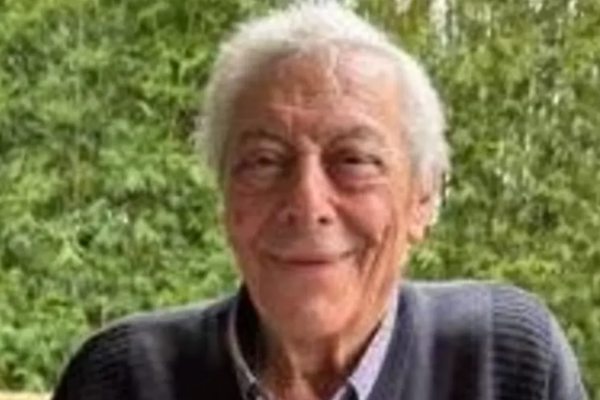
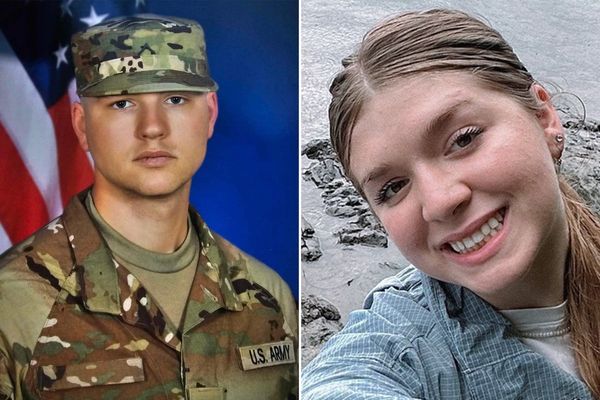
France’s prime minister, Manuel Valls, has defended the country’s intelligence services after criticism that they should have prevented the gruesome double murder of a police commander and his partner by a man with a previous conviction for jihadism who had recently been under surveillance.
Larossi Abballa, 25, who claimed allegiance to Islamic State (Isis), stabbed police commander Jean-Baptiste Salvaing to death outside his home in Magnanville near Paris. He then entered the house and took Salvaing’s partner, Jessica Schneider, and their three-year-old son hostage. Abballa slit Schneider’s throat and streamed a live video of the fatal attack on Facebook. He was killed when police stormed the house and the boy was rescued alive.
French authorities have admitted that Abballa, who was convicted of taking part in a jihadi recruitment network to Pakistan and Afghanistan in 2013 and sentenced to three years in prison, had been under phone surveillance this year in connection to an inquiry about another man leaving for Syria. The state prosecutor said nothing had been found during that phone tapping to indicate he was preparing to carry out a violent act.
France’s rightwing opposition party Les Républicains were swift to condemn the government for security failings and not watching known radicals closely enough.
“I will not let anyone say there was any negligence or lack of judgment” by the security forces, Valls responded on France Inter radio. He argued that a lone attack was hard to prevent and repeated his ongoing warning that terrorism was an inevitable threat.
“We will experience further attacks in the future because we are facing a terrorist organisation which is on the retreat in Syria and Iraq and which is projecting itself in our countries in various forms … in order to sow fear and division.”
The double murder of the police commander and his partner at their home is the latest deadly jihadist attack on French soil since November’s coordinated massacres in Paris by Isis which killed 130 people.
The latest attack has once again thrown the spotlight on French intelligence services and potential state failings. In last year’s series of fatal jihadi attacks on France, many of the key attackers were already known to police and the judiciary and several had previous jihadist convictions.
Chérif Kouachi and his brother Saïd killed 12 people in an attack on Charlie Hebdo magazine in January 2015. Chérif had served time in prison for his part in a jihadi network seeking to fight abroad. Amedy Coulibaly, their accomplice who killed four in a hostage-taking at a kosher supermarket, had also been convicted of a plot to free a terrorist from prison. Some of the leading figures in Paris’s November attacks were known radical jihadists wanted by police.
Rightwing critics called on Tuesday for “retention centres” for radical Islamists in France, in the same way that individuals with dangerous mental health problems can be detained.
But Valls ruled out the idea as flawed and “dangerous”.
Jean-Jacques Urvoas, the justice minister, said the scheme was impractical in an interview with France Info. “In France, we don’t judge intentions, we judge deeds,” he said.
Police unions announced they had secured the right for officers to remain armed while off duty, which has until now been allowed only under the state of emergency that has been in place since November’s Paris attacks and is due to end next month.
In a separate development, Facebook said it was cooperating with French authorities after Abballa live-streamed a video from the scene of the attack via his Facebook account.
“We are working closely with the French authorities as they deal with this terrible crime,” Facebook said in a statement.
“Terrorists and acts of terrorism have no place on Facebook. Whenever terrorist content is reported to us, we remove it as quickly as possible. We treat takedown requests by law enforcement with the highest urgency.”
After the stabbings, just before he was killed in a police raid, Abballa issued threats in a video statement posted on Facebook Live, a new feature that enables any user to stream a live event.
The incident poses a new challenge for Facebook and other social networks seeking to keep an open platform without allowing users to promote violence.
“We do understand and recognise that there are unique challenges when it comes to content and safety for live videos,” a Facebook spokeswoman told Agence France-Presse.
“It’s a serious responsibility, and we work hard to strike the right balance between enabling expression while providing a safe and respectful experience. We’re deeply committed to improving the effectiveness of how we handle reports of live content that violates our community standards.”